
Comparing sizes Extra Challenge Worksheets for Ages 4-6
5 filtered results
Difficulty Level
Grade
Age
-
From - To
Subject
Activity
Standards
Discover our "Comparing Sizes Extra Challenge Worksheets" designed specifically for ages 4-6, to enhance early cognitive development. These engaging worksheets allow little learners to explore and compare different sizes through fun activities. Ideal for guided lessons or independent practice, each worksheet promotes critical thinking as children identify and sort items based on their size. With colorful visuals and interactive exercises, students will enjoy honing their comparison skills while building foundational math concepts. Boost your child’s confidence and knowledge with these carefully crafted worksheets that cater to their developmental stage. Download now and make learning about sizes exciting and educational!
Favorites
With answer key
Interactive
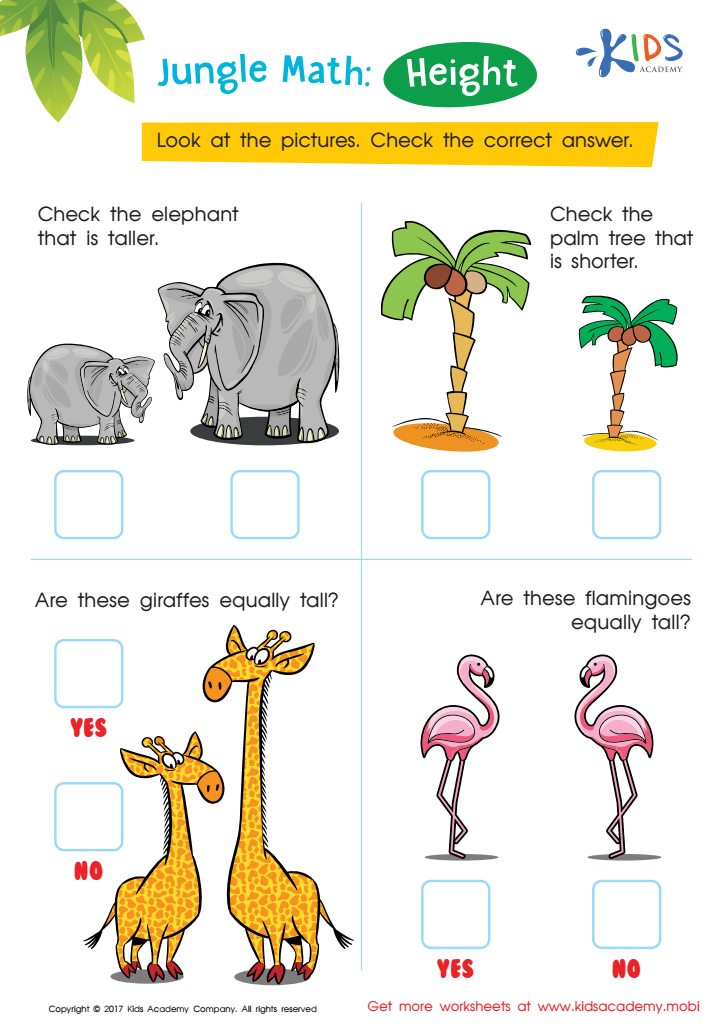
Which Is Taller Worksheet
Help your kindergartner learn about height with this fun worksheet! They'll love comparing zoo animals and deciding which are taller, shorter, or equal. It's a great way to practice math and have fun!
 Assign to My Students
Which Is Taller Worksheet
Worksheet
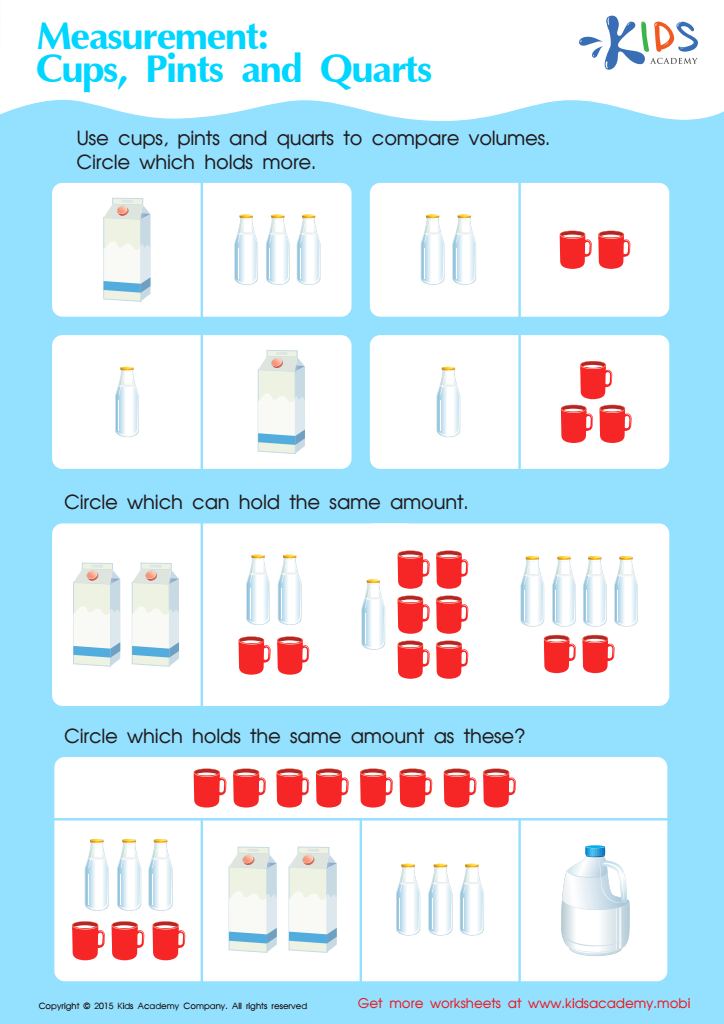
Measurement: Compare Volumes Worksheet
Compare volumes with Kids Academy and have fun! (80 words)
Practice measuring with Kids Academy and have fun! Compare volumes in pictures and circle which holds more. Keep learning with free math worksheets available on our website. Enjoy the process and have fun!
Measurement: Compare Volumes Worksheet
Worksheet
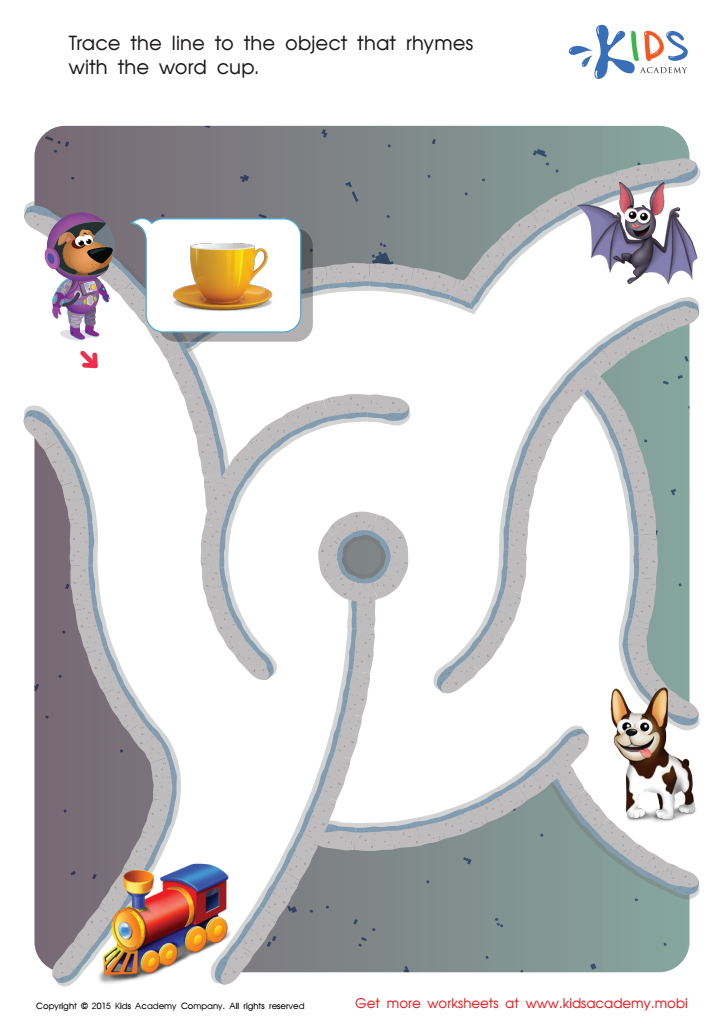
Cup Rhyming Words Worksheet
Kids Academy offers funny worksheets to help kids practice their vocabulary. Try the new one with the dog, matching objects to their rhyming words! Explore more activities and worksheets to learn English Language words and phrases.
Cup Rhyming Words Worksheet
Worksheet
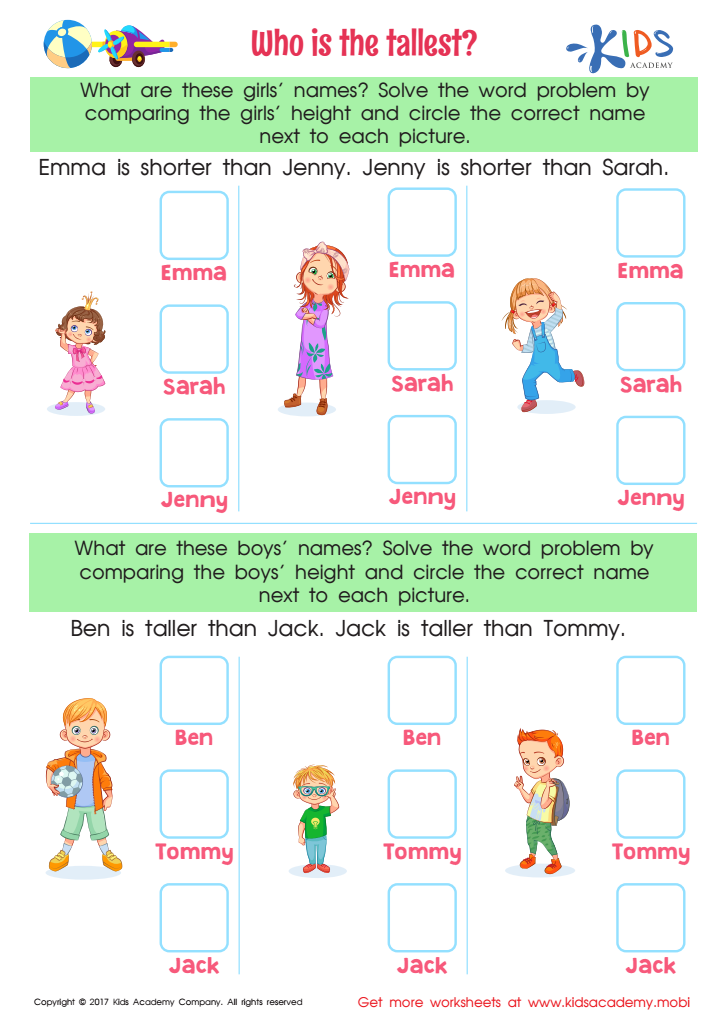
Who Tallest Printable
Help your child observe the kids in the worksheet and compare their heights to answer the question: Who is the Tallest? This is an excellent way for them to practice and better understand measurement concepts.
Who Tallest Printable
Worksheet
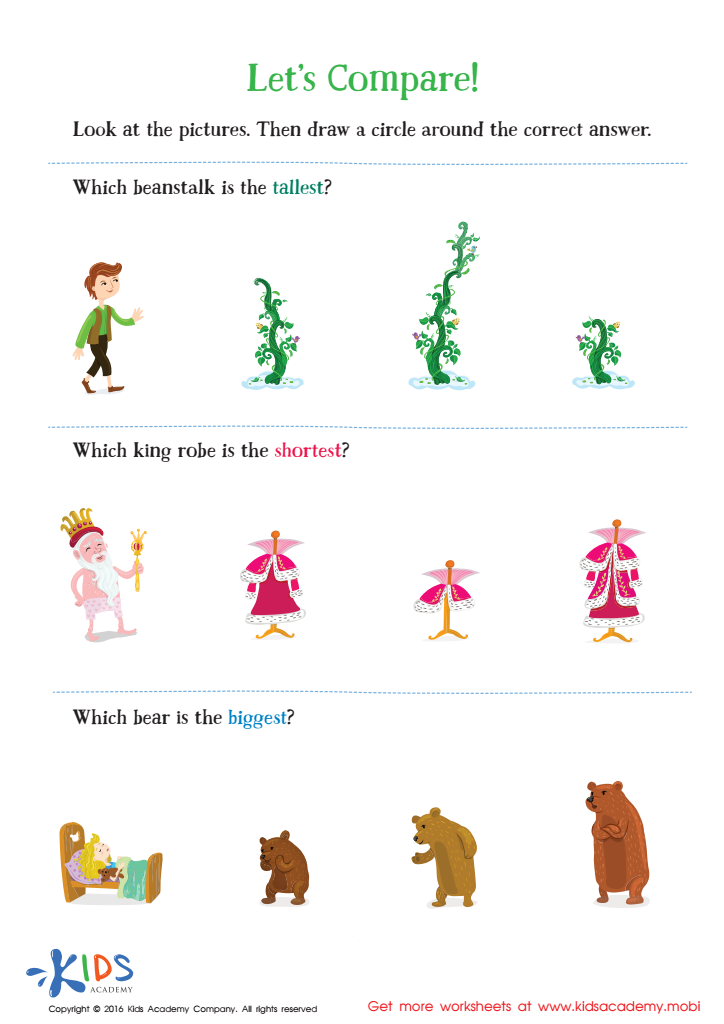
Fairy Tale Worksheet: Let's Compare
Preschoolers need to recognize different sizes of objects. This worksheet combines fun fairy tales with size practice, helping them read, problem solve, and sort through pictures. Your child will love the images and be eager to complete it. Enhance their learning by talking about the tales to build comprehension.
Fairy Tale Worksheet: Let's Compare
Worksheet
Join Kids Academy for Free
Who is primarily going to use this learning content?






Understanding how to compare sizes is a crucial skill for children aged 4-6, as it lays the foundation for various mathematical concepts they will encounter later in education. When parents and teachers emphasize comparing sizes, they help children develop spatial awareness and critical thinking skills. These early lessons foster problem-solving abilities—the basis for advanced math and real-world applications.
Moreover, engaging children in size comparison activities promotes language development. Children learn to articulate descriptions, deploying terms such as "big," "small," "taller," or "shorter." This enhances vocabulary and communication skills, which are vital for effective expression both in academic settings and personal interactions.
Additionally, activities that involve comparing sizes can be turned into playful learning experiences, making education enjoyable. These interactions can involve hands-on activities with objects, fostering curiosity and exploration. As children experiment with different sizes, they further connect mathematical concepts to everyday life, contextualizing their learning.
Ultimately, when parents and teachers prioritize skills like comparing sizes, they are not just teaching math; they are cultivating well-rounded, analytical thinkers who are prepared for future academic challenges and life experiences.








