Handwriting practice Extra Challenge Worksheets for Ages 4-6
6 filtered results
-
From - To
Enhance your child's handwriting skills with our Handwriting Practice Extra Challenge Worksheets designed for ages 4-6. These engaging and educational worksheets provide a fun way to improve letter formation, fine motor skills, and writing fluency. Each worksheet offers diverse exercises tailored to keep young learners motivated and challenged, from tracing to writing sentences. Ideal for reinforcing classroom learning or homeschooling, our worksheets help develop essential pre-writing skills, creativity, and confidence needed for delicate tasks. Support your child's handwriting journey with our expertly designed worksheets for a solid foundation in writing.
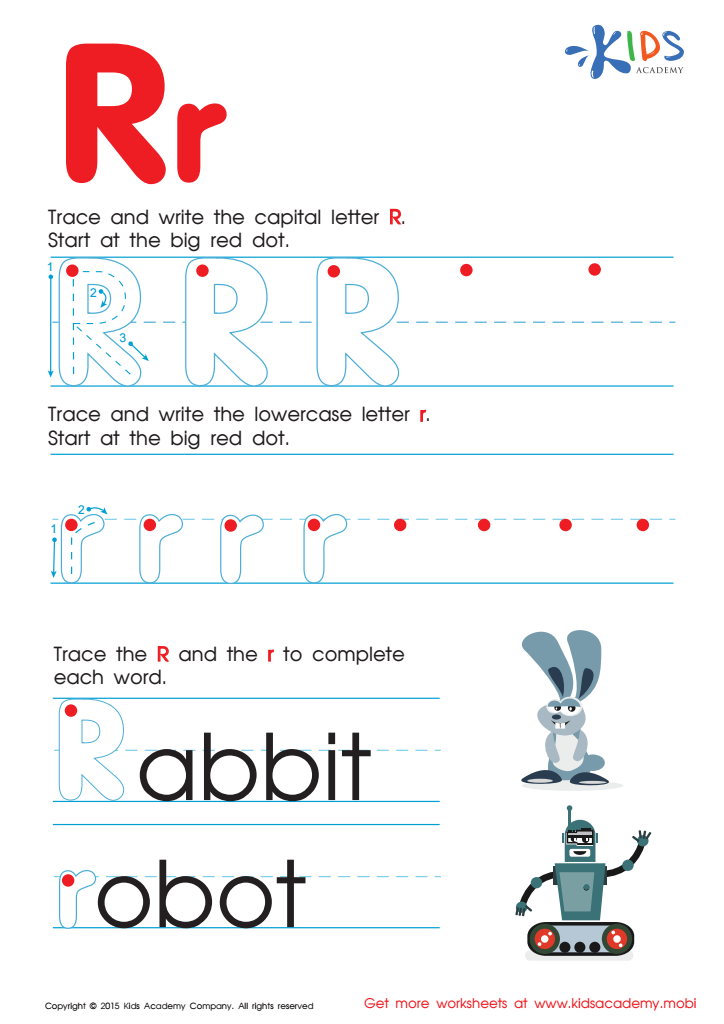
Letter R Tracing Page
 Assign to My Students
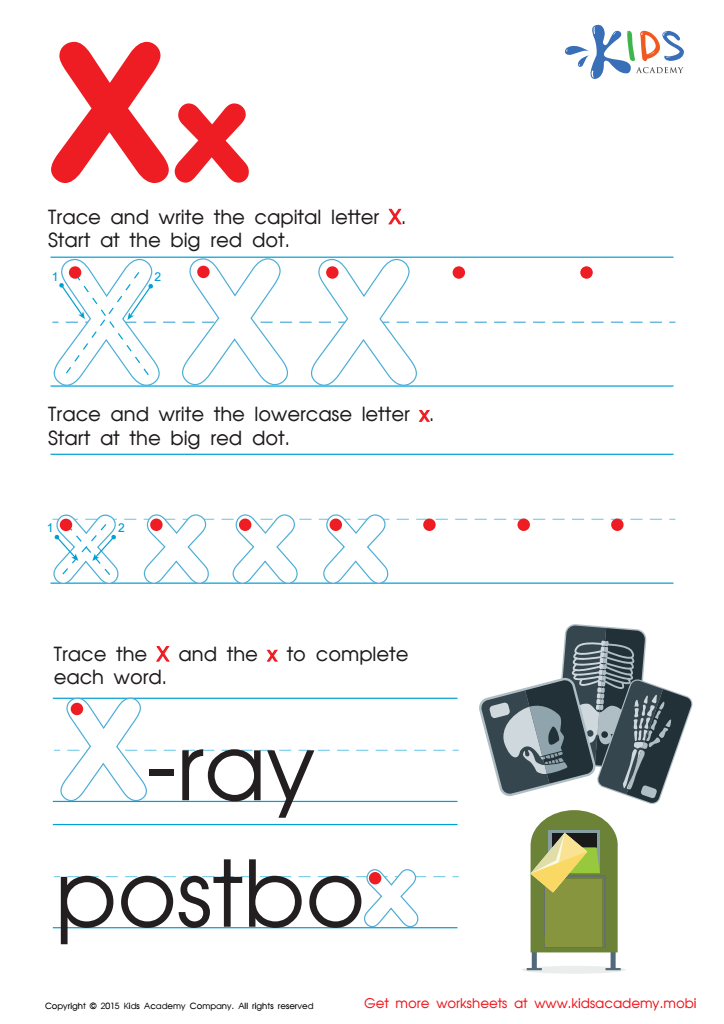
Letter X Tracing Page
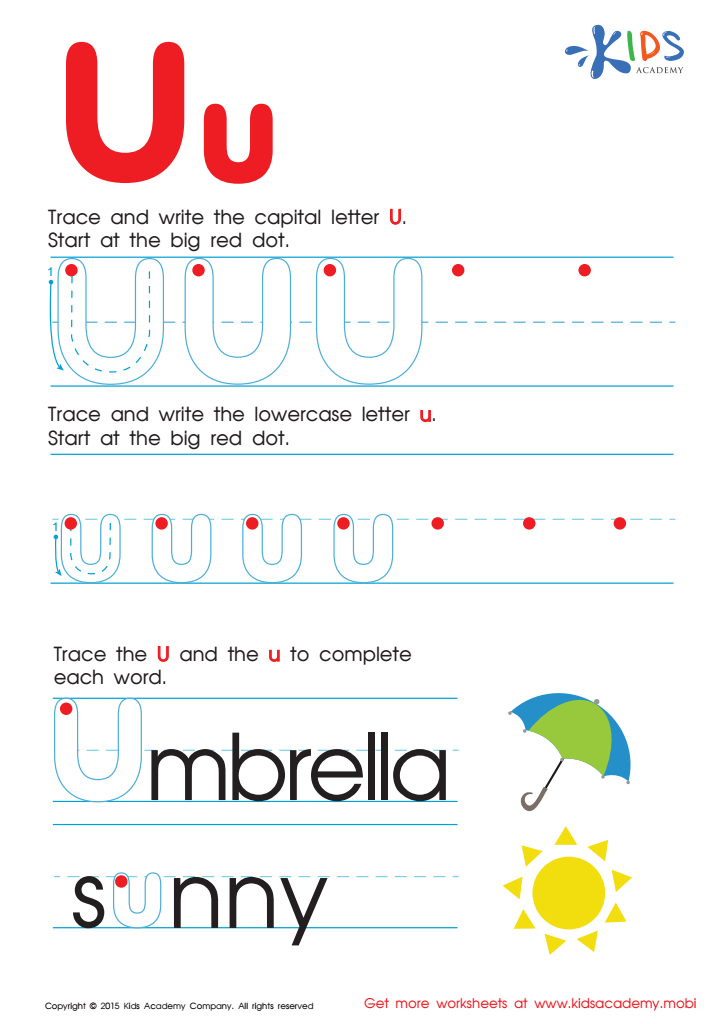
Letter U Tracing Page
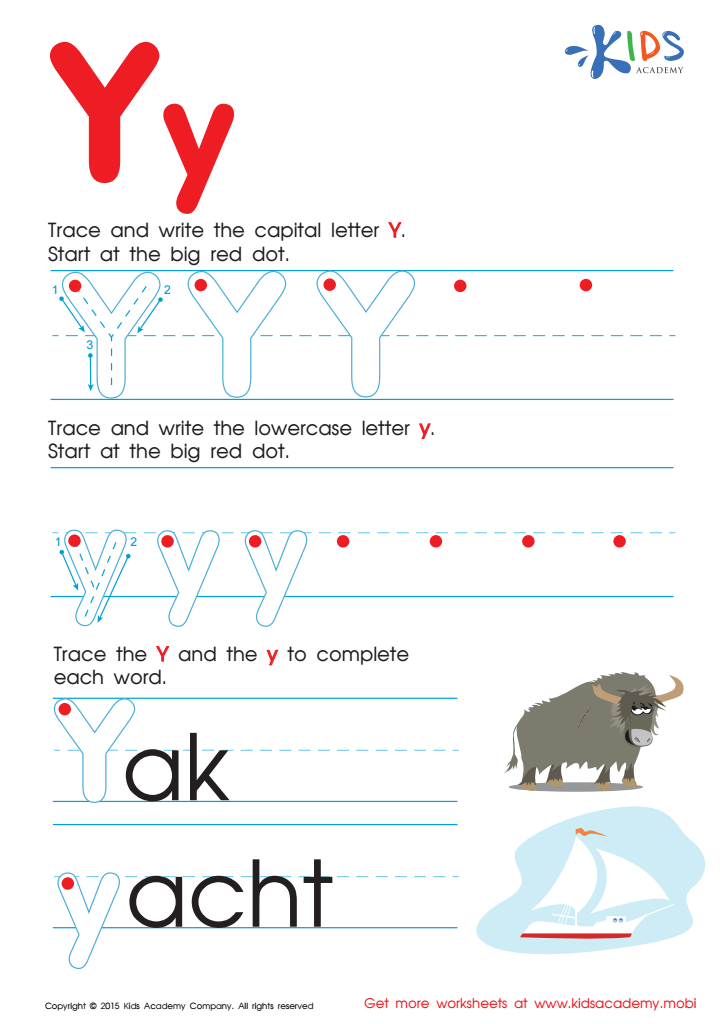
Letter Y Tracing Page
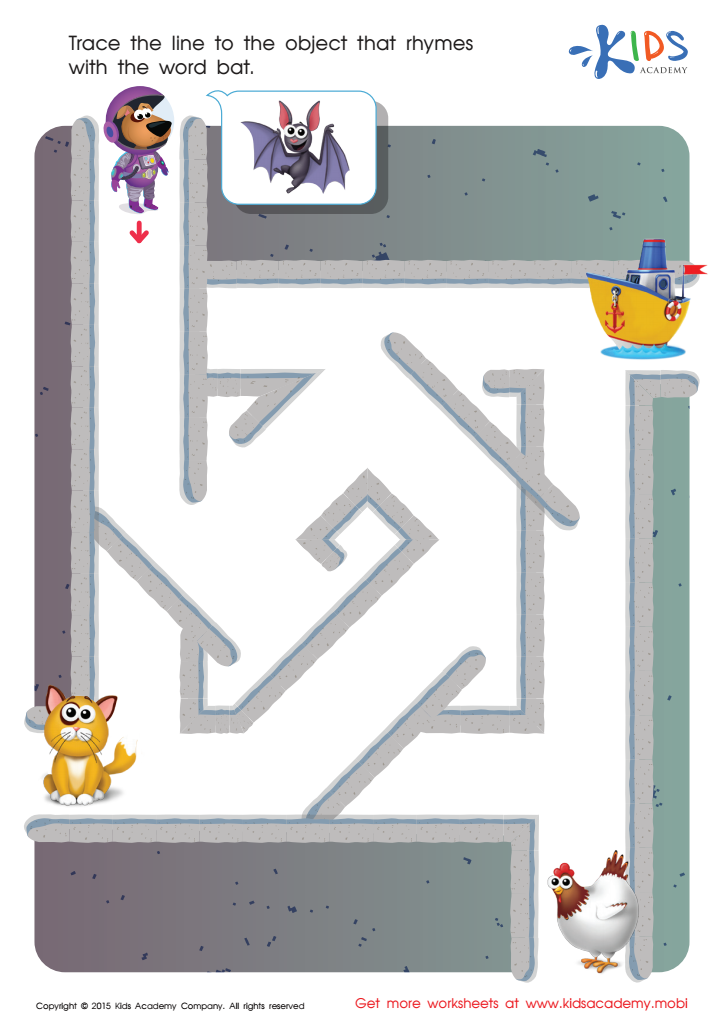
Bat Rhyming Words Worksheet
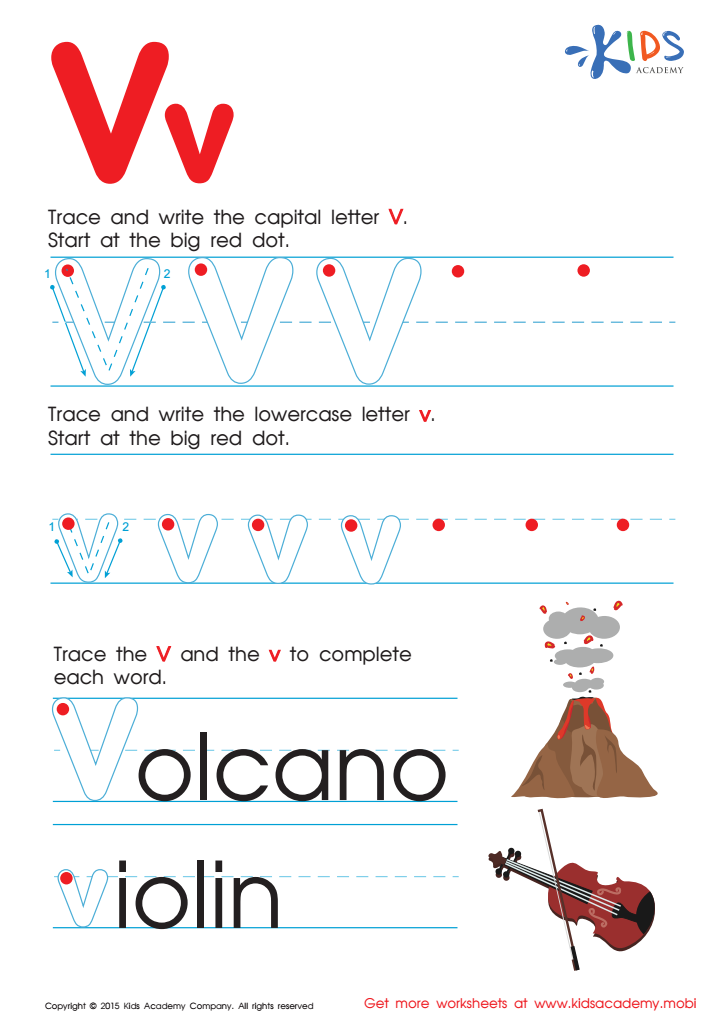
Letter V Tracing Page







Handwriting practice is crucial for children aged 4-6, as it lays the foundation for effective communication, academic success, and cognitive development. At this early stage, children's fine motor skills are in a key developmental phase, and handwriting practice enhances these skills by improving hand-eye coordination, finger dexterity, and muscle memory. By mastering the basic formation of letters and numbers, children gain confidence in their ability to express themselves legibly and efficiently.
Additionally, the act of handwriting stimulates brain activity in ways that keyboard typing does not, fostering neural development linked to reading, memory, and language skills. As children learn to form letters correctly and consistently, they develop a better understanding of phonemic awareness and phonics, which are instrumental in literacy development.
Furthermore, handwriting encourages patience, discipline, and attention to detail — traits that benefit a child's overall learning experience and personal growth. For parents and teachers, it is essential to incorporate extra handwriting challenges to sustain engagement and promote practice. Creative exercises, such as tracing, copying, and freehand writing, keep the learning process enjoyable and tailored to individual progress.
Investment in any elements of early handwriting practice fosters academic readiness and lifelong skills, providing children a strong, confident start not only in school but also in personal expression and cognitive development.








