Sequencing numbers Extra Challenge Worksheets for Ages 4-6
3 filtered results
-
From - To
Unlock your child's potential with our Sequencing Numbers Extra Challenge Worksheets for ages 4-6! Designed to enhance critical thinking and numeracy skills, these engaging worksheets provide fun and interactive ways for young learners to practice number sequencing. Children will develop their understanding of order and patterns while enjoying vibrant illustrations and varied activities. The worksheets cater to different learning styles, making them perfect for independent practice or guided learning sessions. Whether in the classroom or at home, these extra challenge worksheets help build a strong mathematical foundation, setting your child on the path to success in math and beyond. Let the learning begin!
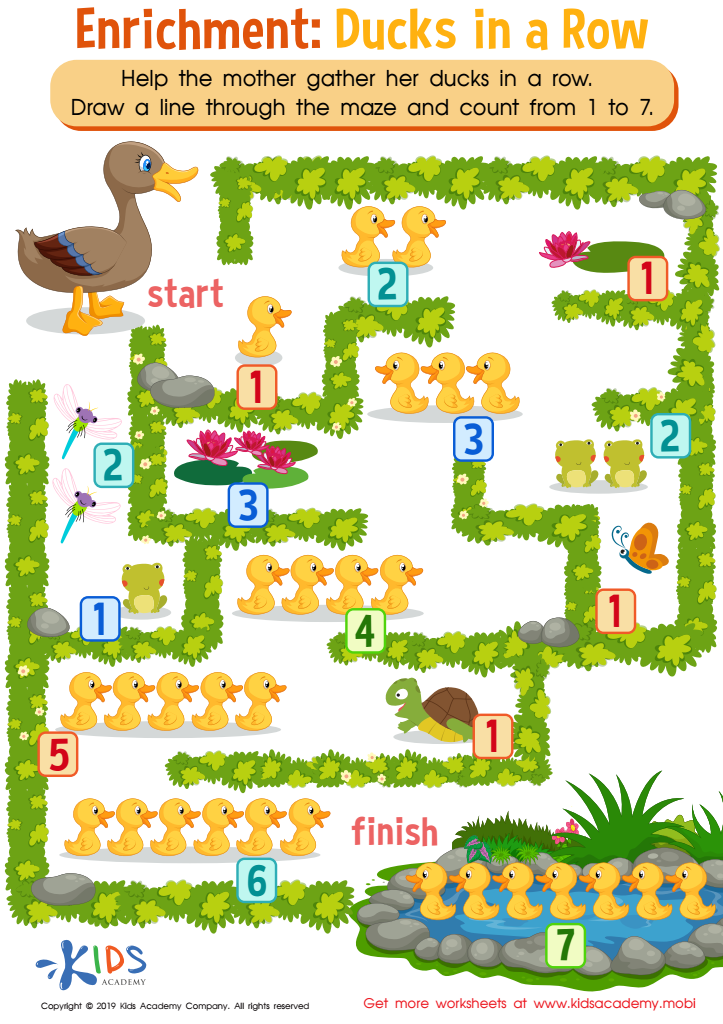
Ducks in a Row Worksheet
 Assign to My Students
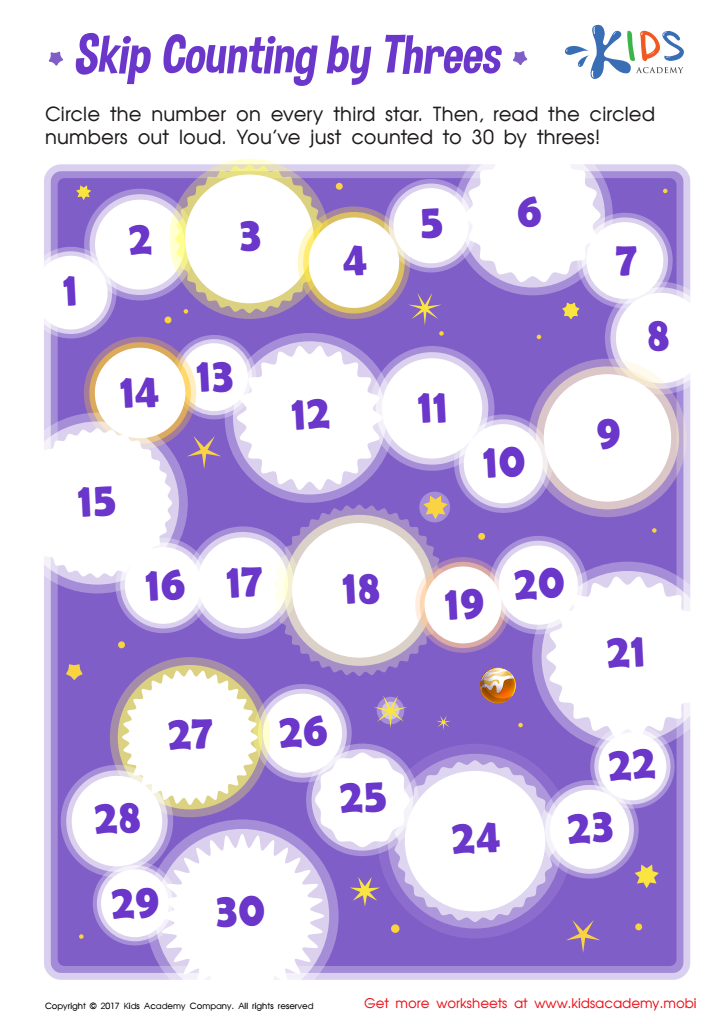
Skip Counting By Three Printable
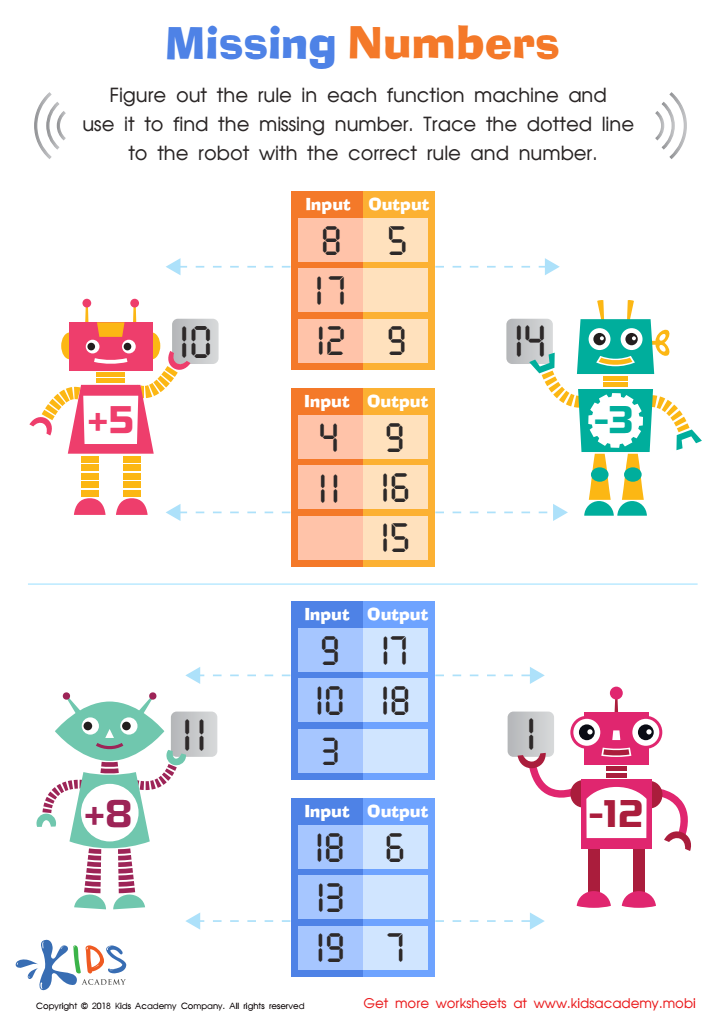
Missing Numbers Worksheet







Sequencing numbers is a fundamental concept in early childhood education that lays the groundwork for mathematical understanding. For children aged 4-6, engaging with sequencing challenges fosters critical cognitive skills that are essential for their development. First, sequencing encourages logical thinking; children learn to recognize patterns and understand the order of numbers, which is a foundational aspect of mathematics. This skill not only supports number fluency but also lays the groundwork for more complex subjects such as addition and subtraction.
Additionally, tasks related to sequencing help improve a child's attention and memory. By practicing these challenges, children strengthen their ability to focus and recall information, which are vital skills needed for future learning. Sequencing activities also enhance problem-solving abilities, as children learn to anticipate outcomes and make decisions based on numerical order.
Furthermore, these activities can be turned into enjoyable games, making learning interactive and engaging for children. Active participation in sequencing challenges not only makes mathematics fun but also fosters a positive attitude towards learning. Involving parents and teachers in these activities promotes a collaborative approach to education, encouraging children to thrive in mathematical literacy, which is crucial for their academic success and everyday life.








