
Spatial awareness Extra Challenge Worksheets for Ages 4-6
7 filtered results
Difficulty Level
Grade
Age
-
From - To
Subject
Activity
Standards
Enhance your child's spatial awareness with our Extra Challenge Worksheets, specifically designed for ages 4-6. These engaging activities encourage young learners to develop essential skills such as problem-solving, critical thinking, and understanding spatial relationships. Through fun exercises that involve shapes, directions, and positioning, children will strengthen their cognitive abilities while enjoying the process. Our worksheets are colorful, interactive, and tailored to meet the needs of early learners, making them perfect for both home and classroom use. Foster your child's growth in spatial awareness with these exciting challenges that lay the foundation for future academic success! Explore them today!
Favorites
With answer key
Interactive
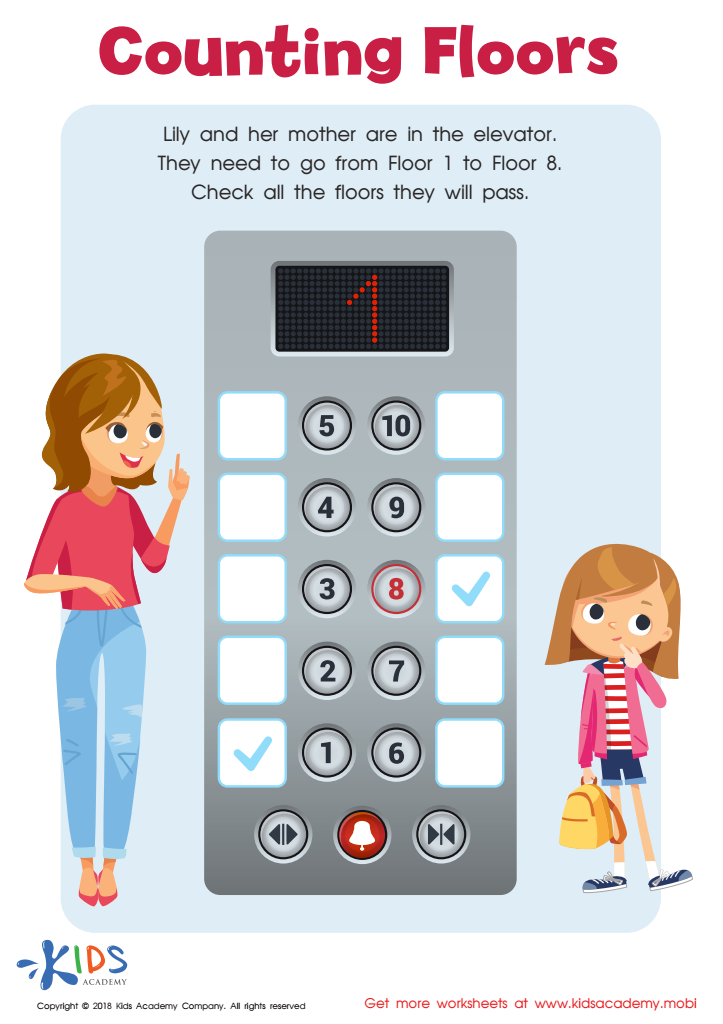
Counting Floors Worksheet
Take your kids on an elevator ride and have them help you. With this worksheet, little ones meet Lily and her mom. They're taking an elevator from Floor 1 to Floor 8. Ask them to check the floors they pass and help the two reach their destination.
 Assign to My Students
Counting Floors Worksheet
Worksheet
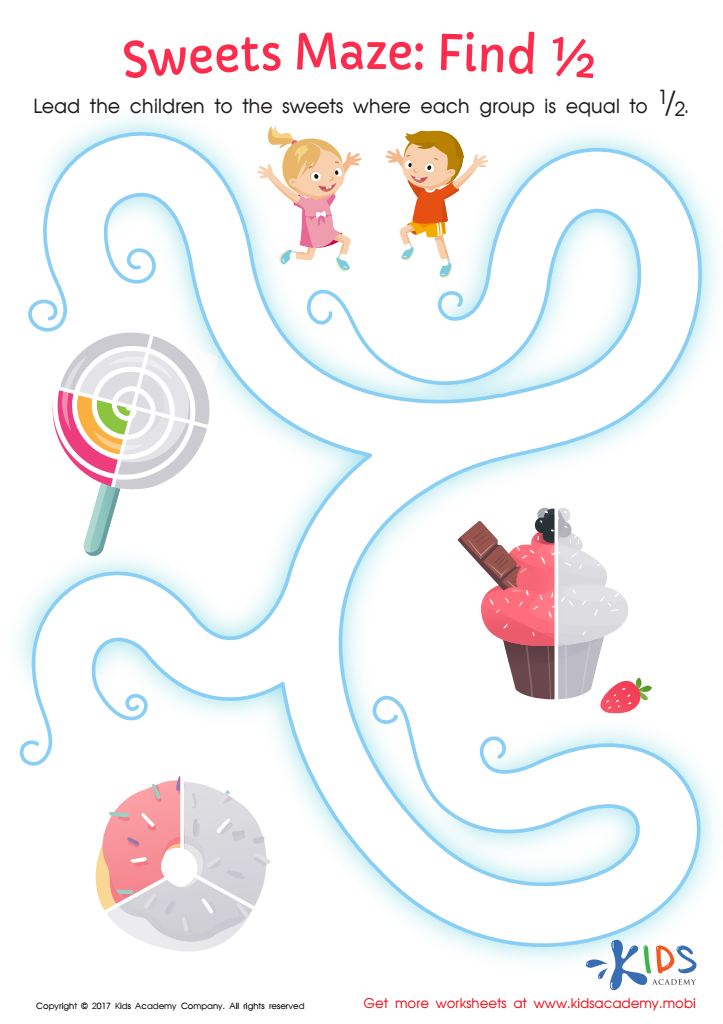
Fractions: Sweets Maze Worksheet
Kids will enjoy mastering parts of a whole with this tantalizing maze featuring tasty treats. Visuals help them understand fractions and the fun theme will motivate them to learn! Get started now to help your child find and identify ½!
Fractions: Sweets Maze Worksheet
Worksheet
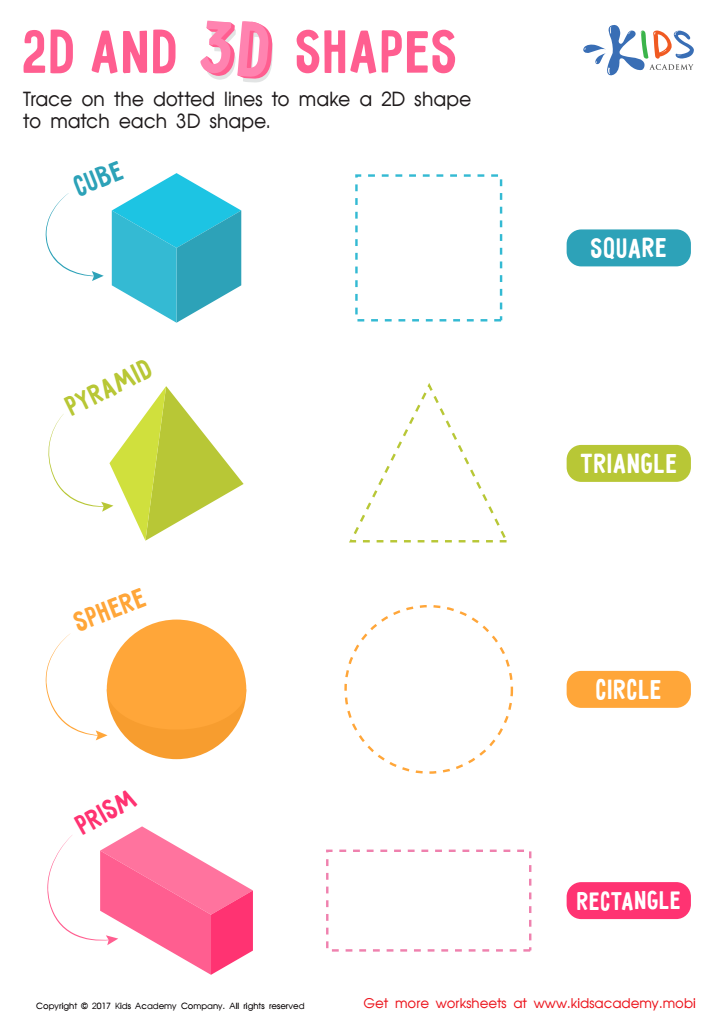
2D and 3D Shapes Worksheet
Introduce your child to 3D and 2D with this traceable worksheet. With dotted lines, help them trace and make a 2D shape for each 3D shape: square, triangle, rectangle, and circle. Show them there's more than one way to draw! You may have taken them to a 3D movie, or they've seen some fantastic 3D art. Now they can wonder no more.
2D and 3D Shapes Worksheet
Worksheet
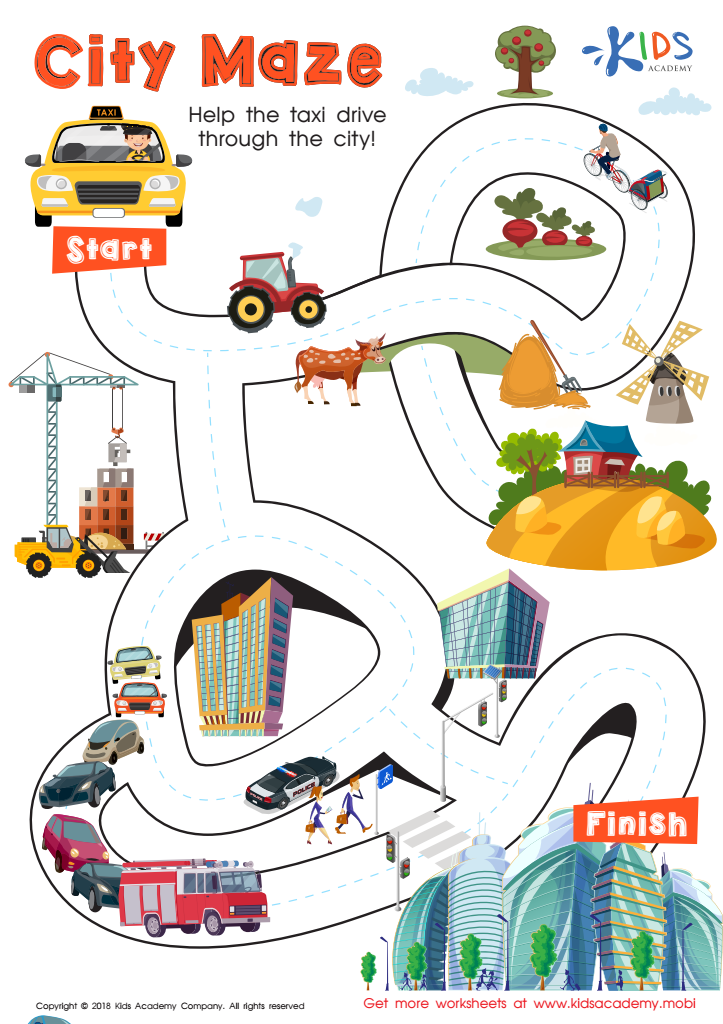
City Maze Worksheet
Kids love mazes! This free PDF city maze worksheet is sure to be a hit. Help your friend the taxi driver get through the maze, following traceable lines through different communities to the big city. It's a fun and challenging way to practice fine motor skills and succeed!
City Maze Worksheet
Worksheet
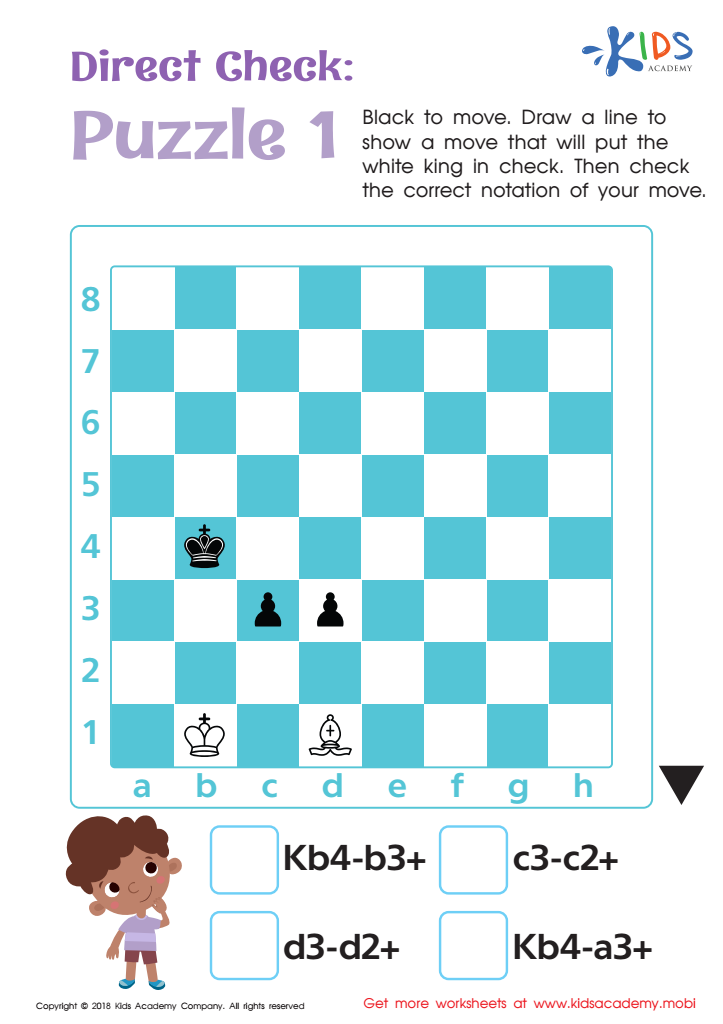
Direct Check: Puzzle 1 Worksheet
Your child can test their chess knowledge with this worksheet. If they've been taking lessons or playing regularly, they'll enjoy connecting the dots to put the white king in checkmate, then checking the correct notation. Challenge their chess skills!
Direct Check: Puzzle 1 Worksheet
Worksheet
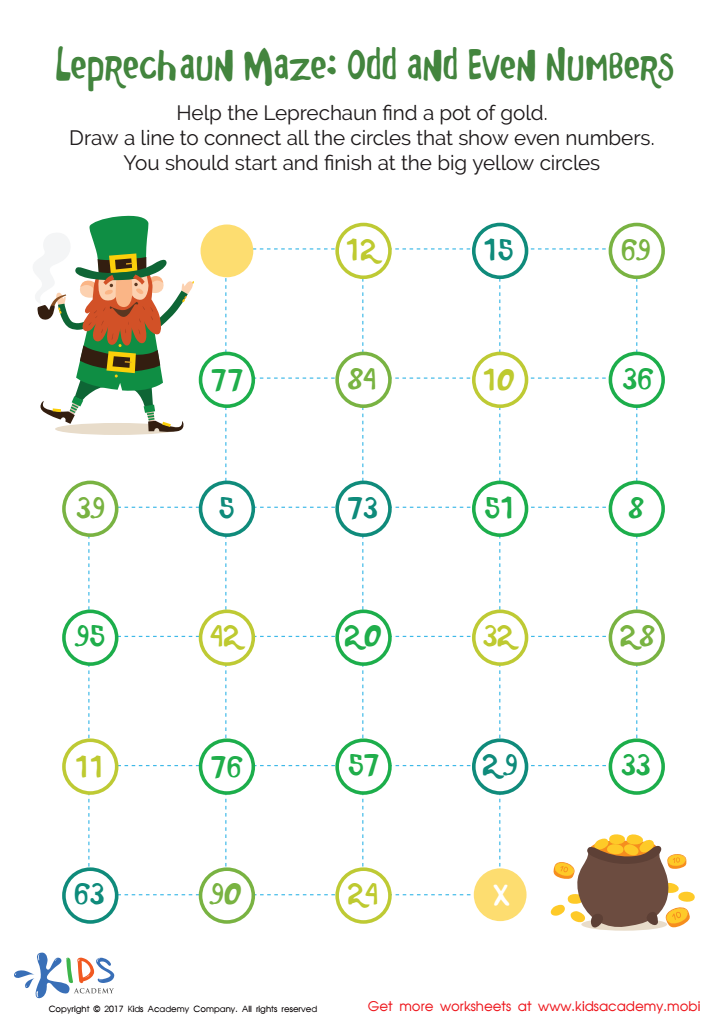
Leprechaun Maze Printable
Help the leprechaun find his pot of gold! Challenge your learner with this St. Patrick's Day worksheet. Let them identify odd or even numbers in the maze and connect the dots. It will be a fun way to celebrate St. Patrick's Day!
Leprechaun Maze Printable
Worksheet
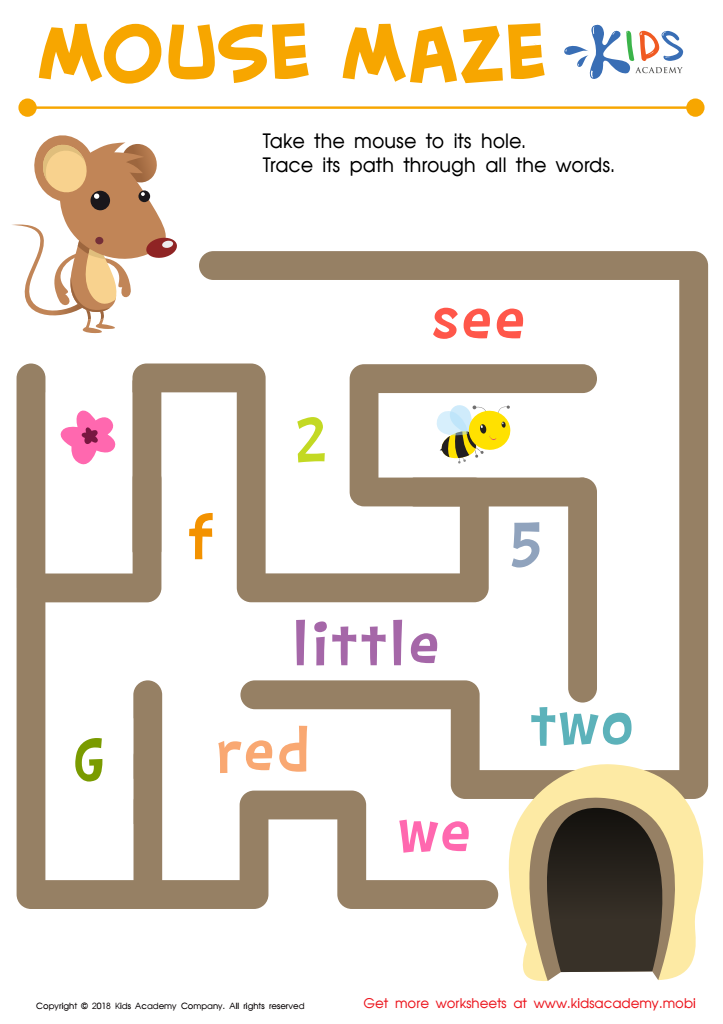
Find Words Mouse Maze Worksheet
Help your child identify words and guide the mouse home! Ask them to point out the colorful animal on the worksheet, then take their hand and show them how to trace the path, going through all the words in the maze to get the mouse back to its hole.
Find Words Mouse Maze Worksheet
Worksheet
Join Kids Academy for Free
Who is primarily going to use this learning content?







Spatial awareness is an essential cognitive skill that involves understanding how objects relate to one another in space. For children ages 4-6, developing spatial awareness is vital for several reasons. First, it forms the foundation for future mathematical understanding, particularly in geometry, measuring, and problem-solving skills, which are crucial in their academic journey.
Secondly, children with strong spatial awareness tend to excel in activities like reading maps, following directions, and visualizing objects from different angles, all of which are increasingly important in our navigationally complex world. Engaging in activities that bolster spatial comprehension, such as puzzles, building blocks, or simple geometry games, nurtures this skill and enhances critical thinking and logic.
Furthermore, spatial awareness supports physical development by helping kids navigate their environment—important for gross motor skills as they learn to coordinate their movements. It promotes confidence in physical activities, making them more willing to try sports and other cooperative play, which fosters social skills.
Parents and teachers should therefore prioritize spatial awareness activities in their curriculum and home interactions. By identifying and nurturing this skill at an early age, we set children up for success across various domains—academic, social, and physical.








