Vocabulary enhancement Extra Challenge Geometry Worksheets for Ages 4-6
3 filtered results
-
From - To
Discover our engaging Vocabulary Enhancement Extra Challenge Geometry Worksheets for ages 4-6, designed to boost your child's mathematical language and geometric understanding. These worksheets incorporate fun activities like matching shapes with words, fill-in-the-blank exercises, and visual puzzles that stimulate both learning and creativity. By combining vocabulary development with geometry concepts, young learners can enhance their communication skills while exploring shapes and space. Perfect for home or classroom use, our thoughtfully crafted worksheets encourage independent learning, critical thinking, and mastery of essential geometry vocabulary. Help your child build a strong foundation for future math success with these interactive and educational tools!
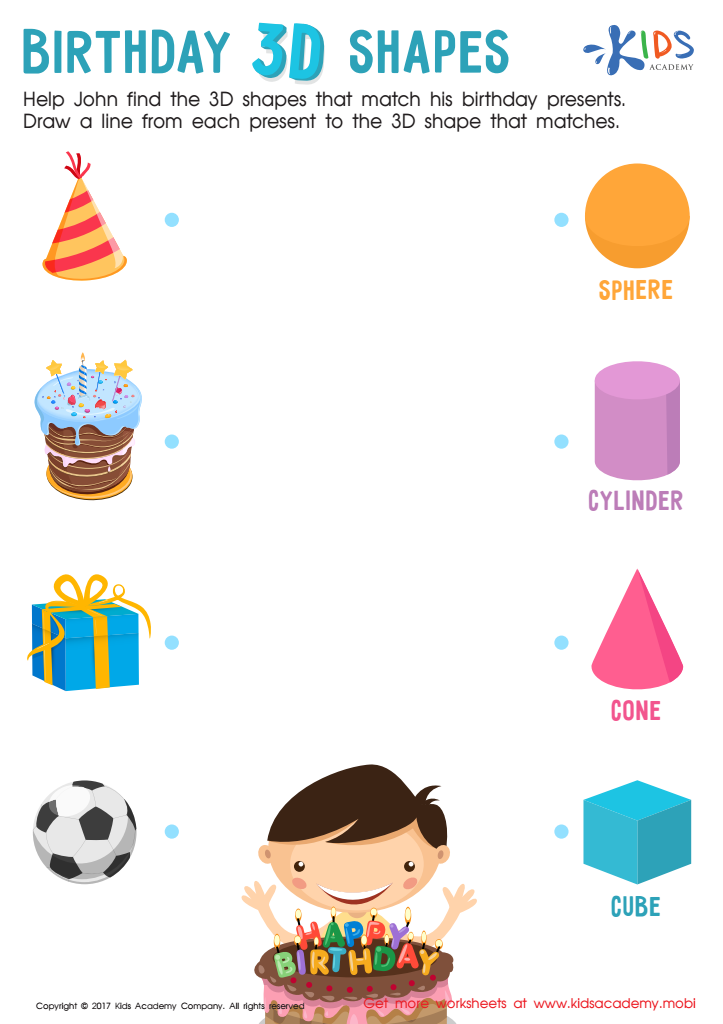
Birthday 3D Shapes Worksheet
 Assign to My Students











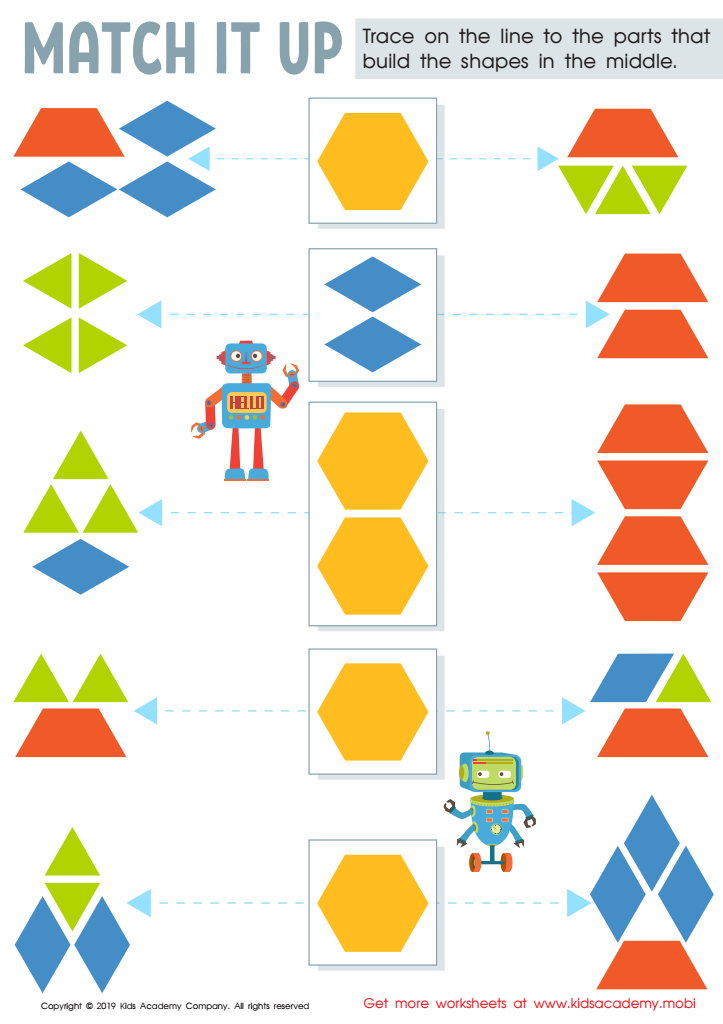
Match It up Worksheet
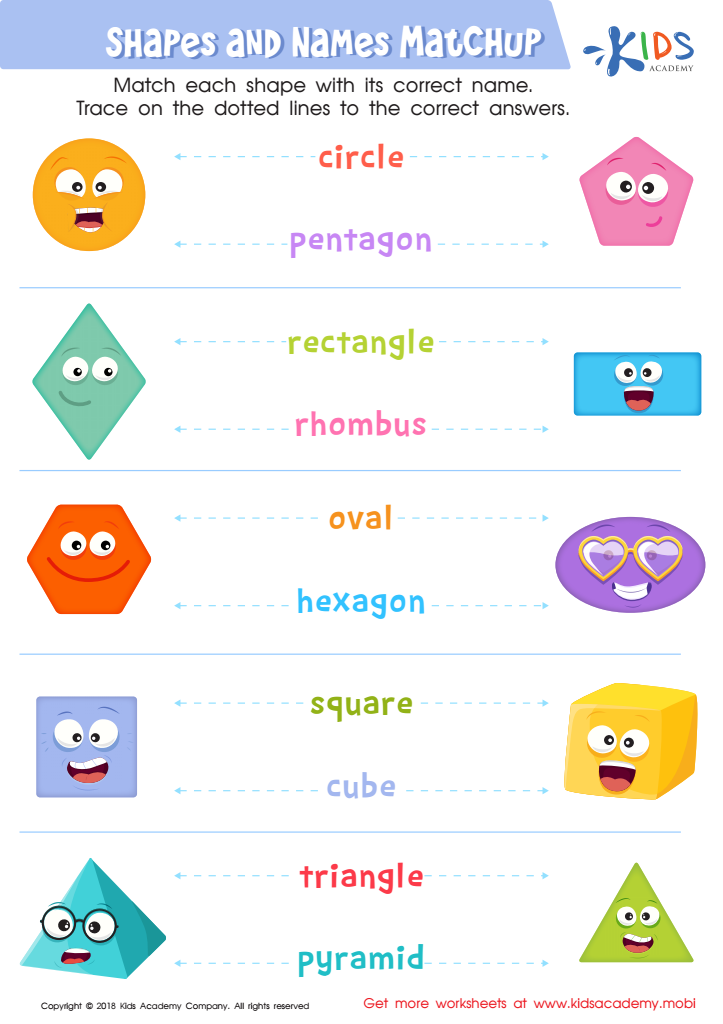
Shapes and Names Matchup Worksheet








Vocabulary enhancement in young children, particularly through targeted activities like "Extra Challenge Geometry," is crucial for their cognitive and linguistic development. At ages 4 to 6, children are at a vital stage for language acquisition, where they begin to form complex sentences and express more abstract ideas. By incorporating geometry-themed vocabulary into their learning, they not only expand their lexicon but also begin to understand spatial relationships and shapes, which are foundational concepts in mathematics.
Engaging with geometry vocabulary boosts critical thinking skills as children learn to identify, describe, and manipulate shapes and spaces. This fosters a deeper understanding of mathematical concepts early on, preparing them for more advanced skills in later grades. Parents and teachers play an essential role in facilitating this learning, as they can introduce vocabulary in playful, interactive ways that make it enjoyable and memorable.
Furthermore, a strong vocabulary enhances a child’s reading and comprehension skills, which are vital for academic success across subjects. By prioritizing vocabulary enhancement in the context of geometry, we empower young learners to express themselves confidently, ask questions, and make connections to the world around them—skills that are essential for lifelong learning.