Comparing sizes Extra Challenge Math Worksheets for Ages 4-6
4 filtered results
-
From - To
Enhance your child’s understanding of sizes with our “Comparing Sizes Extra Challenge Math Worksheets" designed for ages 4-6. These engaging worksheets offer a fun way for young learners to identify and compare different sizes through a variety of interactive activities. With colorful visuals and easy-to-follow instructions, children will develop critical thinking and analytical skills as they navigate through challenges that require them to compare objects effectively. Perfect for reinforcing classroom learning or as an enjoyable at-home activity, our specially crafted worksheets aim to boost confidence and foundational math skills. Explore the joy of learning with Kids Academy today!
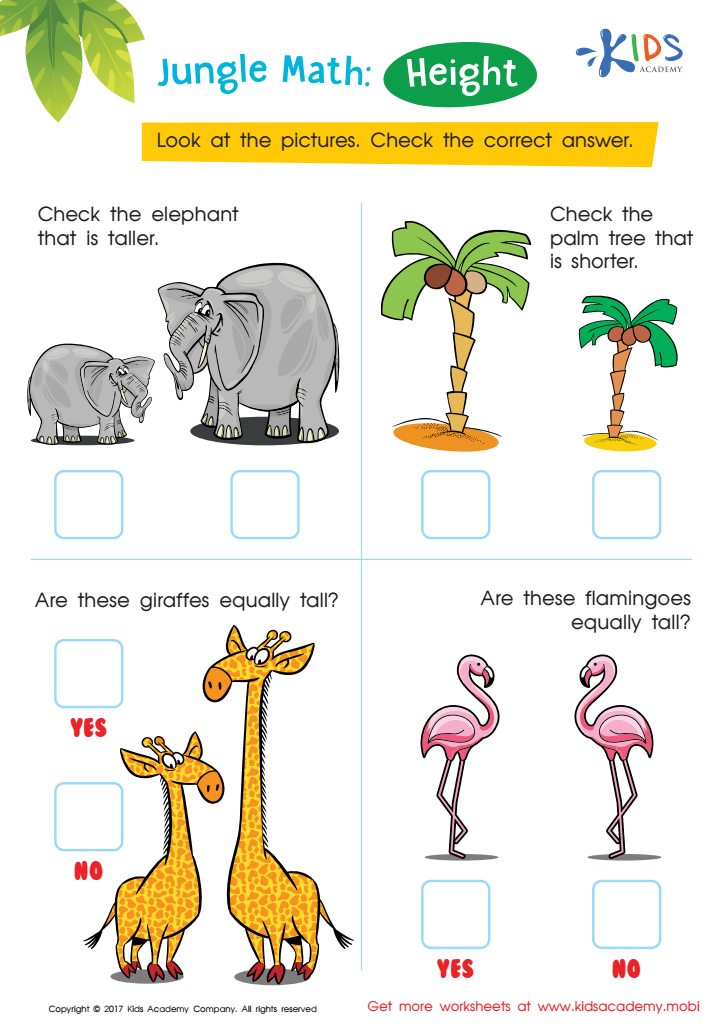
Which Is Taller Worksheet
 Assign to My Students
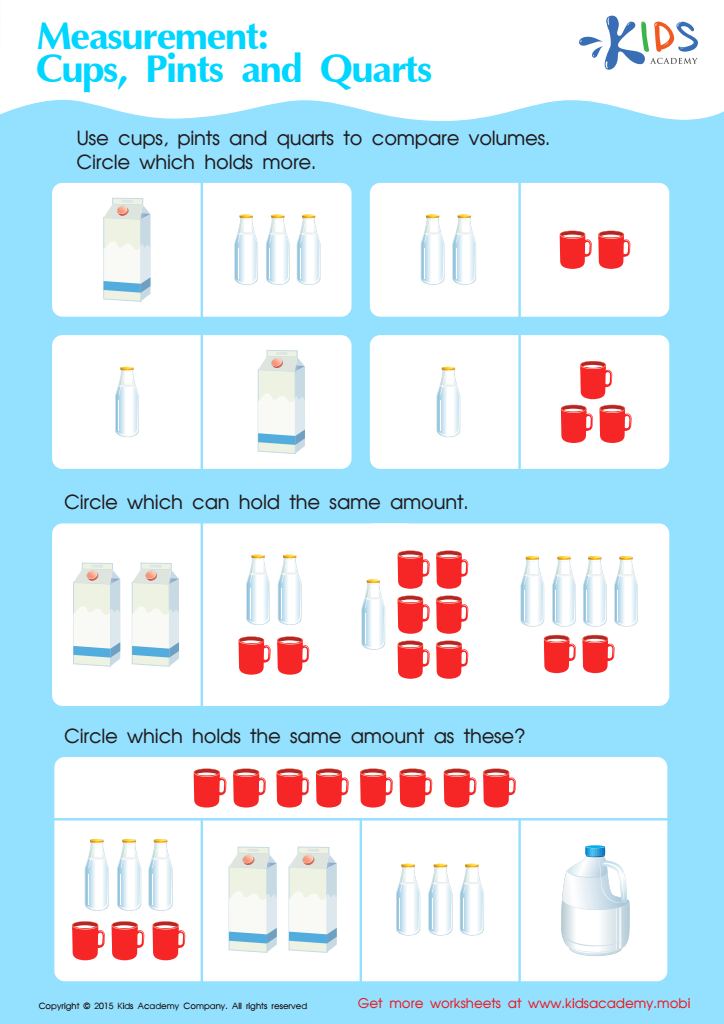
Measurement: Compare Volumes Worksheet
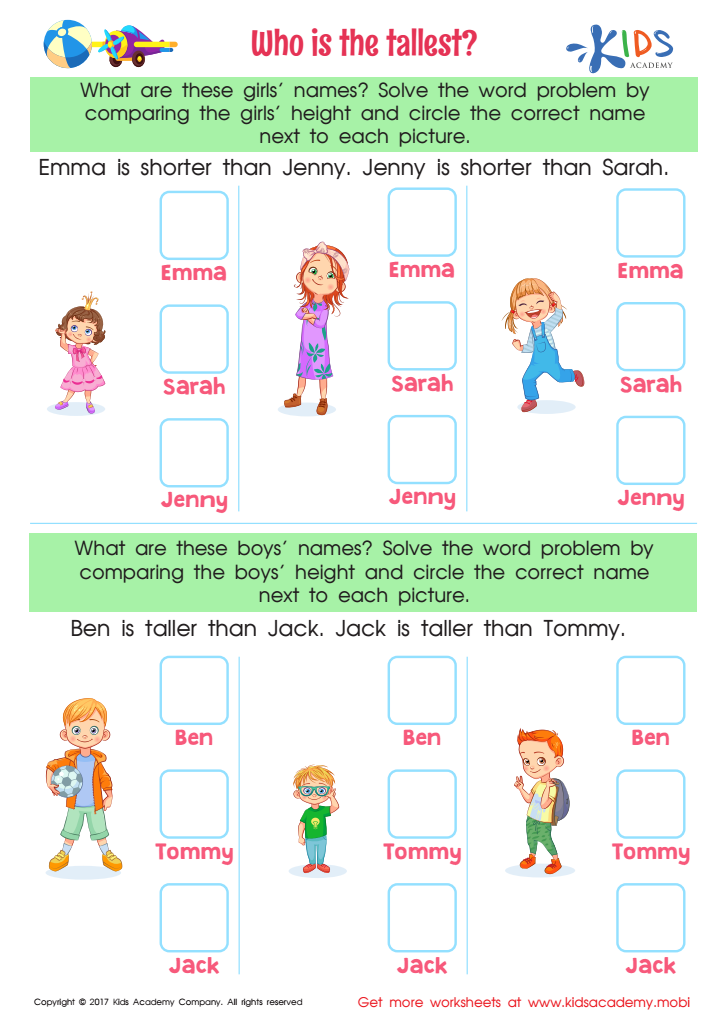
Who Tallest Printable
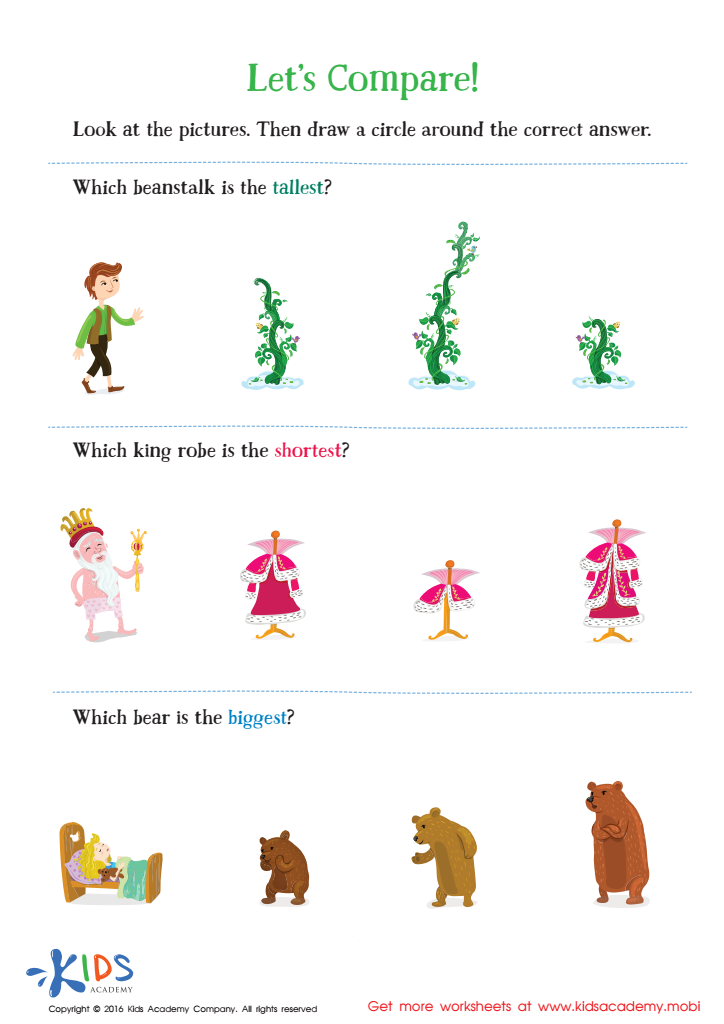
Fairy Tale Worksheet: Let's Compare







Parents and teachers should prioritize activities like Comparing Sizes Extra Challenge Math for Ages 4-6 because they play a crucial role in early childhood development. At this age, children are like sponges, absorbing foundational concepts that shape their future learning. This particular activity fosters mathematical reasoning, enhances critical thinking, and lays the groundwork for understanding size relationships, which is essential to advanced mathematical concepts later on.
Engaging children in comparing sizes helps them develop essential vocabulary, boosting their language skills while they learn terms such as "larger," "smaller," "longer," and "shorter." These activities also encourage hands-on interactions, making learning tangible and enjoyable, which is vital for maintaining young children’s attention and enthusiasm.
Moreover, comparing sizes integrates cognitive skills with physical manipulation, aiding in the development of fine motor skills. Such activities encourage cooperative play if done in groups, supporting social development and teamwork.
In a world increasingly influenced by technology and numerical data, establishing a solid foundation at an early age prepares children not just for academic success but also cultivates a lifelong appreciation for learning, ensuring they're equipped to navigate their educational journeys confidently. Thus, parents and educators should value this early mathematical engagement.








