Money recognition Extra Challenge Math Worksheets for Ages 4-6
4 filtered results
-
From - To
Introducing our "Money Recognition Extra Challenge Math Worksheets for Ages 4-6"! Designed to enhance young learners' understanding of money, these fun, engaging worksheets help kids develop essential financial literacy skills. Ideal for preschool and kindergarten students, our resources feature colorful illustrations and interactive activities that encourage recognition of coins and their values. Each worksheet presents unique challenges, promoting critical thinking while making learning enjoyable. Perfect for classroom or home use, these extra challenge sheets ensure your child gains confidence in money concepts, setting a strong foundation for future math learning. Boost your little one's skills today with our comprehensive money recognition worksheets!
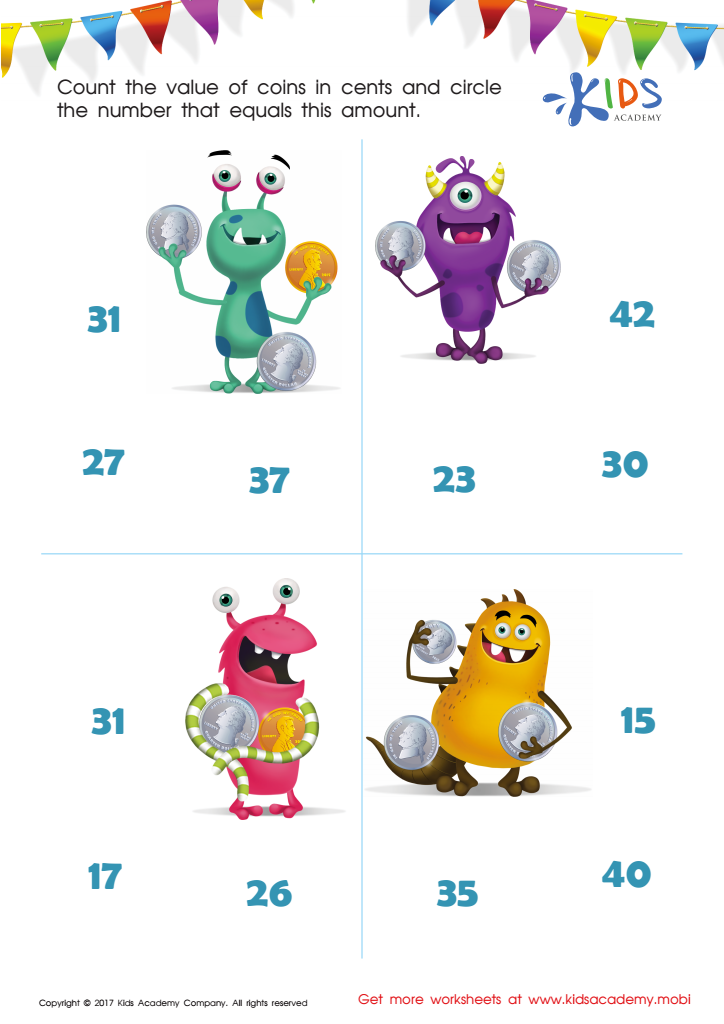
How Many Coins Money Worksheet
 Assign to My Students
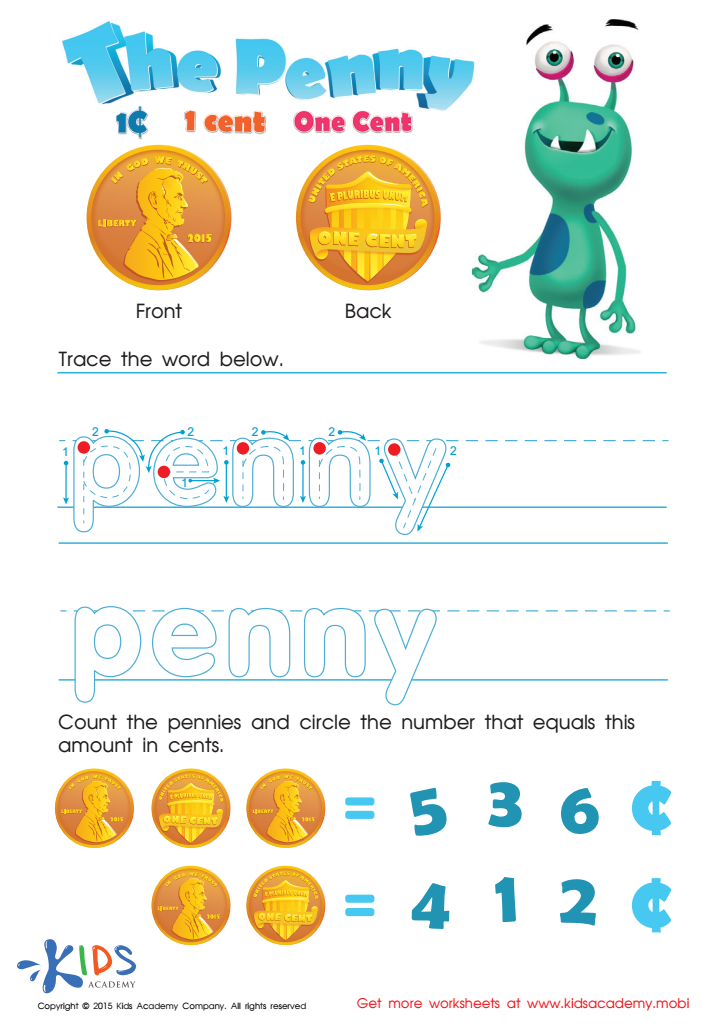
One Cent or the Penny Money Worksheet
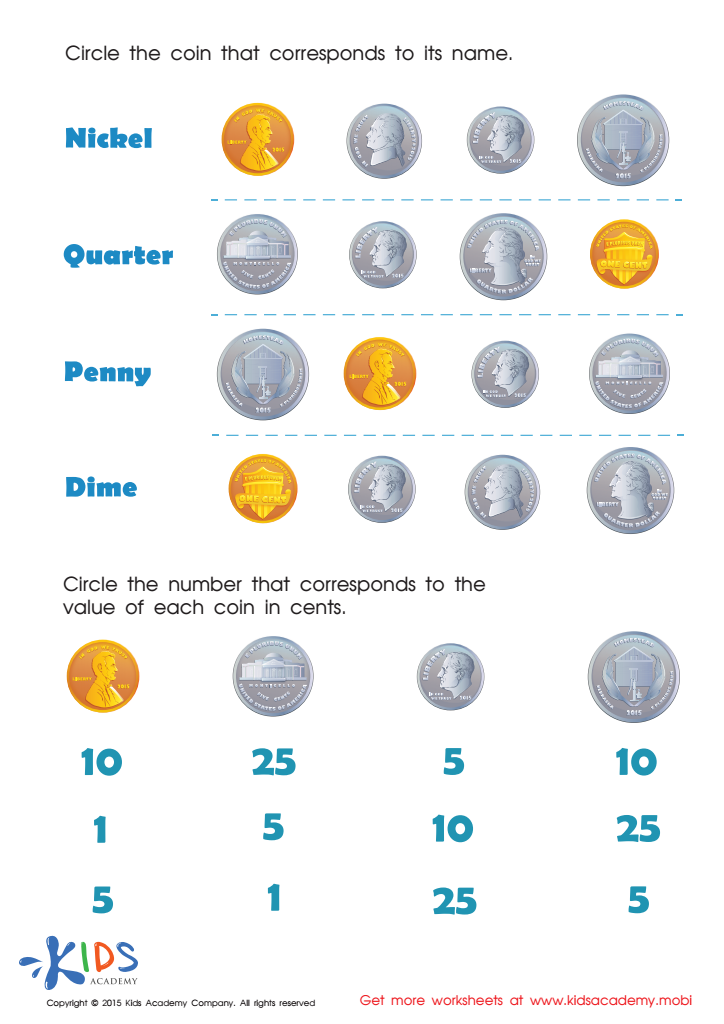
Coin Names and Values Money Worksheet
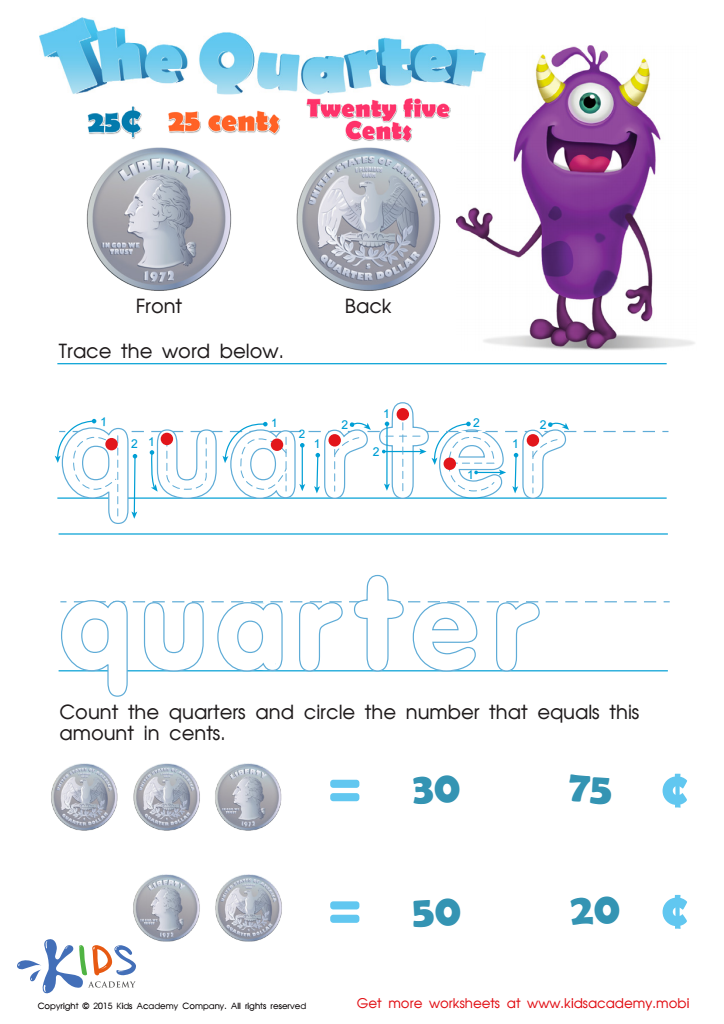
Twenty Five Cents or the Quarter Money Worksheet








Parents and teachers should prioritize money recognition skills for children aged 4-6 because these skills lay the foundation for numeracy and real-world mathematical applications. Early exposure to recognizing different denominations of coins and bills helps children develop essential cognitive skills, including counting, sorting, and problem-solving. Understanding money touches on multiple areas of learning; it enhances their grasp of addition and subtraction through practical activities, like play-based shopping or money-based games.
Additionally, fostering money recognition empowers children with financial literacy from a young age. As they learn about the values of different coins and how to use money, children gain confidence in their ability to make choices, understand value, and develop good financial habits that will benefit them throughout life. Engaging in activities that challenge them to recognize and work with money also encourages critical thinking and promotes communication skills as they explain their thought processes.
By introducing "Extra Challenge Math" activities focused on money recognition, educators and parents can create engaging and stimulating environments where children can explore mathematical concepts in a fun and meaningful way. Ultimately, these skills are not just academic; they are vital life skills that prepare children for future independence and success.








