Understanding currency Extra Challenge Math Worksheets for Ages 4-6
3 filtered results
-
From - To
Discover the "Understanding Currency Extra Challenge Math Worksheets" designed specifically for children ages 4-6! These engaging worksheets are perfect for enhancing early math skills while introducing young learners to the concept of currency. With a variety of fun activities that involve recognizing coins, counting money, and solving simple problems, children will develop a solid foundation in understanding the value of money. These worksheets are not only educational but also designed to spark curiosity and boost confidence in young mathematicians. Great for classroom use or home learning, these challenges cater to different skill levels, ensuring that each child has a rewarding learning experience.
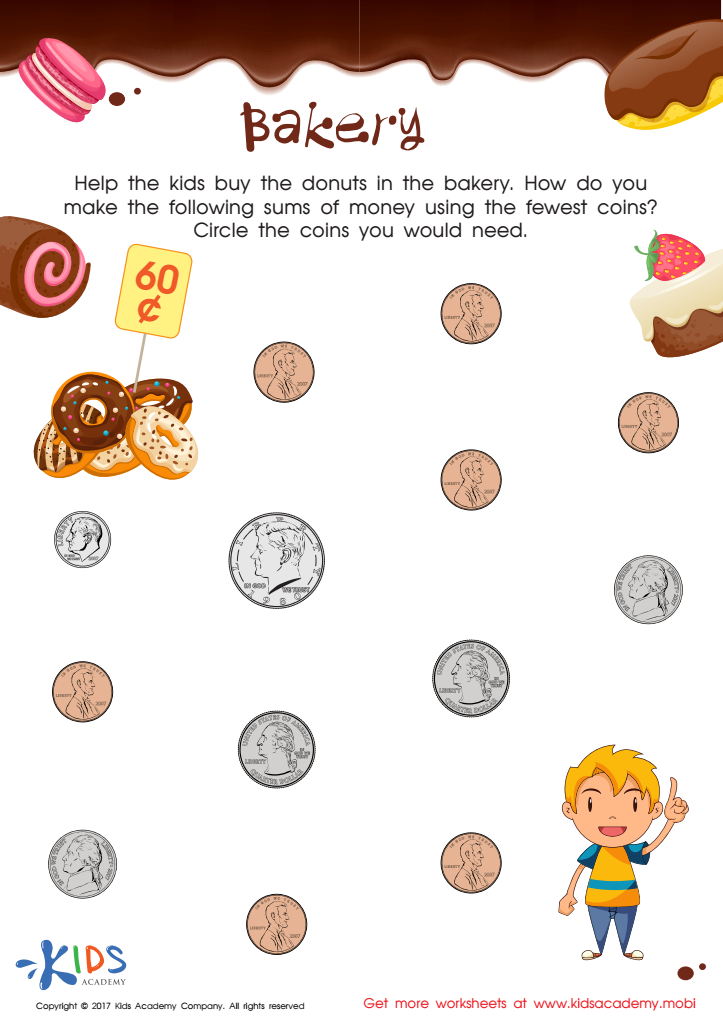
Counting Coins Worksheet
 Assign to My Students
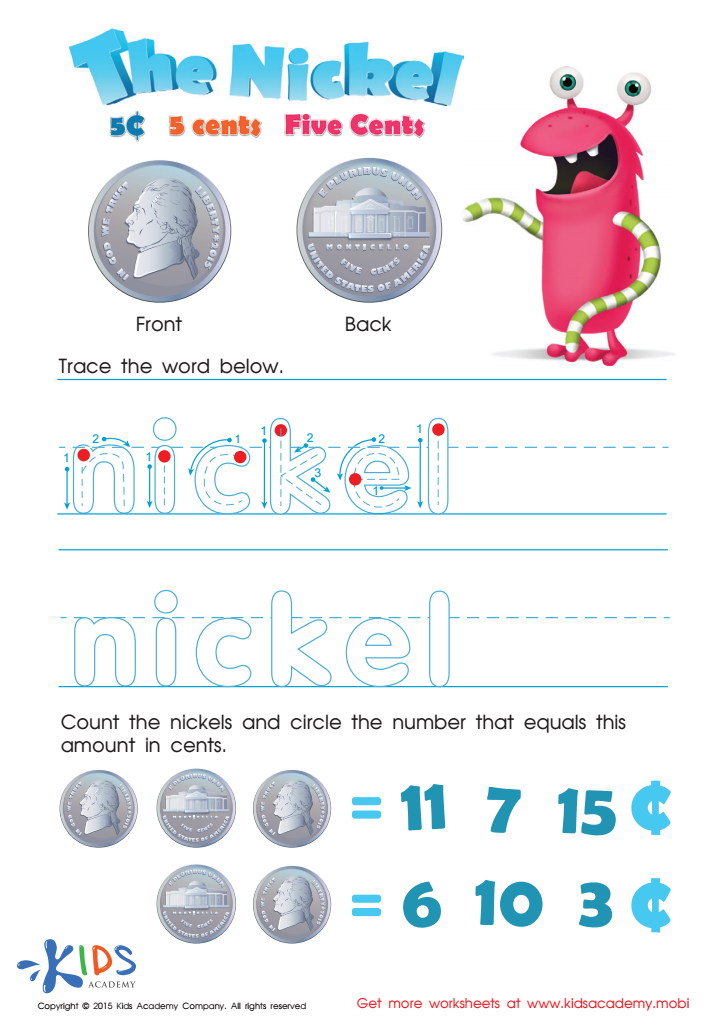
Five Cents or the Nickel Money Worksheet
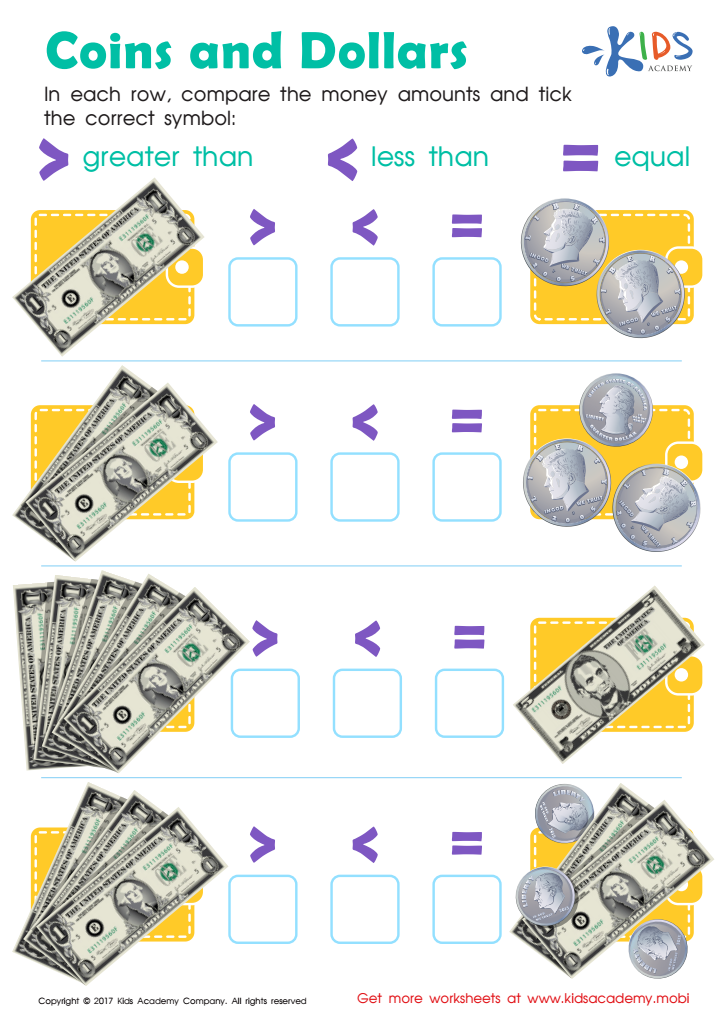
Money: Coins Dollars Printable








Understanding currency is a vital skill for young children, particularly in the early grades (ages 4-6), when foundational math concepts are first introduced. Parents and teachers should care about this topic because it lays the groundwork for financial literacy, a crucial aspect of a child's development.
First, learning about currency helps children grasp basic math skills such as counting, addition, and subtraction through hands-on activities. When they handle coins or bills, they learn to recognize different denominations and understand their values, fostering essential numerical understanding.
Additionally, engaging children in currency-related activities, like creating simple shopping scenarios or using play money, enhances critical thinking and problem-solving skills. This immersion not only makes learning enjoyable but also relatable to real-world experiences.
Moreover, understanding currency encourages children to make informed decisions regarding spending and saving, instilling good financial habits early on. It promotes discussions about value and responsibility, preparing youngsters for future economic independence.
In summary, introducing currency concepts in early education empowers children with practical math skills, enhances cognitive development, and nurtures responsible financial behaviors—all crucial for thriving in today’s world. Parents and teachers play a pivotal role in guiding this learning journey.








