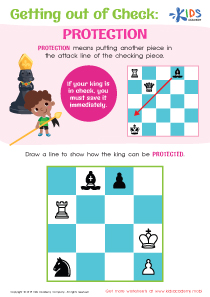
Critical thinking development Extra Challenge Chess Worksheets for Ages 4-7
4 filtered results
-
From - To
Unlock your child's potential with our "Critical Thinking Development Extra Challenge Chess Worksheets" for ages 4-7! These engaging worksheets are designed to foster essential cognitive skills while introducing young learners to the game of chess. Each activity encourages logical reasoning, pattern recognition, and problem-solving abilities in a fun, interactive way. Perfect for enhancing critical thinking, these worksheets provide a unique blend of gameplay and education, making learning enjoyable for your little ones. Challenge their minds and inspire a love for strategy and critical analysis through these beautifully crafted materials, helping pave the way for confident, thoughtful decision-makers in the future!
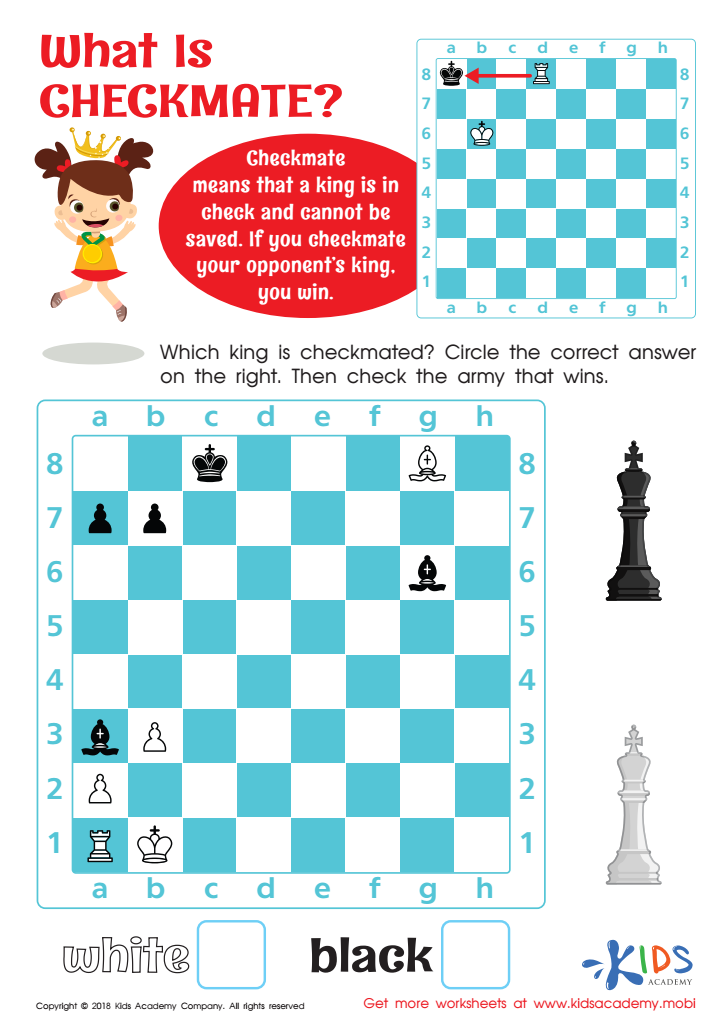
What is Checkmate? Worksheet
 Assign to My Students
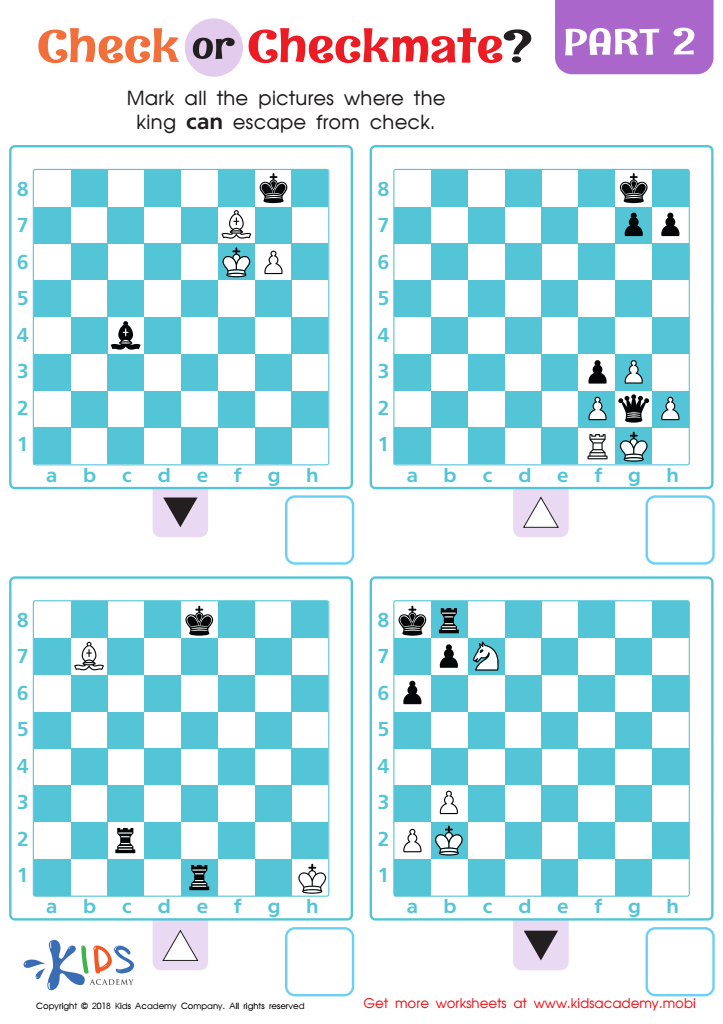
Check or Checkmate: Part 2 Worksheet
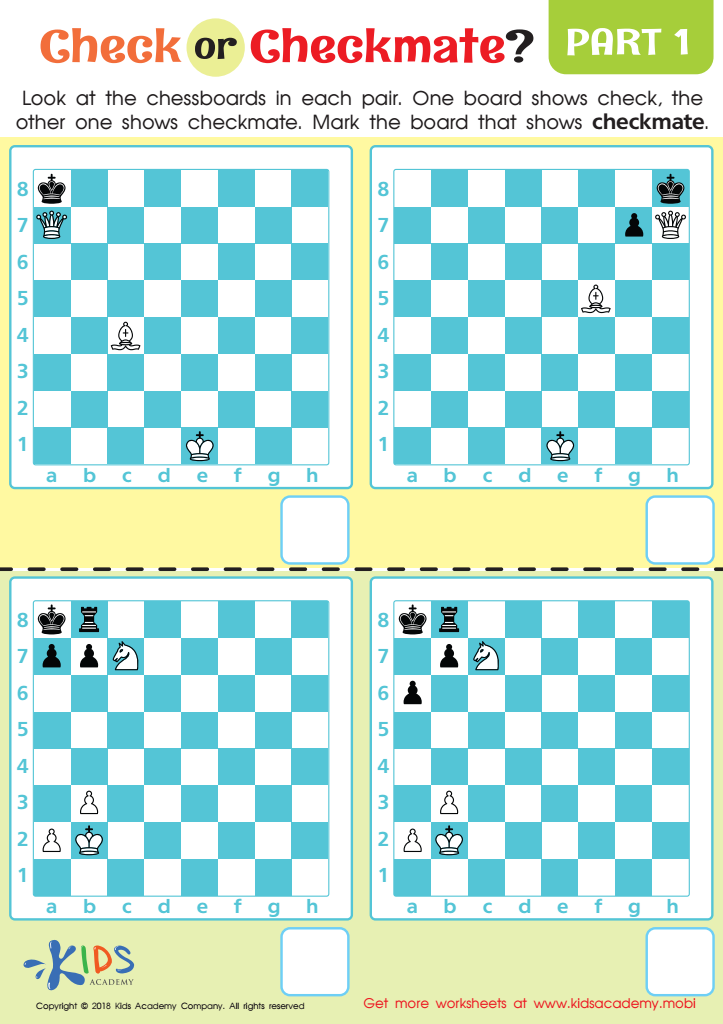
Check or Checkmate: Part 1 Worksheet
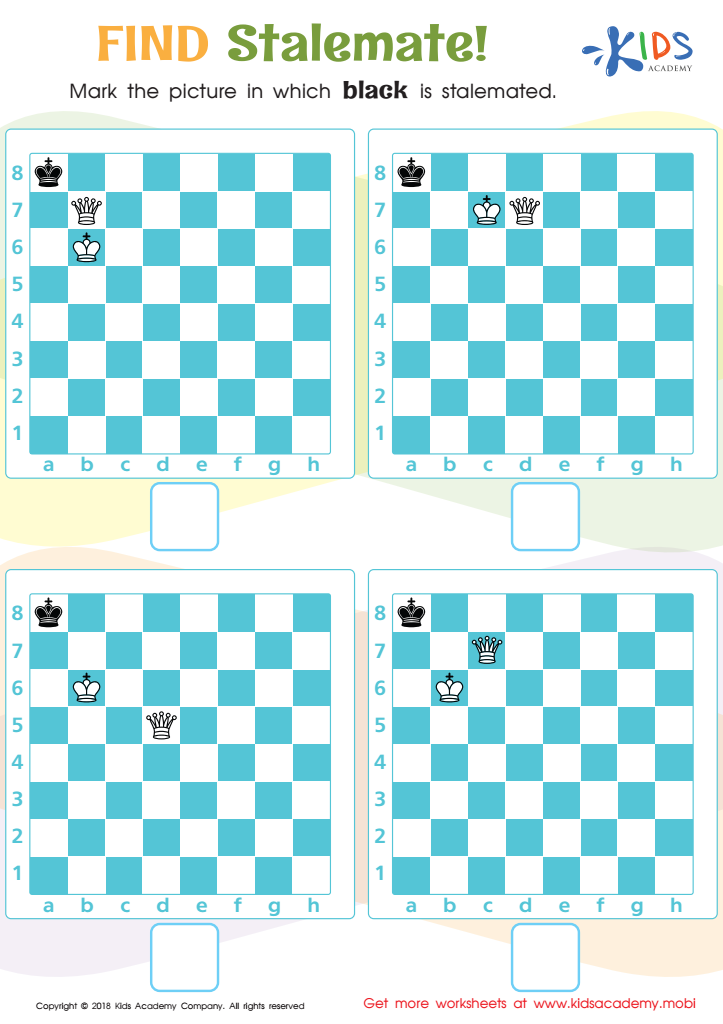
Find Stalemate! Worksheet







Parents and teachers should care about the development of critical thinking skills in young children, particularly through engaging activities like Extra Challenge Chess for ages 4-7. Critical thinking is fundamental for problem-solving and decision-making, skills that are not only essential in academic settings but also in everyday life.
Chess serves as an exceptional tool for fostering these skills in early learners. The game introduces young players to concepts of strategy, foresight, and the consequences of actions as they navigate the chessboard. It encourages them to think ahead and consider multiple outcomes before making decisions, helping develop patience and focus.
Moreover, playing chess collaboratively can enhance social skills and emotional intelligence, as children learn to respect opponents, cope with winning and losing, and communicate their thoughts effectively.
By integrating chess into learning, parents and teachers can create an enriched educational environment that primes children for future success. This approach not only nurtures cognitive abilities but also instills a lifelong love for learning, laying a strong foundation for academic and personal achievements. In our fast-paced world, fostering critical thinking through engaging platforms like chess is an invaluable investment in a child’s future.