
Critical thinking enhancement Extra Challenge Worksheets for Ages 4-7
3 filtered results
Difficulty Level
Grade
Age
-
From - To
Subject
Activity
Standards
Unlock your child's potential with our Critical Thinking Enhancement Extra Challenge Worksheets, designed for ages 4-7. These engaging, age-appropriate activities encourage young minds to think deeply and solve problems creatively. With a variety of puzzles, pattern games, and logic exercises, kids will develop crucial skills such as reasoning, analytical thinking, and cognitive flexibility. Each worksheet aims to build confidence and improve focus, making learning both fun and effective. Perfect for home or classroom use, these expertly crafted resources provide a solid foundation for lifelong critical thinking. Visit Kids Academy to discover how to enhance your child’s learning journey today!
Favorites
With answer key
Interactive
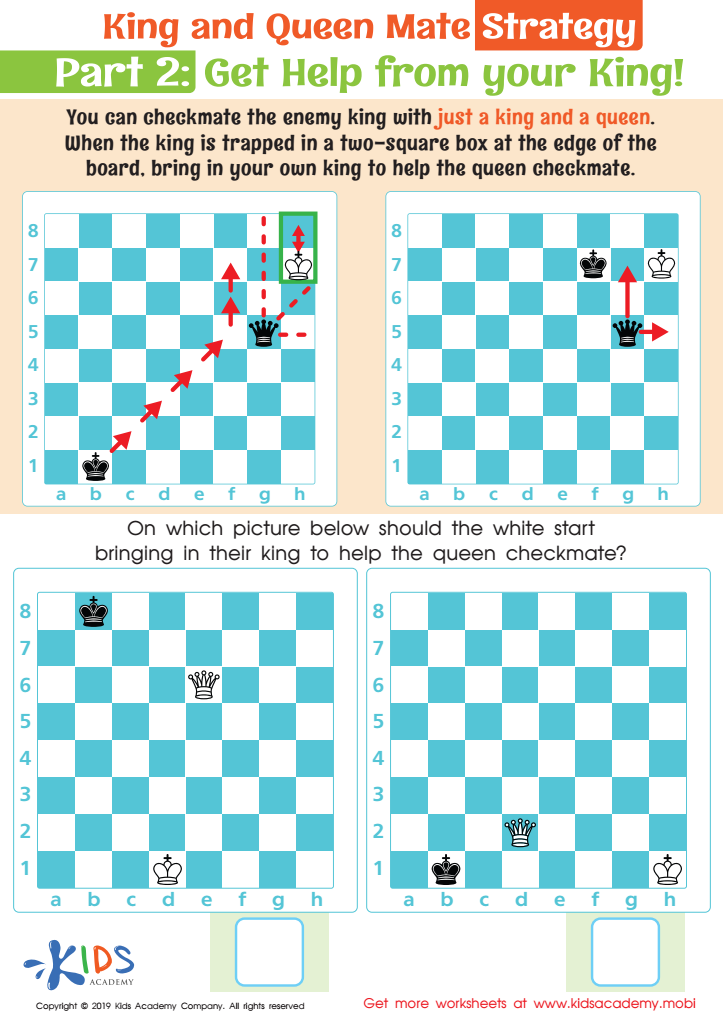
King and Queen Mate Strategy: Part 2 Worksheet
This worksheet helps your child learn to checkmate the opposing king with their king and queen. Descriptive sample boards show the strategy, and more boards help determine which one demonstrates how the king assists the queen.
 Assign to My Students
King and Queen Mate Strategy: Part 2 Worksheet
Worksheet
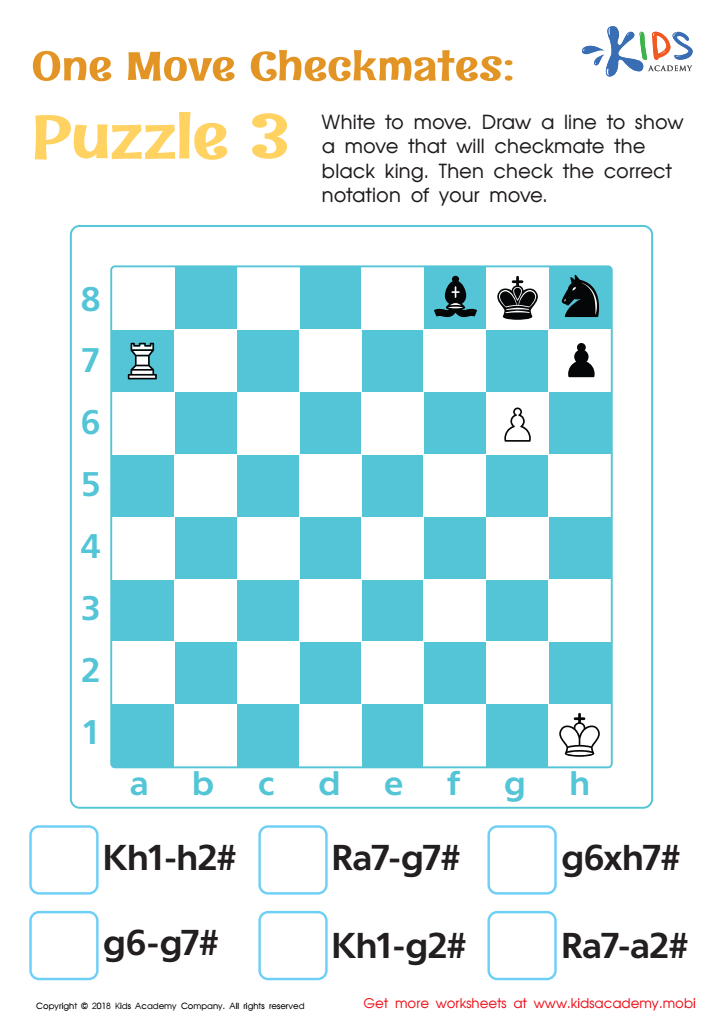
One Move Checkmates: Puzzle 3 Worksheet
Boost your child's critical thinking and strategy skills with this fun puzzle activity. They'll use their logical thinking to plot ways to checkmate the black king, and then check their answer with the given choices. A great way to improve their skills and have a blast doing it!
One Move Checkmates: Puzzle 3 Worksheet
Worksheet
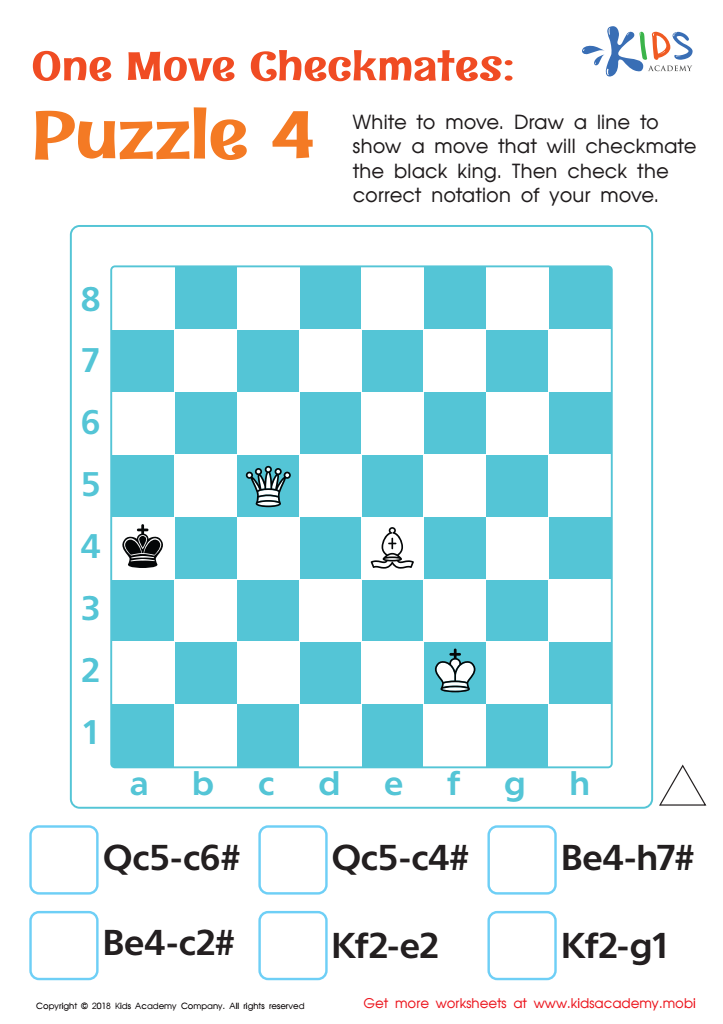
One Move Checkmates: Puzzle 4 Worksheet
Want to challenge your logistician? This engaging PDF worksheet tests their critical thinking, strategy and visual-spatial skills. They must plot to overtake and checkmate the king and use the answer choices to check if they've strategized correctly. It's a fun way to build problem-solving skills needed for higher-level math.
One Move Checkmates: Puzzle 4 Worksheet
Worksheet
Join Kids Academy for Free
Who is primarily going to use this learning content?








Critical thinking enhancement activities are essential for young children (ages 4-7) because they lay the foundation for cognitive development and lifelong learning. At this age, children's brains are highly receptive and formulating essential habits that affect future academic and personal success.
First, critical thinking skills help children learn how to analyze, evaluate, and problem-solve—a vital set of abilities in an ever-complex world. By engaging in activities that promote questioning and reasoning, young children develop confidence in their capabilities to understand different perspectives and solve problems efficiently.
Second, critical thinking nurtures creativity and curiosity. Educating children to think beyond rote memorization and standardized answers promotes innovative thinking. When children are encouraged to ask "why" and "how", they become enthusiastic learners who actively engage with the material around them.
Third, these activities build emotional intelligence and social skills. Children who practice critical thinking are better at understanding their emotions and empathizing with others' viewpoints, fostering improved communication and stronger relationships.
Investing in critical thinking enrichment at an early age helps young learners develop essential skills such as articulating thoughts, making informed decisions, and navigating life's challenges effectively. Ensuring that children engage in these activities not only benefits them academically but also equips them for a constructive and thoughtful future.








