
Critical thinking skills Extra Challenge Worksheets for Ages 4-7
3 filtered results
Difficulty Level
Grade
Age
-
From - To
Subject
Activity
Standards
Enhance your child's cognitive development with our "Critical Thinking Skills Extra Challenge Worksheets" designed for ages 4-7. These engaging and interactive worksheets encourage young learners to think deeply, solve problems, and develop reasoning skills. Covering a variety of topics, from pattern recognition to logical reasoning, these extra challenges not only make learning fun but also boost confidence in critical thinking abilities. Perfect for home or classroom settings, our worksheets are easy to use and tailored for different skill levels. Watch your child flourish as they expertly navigate these thought-provoking exercises, laying a strong foundation for academic success and lifelong learning.
Favorites
With answer key
Interactive
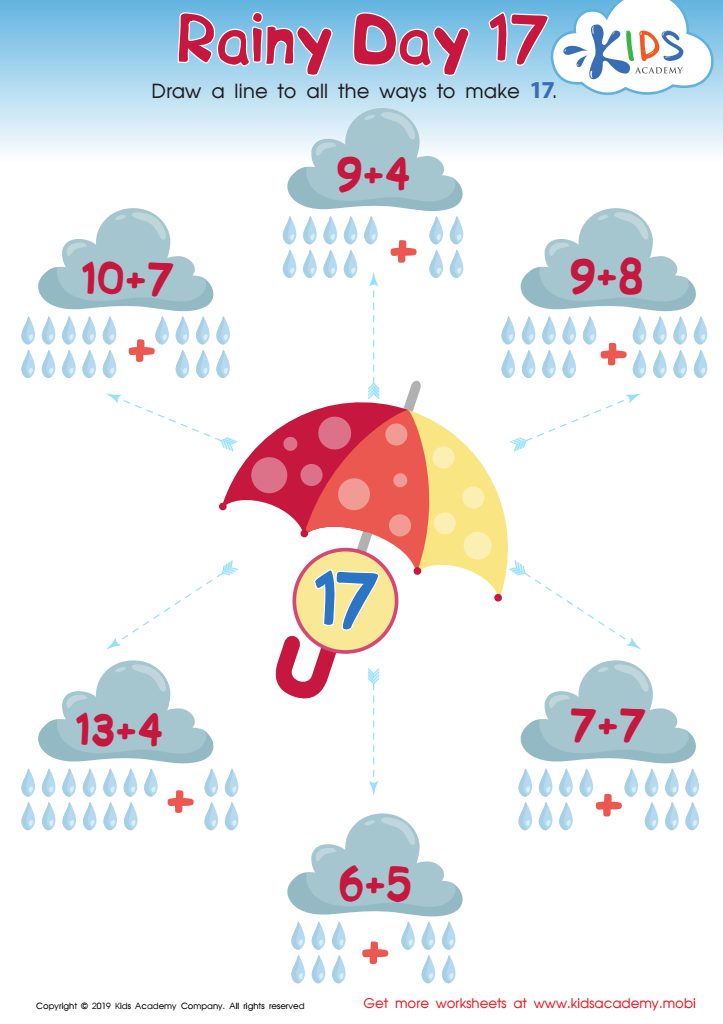
Rainy Day 17 Worksheet
Assist your kids with the 6 equations given. Each cloud displays the sum of two numbers, some of which make 17. Guide them to figure out the total of both numbers when added and draw a line to the umbrella in the center to illustrate the different ways to make 17. This activity will sharpen their addition skills.
 Assign to My Students
Rainy Day 17 Worksheet
Worksheet
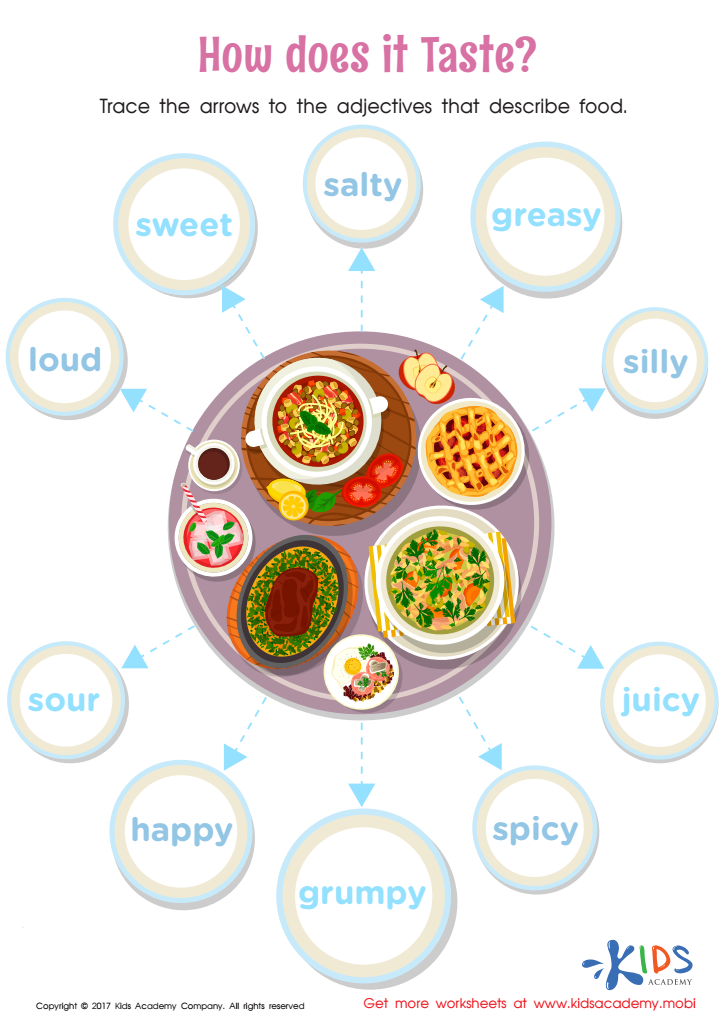
Food Adjectives Worksheet
Here’s a fun PDF worksheet to get your child’s taste buds tingling and help build descriptive language skills!
Food Adjectives Worksheet
Worksheet
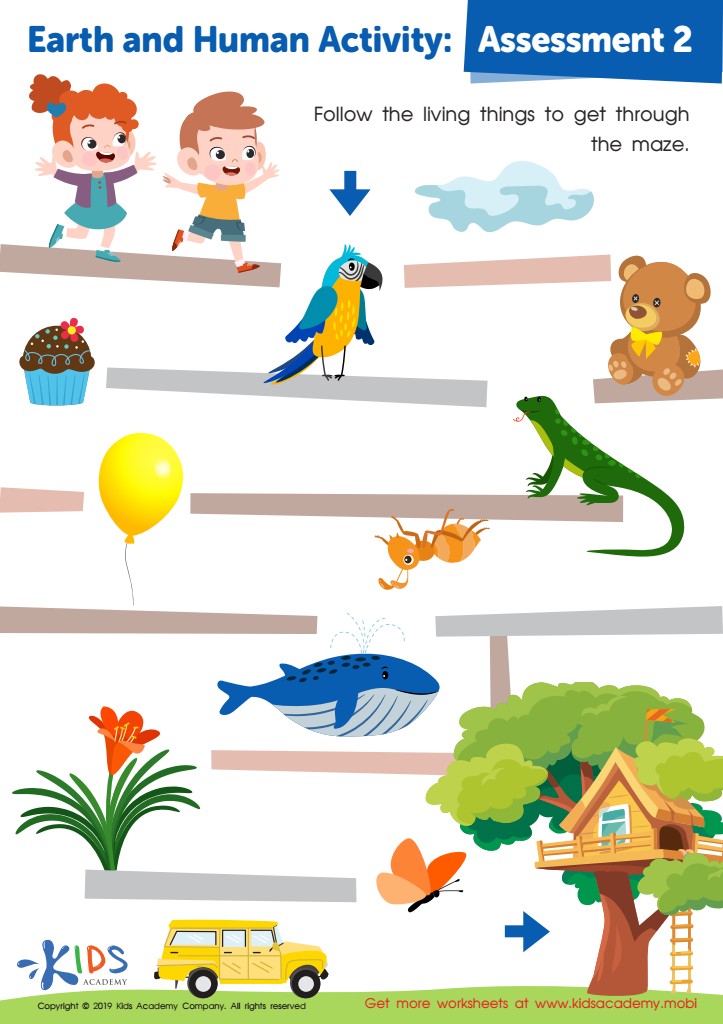
Earth and Human Activity: Assessment 2 Worksheet
Earth is alive with birds, trees, insects, and animals. Explain to your kids that the environment on Earth supports life. Ask for examples, then use the worksheet pictures to help them identify living things and complete the maze.
Earth and Human Activity: Assessment 2 Worksheet
Worksheet
Join Kids Academy for Free
Who is primarily going to use this learning content?








Critical thinking skills are essential for young learners aged 4-7 because they lay the foundation for cognitive development and lifelong learning. These skills enable children to analyze situations, ask questions, and solve problems creatively. When parents and teachers prioritize critical thinking, they encourage a learning environment where children feel comfortable exploring ideas, expressing opinions, and making decisions.
At this age, critical thinking skills help children move beyond rote memorization and engage with concepts more deeply. Tasks like sorting objects, comparing shapes, or discussing story plots cultivate reasoning and reasoning abilities. Such activities promote curiosity and instill a love for learning, which can enhance academic performance as they progress through school.
Additionally, critical thinking fosters emotional and social development. It teaches children to consider multiple perspectives, empathize with others, and communicate effectively—skills crucial for building relationships in a diverse world. Encouraging critical thinking also prepares children for real-life challenges, fostering resilience and independence.
Ultimately, investing in these skills during early childhood benefits not just the individual child but also society as a whole by nurturing informed, thoughtful, and innovative citizens. Parents and teachers play a pivotal role in guiding children through this transformative journey of intellectual growth.








