Understanding fractions Extra Challenge Fractions of Shapes Worksheets for Ages 4-7
7 filtered results
-
From - To
Enhance your child's grasp of fractions with our "Understanding Fractions Extra Challenge Fractions of Shapes Worksheets" designed specifically for ages 4-7. These engaging worksheets simplify the concept of fractions through colorful and interactive activities that involve dividing shapes into equal parts. Children will develop essential skills in recognizing fractions, learning to differentiate between halves, thirds, and quarters, all while enjoying fun visuals. Ideal for classroom or home use, these resources encourage critical thinking and strengthen foundational math skills. Give your young learners the confidence they need to succeed in mathematics with these extra challenges that make learning about fractions a joy!
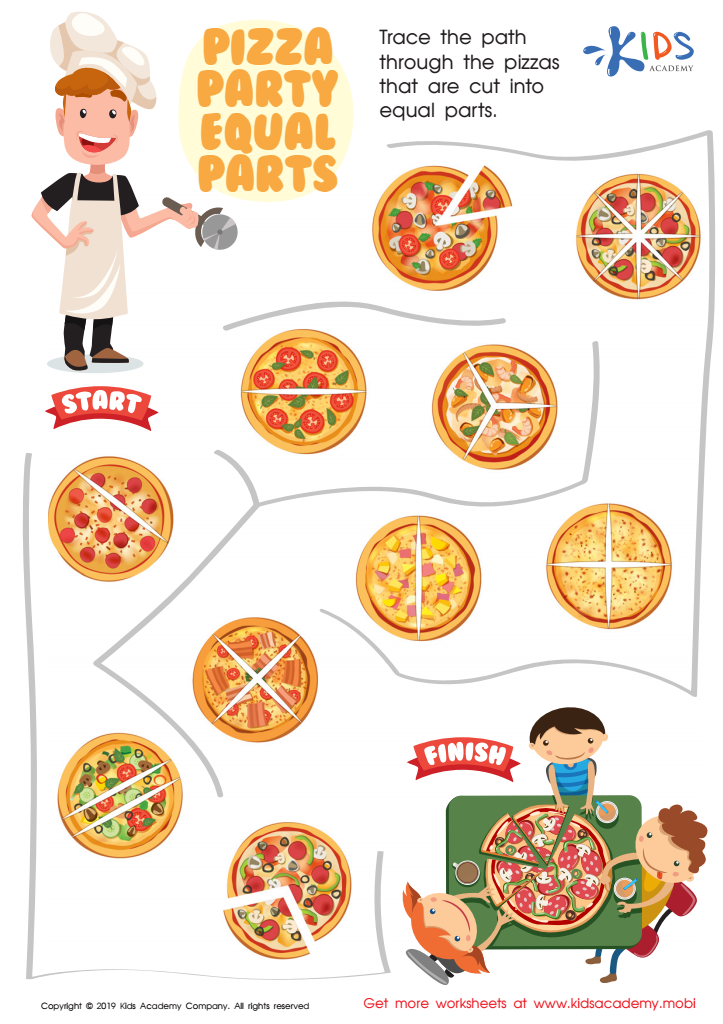
Pizza Party Equal Parts Worksheet
 Assign to My Students
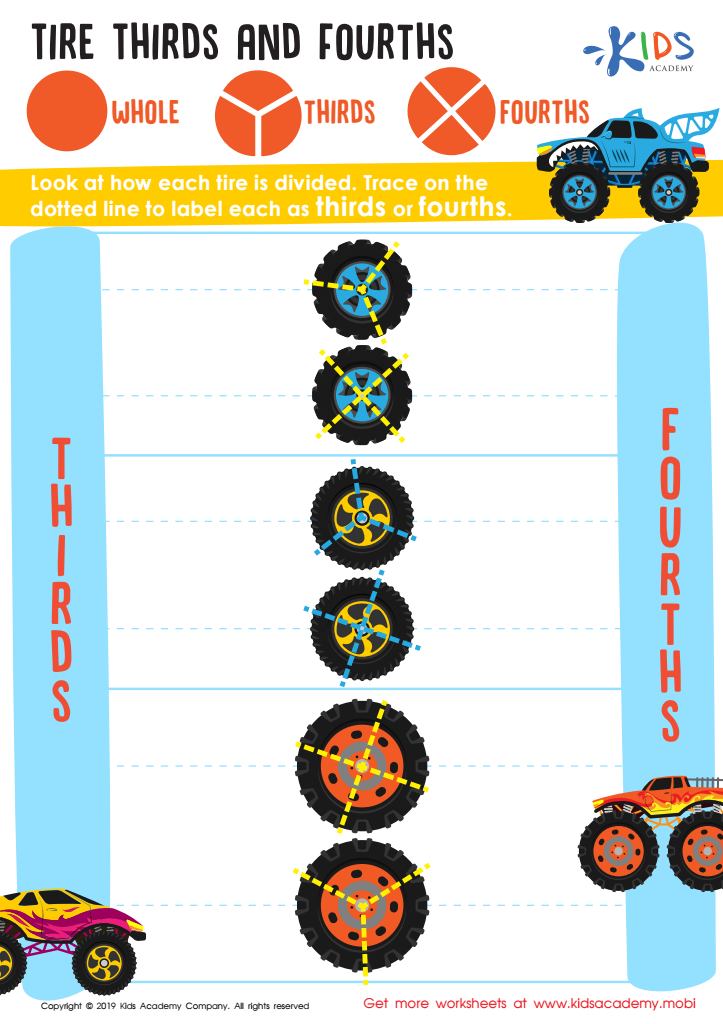
Tire Thirds and Fourths Worksheet
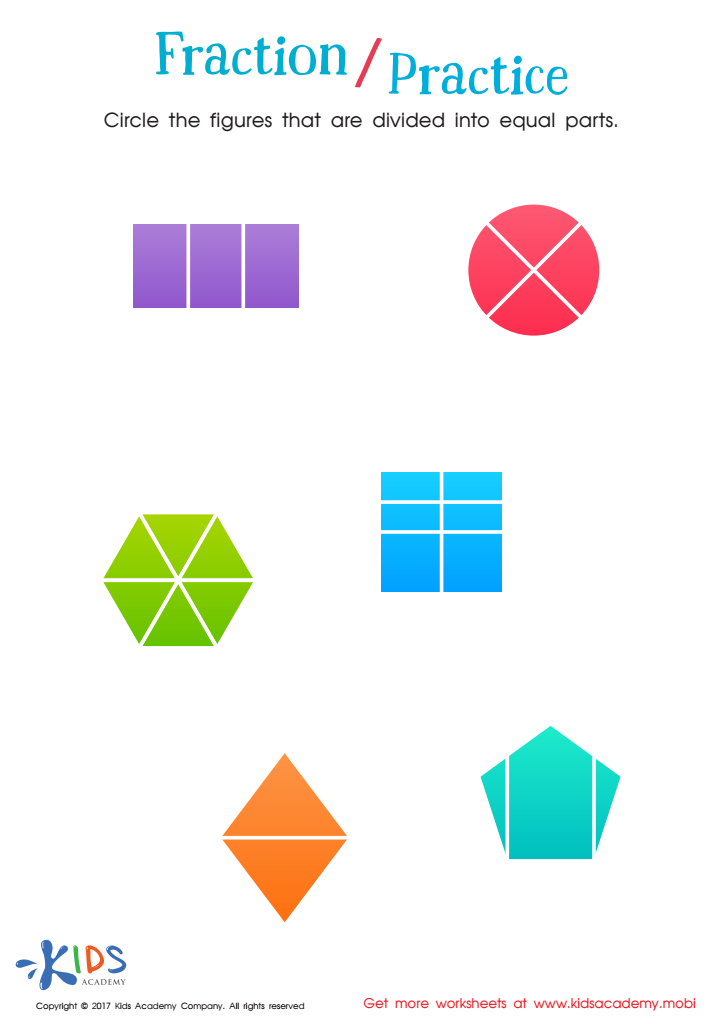
Fractions: Shapes Worksheet
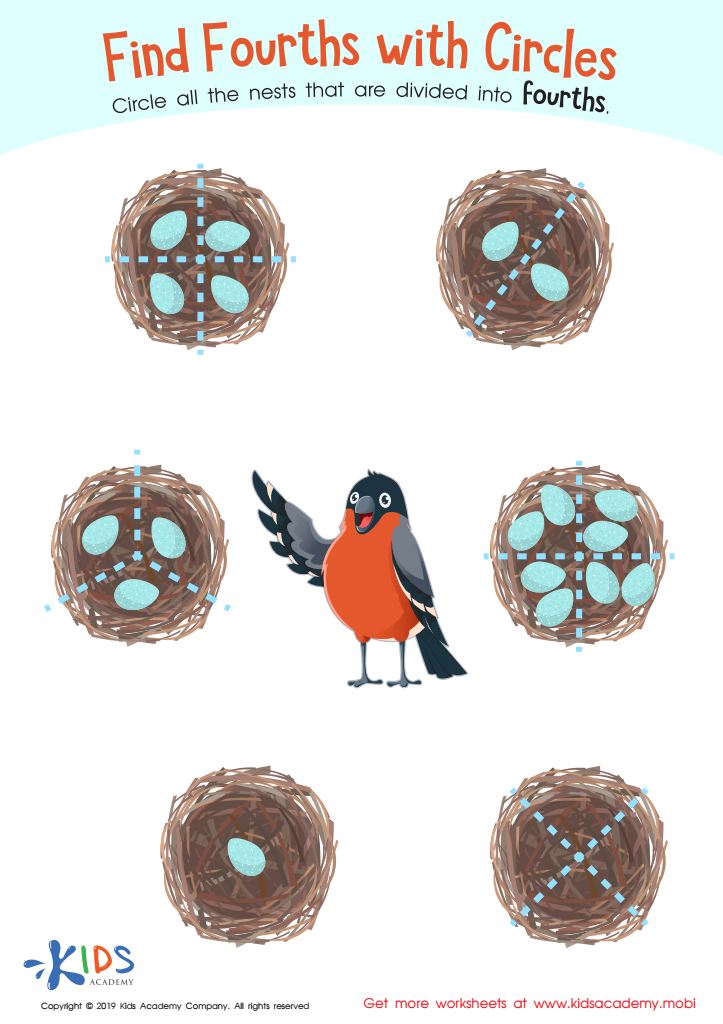
Find Fourths Circles Worksheet
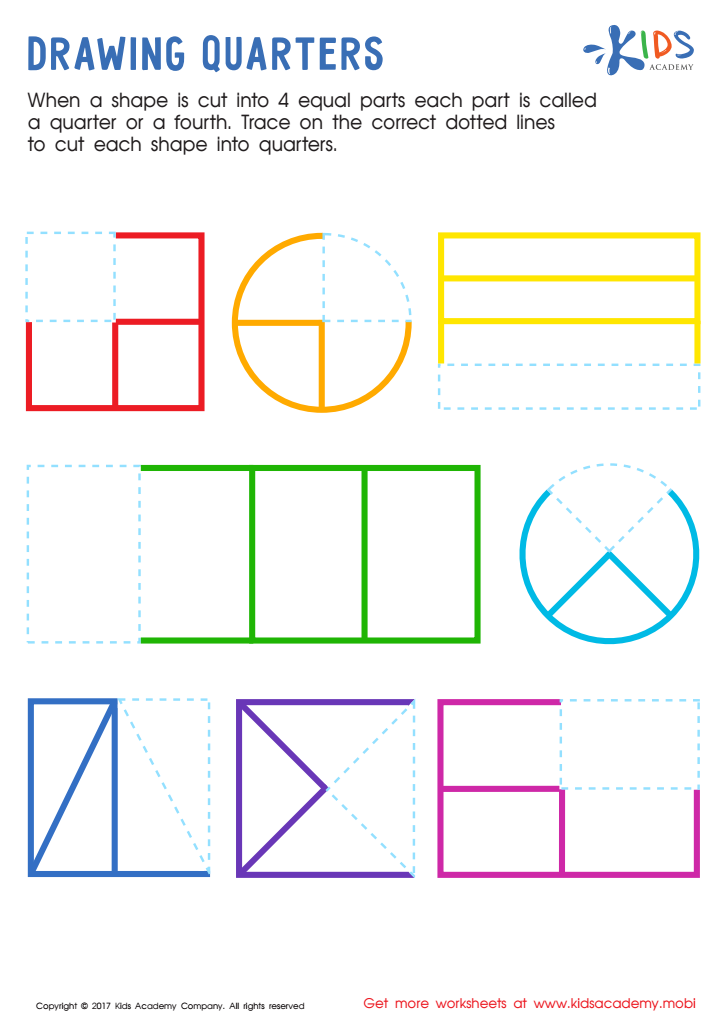
Drawing Quarters Worksheet
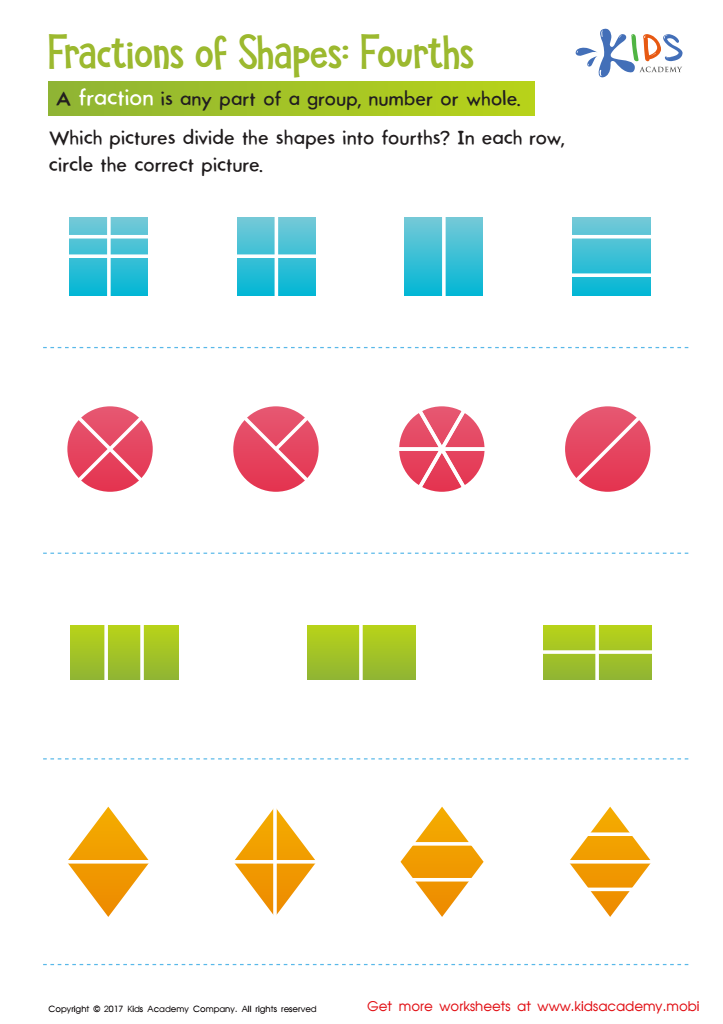
Fractions of Shapes Worksheet
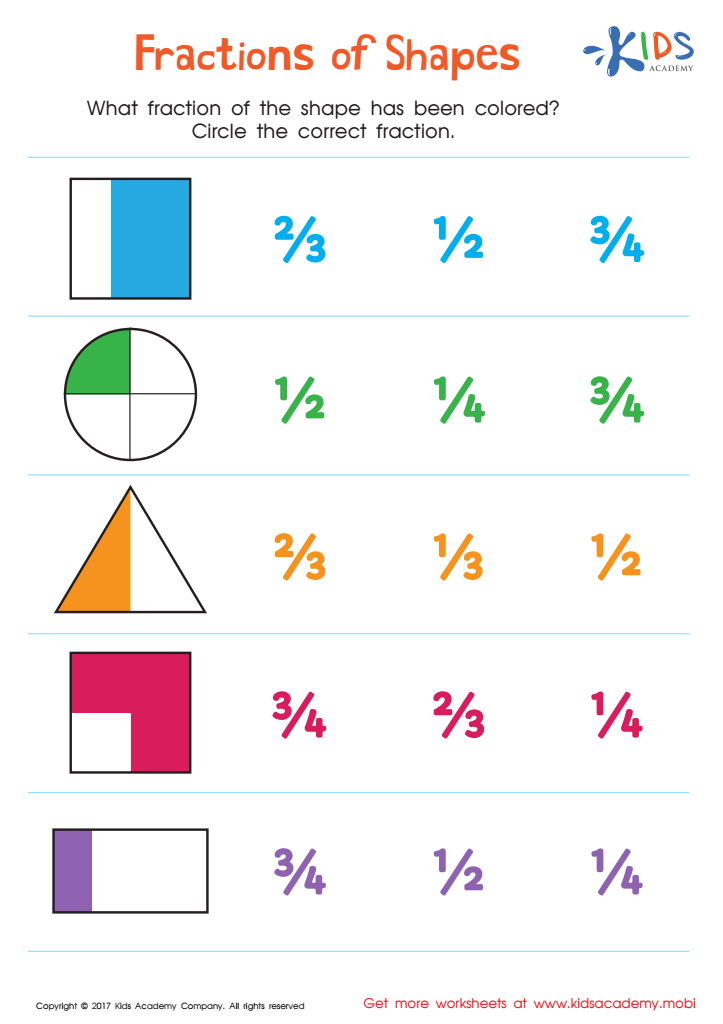
Fractions of Shapes: Math Concept Worksheet








Understanding fractions is a foundational math skill that significantly impacts a child’s overall mathematical development. For children ages 4-7, exploring fractions through shapes not only makes learning enjoyable but also lays the groundwork for more complex mathematical concepts later on. Engaging with fractions helps young learners develop critical thinking skills as they visualize and manipulate parts of shapes, fostering spatial awareness.
Parents and teachers should care about introducing “Extra Challenge Fractions of Shapes” because it promotes active learning and creates a deeper understanding of fraction concepts. Children learn to recognize and create equal parts, which enhances their abilities in comparison, addition, and subtraction of fractions. Furthermore, these activities can help bridge gaps between recreational play and academic learning.
Additionally, understanding fractions is essential in everyday life—whether it’s sharing a pizza, dividing a cake, or measuring materials for a craft project. These concrete experiences formulate a strong conceptual understanding, which builds confidence in math. Ultimately, instilling a love for math and fractions in early childhood not only prepares children for future academic success but also equips them with practical skills they will use for a lifetime. Thus, supporting this area of learning is vital for parents and teachers alike.