Logical Reasoning Extra Challenge Geometry Worksheets for Ages 4-7
3 filtered results
-
From - To
Enhance your child's critical thinking with our "Logical Reasoning Extra Challenge Geometry Worksheets" designed for ages 4-7. These engaging, printable worksheets help develop essential geometric skills through fun, challenging problems that promote logical reasoning. Students will tackle a variety of tasks involving shape recognition, spatial understanding, and pattern identification, enhancing their problem-solving abilities. Perfect for early learners to strengthen foundational math skills in an interactive way. Start boosting your child’s logical reasoning and geometric knowledge today! Explore more at Kids Academy to find the ideal worksheets tailored to your little one's learning needs.
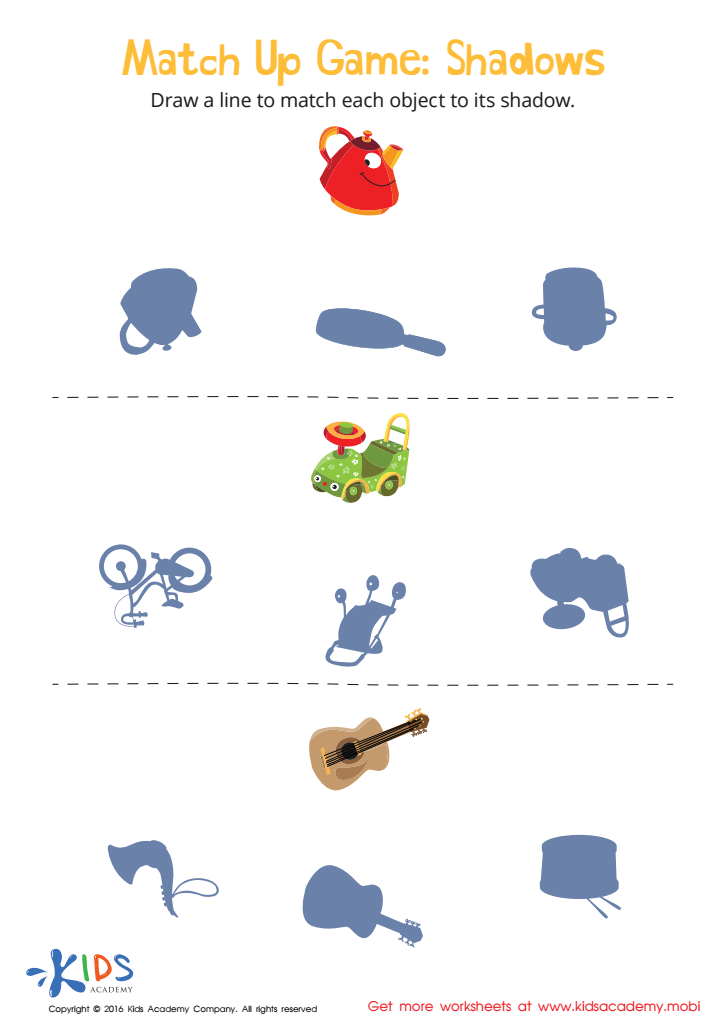
 Assign to My Students











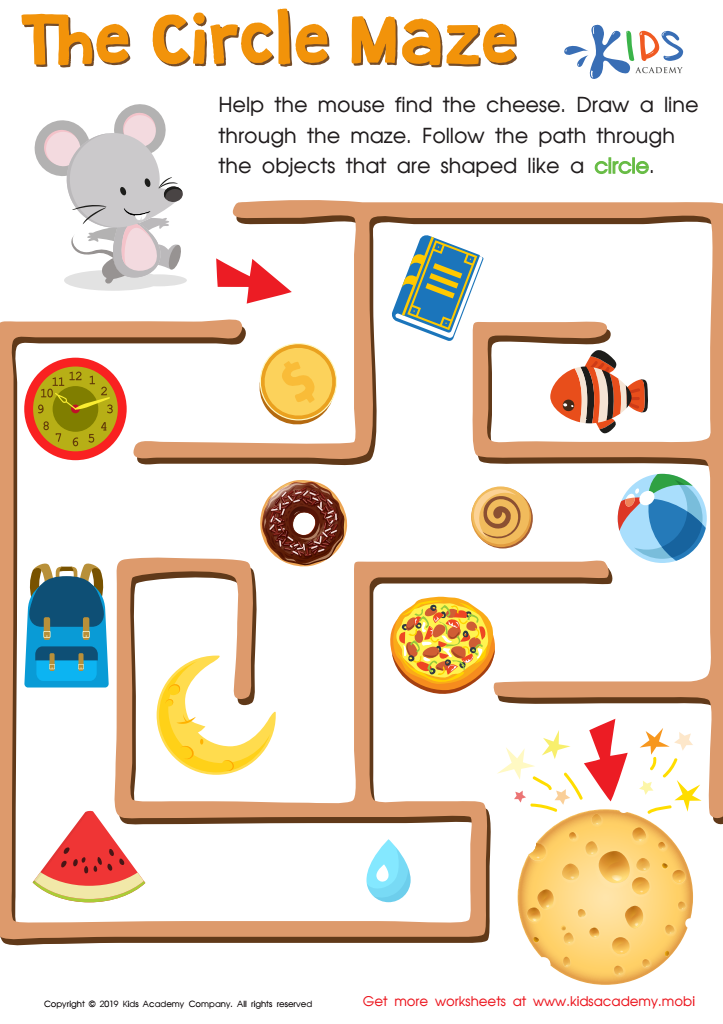
The Circle Maze Worksheet
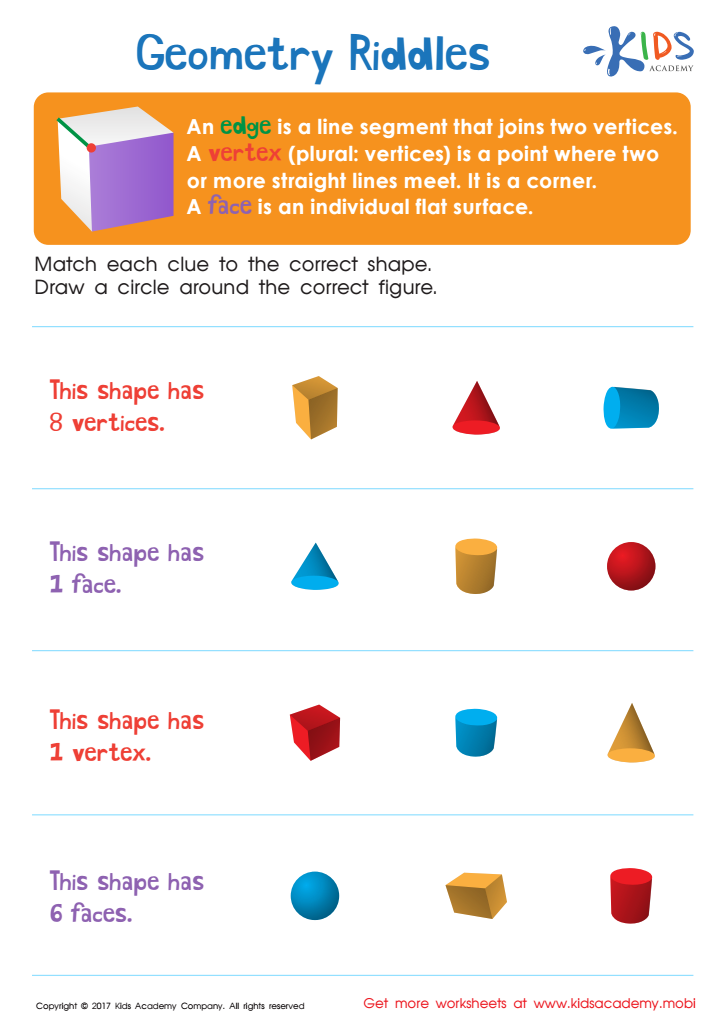
Geometry Riddles Printable








Parents and teachers should care about introducing Logical Reasoning Extra Challenge Geometry to children aged 4-7 because it plays a critical role in early cognitive development. Engaging young minds with geometry nurtures foundational skills in analytical thinking, problem-solving, and spatial awareness. These skills are essential not just for future math success, but in navigating everyday decisions and challenges.
Early exposure to logical reasoning through geometry stimulates curiosity and encourages children to ask "why" and "how" questions, fostering a deeper understanding of the world around them. For example, activities involving shape recognition and pattern identification can boost a child's ability to observe and categorize. These are critical cognitive skills that support learning across all subjects, including reading and science.
Furthermore, such challenges can build confidence and perseverance as children learn to work through difficult tasks and experience the satisfaction of solving problems independently. This sense of achievement can have a lasting impact, advocating a growth mindset and reducing math anxiety.
In a group setting like a classroom, these experiences also promote social skills such as collaboration, communication, and the articulation of thought processes, as children work together to solve geometric puzzles.
Ultimately, Logical Reasoning Extra Challenge Geometry for this age group forms the bedrock of critical thinking and lifelong learning capabilities.








