Basic Addition Skills Extra Challenge Math Worksheets for Ages 4-7
7 filtered results
Difficulty Level
Grade
Age
-
From - To
Subject
Activity
Standards
Enhance your child's math skills with our "Basic Addition Skills Extra Challenge Math Worksheets" designed for ages 4-7! These engaging worksheets provide a fun and interactive way to practice fundamental addition concepts, perfect for young learners ready to take their skills to the next level. Each worksheet features colorful illustrations and creative scenarios that stimulate interest and inspire confidence in math. With varying difficulty levels, children can gradually develop their abilities, ensuring they grasp essential addition skills. Ideal for home practice or classroom use, these resources make learning math enjoyable. Download now and watch your child flourish in their numerical journey!
Favorites
With answer key
Interactive
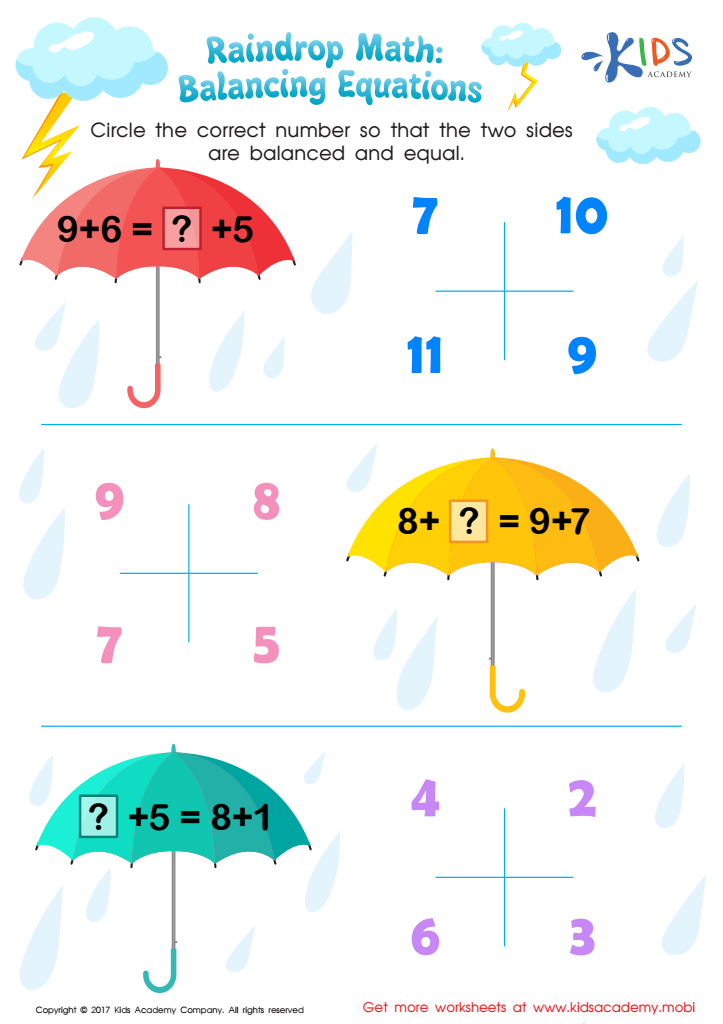
Raindrop Math Printable
It will help them think deeper about equations, form a foundation for early algebraic thinking, and gain a better sense of numeracy. Plus, they get to practice simple addition skills.
 Assign to My Students
Raindrop Math Printable
Worksheet
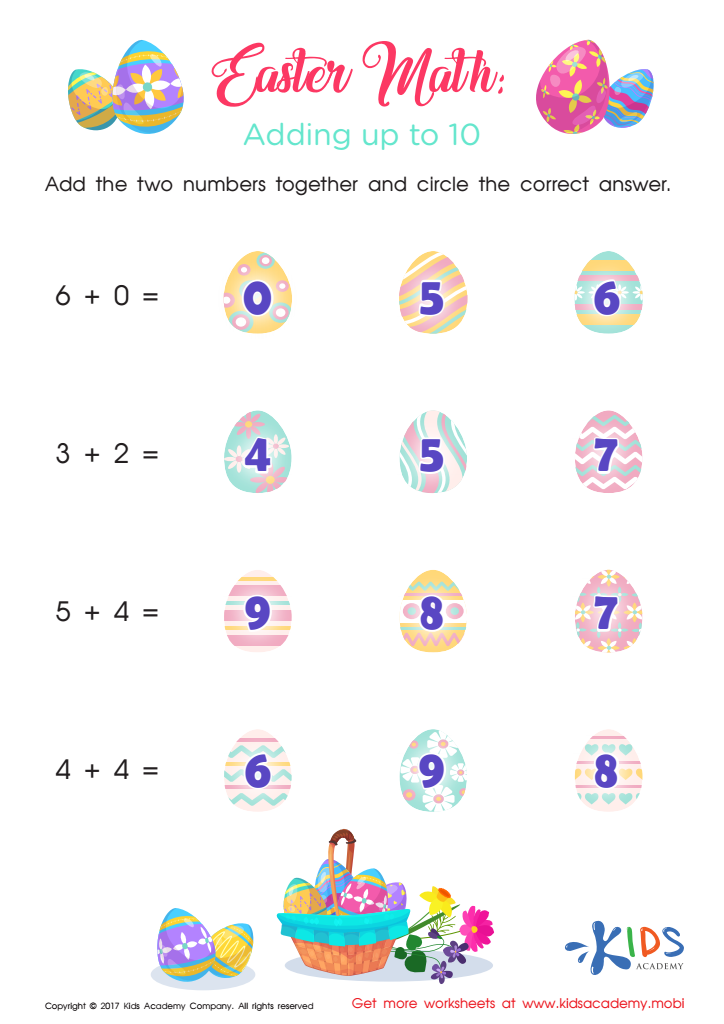
Addition Up To 10 Worksheet
This spring-themed worksheet helps your child master addition up to 10. Its bright colors and fun activities make it an enjoyable way to improve math skills.
Addition Up To 10 Worksheet
Worksheet
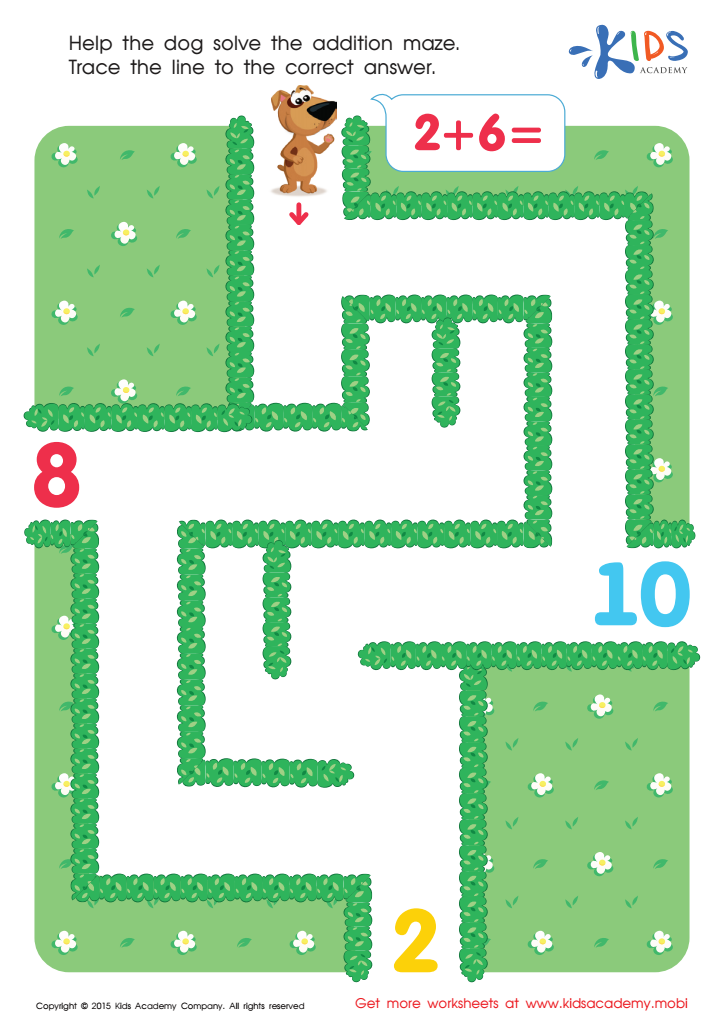
Two Plus Six Addition Worksheet
Make maths fun and interesting for your preschooler with our kindergarten addition worksheets. Help the dog to trace the right path to the correct answer and explore our free printable addition and subtraction worksheets. Visit our site for more study materials.
Two Plus Six Addition Worksheet
Worksheet
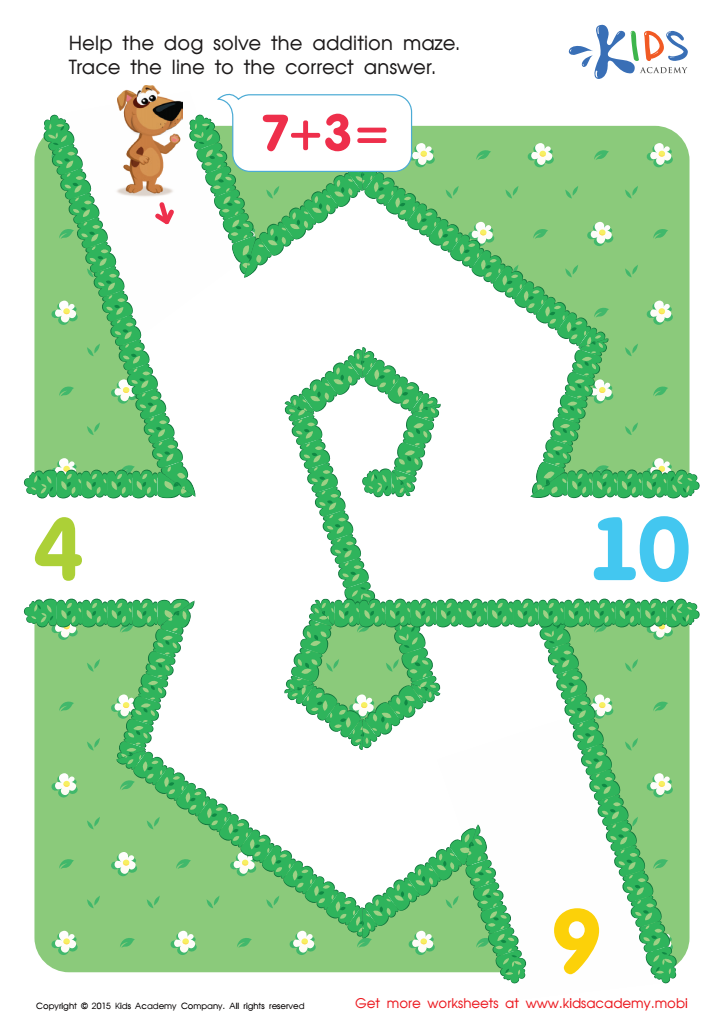
Seven Plus Three Worksheet
Practice addition and subtraction with your kids, help them out and make learning math an enjoyable activity.
Seven Plus Three Worksheet
Worksheet
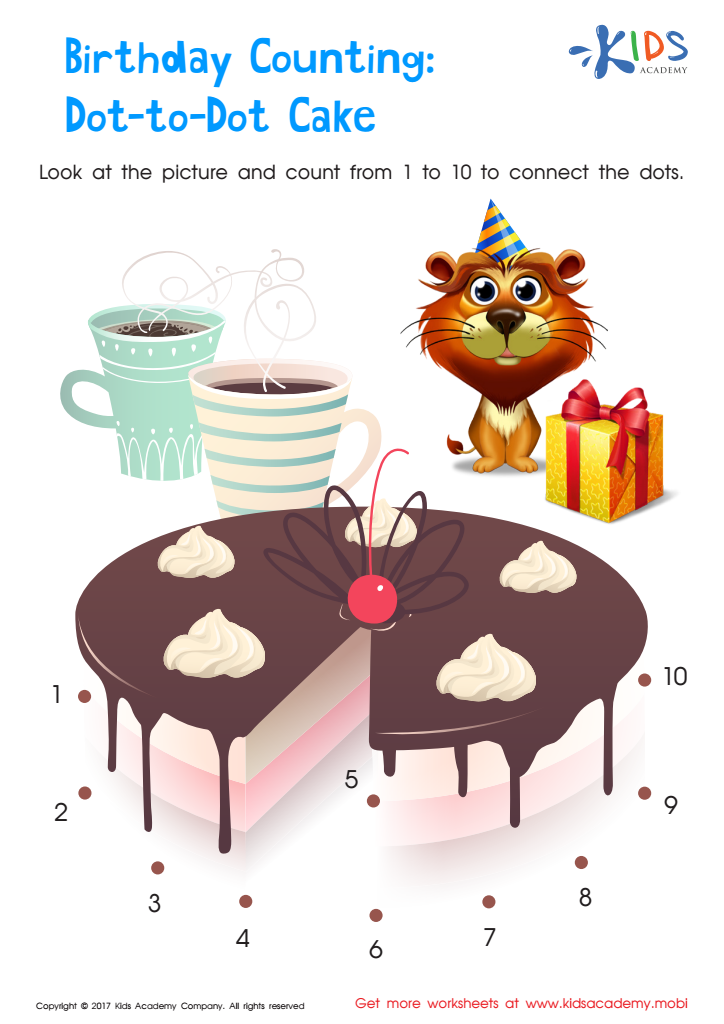
Birthday Counting Connect Dots Worksheet
Help your child count to ten and draw curved lines with this birthday cake dot to dot! Practice numeracy and problem solving skills, and enjoy the fun of creating a picture. Then, use it as a reminder for your child’s birthday and learn about the days and months of the year.
Birthday Counting Connect Dots Worksheet
Worksheet
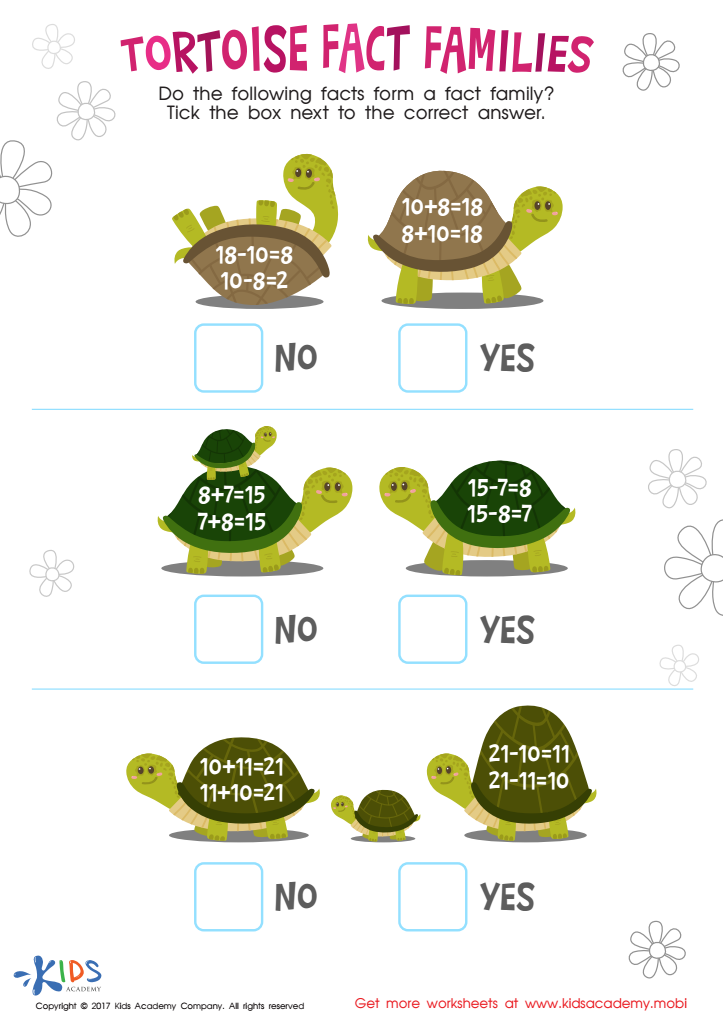
Tortoise Fact Families Printable
With 1st grade add & subtract tortoises, kids can improve their math understanding and skills. Enjoy fun, hands-on practice with fact families and strengthen logical reasoning and critical thinking!
Tortoise Fact Families Printable
Worksheet
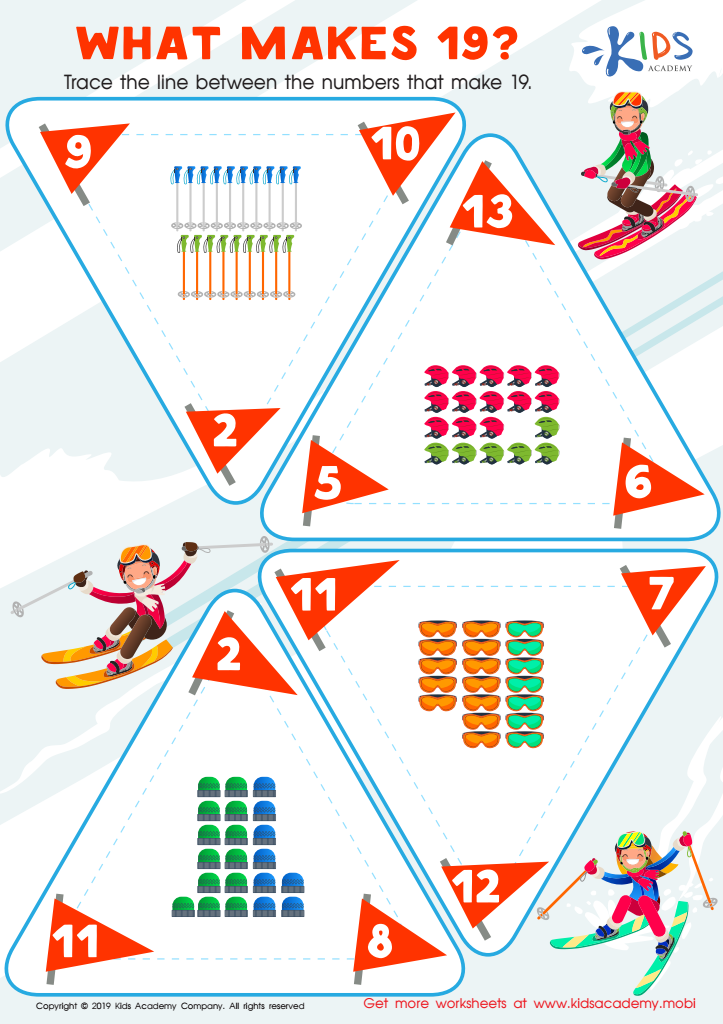
What Makes 19? Worksheet
As a parent, it's your responsibility to help your kids learn. Put on the teacher hat and use this worksheet to teach them addition tricks. Help them count and add the objects, trace a line between the numbers that make 19, and take their learning a step further.
What Makes 19? Worksheet
Worksheet
Join Kids Academy for Free
Who is primarily going to use this learning content?






.jpg)

Parents and teachers should prioritize basic addition skills for children aged 4 to 7 because these foundational abilities set the stage for future mathematical understanding and academic success. Mastering basic addition not only enhances a child's number sense but also fosters confidence in their problem-solving skills. At this crucial developmental stage, children are naturally curious and eager to learn, making it an ideal time to introduce new concepts through engaging methods.
Moreover, enhancing these skills can help children develop critical thinking and analytical capabilities, which are essential for tackling more complex math topics later on. Strong addition skills also support other areas of learning, such as reading comprehension and logical reasoning.
By incorporating fun and stimulating activities, such as games and manipulatives, parents and teachers can make learning addition enjoyable, reducing anxiety and enhancing retention. The involvement of parents reinforces these lessons at home, creating a strong support system. Ultimately, nurturing basic addition abilities not only prepares children for advanced math but also equips them with essential life skills, promoting overall cognitive development. Investing in these skills early ensures that children develop a positive attitude towards math, setting them on a path of continued academic achievement.