Comparing objects Extra Challenge Math Worksheets for Ages 4-7
3 filtered results
-
From - To
Explore our "Comparing Objects Extra Challenge Math Worksheets" designed for children ages 4-7, where young learners can enhance their reasoning and visual skills! These engaging worksheets encourage kids to compare various objects based on size, shape, and quantity, making math fun and interactive. With colorful illustrations and enjoyable activities, these resources foster critical thinking and boost confidence in mathematical concepts. Perfect for home or classroom use, these extra challenge worksheets offer a fantastic opportunity for children to refine their comparison skills while having fun. Discover the joy of learning with Kids Academy today!
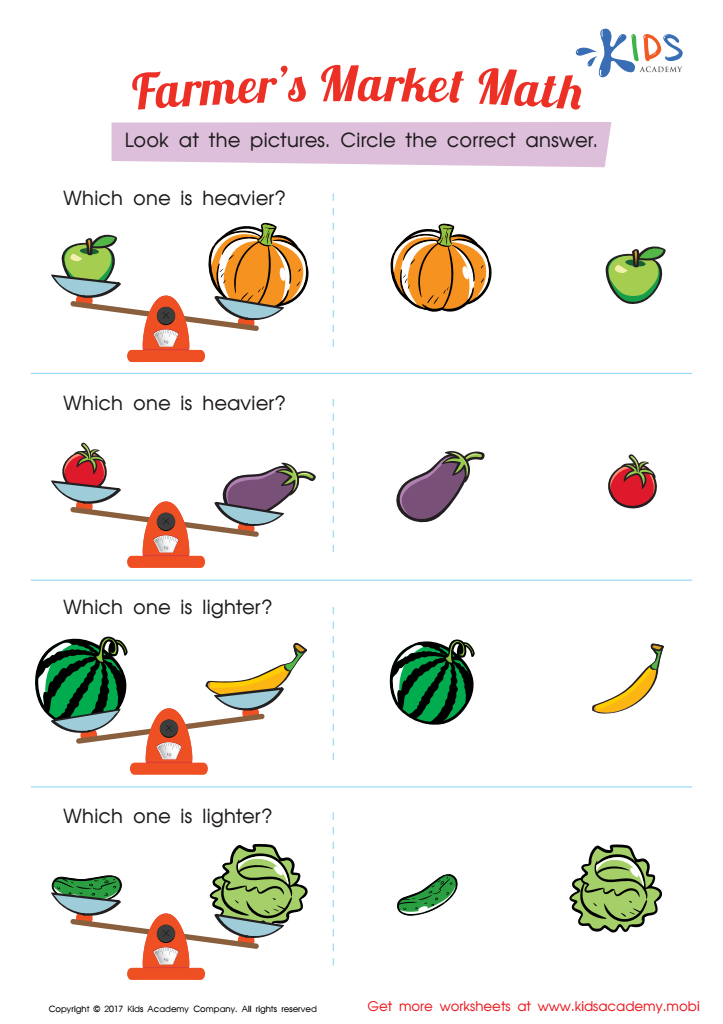
Which One Is Heavier Worksheet
 Assign to My Students
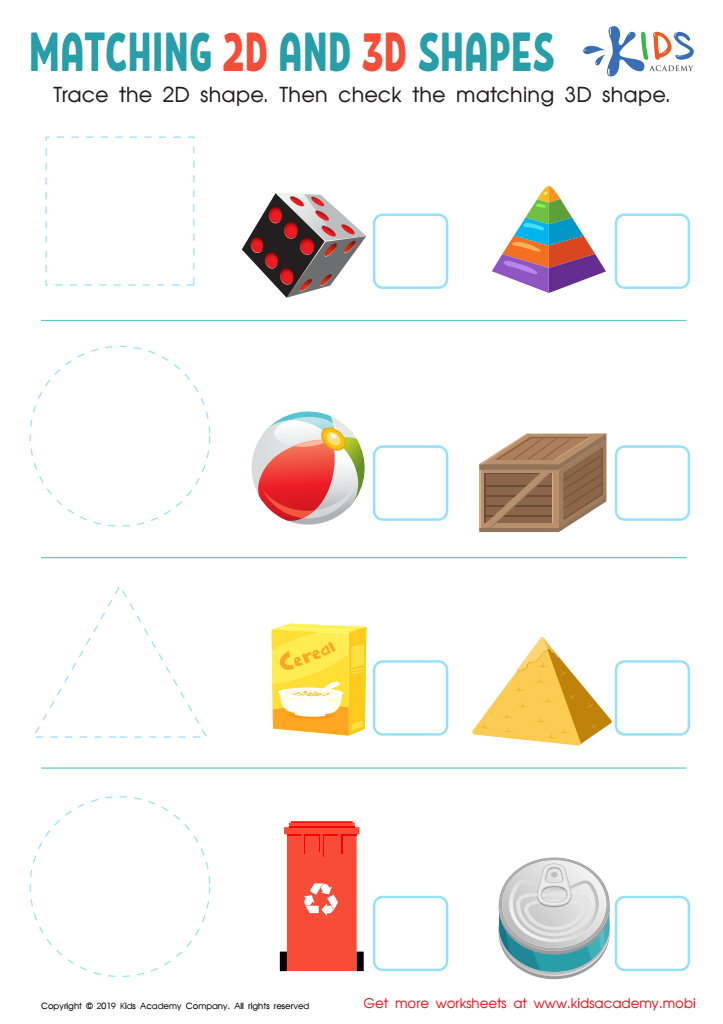
Matching 2D and 3D Shapes Worksheet
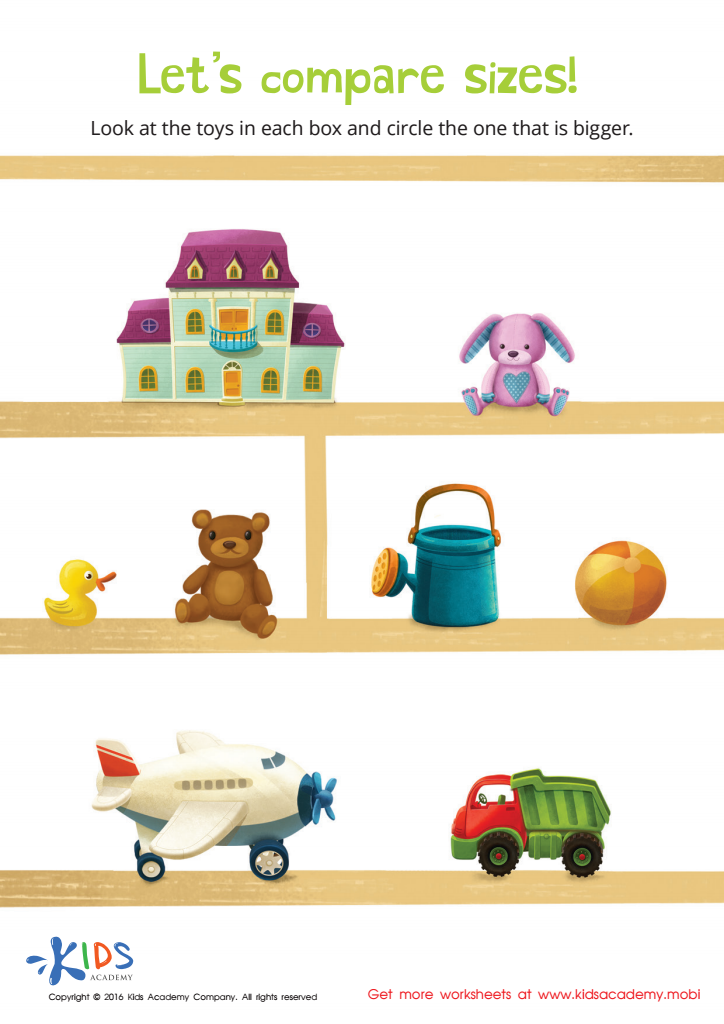
Classifying by Size Sorting Worksheet




Comparing objects is an essential early math skill that plays a crucial role in a child's cognitive development. For parents and teachers, understanding the significance of this skill for children aged 4-7 can enhance their educational approach and support child growth.
At this stage, children learn to recognize differences in size, weight, and quantity. By engaging in activities that encourage comparison, children develop critical thinking skills and analytical abilities, which are foundational for more advanced math concepts later in life. This understanding fosters numeracy and lays the groundwork for skills like addition, subtraction, and measurement.
Moreover, comparing objects helps children improve their language and communication skills. As they express their observations about objects, they learn to articulate their understanding and reasoning, facilitating better engagement in classroom settings. This also builds confidence in their problem-solving abilities.
Involving children in comparing tasks actively fosters a sense of curiosity and exploration. For teachers and parents, recognizing and promoting these activities offers opportunities for interactive learning experiences that are not only educational but also fun. Ultimately, emphasizing comparison among objects encourages holistic development, preparing children for future academic challenges and real-world problem-solving.