Alphabet Recognition Extra Challenge Tracing Letters Worksheets for Ages 4-8
3 filtered results
-
From - To
Boost your child's alphabet learning with our "Alphabet Recognition Extra Challenge Tracing Letters Worksheets for Ages 4-8." Designed to provide an engaging and fun educational experience, these worksheets go beyond simple letter tracing to enhance proficiency in alphabet recognition. Perfect for kids ages 4-8, each worksheet is specially crafted to strengthen handwriting skills, improve fine motor control, and deepen letter understanding through various activities. Ideal for both classroom and at-home use, these worksheets will keep young learners challenged and entertained. Equip your child with the foundational skills they need for reading and writing success.

Letter A Tracing Page
 Assign to My Students
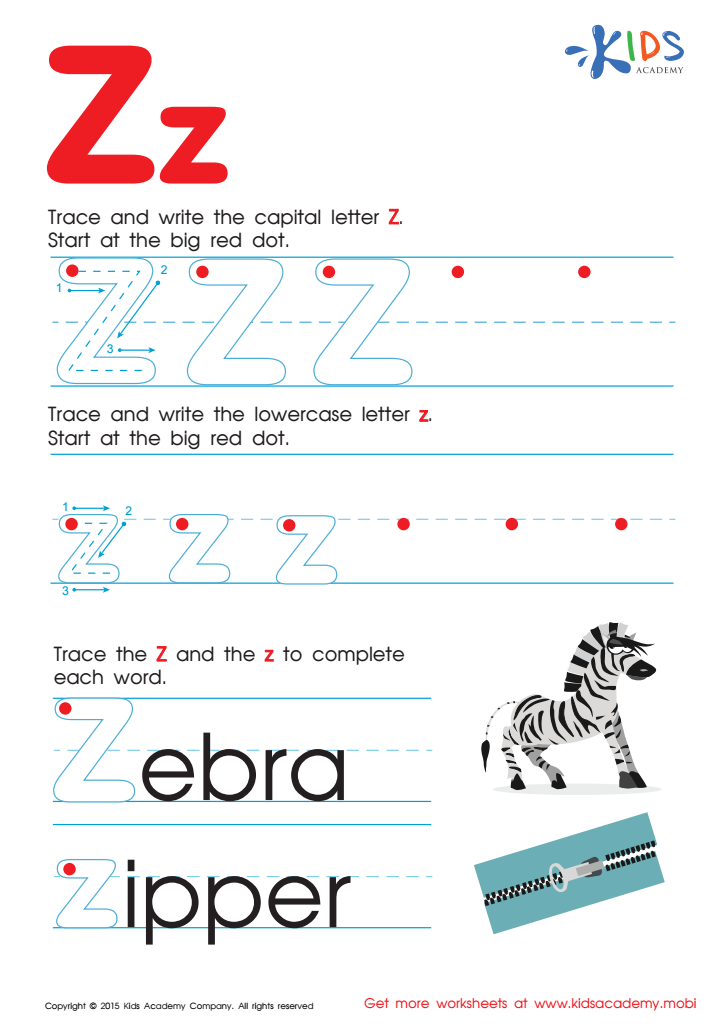
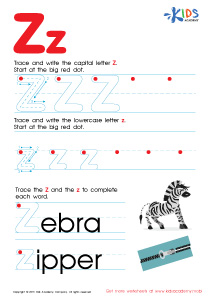
Letter Z Tracing Page
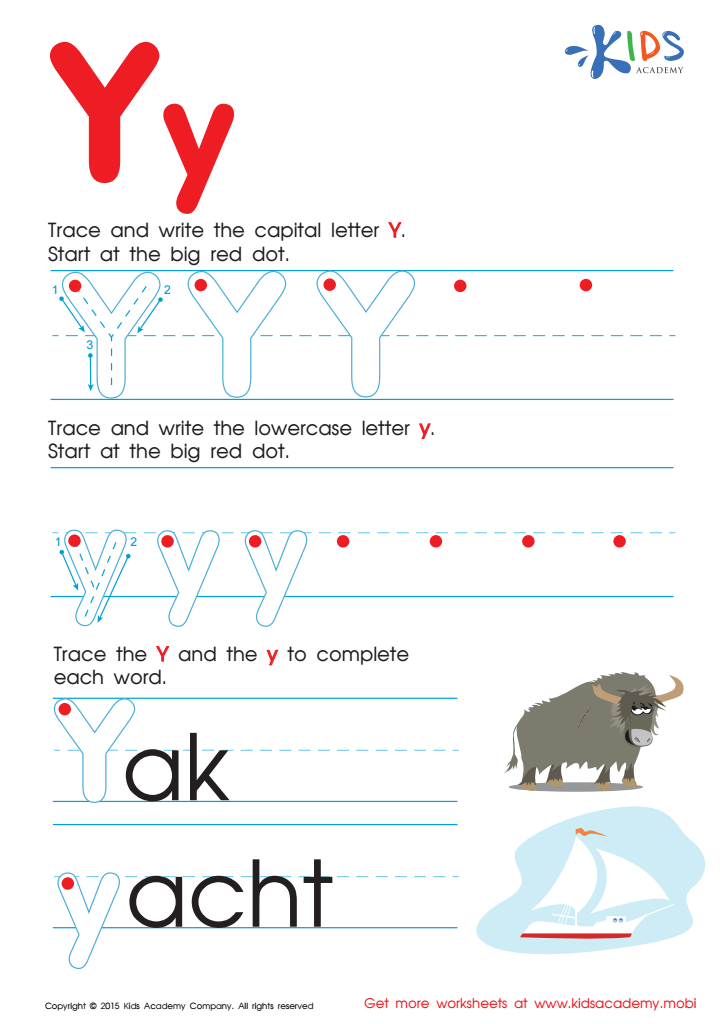
Letter Y Tracing Page








Alphabet Recognition Extra Challenge Tracing Letters for Ages 4-8 is an essential tool in early childhood education that parents and teachers should prioritize for several compelling reasons. Firstly, alphabet recognition is a foundational literacy skill that prepares young learners for reading and writing. Through tracing activities, children become familiar with letter shapes, making it easier for them to identify these letters in different contexts, such as in books or on signs.
Secondly, the tactile experience of tracing letters helps improve fine motor skills, crucial for later writing abilities. By following the letter shapes with their fingers or a pencil, children develop hand-eye coordination and muscle memory essential for coherent writing.
Moreover, alphabet tracing activities can make learning enjoyable and engaging, fostering a positive attitude towards education from an early age. Bright colors, playful fonts, and interesting tracing paths capture attention and keep young minds curious and motivated.
Finally, such tracing activities also serve as a basis for understanding phonics. Recognizing and being able to write letters leads to the next step of linking these letters to sounds, an integral part of learning to read.
In summary, Alphabet Recognition Extra Challenge Tracing Letters supports multifaceted early development, from literacy and fine motor skills to a love for learning, proving it to be an indispensable resource for parents and educators alike.