Fine Motor Skills Extra Challenge Tracing Letters Worksheets for Ages 4-8
7 filtered results
-
From - To
Our "Fine Motor Skills Extra Challenge Tracing Letters Worksheets for Ages 4-8" are designed to boost your child's alphabet learning while strengthening essential fine motor skills! Through engaging and age-appropriate activities, these worksheets focus on improving hand-eye coordination, pencil control, and muscle development. Perfectly tailored for kids aged 4-8, each sheet delights and challenges with letter tracing fun, helping young learners gain confidence in writing. Give your child a solid foundation in both writing and fine motor skills with these expertly crafted worksheets. Ideal for parents and teachers alike looking for quality educational resources!
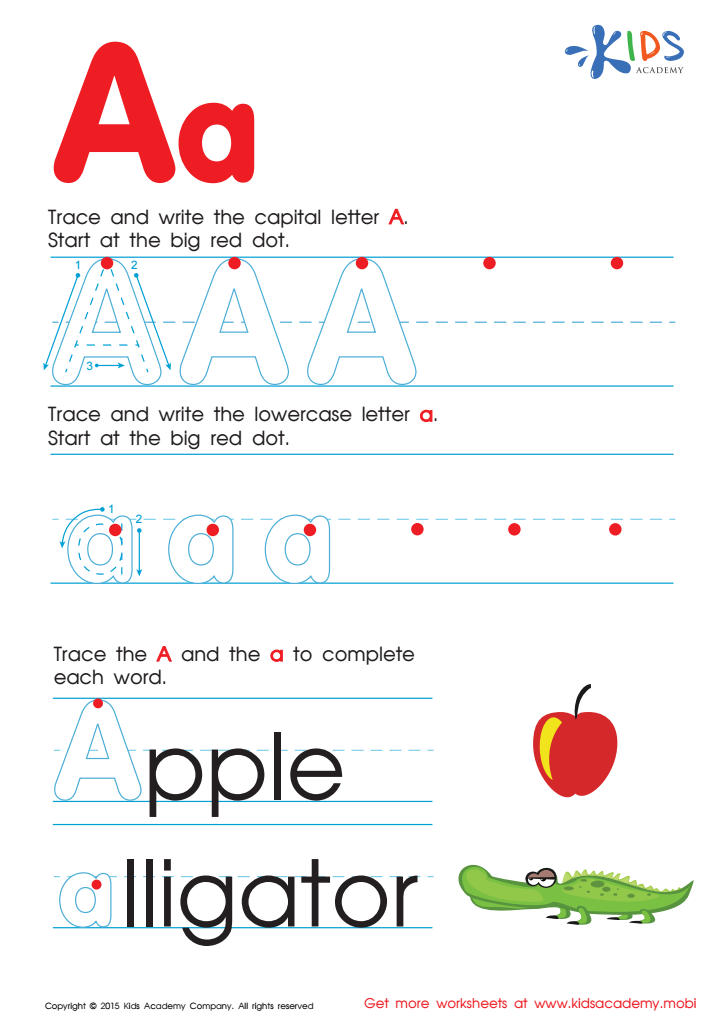
Letter A Tracing Page
 Assign to My Students
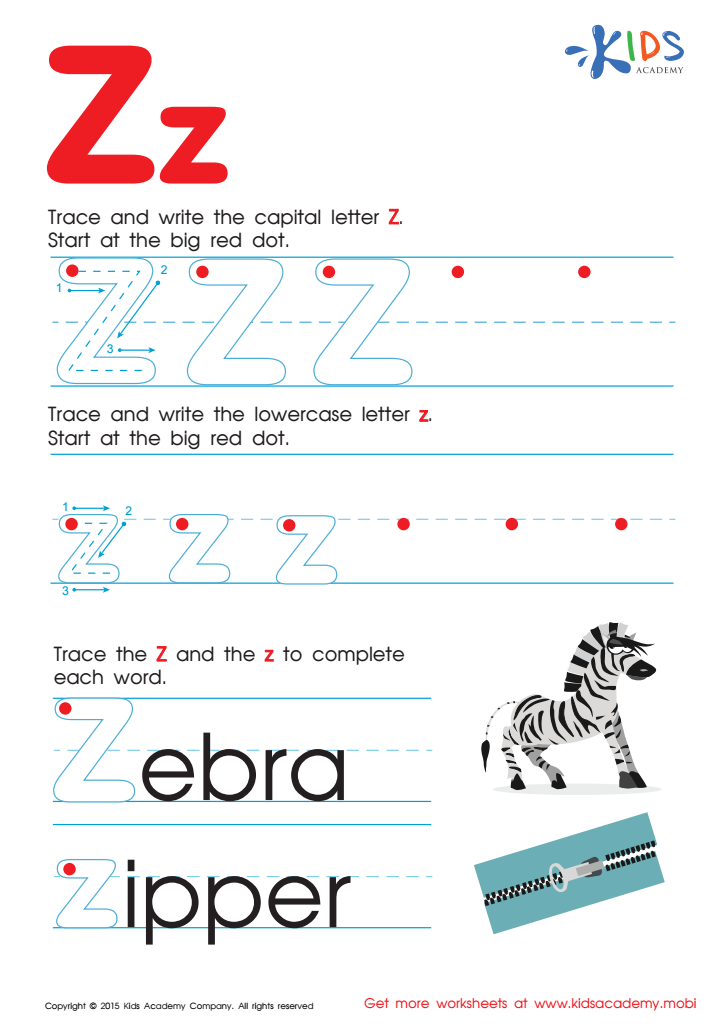
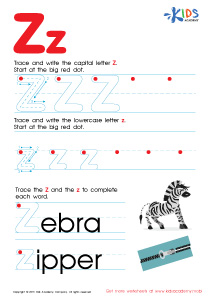
Letter Z Tracing Page
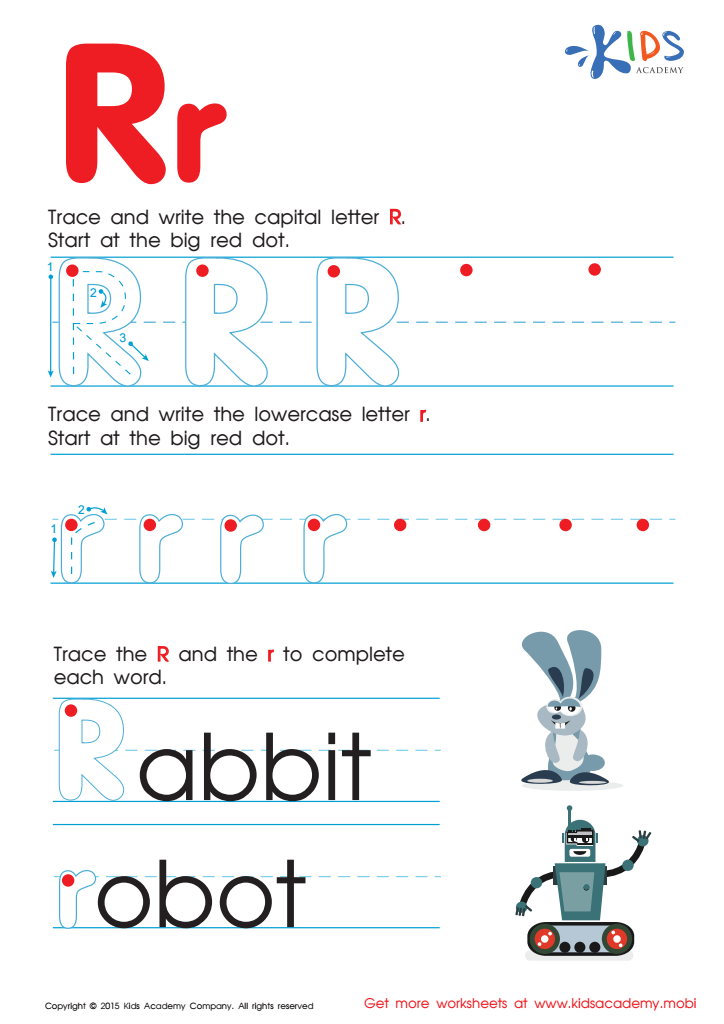
Letter R Tracing Page
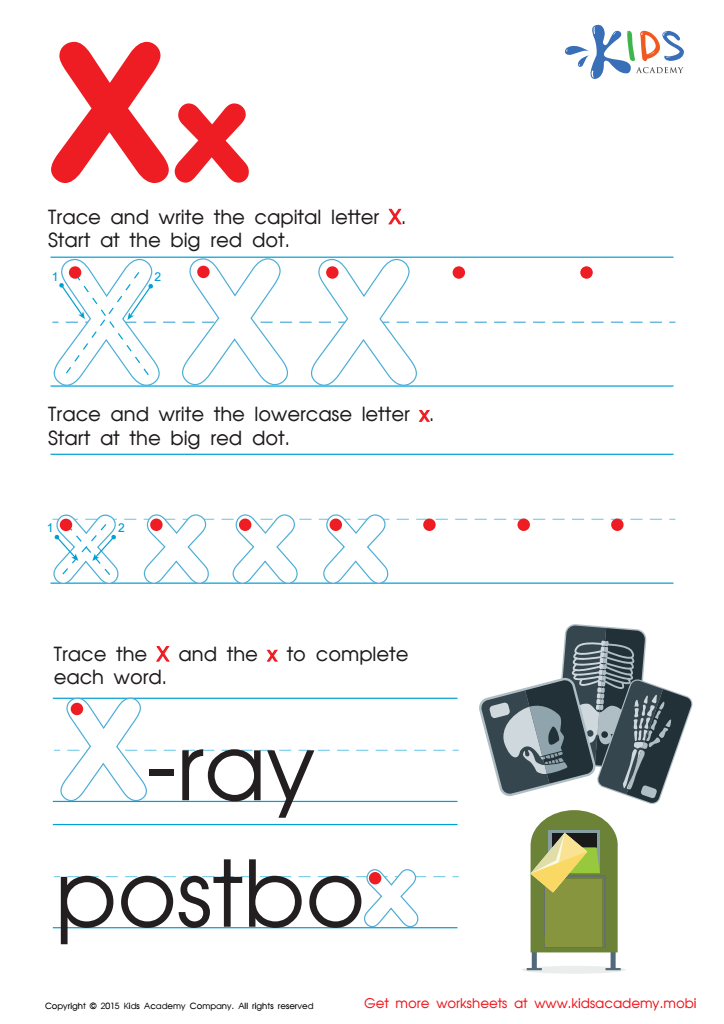
Letter X Tracing Page
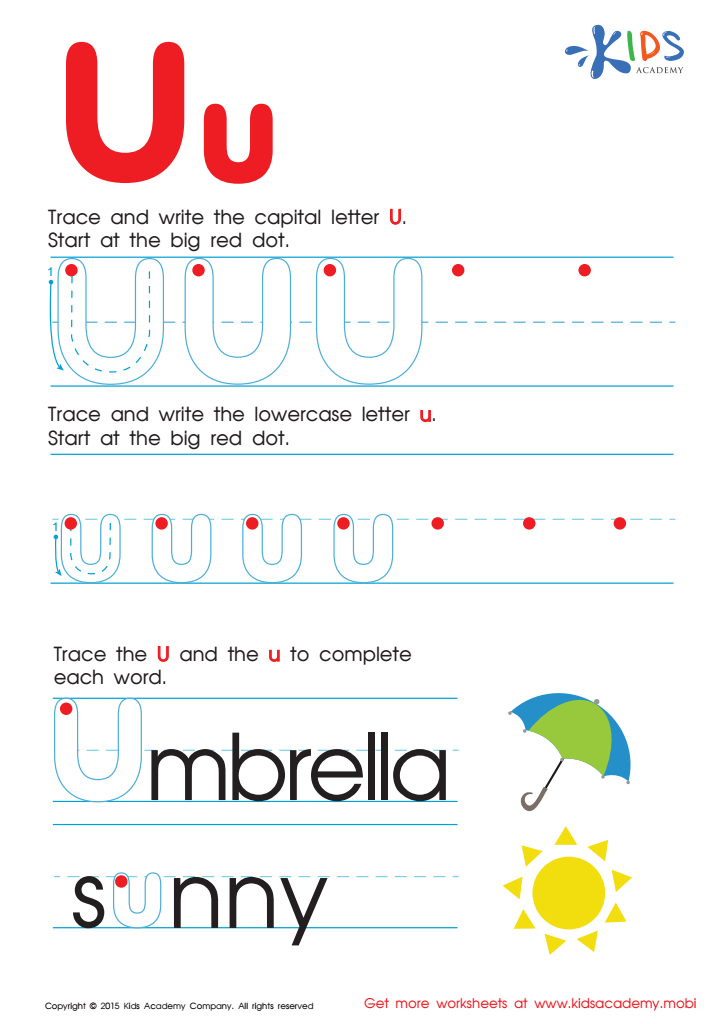
Letter U Tracing Page
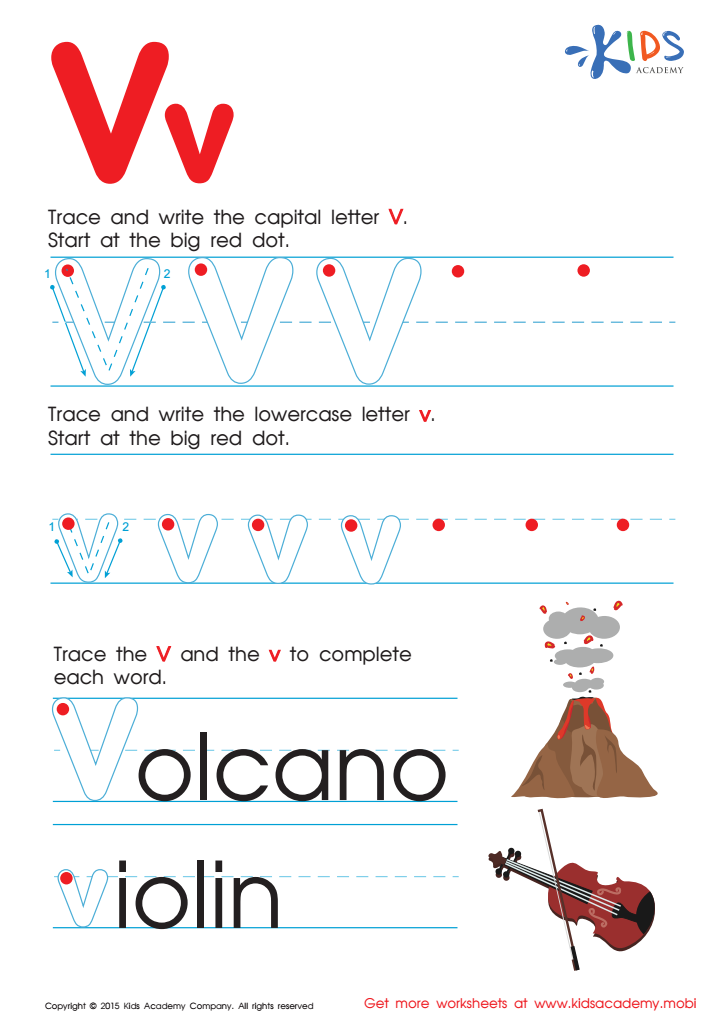
Letter V Tracing Page

Letter T Tracing Page








Fine motor skills are essential for young children as they form the foundation for numerous tasks they'll encounter throughout their lives, such as writing, buttoning, and manipulating small objects. For ages 4-8, engaging in fine motor skills extra challenge tracing letters can significantly impact their development. This activity not only enhances hand-eye coordination but also strengthens the small muscles in their hands and fingers, which are crucial for tasks that require precision.
Tracing letters is a fantastic way to integrate fine motor practice with literacy development. As children trace letters, they become more familiar with the shapes and forms, aiding in letter recognition and eventually leading to better handwriting skills. Consistently practicing tracing helps kids develop a proper pencil grip, coordination, and control, making future writing tasks less challenging.
Moreover, these activities encourage concentration and patience, enforcing a sense of achievement upon completion. They also allow teachers and parents to identify and provide additional support to children who may struggle with fine motor tasks. By incorporating extra challenges, the activities remain engaging and appropriately support the individual skill levels of each child. All these benefits make fine motor skills tracing not only essential for academic success but also beneficial for building confidence and independence in everyday tasks.