Matching numbers Extra Challenge Worksheets for Ages 4-8
5 filtered results
-
From - To
Discover our Matching Numbers Extra Challenge Worksheets, specially designed for children ages 4-8. These engaging and educational printable worksheets are perfect for young learners eager to improve their number recognition and matching skills. Featuring a variety of fun and challenging activities, our worksheets will keep kids motivated and excited to learn. Each sheet is thoughtfully crafted to enhance cognitive development and fine motor skills, making learning both enjoyable and effective. Whether in the classroom or at home, these worksheets are the ideal resource for practicing and mastering number matching. Download now and watch your child's confidence soar!
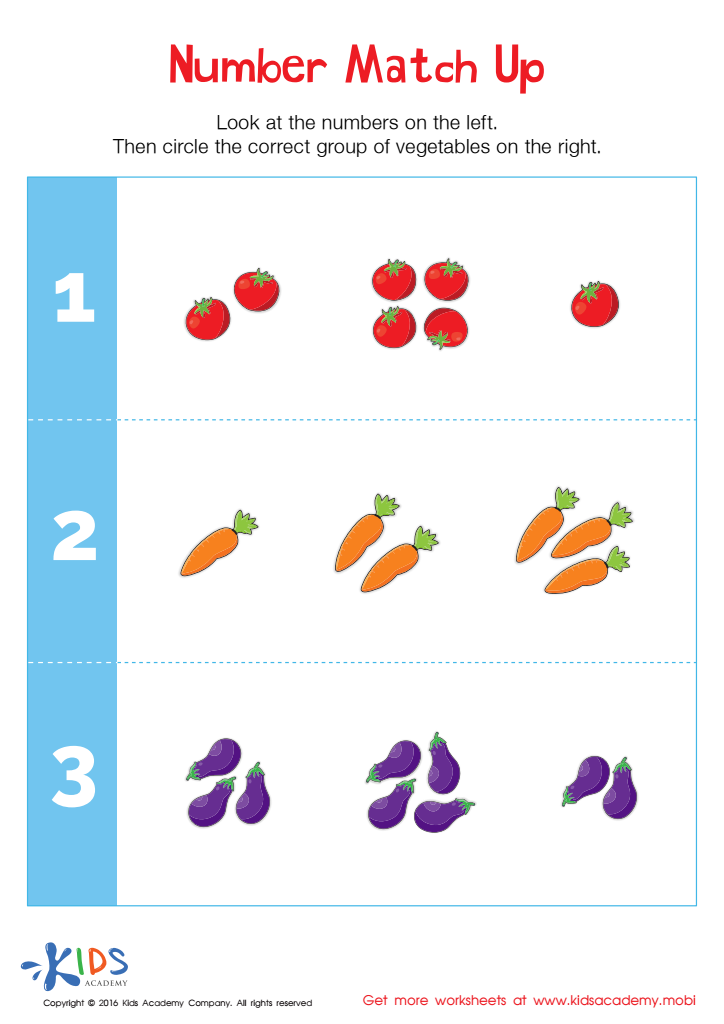
Number Match Up Worksheet
 Assign to My Students

Count and Match Vegetables 1 – 7 Math Worksheet
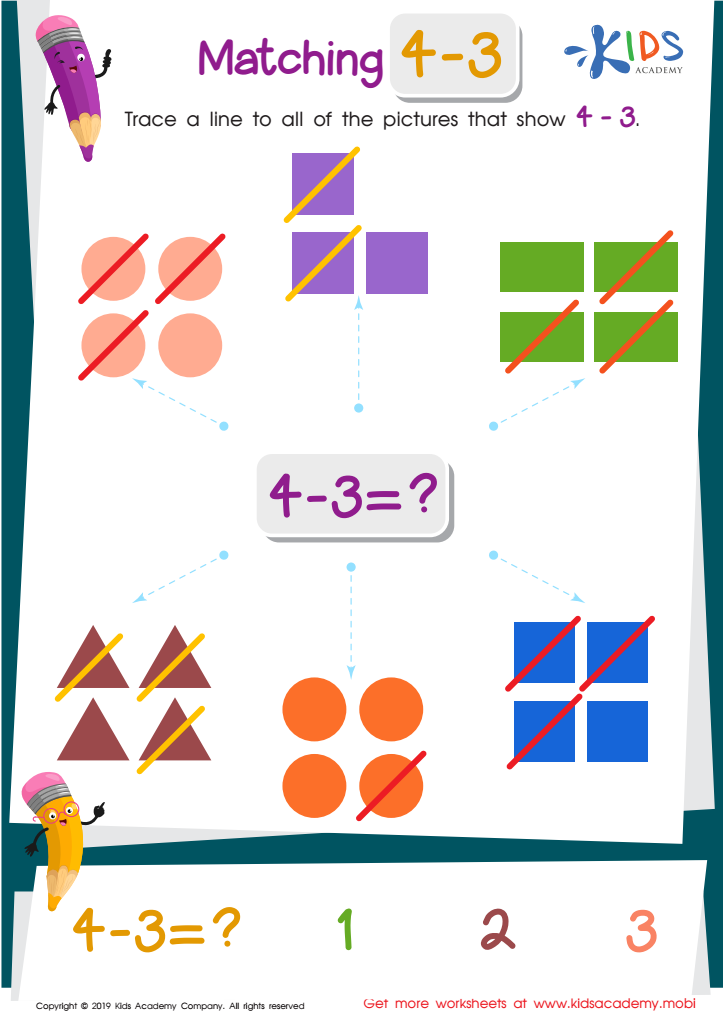
Matching 4 – 3 Worksheet
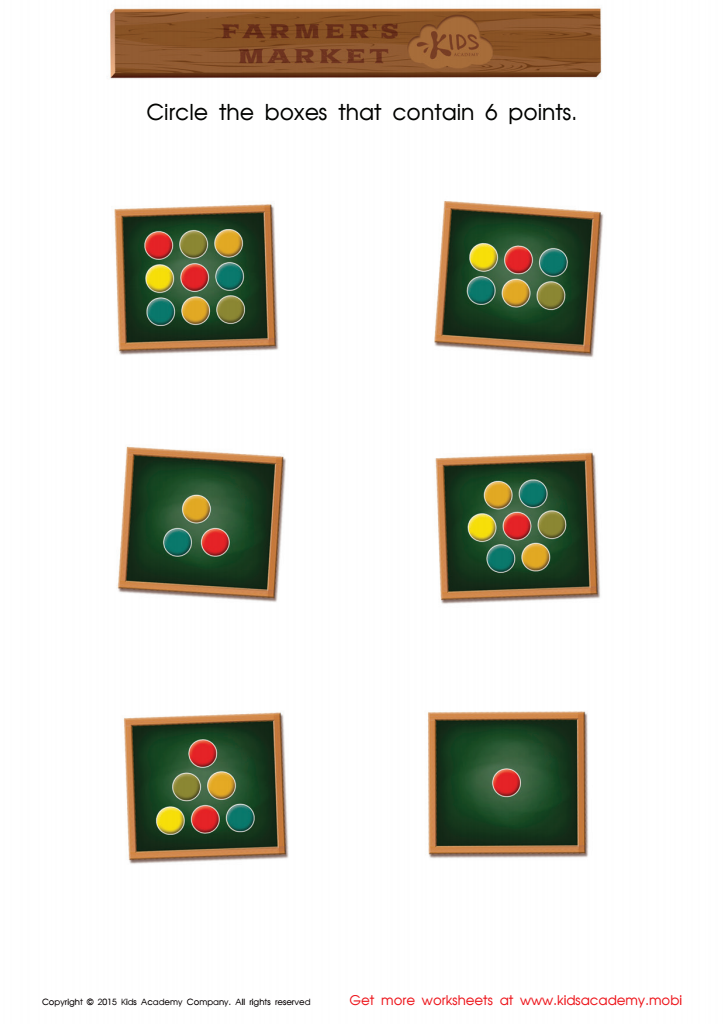
Count and Match Points 6 Math Worksheet
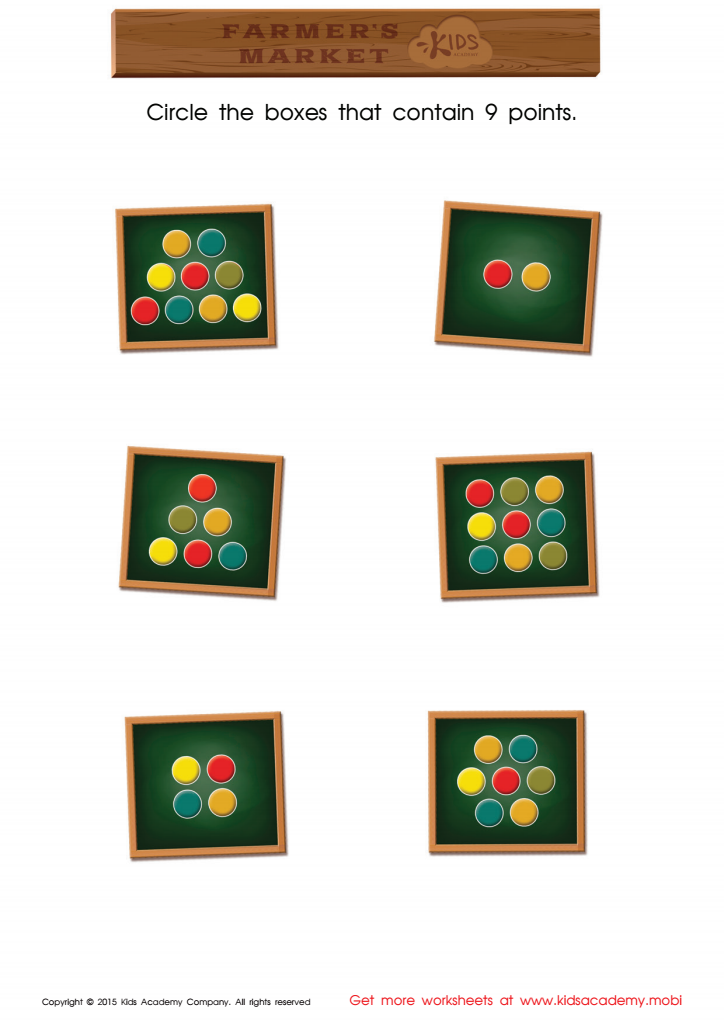
Count and Match Points 9 Math Worksheet






Engaging children aged 4-8 in activities like the "Matching Numbers Extra Challenge" holds multifaceted benefits essential to early development. This formative period is crucial for acquiring foundational cognitive and motor skills. Firstly, number matching enhances numerical recognition and counting, underpinning future mathematical learning. It helps children understand the relationship between numerals and quantity, fostering a sense of number magnitude.
Secondly, activities like these bolster memory and concentration. Kids must hold numbers in their minds and match them correctly, which hones their short-term and working memory. Thirdly, pattern recognition and logical thinking skills develop as children identify matching numbers across different contexts or formats. Fourthly, such challenges often require fine motor skills, as children manipulate cards or objects, strengthening hand-eye coordination essential for writing and other tasks.
Moreover, early exposure to structured challenges cultivates patience, problem-solving, and perseverance. These "soft skills" are critical in both academic settings and daily life. Socially, engaging in such activities with peers or adults encourages communication and collaborative skill-building.
Parents and teachers play a pivotal role by incorporating engaging, educational activities. By nurturing a child’s proficiency and confidence in matching numbers early on, they lay a robust groundwork for more advanced academic concepts, reinforcing a lifelong positive attitude towards learning.








