Comparing sizes Extra Challenge Measurement Worksheets for Ages 4-8
5 filtered results
-
From - To
Discover our "Comparing Sizes Extra Challenge Measurement Worksheets" tailored for children aged 4-8! These engaging worksheets are designed to enhance early math skills by encouraging young learners to explore the concept of size comparison. With a variety of fun activities, kids will measure, compare, and sort objects, strengthening their understanding of big, small, longer, and shorter. Our thoughtfully crafted exercises promote critical thinking and enhance visual-spatial awareness. Perfect for classroom use or at-home learning, these worksheets provide a stimulating challenge that keeps children motivated and eager to learn. Help your child master measurement concepts in an enjoyable and interactive way!
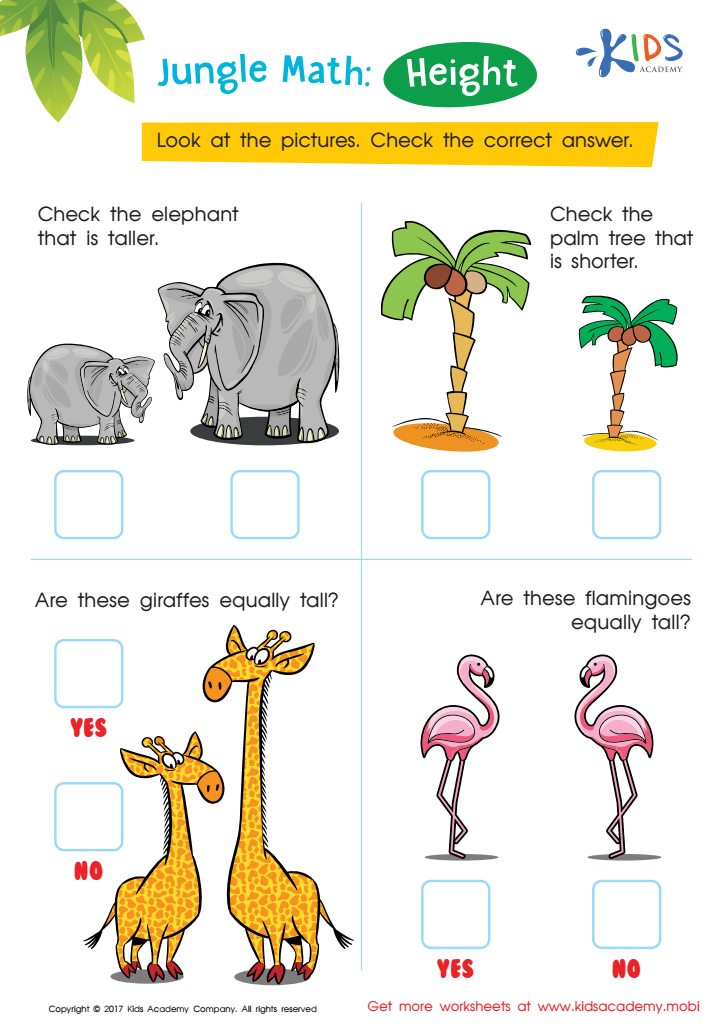
Which Is Taller Worksheet
 Assign to My Students
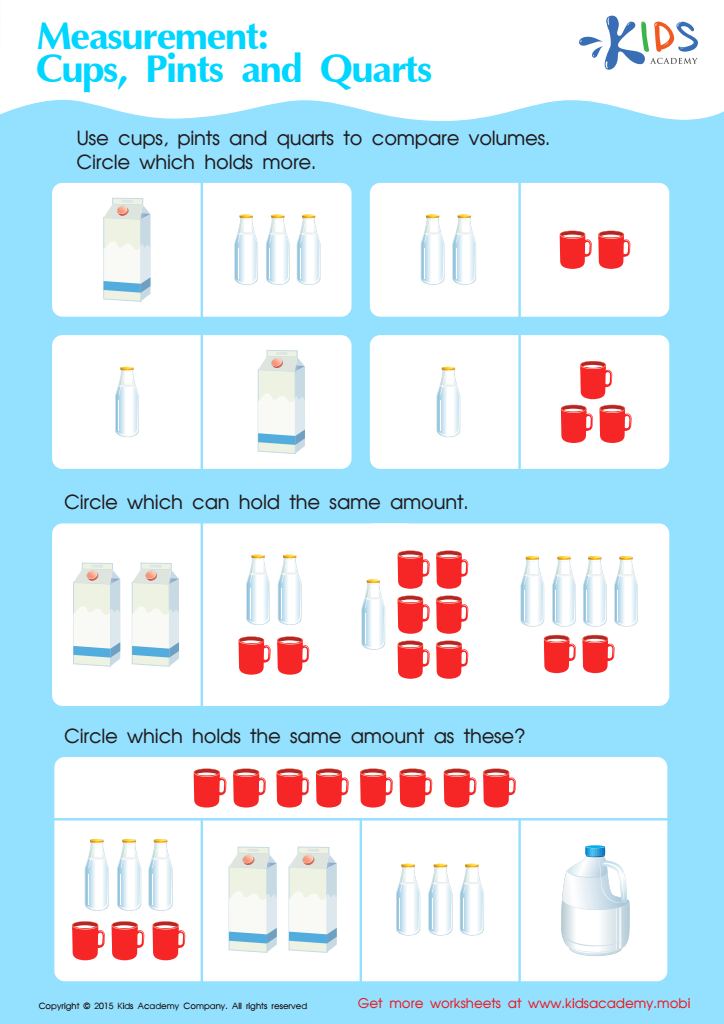
Measurement: Compare Volumes Worksheet
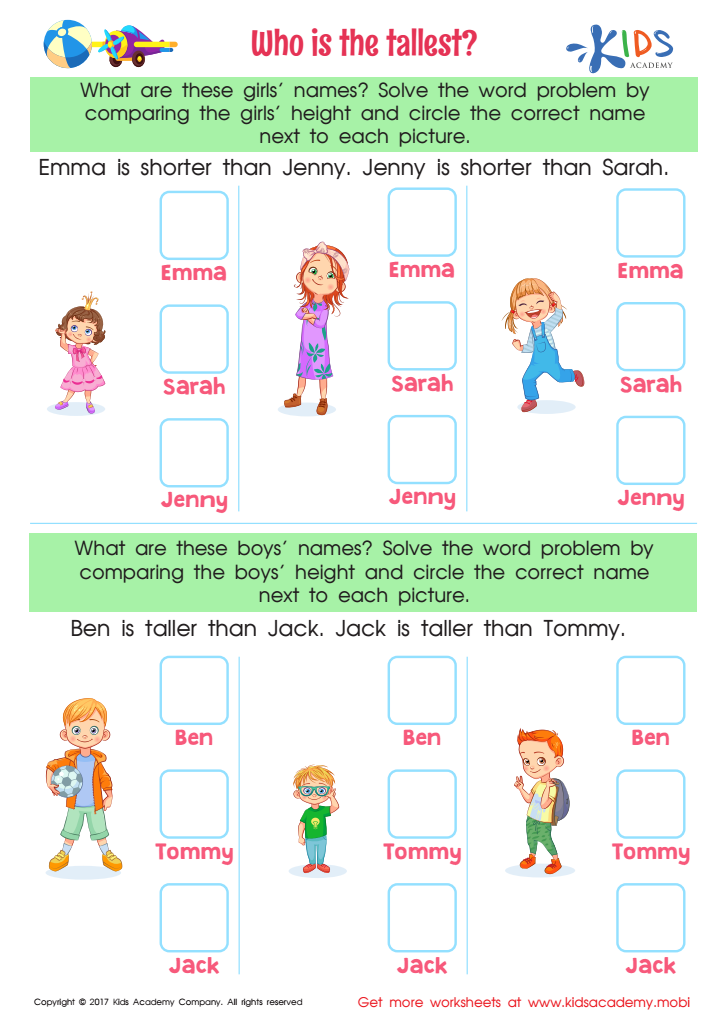
Who Tallest Printable
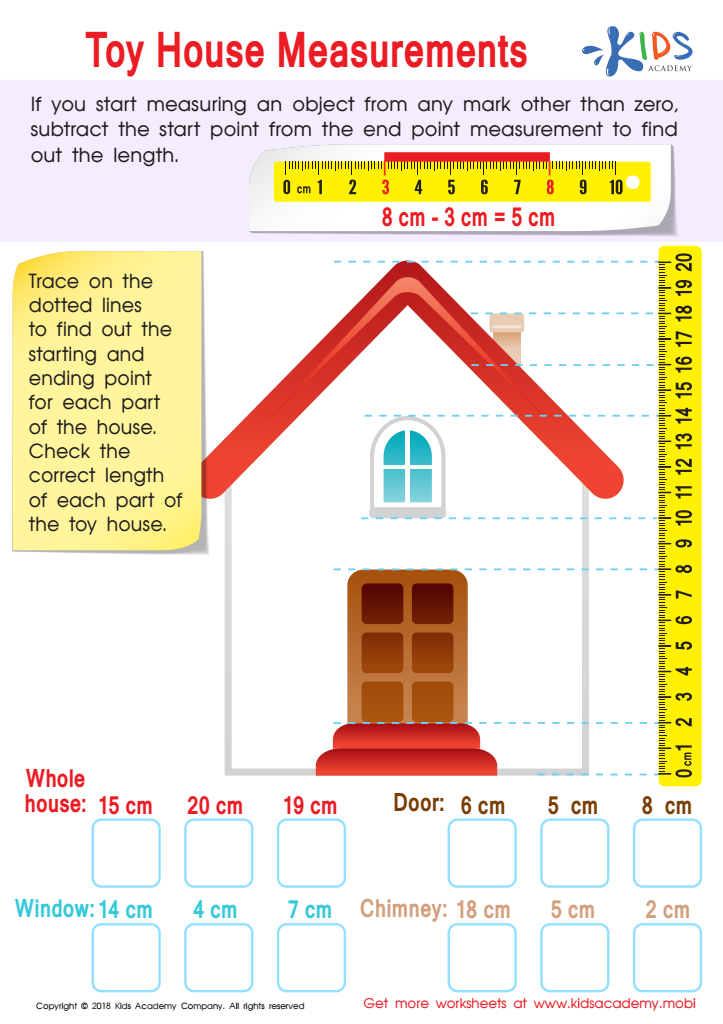
Toy House Measurements Worksheet
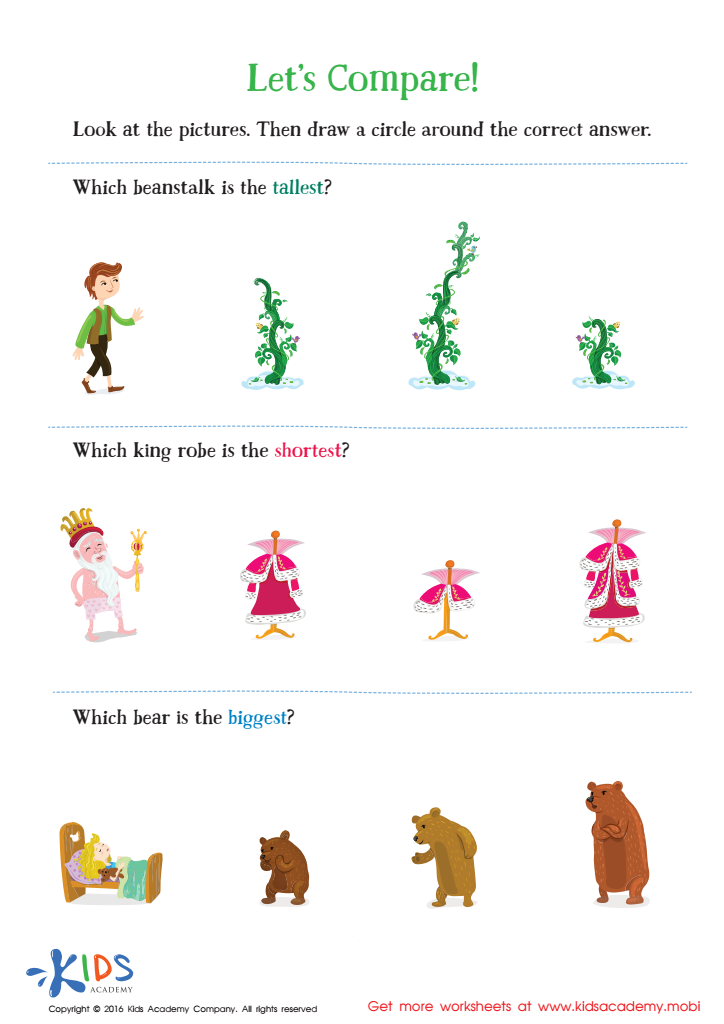
Fairy Tale Worksheet: Let's Compare








Parents and teachers should prioritize activities like “Comparing Sizes Extra Challenge Measurement” for children aged 4-8 because such activities lay the foundation for critical math skills. Early exposure to measurement concepts helps children develop spatial awareness, a vital cognitive skill. When young learners engage in comparing sizes of objects, they not only recognize differences in length, height, and width but also learn to articulate their observations, enhancing their language and communication skills.
Additionally, measuring and comparing fosters problem-solving abilities and encourages logical thinking. Children learn to make connections between numeric relationships and real-world applications, such as differentiating between bigger and smaller, longer and shorter, heavier and lighter. These fundamental concepts are essential as children progress in their education.
Moreover, playful and hands-on measurement activities can stimulate curiosity and engagement, making learning enjoyable. Encouraging participation in such challenges also promotes teamwork and cooperation when done in group settings, allowing children to learn from their peers.
Ultimately, cultivating these early measurement skills is not just about math; it builds a strong cognitive and social framework that supports children’s overall development and prepares them for more complex academic challenges ahead. Demonstrating the relevance of measurements in daily life can instill a lifelong love for learning.