Mental math skills Extra Challenge Times Tables Worksheets for Ages 4-8
3 filtered results
-
From - To
Unlock a world of learning with our challenging Mental Math Skills Extra Challenge Times Tables Worksheets for ages 4-8! Specially designed for young learners, these engaging worksheets aim to bolster crucial mental math skills and sharpen times tables knowledge. Fun and educational, they offer a playful approach to mastering multiplication facts, encouraging problem-solving, critical thinking, and confidence in mathematics. Perfect for passionate parents and dedicated educators, these worksheets bring an extra dose of excitement to learning while nurturing mathematical excellence. Download now and watch your child's math abilities soar! Visit our website for free and premium educational resources.
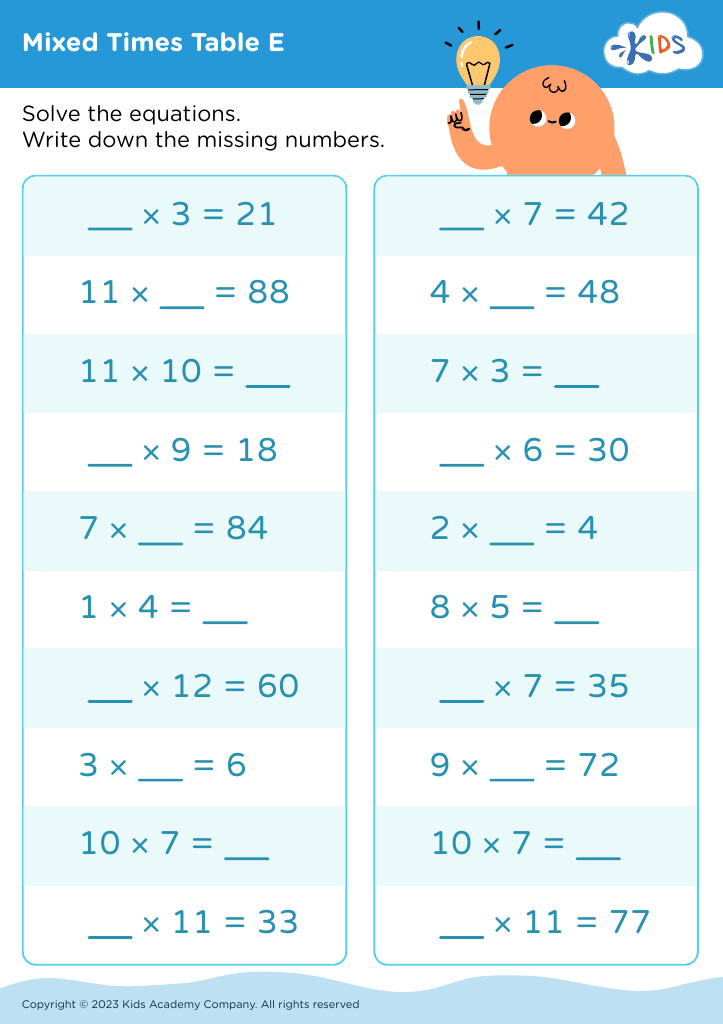
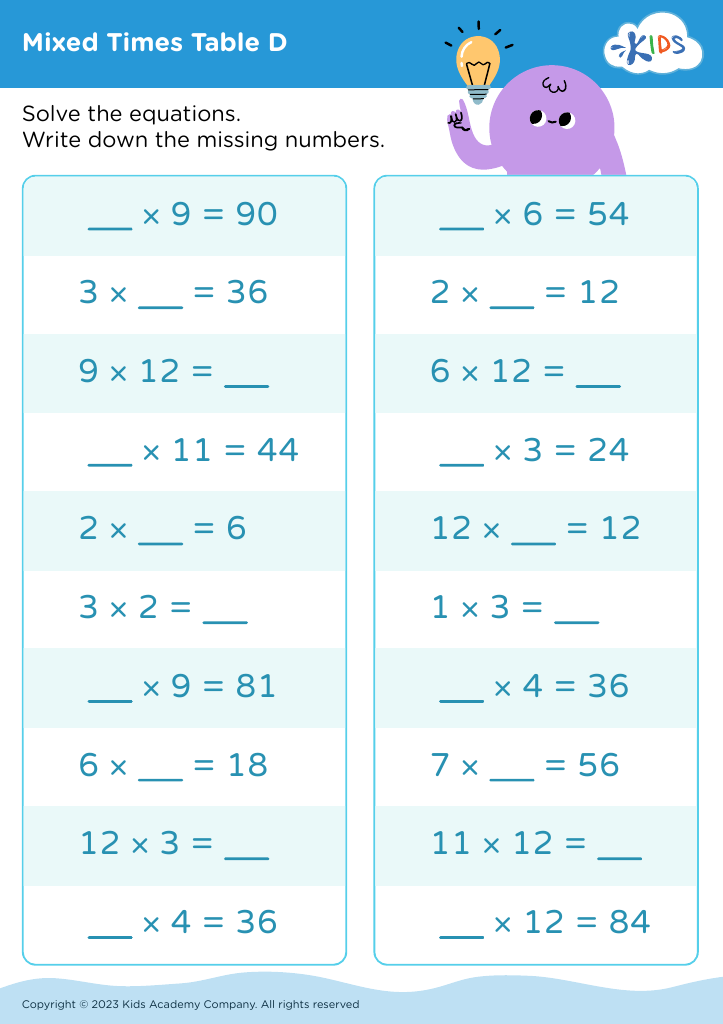
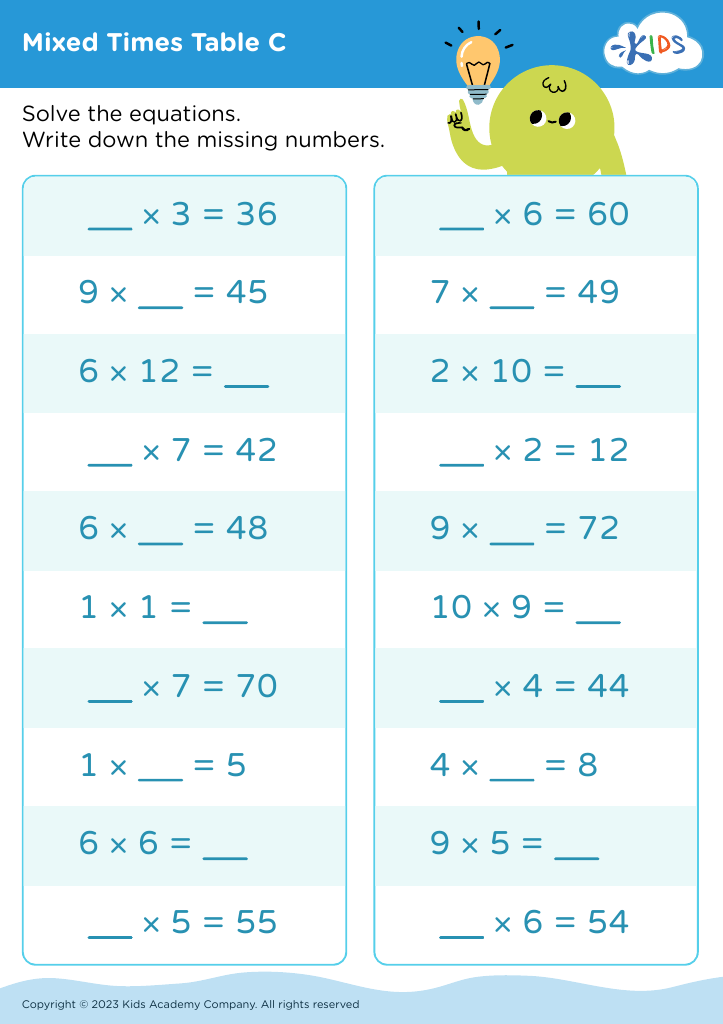





Parents and teachers should prioritize Mental Math Skills and the Extra Challenge Times Tables for children ages 4-8 because these foundational skills are crucial for cognitive development and future academic success. Young children’s brains are highly malleable, and introducing mental math at this age leverages their natural ability to absorb new information quickly. Mastery of times tables through engaging and challenging activities stimulates critical thinking, memory, and problem-solving skills.
Mental math exercises enhance number sense, giving children the ability to understand and manipulate numbers fluently. This is vital for developing arithmetic skills and lays the groundwork for more complex mathematical concepts in later years. By practicing times tables, children learn to recognize patterns, which fosters analytical thinking and precision.
Moreover, cultivating these skills early instills confidence in young learners. A strong mathematical foundation reduces anxiety around the subject, making future math learning a more positive experience. For parents and teachers, the emphasis on early math skills aligns with educational standards and helps identify and address learning gaps early on. Engaging in fun, challenging activities to teach these skills also makes learning enjoyable, nurturing a lifelong interest in math. Overall, dedicating effort to these competencies equips children with essential tools for academic and life successes.








