Vocabulary development Extra Challenge Writing Worksheets for Ages 4-8
3 filtered results
-
From - To
Boost your child's language skills with our Vocabulary Development Extra Challenge Writing Worksheets, perfect for ages 4-8! These engaging activities are designed to enhance their vocabulary, comprehension, and writing abilities through fun and interactive exercises. Each worksheet offers a variety of tasks such as matching words to pictures, sentence formation, and creative writing prompts, ensuring a comprehensive learning experience. Ideal for early learners, these worksheets make vocabulary building enjoyable and effective, setting a solid foundation for lifelong communication skills. Explore and download now to give your child the extra edge in their language development journey.
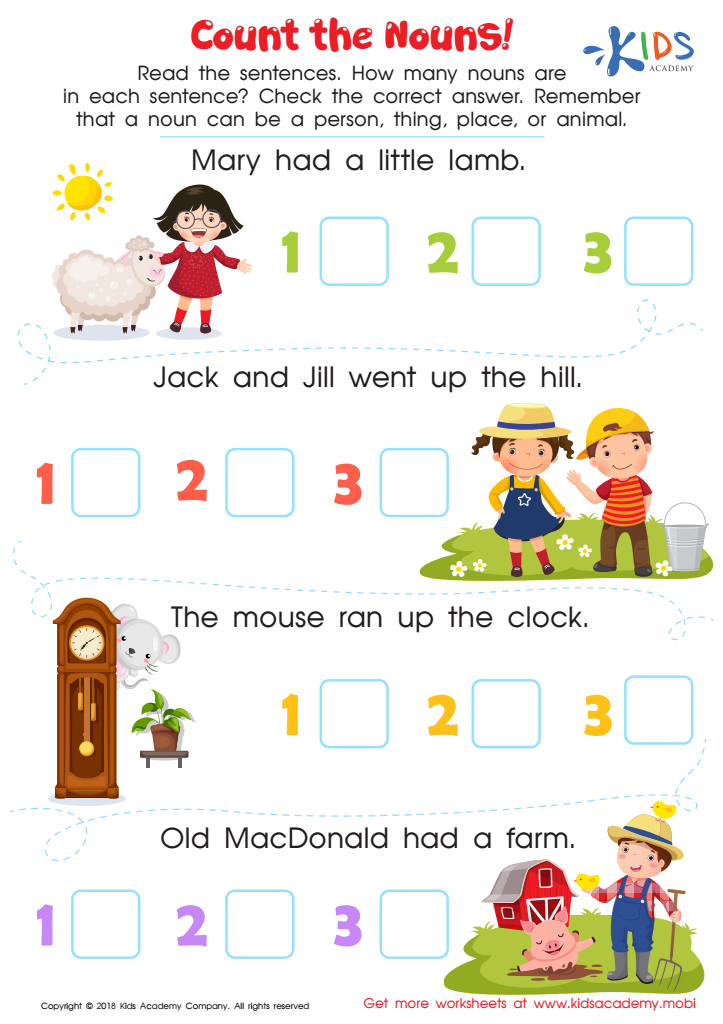
Count the Nouns Worksheet
 Assign to My Students
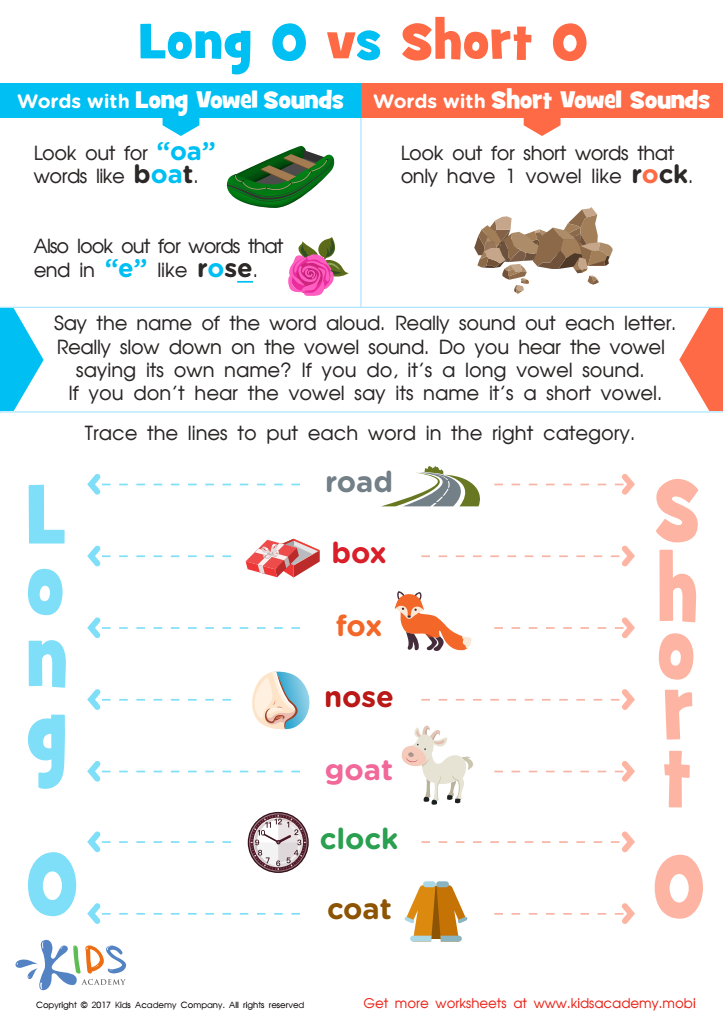
Long and Short Vowel O Spelling Worksheet
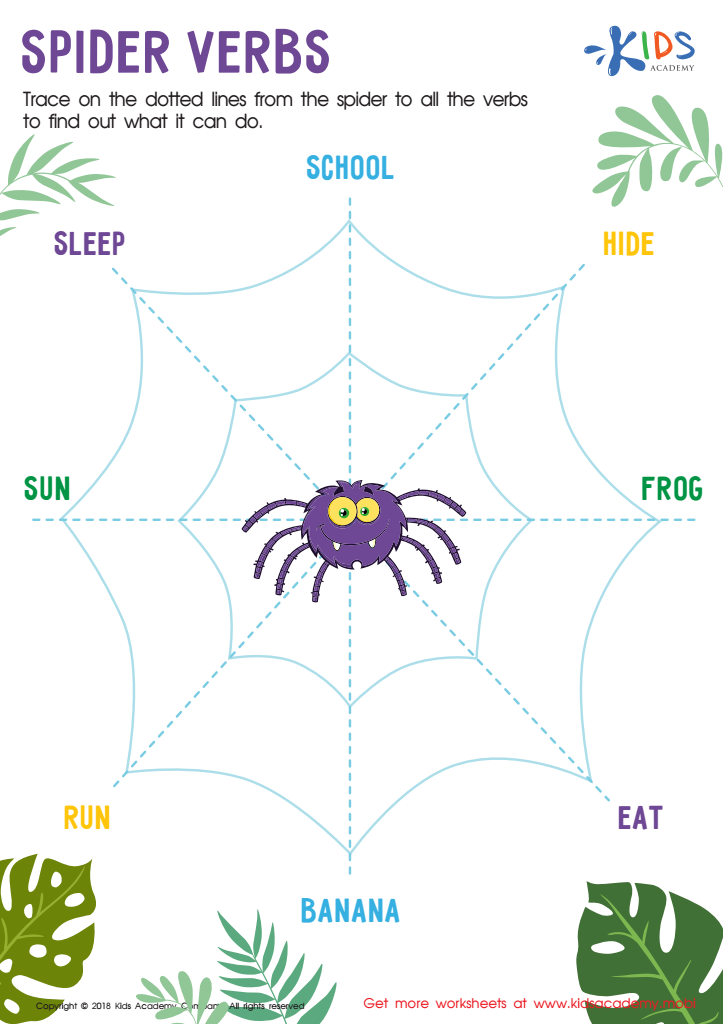
Spider Verbs Worksheet





.jpg)


Vocabulary development is crucial for children aged 4-8 as it laysthe foundation for all future learning and communication skills. At this pivotal stage, children acquire language rapidly, and a strong vocabulary aids in their understanding of new concepts, enhances their reading comprehension, and bolsters their ability to express ideas effectively. Both parents and teachers play vital roles in encouraging vocabulary growth through engaging activities, reading together, and creating a language-rich environment.
Enhancing vocabulary fosters critical cognitive development and helps children navigate social situations confidently. When children learn new words, they become better able to articulate their thoughts, listen, follow directions, and engage in meaningful conversations. These skills are essential not only for school success but also build the foundation for lifelong learning.
Moreover, a robust vocabulary is linked to higher academic achievement across subjects. For instance, math problem-solving often requires comprehension of complex language, and scientific inquiry relies on understanding specific terminology. Encouraging vocabulary development ensures children are not just memorizing words but gaining a deeper understanding of their meanings and uses.
In summary, focusing on vocabulary development in early childhood sets the stage for educational success, effective communication, and confident social interactions, making it a critical investment for both parents and teachers.