Basic Math Skills Extra Challenge Money Worksheets for Ages 4-9
3 filtered results
-
From - To
Ignite your child's mathematical potential with our "Basic Math Skills Extra Challenge Money Worksheets" for ages 4-9. Specifically crafted to challenge young learners, these printable worksheets blend fun and education for mastering counting money. Perfectly tailored for their developmental stage, these exercises foster crucial math skills such as addition, subtraction, and counting. Through engaging activities featuring real-life scenarios, children enhance their financial understanding while developing problem-solving abilities. Turn everyday learning into an exciting adventure and build a strong mathematical foundation with our expertly designed worksheets, guaranteed to captivate and educate your young ones. Jumpstart their journey today!
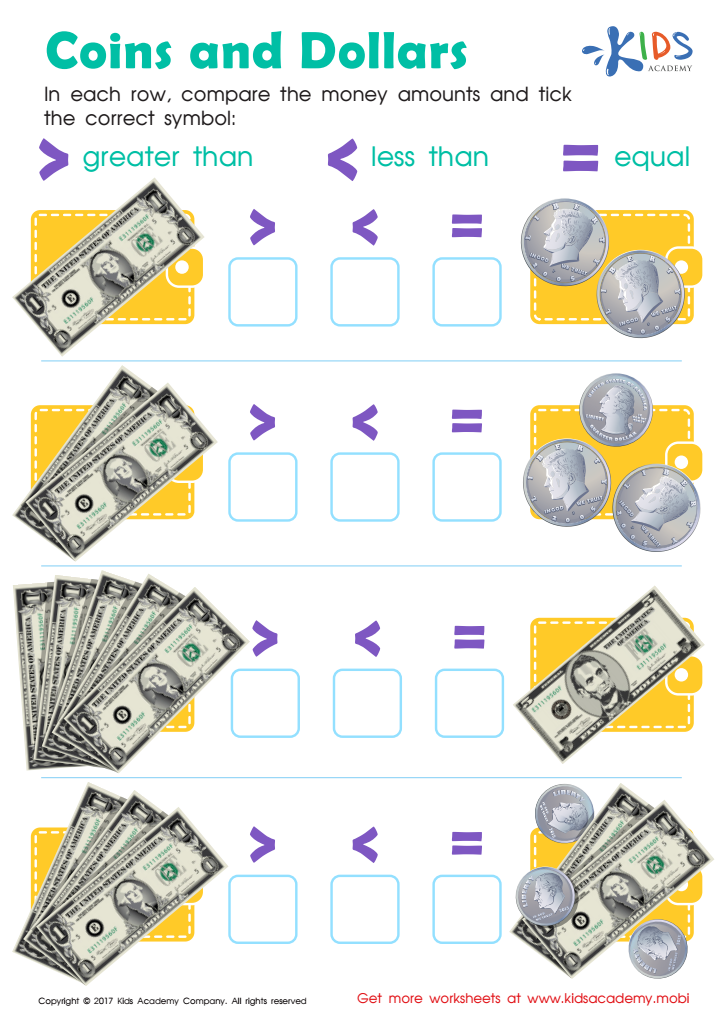
Money: Coins Dollars Printable
 Assign to My Students
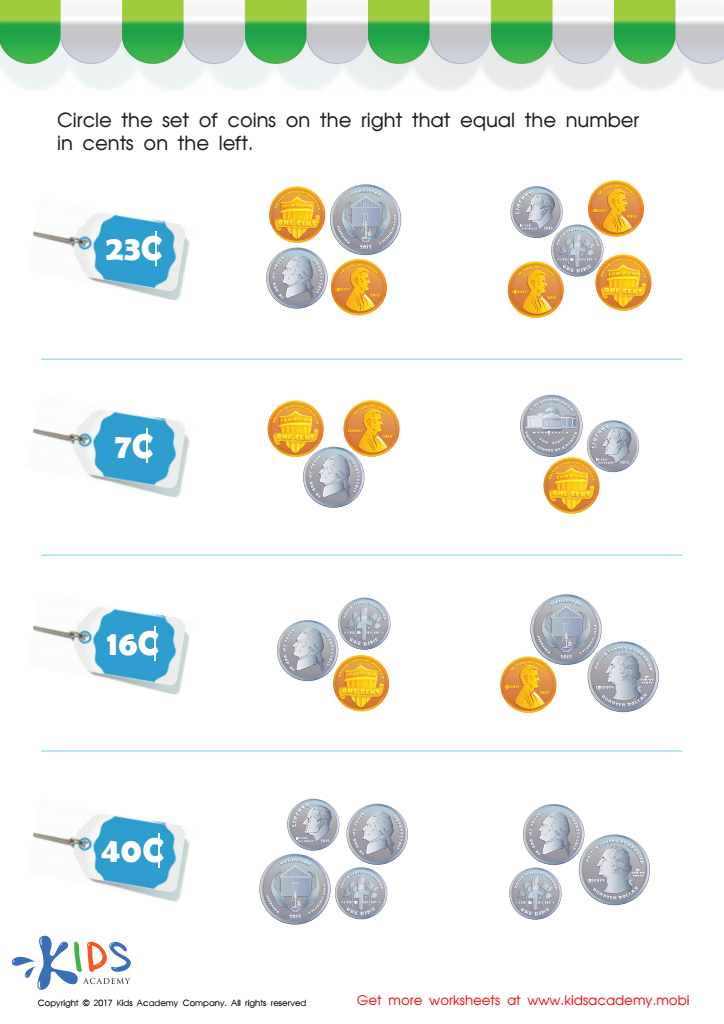
Picking the Coins You Need Money Worksheet
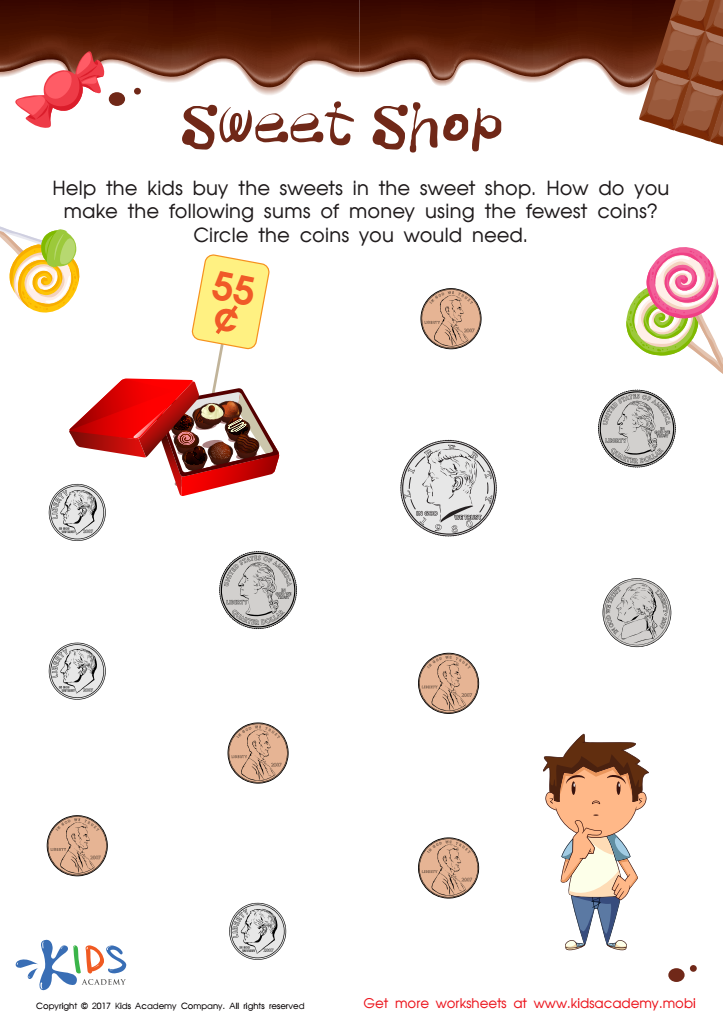
Sweet Shop – Counting Coins Worksheet








Basic math skills form the foundation for not only future academic success but also daily life activities. An early emphasis on these skills for children ages 4-9 offers numerous benefits. Parents and teachers should care about this for several reasons. Firstly, developing strong basic math skills at an early age fosters critical thinking and problem-solving abilities. Young learners who are comfortable with math are more likely to excel in it as they progress through school, reducing anxiety and increasing academic confidence.
Additionally, incorporating elements of extra challenges and rewards, such as money-themed activities, can make learning math fun and engaging. Learning about money involves numbers, basic calculations, and understanding value—all crucial aspects of math. When children see practical applications through activities that simulate real-life scenarios, they develop a sense of relevance and motivation.
Moreover, knowing how to manage and understand money helps establish financial literacy from a young age, an essential life skill. Activities focused on counting, simple addition and subtraction, and making change assist children in grasping the concept of money management early on.
Lastly, early strength in math often correlates with successes and opportunities later in life. By investing time and resources in developing these competencies, parents and teachers set children up for a brighter academic future and improved problem-solving skills in everyday life.