Understanding plurals Extra Challenge Writing Worksheets for Ages 4-9
5 filtered results
Difficulty Level
Grade
Age
-
From - To
Subject
Activity
Standards
Discover the "Understanding Plurals Extra Challenge Writing Worksheets" designed for ages 4-9! These engaging worksheets provide an exciting platform for young learners to master the concept of plurals. Packed with fun activities, children will distinguish between singular and plural nouns while enhancing their writing skills. Each worksheet promotes critical thinking through various challenges, such as identifying plural forms and using them in sentences. Perfect for reinforcing classroom learning or as a creative homework assignment, these worksheets make learning enjoyable and effective. Help your child thrive in their literacy journey with our delightful and interactive plural understanding challenges!
Favorites
With answer key
Interactive
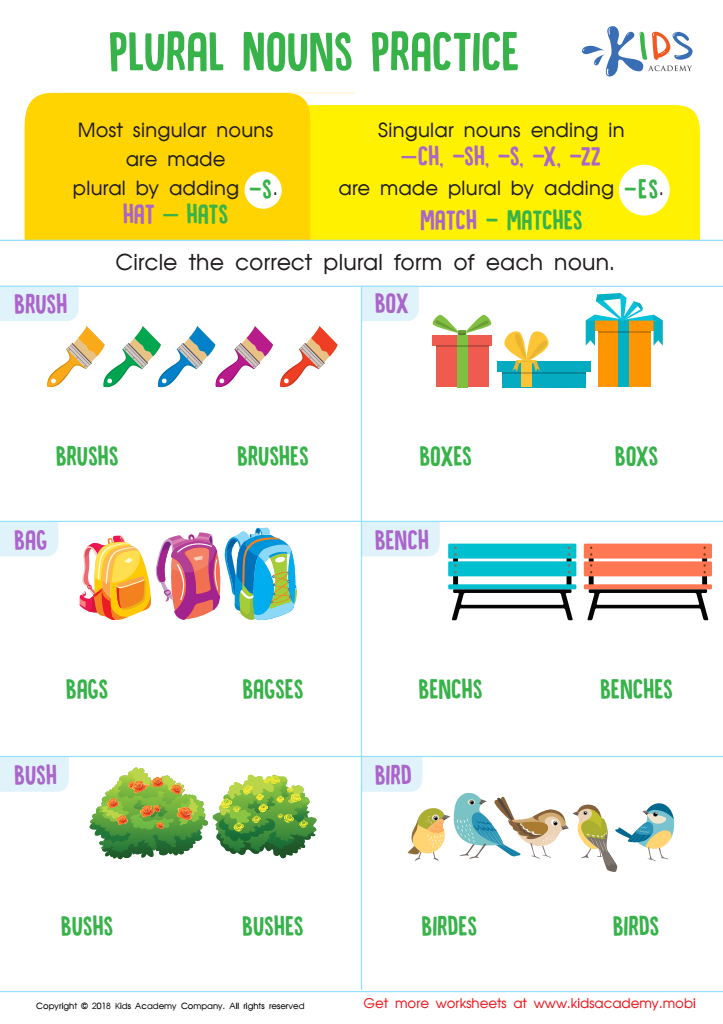
Plural Nouns Practice Worksheet
Explain to your child that most singular nouns become plural by adding "-s". E.g. "cat"->"cats". For words ending in "-ch", "-sh", "-s", "-x", or "-zz", add "-es". E.g. "buzz"->"buzzes". Then, get them to circle the right plural form of each noun on the worksheet.
 Assign to My Students
Plural Nouns Practice Worksheet
Worksheet
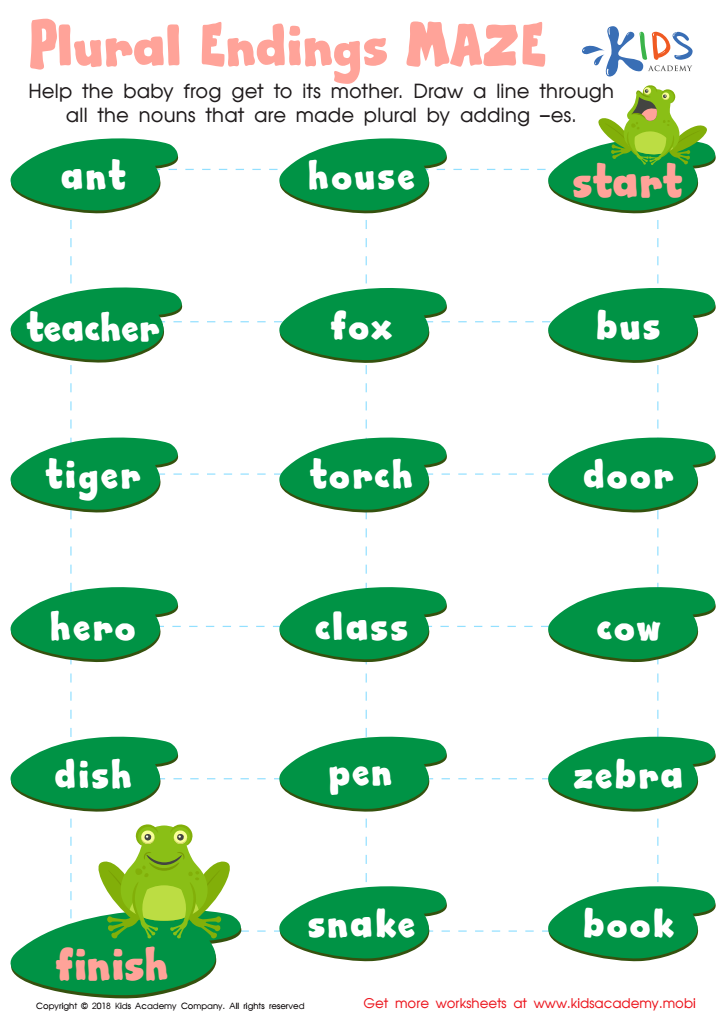
Plural Endings Maze Worksheet
Help your child have fun while learning new things with this worksheet. Does your child know that some nouns require '-es' to make them plural? Use this pdf to teach them the rule and get the little frog to its mother – draw a line through the words with '-es' plural forms.
Plural Endings Maze Worksheet
Worksheet
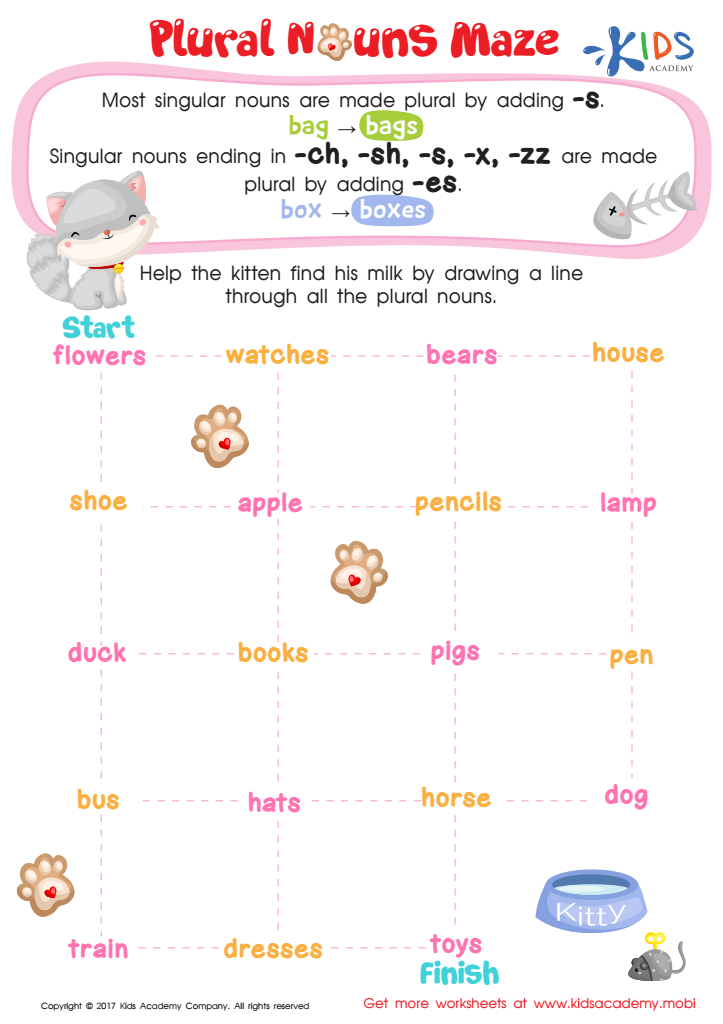
Plural Nouns Maze Worksheet
Oh no, the kitty needs her milk! Help your learner navigate the maze by drawing a line through the plural words. Review the grammar rules on -s and -es endings, then get to work to guide the kitten to her bowl! Download this PDF worksheet to start.
Plural Nouns Maze Worksheet
Worksheet
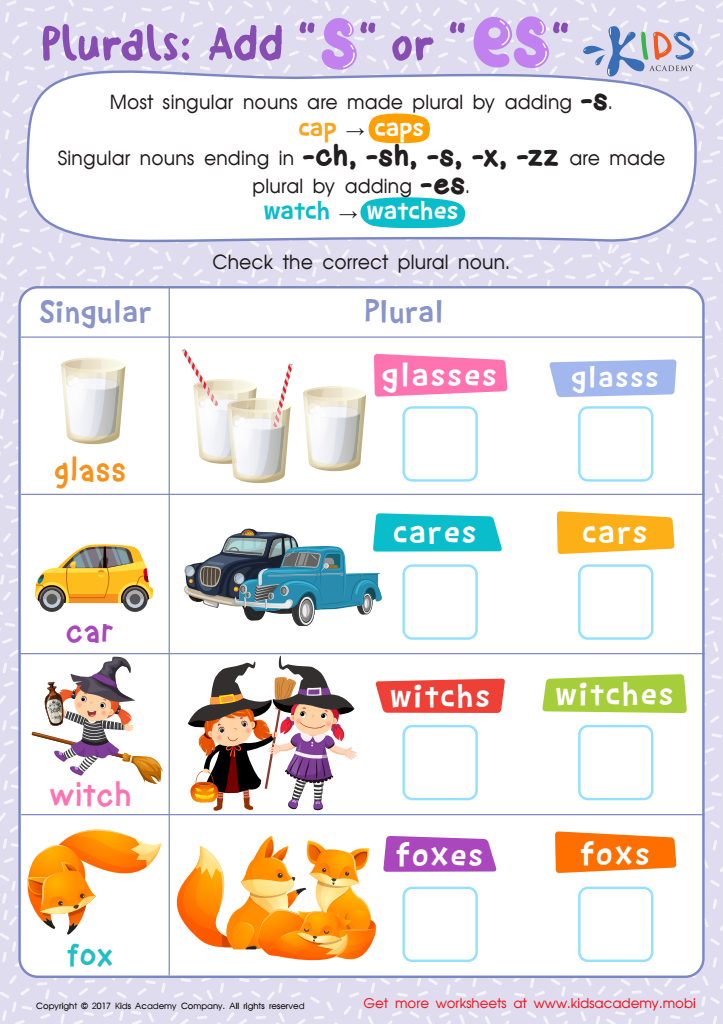
Plurals: "–es" or "–es"? Worksheet
Learning plural nouns can be tough for young readers. This worksheet shows them the difference between singular and plural spelling with cute images. Read each word and check the correct version. Remind them why the other ending can't be used.
Plurals: "–es" or "–es"? Worksheet
Worksheet
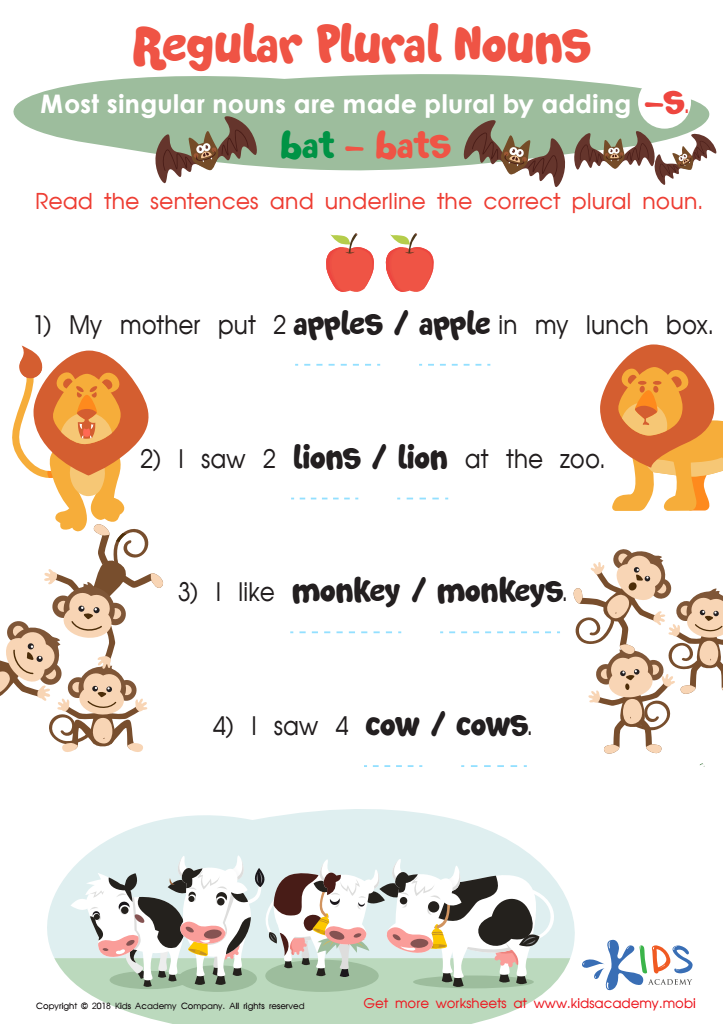
Regular Plural Nouns Worksheet
Your child should know the rule of adding '-s' to form plurals of nouns by now. Examples: bat-bats, cat-cats, song-songs etc. If they understand this, the task in the worksheet should be easy. Read the sentences and ask them to underline the correct plural noun.
Regular Plural Nouns Worksheet
Worksheet
Join Kids Academy for Free
Who is primarily going to use this learning content?







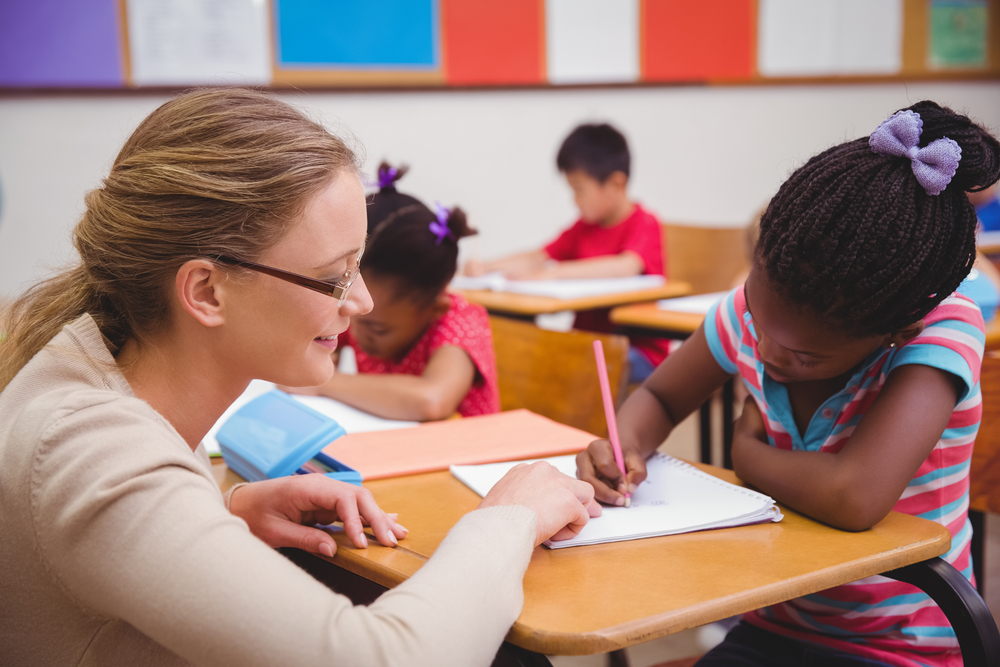
Understanding plurals is a fundamental aspect of language development and literacy for young learners aged 4-9. Parents and teachers should prioritize this skill because it enhances children's ability to communicate effectively. Plurals help children comprehend and express quantity, fostering critical thinking and vocabulary expansion. As they learn to identify and use plurals, kids develop a greater appreciation for words and their meanings.
Moreover, mastering plurals sets the groundwork for more complex grammar concepts. By embracing this concept early on, children build confidence in their reading and writing abilities, allowing for smoother transitions into advanced literacy skills. Since storytelling and instruction often involve diverse nouns, recognition of plurals aids comprehension and engagement.
In the context of collaborative learning, when children grasp plurals, they contribute more meaningfully to conversations and group activities, enhancing social skills as well. Additionally, involving parents in this learning journey can strengthen bonds and create a supportive home environment focused on growth.
Finally, nurturing an understanding of plurals ensures children are well-equipped for future academic challenges, creating a solid foundation across all subjects, especially in language arts, mathematics, and sciences, where noun forms play a crucial role. Thus, prioritizing plurals is an investment in a child's holistic development.