Filters

8 filtered results

Clear all filters
Favorites
With answer key
Interactive

8 filtered results

Difficulty Level

Grade


Discover our "Fine Motor Skills Extra Challenge Alphabet Worksheets" designed specifically for 4-year-olds! These engaging worksheets provide a fun and interactive way for young learners to enhance their fine motor skills while mastering the alphabet. Each activity focuses on key skills such as tracing, drawing, and letter recognition, helping children develop handwriting precision and hand-eye coordination. Perfect for home or classroom use, these worksheets offer a unique blend of learning and creativity, ensuring that your little ones stay engaged and motivated. Foster early educational development and watch your child's confidence grow with our tailored alphabet challenges! Ideal for every preschooler.

Check out this FREE Trial Lesson on Alphabet for age 4!

A

Favorites
With answer key
Interactive
  • 4
  • Fine Motor Skills
  • Alphabet
  • Extra Challenge
Letter a worksheets
Letter a worksheets

Letter A Tracing Page

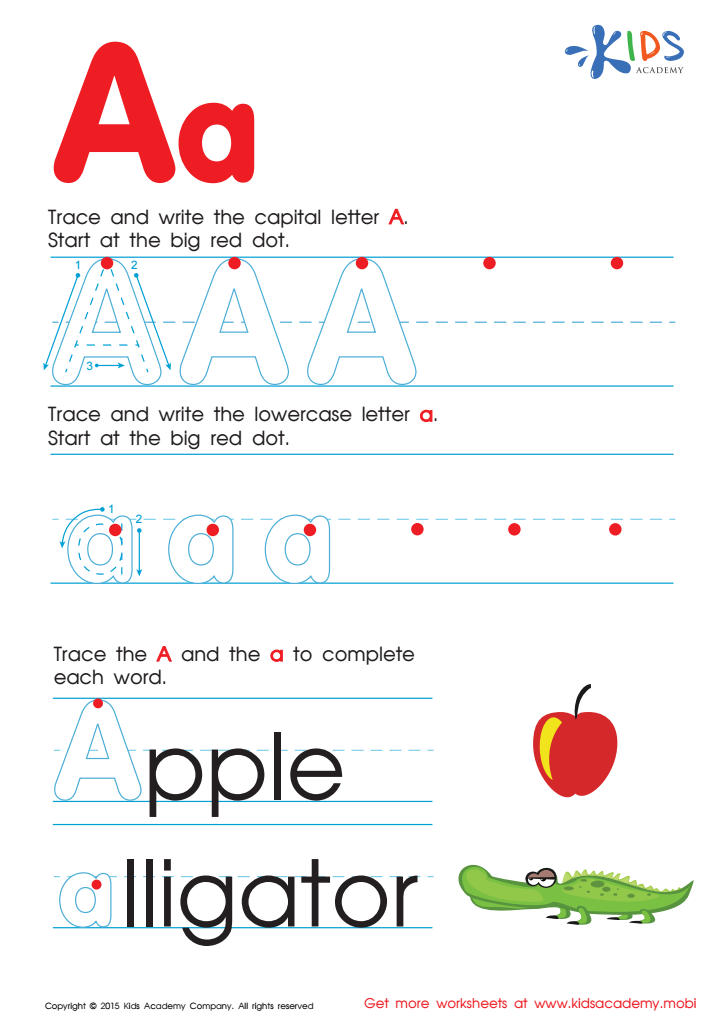
Trace and write the letter "A"! Start with the big red dot, then do the capital and lowercase versions. Then write it again with two words - apple and alligator. Download more tracing worksheets at Kids Academy.
Letter A Tracing Page
Worksheet
Letter Z worksheets
Letter Z worksheets

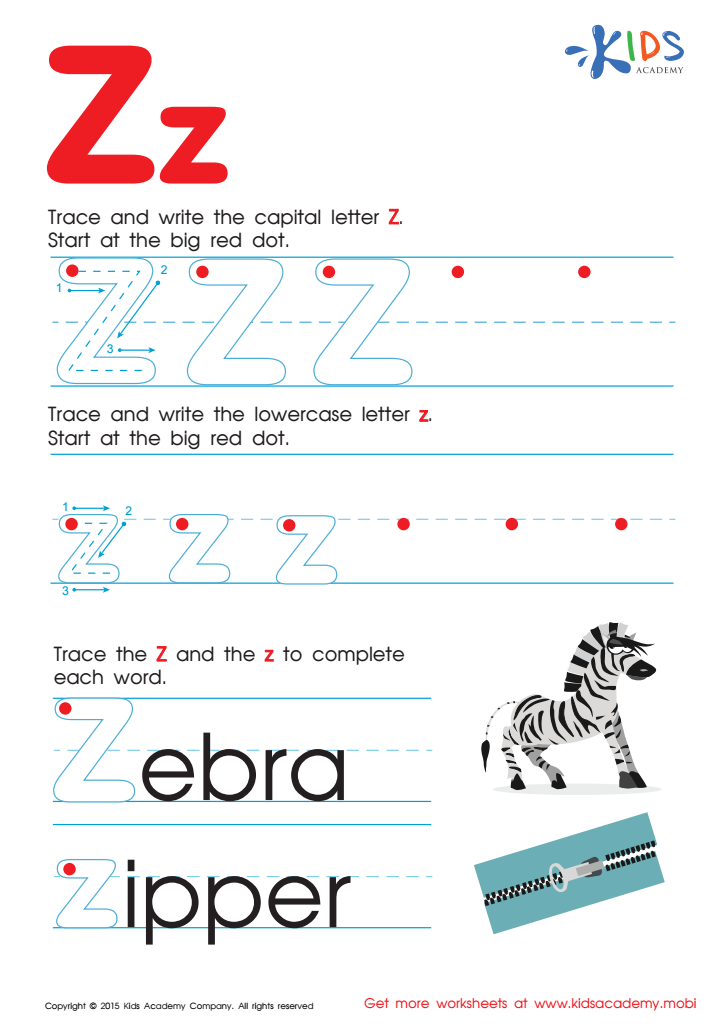
Letter Z Tracing Page

Trace and write capital "Z" and lowercase "z". Complete words "zebra" and "zipper". Be attentive and have fun! (80 words)
Letter Z Tracing Page
Worksheet
Baa Baa Black Sheep printable worksheet

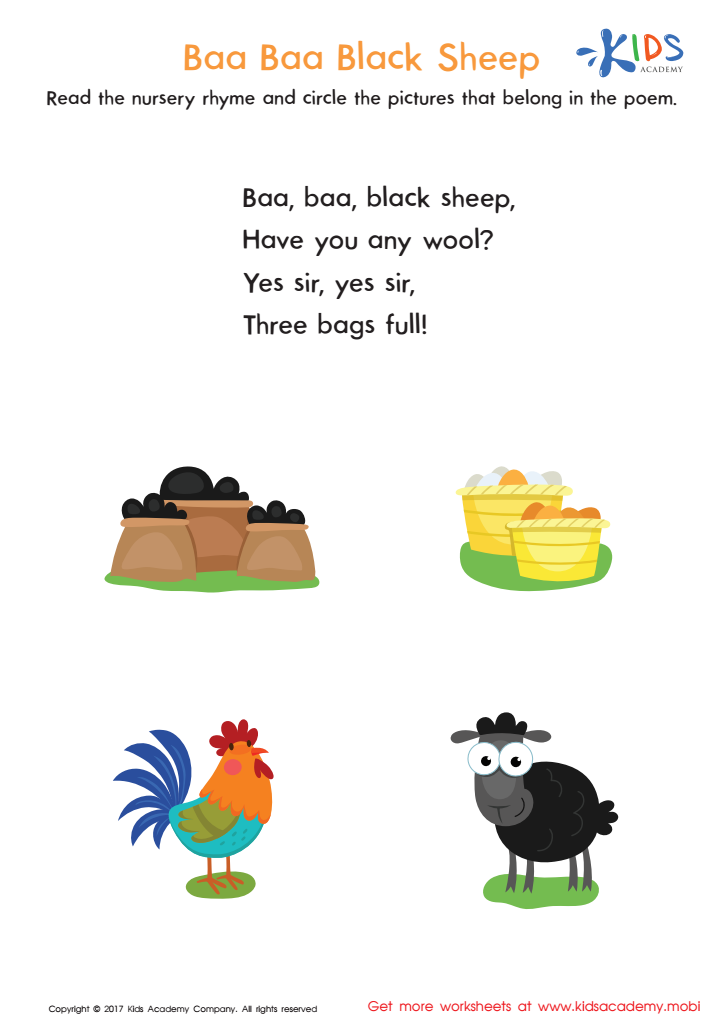
Baa Baa Black Sheep Printable

Jumpstart your child's reading skills with this printable Baa Baa Black Sheep worksheet! Recite the lines with them, then have them select the pictures associated with the poem to test comprehension. Fun and educational!
Baa Baa Black Sheep Printable
Worksheet
Letter R worksheets
Letter R worksheets

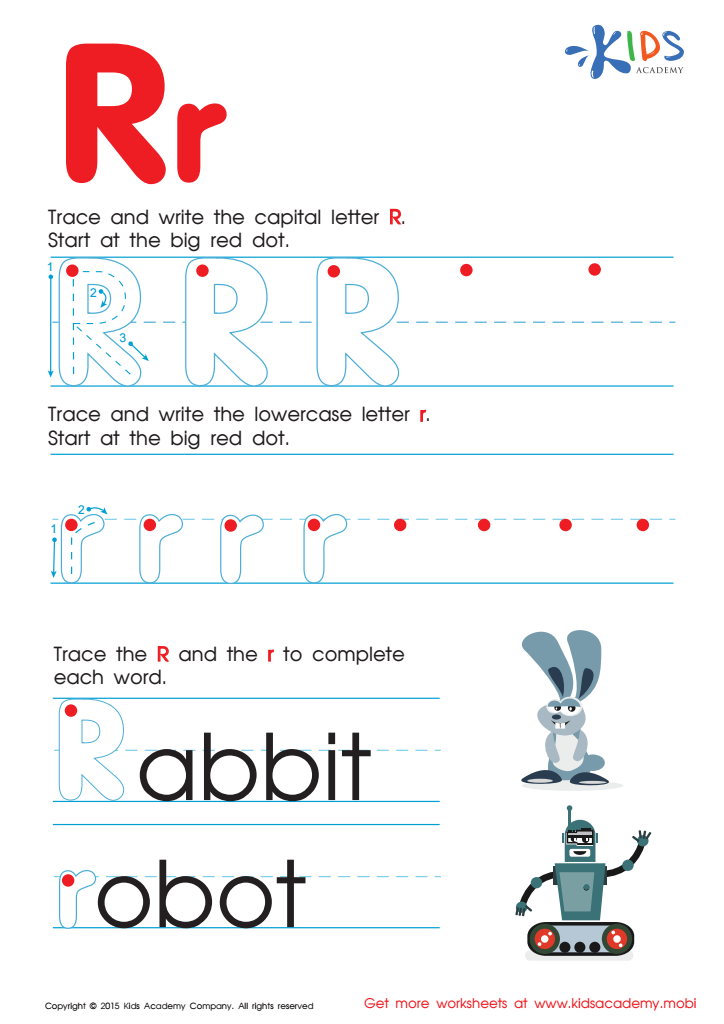
Letter R Tracing Page

Trace and write the letter "R" with this worksheet for kindergarten. Start with the uppercase, then move on to the lowercase. Write the letters several times for practice. Then help complete the words for the rabbit and robot, spelling carefully. More ABC worksheets can be found at Kids Academy.
Letter R Tracing Page
Worksheet
Letter X worksheets
Letter X worksheets

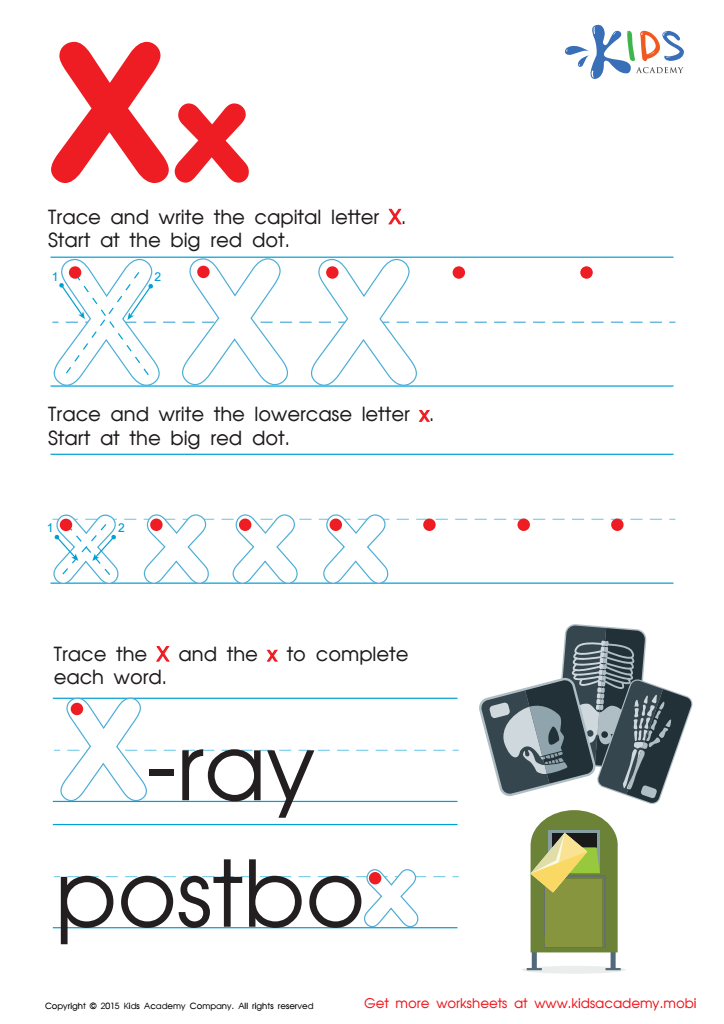
Letter X Tracing Page

Trace the uppercase letter "X" to learn, then write it yourself and practice. Then do the same with the lowercase "x" before completing the words "X-ray" and "postbox". Enjoy our alphabet printables!
Letter X Tracing Page
Worksheet
Letter U worksheets
Letter U worksheets

Letter U Tracing Page

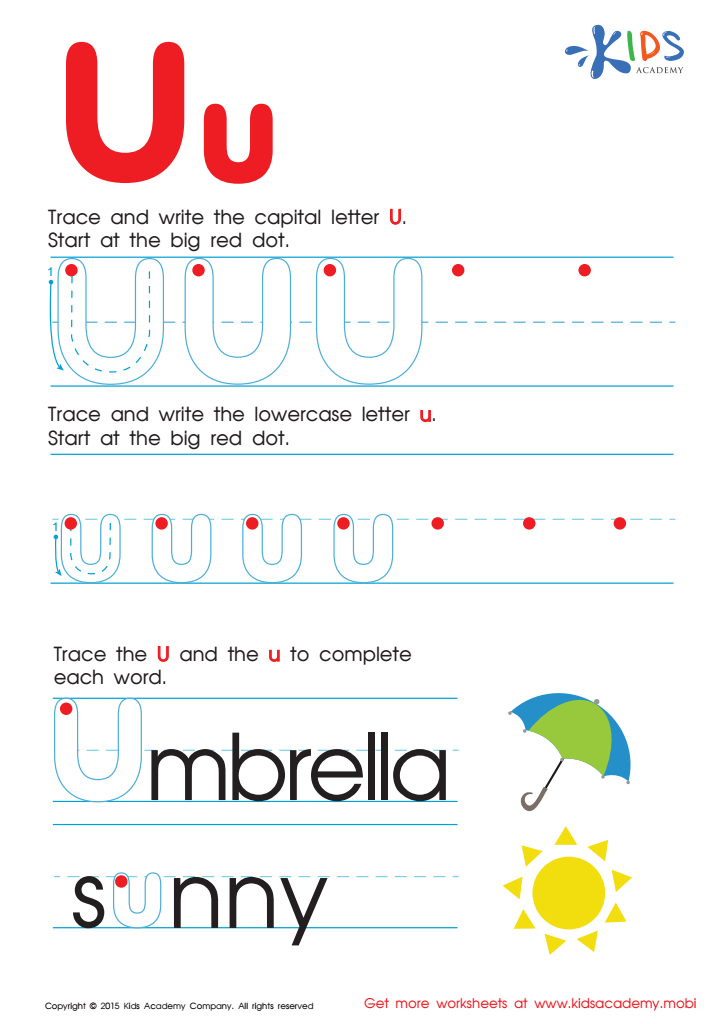
Ready to trace and write the letter "U"? Use our worksheet and practice tracing both uppercase and lowercase letters. Complete the words "umbrella" and "sunny" with a capital "U". Check our full collection of alphabet printables for more activities.
Letter U Tracing Page
Worksheet
Letter V worksheets
Letter V worksheets

Letter V Tracing Page

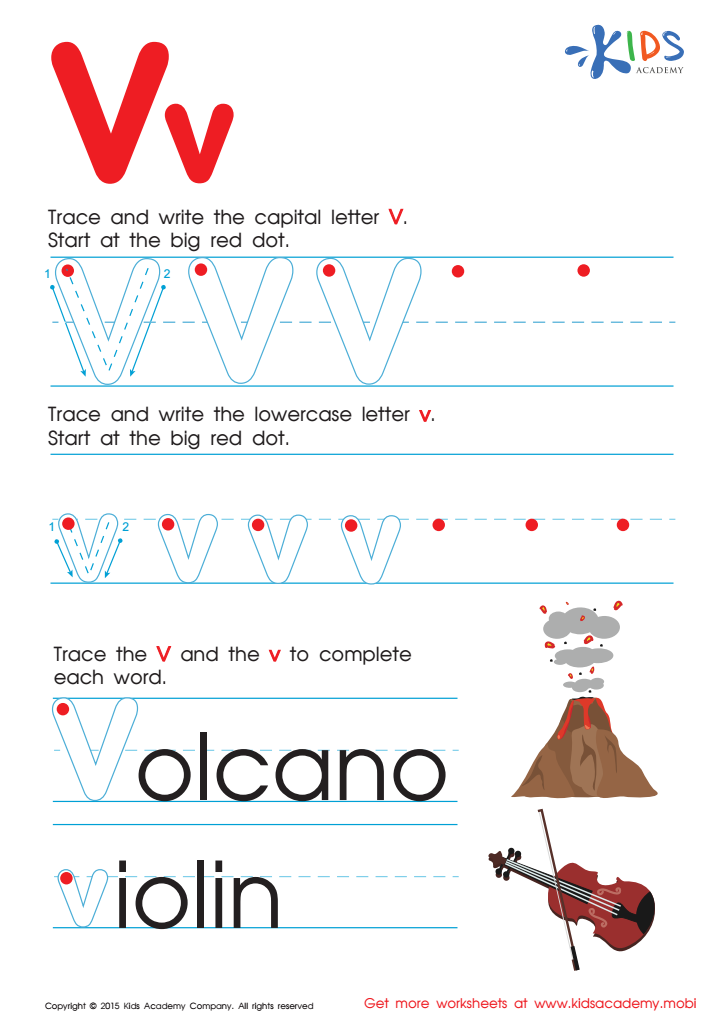
Trace the uppercase and lowercase letter "V" with our kindergarten tracing worksheet. Begin at the red dot and follow the lines. Write it several times. Complete the words "Volcano" and "violin". Get more alphabet activities at Kids Academy.
Letter V Tracing Page
Worksheet
Letter T worksheets
Letter T worksheets

Letter T Tracing Page

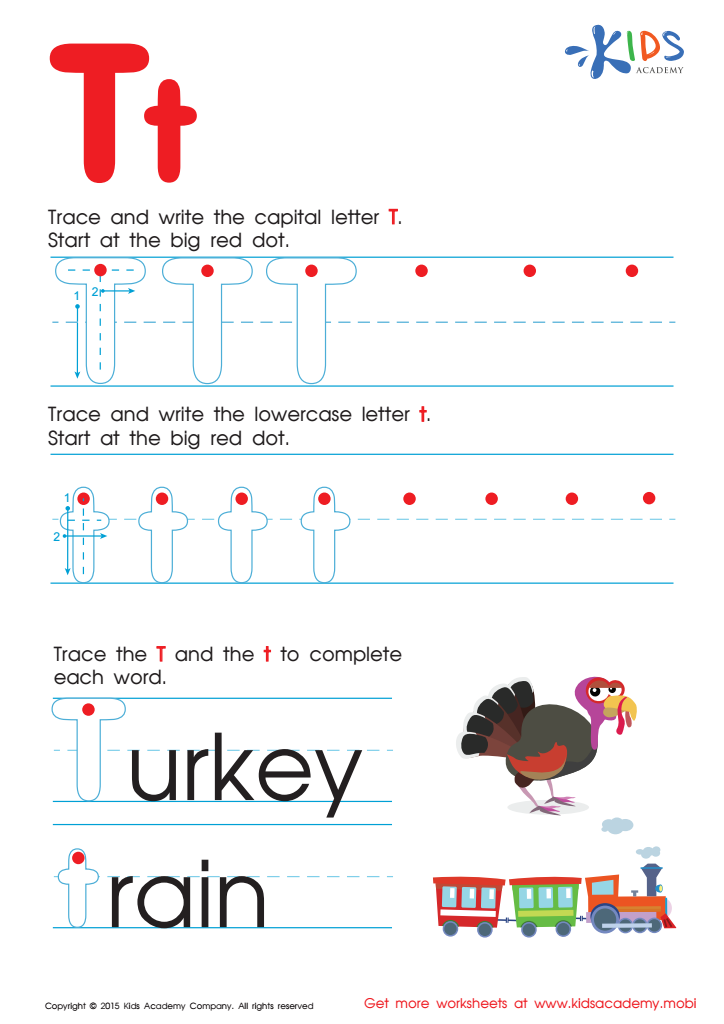
Trace letters, complete words, draw pictures and see your kids having fun! Kids Academy offers alphabet tracing worksheets to learn to write letters. Start with the big red dot, trace the letter, then write it. Practice uppercase and lowercase. Have fun completing words with a Turkey or a rain-train and draw pictures. Get more printable worksheets to make learning enjoyable.
Letter T Tracing Page
Worksheet


Fine motor skills are essential for young children's overall development, particularly in tasks that involve precision and control. Engaging in activities like the Fine Motor Skills Extra Challenge Alphabet for 4-year-olds offers numerous benefits for both parents and teachers. First, these activities enhance hand-eye coordination and dexterity, which are crucial as children progress in their learning journey, from writing to using tools effectively.

Moreover, developing fine motor skills can boost children's confidence and independence in performing self-care tasks, such as buttoning clothes and using utensils. The focus on the alphabet in these activities aids in early literacy development, ensuring that children not only grow their motor skills but also recognize letters and sounds, which are foundational for reading.

Additionally, these challenges can be a fun and interactive way to promote engagement, making learning enjoyable. Involving parents or caregivers in these activities strengthens the bond between them and their child, fostering a supportive learning environment at home.

Ultimately, incorporating fine motor skill challenges in early childhood education cultivates well-rounded individuals who are better prepared for the academic and social challenges of school. Therefore, both parents and teachers should embrace and advocate for these enriching experiences.