Understanding plurals Extra Challenge Worksheets for 4-Year-Olds
3 filtered results
-
From - To
Explore our engaging "Understanding Plurals Extra Challenge Worksheets" designed specifically for 4-year-olds! These worksheets help young learners grasp the concept of plurals with fun and interactive activities that promote early literacy skills. Each worksheet is carefully crafted to enhance understanding through colorful illustrations and stimulating exercises. Your child will enjoy matching singular words to their plural forms, filling in the blanks, and practicing vocabulary in a playful manner. Ideal for home or classroom use, these worksheets foster critical thinking and encourage language development, making learning about plurals a delightful experience. Start your child's journey toward effective communication today!
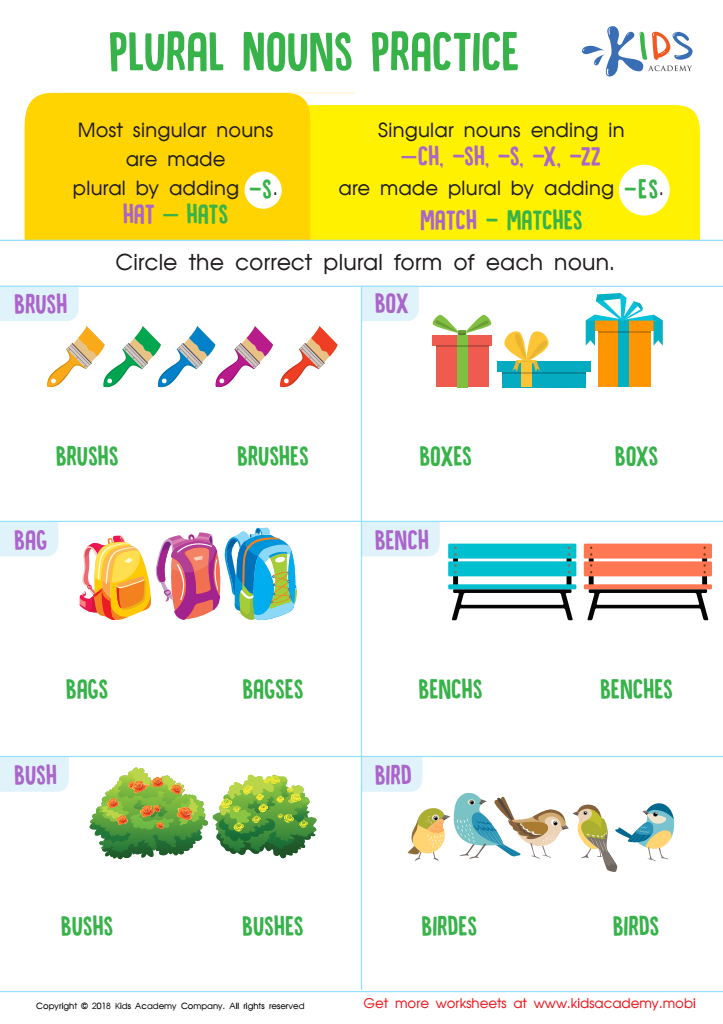
Plural Nouns Practice Worksheet
 Assign to My Students
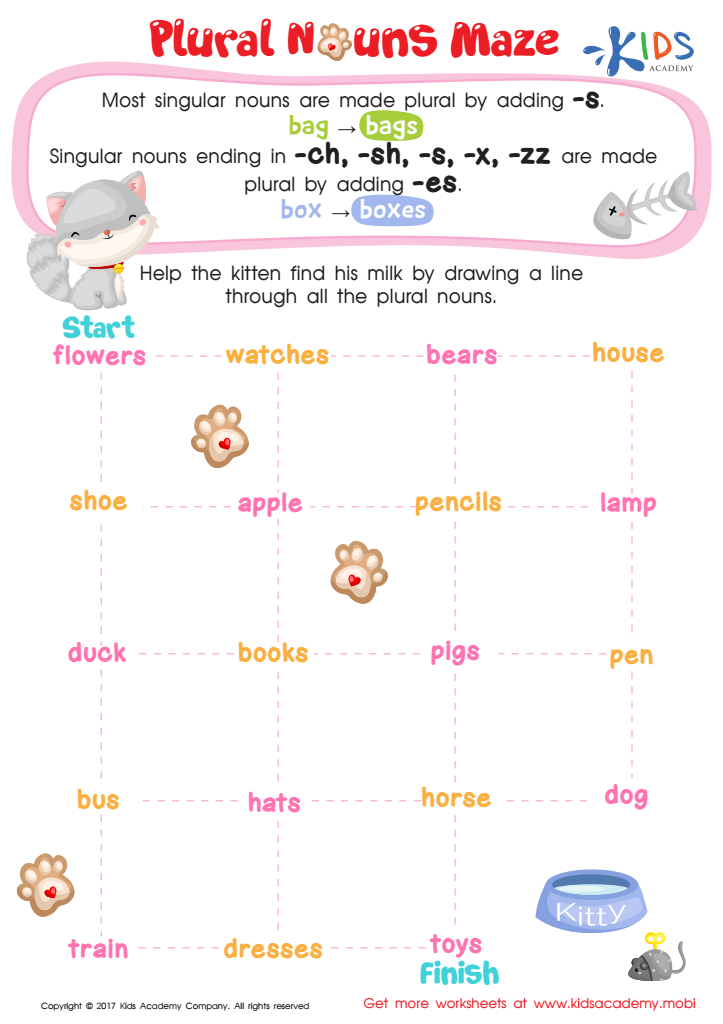
Plural Nouns Maze Worksheet
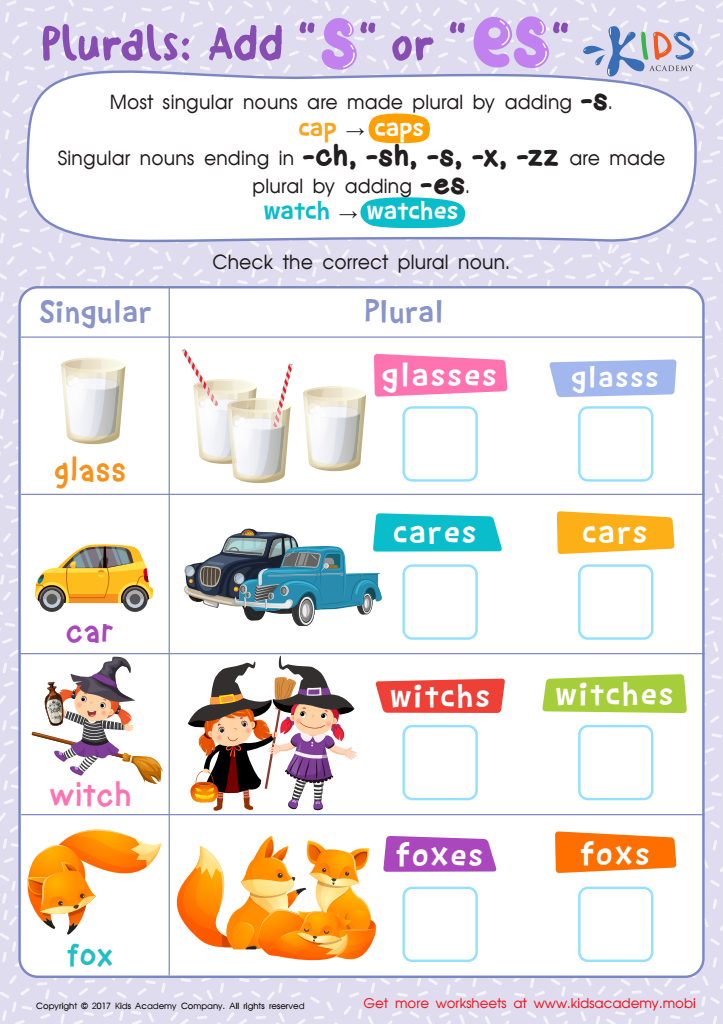
Plurals: "–es" or "–es"? Worksheet








Understanding plurals is vital for a child's language development, particularly for 4-year-olds, as it lays the foundation for effective communication and literacy skills. Parents and teachers should care about this topic because plurals help children grasp the concept of quantity, enhancing their ability to describe and categorize the world around them. Recognizing the difference between singular and plural forms supports vocabulary expansion and aids in early reading and writing processes.
Introducing plurals through engaging activities allows children to connect words with real-life objects, making learning memorable. For instance, using toys, pictures, or interactive games can illustrate the difference between ‘cat’ and ‘cats.’ This tactile approach encourages active participation, helping children internalize rules and forms organically.
Moreover, mastering plurals fosters critical social skills as children learn to discuss and share. Effective communication is key to building relationships with peers and adults, and pluralization plays a part in expressing those relationships clearly.
Encouraging children to explore plurals not only enriches their language but also builds confidence in their speaking and storytelling abilities, which are crucial for their overall development. Therefore, it’s essential for adults to be proactive in teaching this important aspect of language early on.








