Counting practice Extra Challenge Coins Worksheets for 4-Year-Olds
3 filtered results
-
From - To
Enhance your child's counting skills with our "Extra Challenge Coins Worksheets for 4-Year-Olds"! Designed to make learning fun, these printable worksheets engage young learners in interactive counting activities featuring vibrant coin illustrations. Each worksheet promotes essential mathematical skills, helping kids recognize and count coins while developing their understanding of numbers. Ideal for home or classroom use, these exercises encourage both independent and guided practice. Foster a love for math with exciting challenges that build confidence in little learners. Perfect for parents and educators looking to enrich their preschool curriculum, these worksheets are a valuable resource in early education. Start counting today!
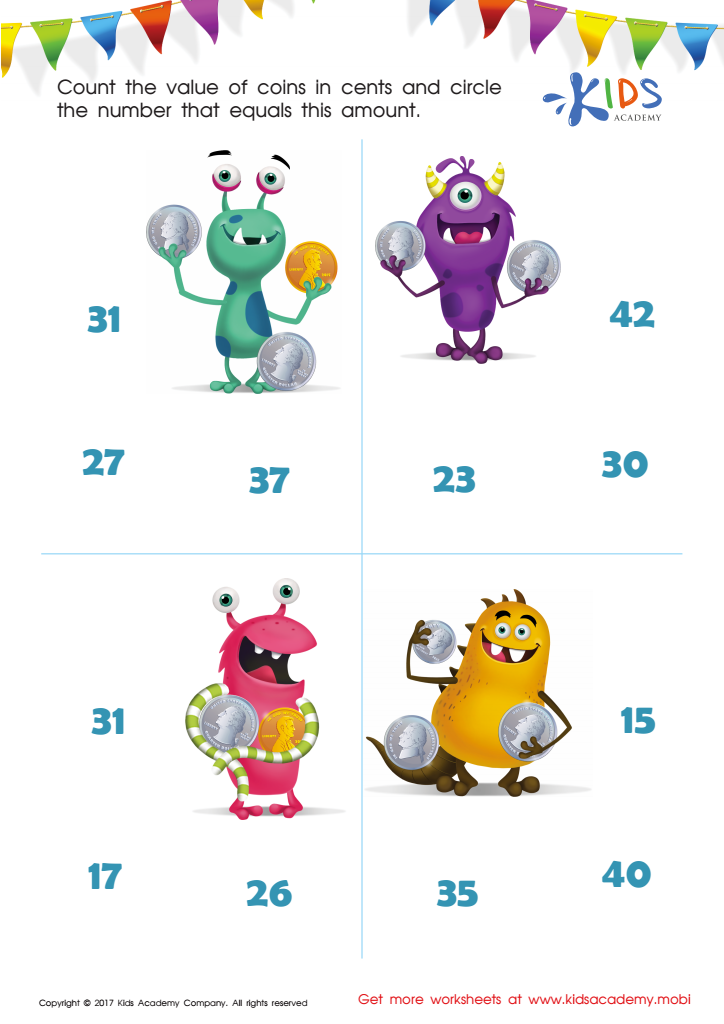
How Many Coins Money Worksheet
 Assign to My Students
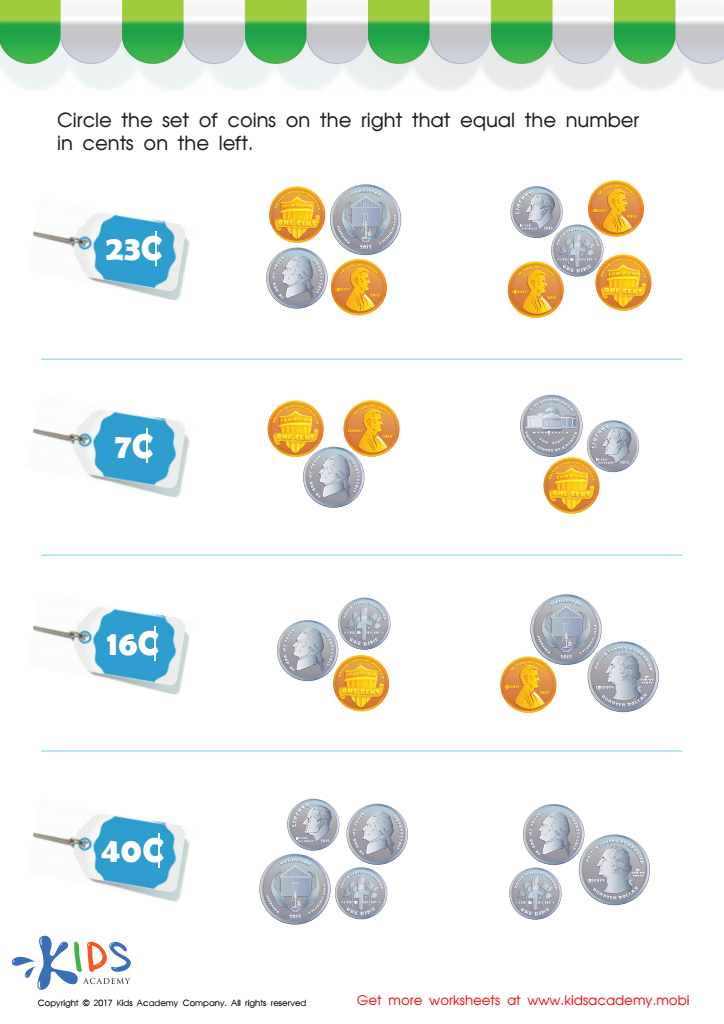
Picking the Coins You Need Money Worksheet
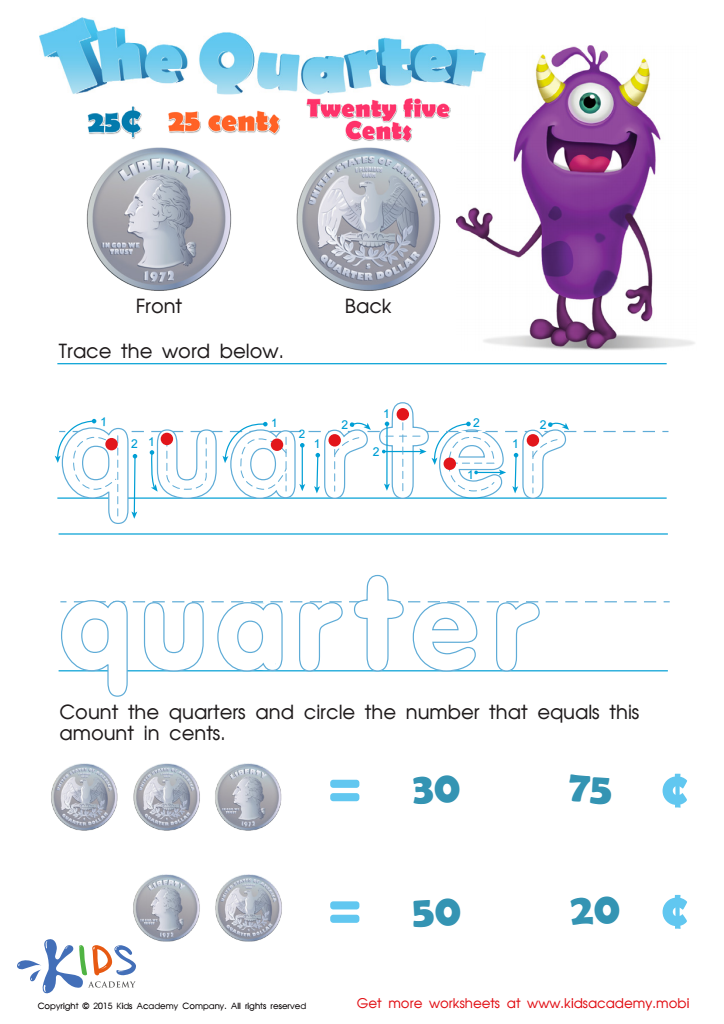
Twenty Five Cents or the Quarter Money Worksheet








Counting practice is essential for 4-year-olds, laying the foundation for mathematical understanding, critical thinking, and problem-solving skills. Incorporating Extra Challenge Coins into counting activities can significantly enhance a child's learning experience.
Firstly, this engaging method transforms counting from a basic task into a fun challenge, capturing young learners’ interest and motivation. Each coin can represent small units, encouraging children to visualize numbers and understand their practical applications. It promotes active involvement, ensuring that children remain attentive and excited about learning.
Secondly, the number concept is foundational for future mathematical skills. Early counting practice helps children recognize patterns, understand sequences, and develop number sense. Challenge coins can introduce concepts such as addition and subtraction in a tangible way, giving children a hands-on learning experience.
Additionally, using Extra Challenge Coins fosters important social skills. When children work together, they learn to share, take turns, and engage in cooperative play, all while practicing their counting skills.
For parents and teachers, investing time in creative counting practices like this not only supports academic growth but also enhances a child’s cognitive and emotional development. Ultimately, such activities contribute to a lifelong love of learning, ensuring well-rounded, capable individuals as they progress in their education.








