
Story sequencing Extra Challenge Reading Fiction Worksheets for 4-Year-Olds
3 filtered results
Difficulty Level
Grade
Age
-
From - To
Subject
Activity
Standards
Elevate reading skills with our "Story Sequencing Extra Challenge Reading Fiction Worksheets" designed for 4-year-olds! Tailored to engage young minds, these worksheets focus on enhancing understanding through sequential story elements. Each worksheet features captivating illustrations and engaging narratives to help little readers develop foundational literacy skills. By arranging story components in the correct order, children enhance their comprehension and logical thinking, making reading both fun and educational. Perfect for parents and educators, these resources support early literacy growth, preparing kids for future reading success. Explore our vibrant, interactive worksheets to give your child an edge in their reading journey!
Favorites
With answer key
Interactive
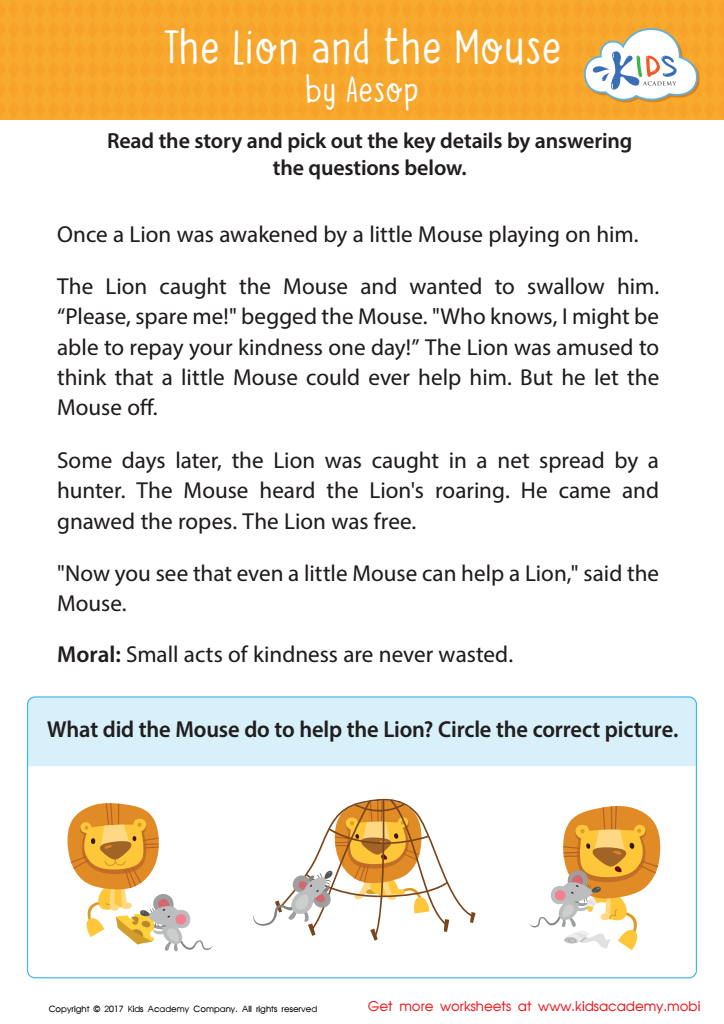
The Lion and The Mouse Sequencing Worksheet
Read the fable "The Lion and the Mouse" and test your child's comprehension skills! Answer the question by selecting the image that best matches the answer. It's a great way to practice reading comprehension.
 Assign to My Students
The Lion and The Mouse Sequencing Worksheet
Worksheet
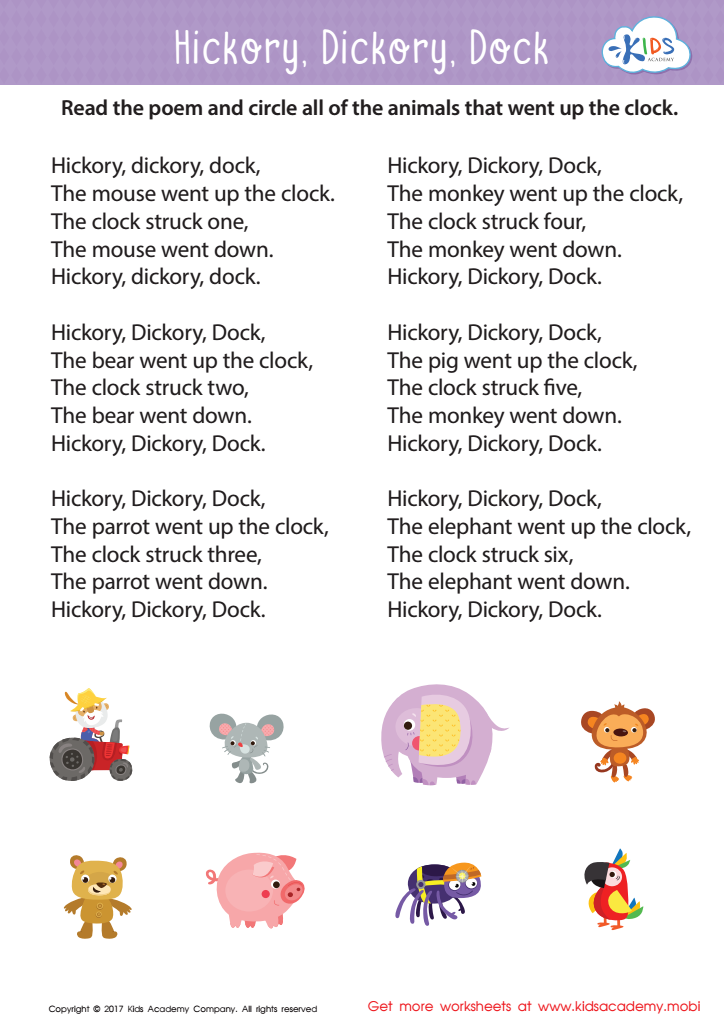
Hickory Dickory Dock Sequencing Worksheet
Help your child boost their reading skills with this fun Hickory Dickory Dock sequencing worksheet! They'll read and identify the animals in the right order, strengthening their story sequencing and comprehension skills.
Hickory Dickory Dock Sequencing Worksheet
Worksheet
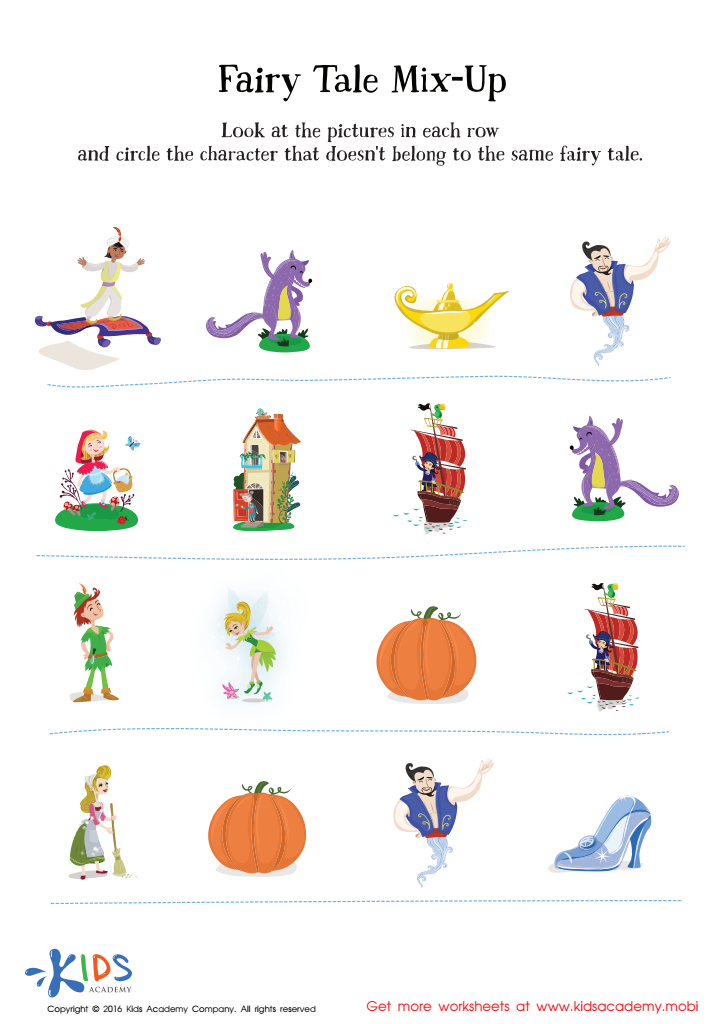
Fairy Tale Worksheet: Story Mix Up
Kids love fairy tales! Encourage your child to engage with their favorite stories using our vibrant worksheet. It'll help sharpen cognitive and comprehension skills, build problem-solving skills, and strengthen classification skills. Beforehand, read or watch the fairy tales and talk about each one's characters and elements. Your child will love the story and time spent together! Print the worksheet and get ready for a magical experience.
Fairy Tale Worksheet: Story Mix Up
Worksheet
Join Kids Academy for Free
Who is primarily going to use this learning content?








Supporting story sequencing and challenging early readers with fiction is crucial in nurturing foundational literacy skills in 4-year-olds. At this developmental stage, children are beginning to grasp the basics of narrative structure, which includes understanding the 'beginning,' 'middle,' and 'end' of a story. Engaging with sequencing activities refines their ability to organize thoughts logically, fostering crucial cognitive abilities like memory, comprehension, and critical thinking.
Parents and teachers should care because it helps young children to connect events and cause-and-effect relationships, laying the groundwork for both reading and overall cognitive development. Fictional stories, with their imaginative elements, captivate a child's interest and stimulate creativity. Extra challenges push capable young learners to think deeper and build more complex reasoning skills, thereby advancing their reading proficiency.
Moreover, early exposure to sequencing in narrative contexts aids children in predicting story outcomes and enhances their listening and communication abilities. When children articulate or illustrate the progression of events, it reinforces their language development and provides practice in expressing ideas coherently. Structured yet engaging, story sequencing challenges foster an enthusiasm for reading that sets the stage for lifelong learning and literacy. Thus, investing effort in these activities at an early age equips children with essential skills on which future educational experiences are built.







