Observational skills Extra Challenge Worksheets for Ages 5-6
3 filtered results
-
From - To
Unlock your child's potential with our "Observational Skills Extra Challenge Worksheets for Ages 5-6"! These meticulously designed activities enhance attention to detail and critical thinking in young learners. Our collection offers engaging tasks that boost absorption skills through interactive exercises. Each worksheet aids in developing keen observational abilities by prompting kids to identify differences, spot similarities, and track changes. Perfect for both classroom and home settings, these worksheets enliven learning and make it both fun and educational. Ideal for nurturing an inquisitive mind, our extra challenge worksheets are the ultimate tool for fostering a lifelong love for learning.
 Assign to My Students
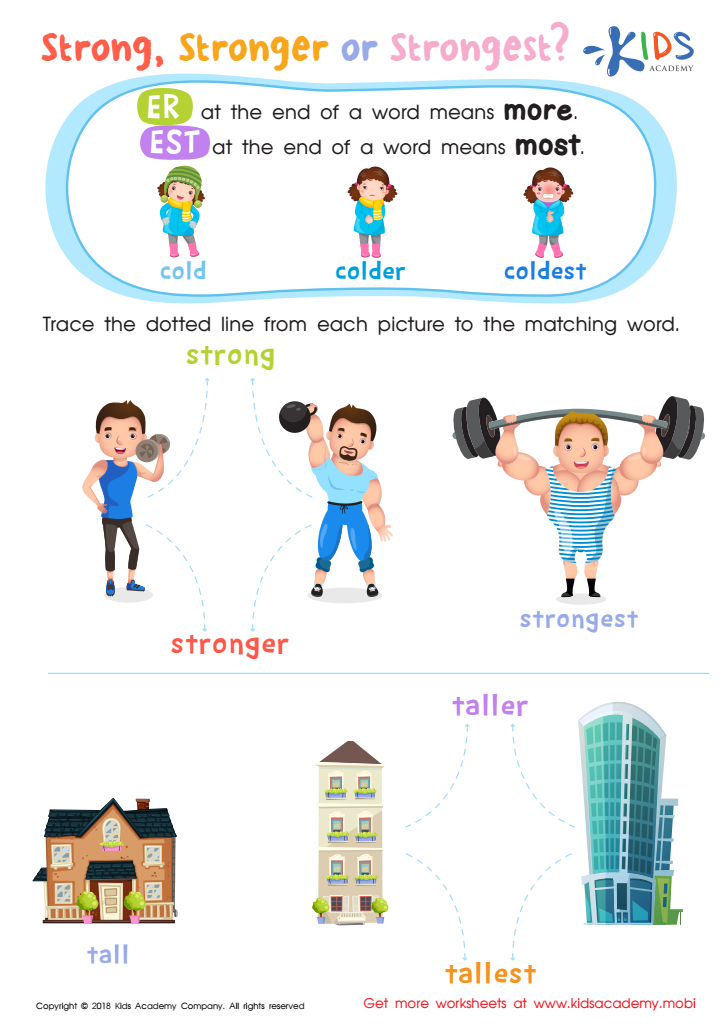
Strong or Stronger? Worksheet
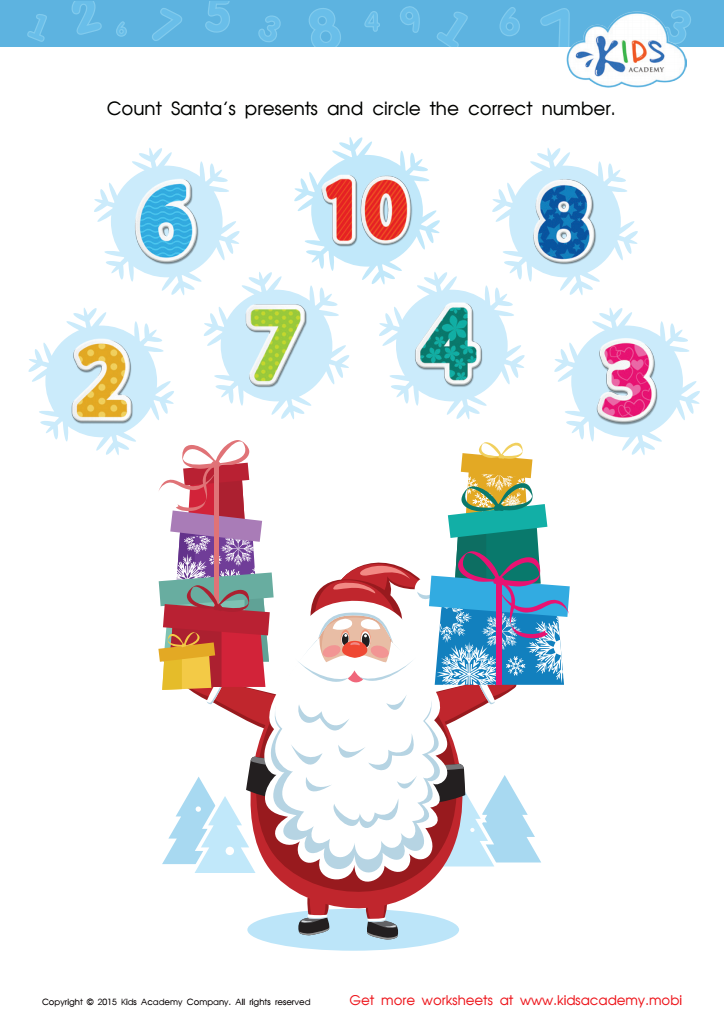
Count Santa's Presents Worksheet






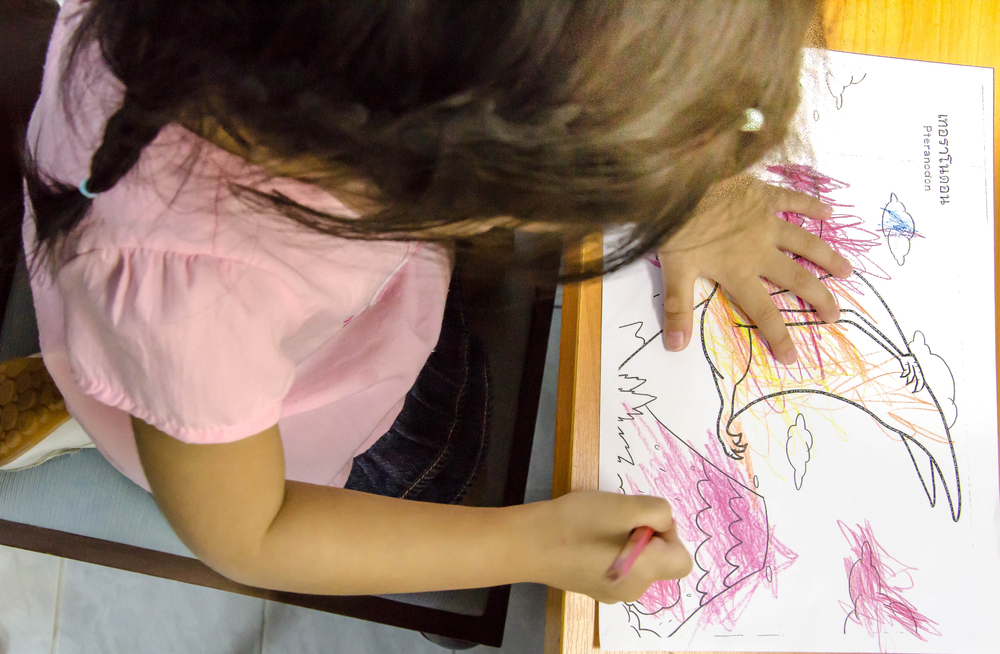
Observational skills are pivotal for the developmental growth of children aged 5-6, influencing their cognitive, social, and emotional development. Parents and teachers should emphasize these skills to foster a child’s natural curiosity, attention to detail, and critical thinking abilities. At this age, children are naturally curious about the world around them, and enhancing observational skills can sharpen their ability to notice and understand complex details in their surroundings, building a strong foundation for lifelong learning.
Strengthening observational skills helps improve focus and concentration, essential for academic success. It aids children in distinguishing patterns, recognizing differences and similarities, and drawing inferences—skills crucial for subjects like math, reading, and science. Moreover, these skills are integral to developing problem-solving abilities, enabling children to approach challenges positively and creatively.
In addition to academic benefits, honing observational skills enhances social dynamics by improving active listening and empathy. Children learn to interpret social cues, recognize emotions, and respond appropriately, which is vital for forming healthy interpersonal relationships. Emotional intelligence, boosted through keen observations, helps children manage their emotions effectively, contributing to better self-regulation and cooperation with peers.
Ultimately, nurturing observational skills fosters a well-rounded, inquisitive individual, equipped for more nuanced understanding of both academic concepts and real-life situations, ensuring a solid foundation for future success.








