
Recognizing shapes Extra Challenge Worksheets for Ages 5-6
3 filtered results
Difficulty Level
Grade
Age
-
From - To
Subject
Activity
Standards
Enhance your child's learning experience with our "Recognizing Shapes Extra Challenge Worksheets" designed specifically for ages 5-6. These engaging, printable worksheets help young learners develop their shape recognition skills in fun and interactive ways. Each activity encourages critical thinking as children identify, compare, and categorize various shapes, helping them build a strong foundation for future math concepts. Perfect for use at home or in the classroom, these worksheets are tailored to stimulate creativity while reinforcing essential skills. Make learning shapes a fun adventure with our thoughtfully crafted challenges that will keep your little ones excited and motivated!
Favorites
With answer key
Interactive
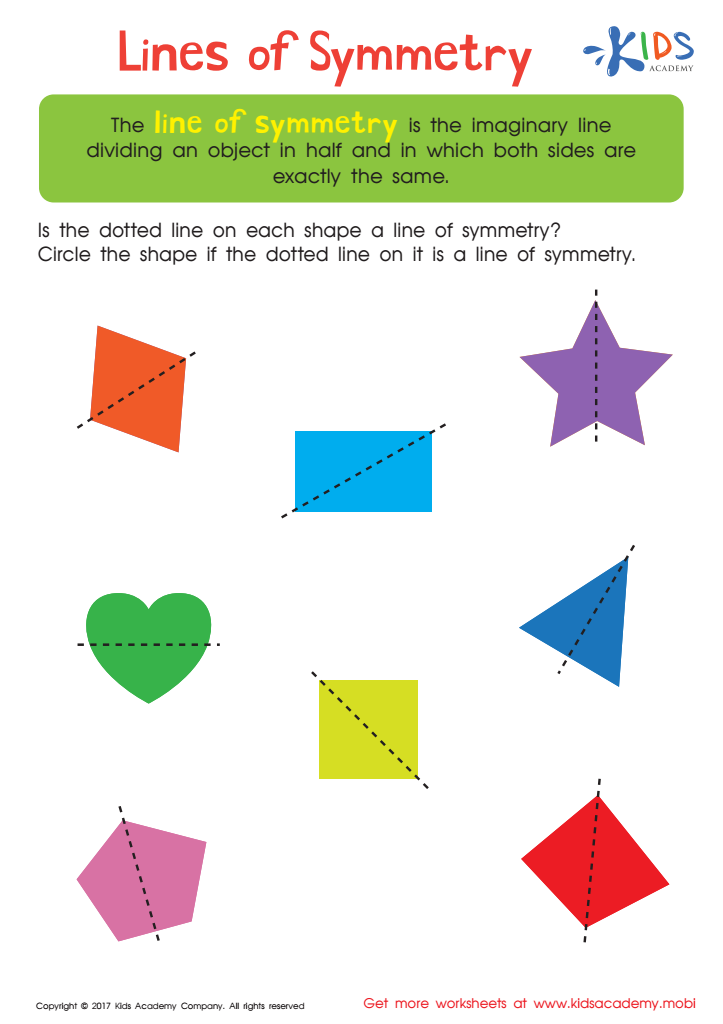
Lines of Symmetry Printable
Symmetry is a key math concept that kids must learn to develop their geometry skills. This fun worksheet helps build this skill, by encouraging kids to recognize symmetrical shapes and find equal parts.
 Assign to My Students
Lines of Symmetry Printable
Worksheet
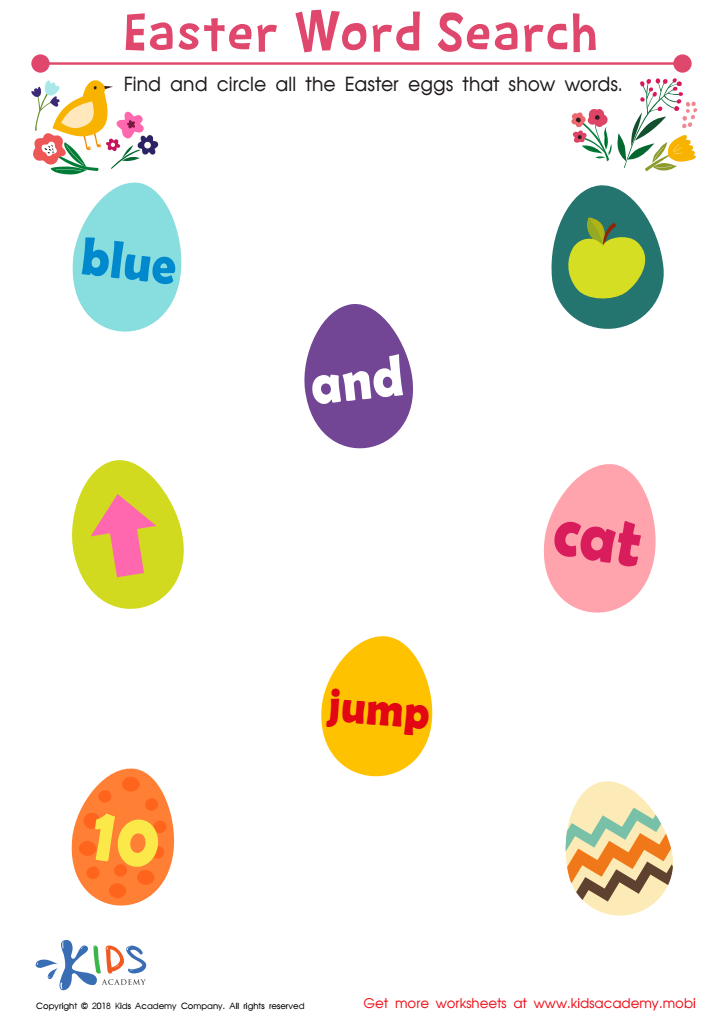
Easter Word Search Worksheet
Kids love Easter - food, picnics, games - and the egg hunt! Does your family celebrate Easter? Get your kids to find some of the Easter egg words in this word search. Ask them to read each word and circle the eggs. It's a fun way to celebrate the holiday!
Easter Word Search Worksheet
Worksheet
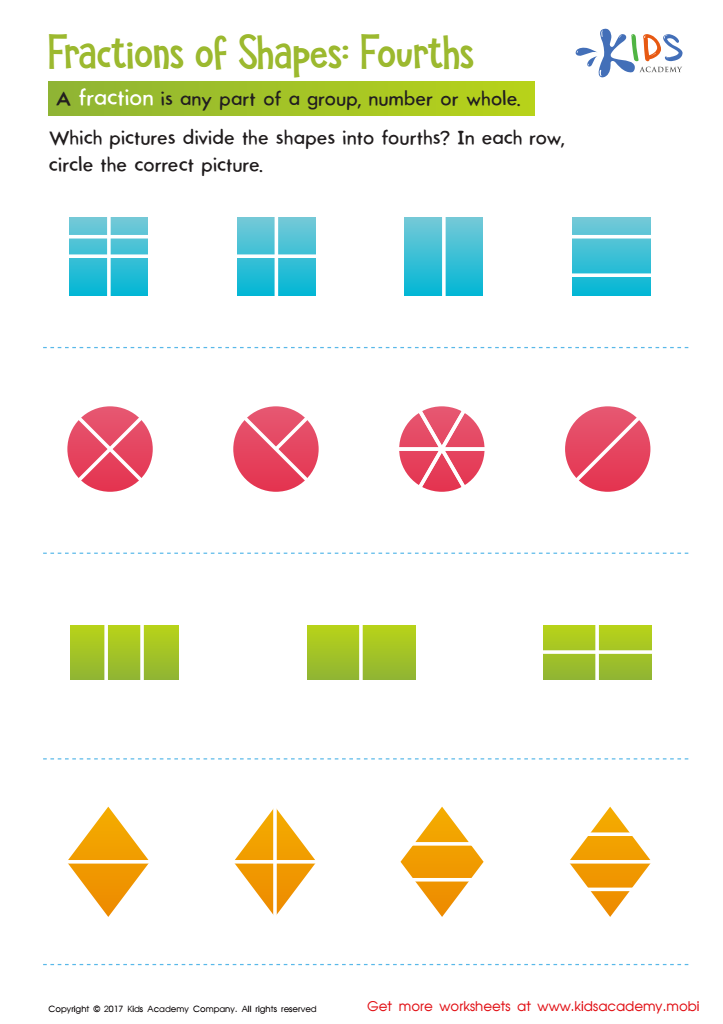
Fractions of Shapes Worksheet
It will also show them how fractions are represented in everyday shapes.
Fractions of Shapes Worksheet
Worksheet
Join Kids Academy for Free
Who is primarily going to use this learning content?







Recognizing shapes is a foundational skill that significantly enhances cognitive development in children aged 5-6. Parents and teachers should prioritize this learning area because understanding shapes not only builds mathematical foundation but also fosters spatial awareness, critical thinking, and problem-solving skills. These abilities are crucial as they form the basis for more complex concepts in geometry and other math-related subjects later on.
Moreover, shape recognition activities encourage creativity and imagination, allowing children to explore their environments through play. Engaging in shape-related challenges can boost fine motor skills, as kids often participate in hands-on tasks like drawing, cutting, and assembling various forms. Additionally, the ability to identify and differentiate shapes also supports language development, as children learn to articulate their observations and describe geometric concepts.
Beyond academics, embracing shape recognition can cultivate a sense of achievement and promote confidence in young learners. Positive reinforcement through interactive activities, like games and puzzles, makes learning enjoyable while encouraging teamwork and communication among peers. Ultimately, equipping children with shape recognition skills contributes to their overall readiness for future educational challenges and everyday situations, making it an essential focus for both parents and teachers.








