Story sequencing Extra Challenge Worksheets for Ages 5-6
5 filtered results
-
From - To
Boost your child's storytelling skills with our "Story Sequencing Extra Challenge Worksheets" designed for ages 5-6. These engaging worksheets help young learners enhance their comprehension and narrative abilities by arranging events in a logical order. Perfect for both classroom and at-home learning, our extra challenges encourage creative thinking and problem-solving. Kids will enjoy piecing together stories through colorful images and fun prompts, developing essential skills for early literacy. Spark your child's imagination and boost their confidence as they master the art of sequencing narratives. Download and print these worksheets today for an effective, enjoyable learning experience!
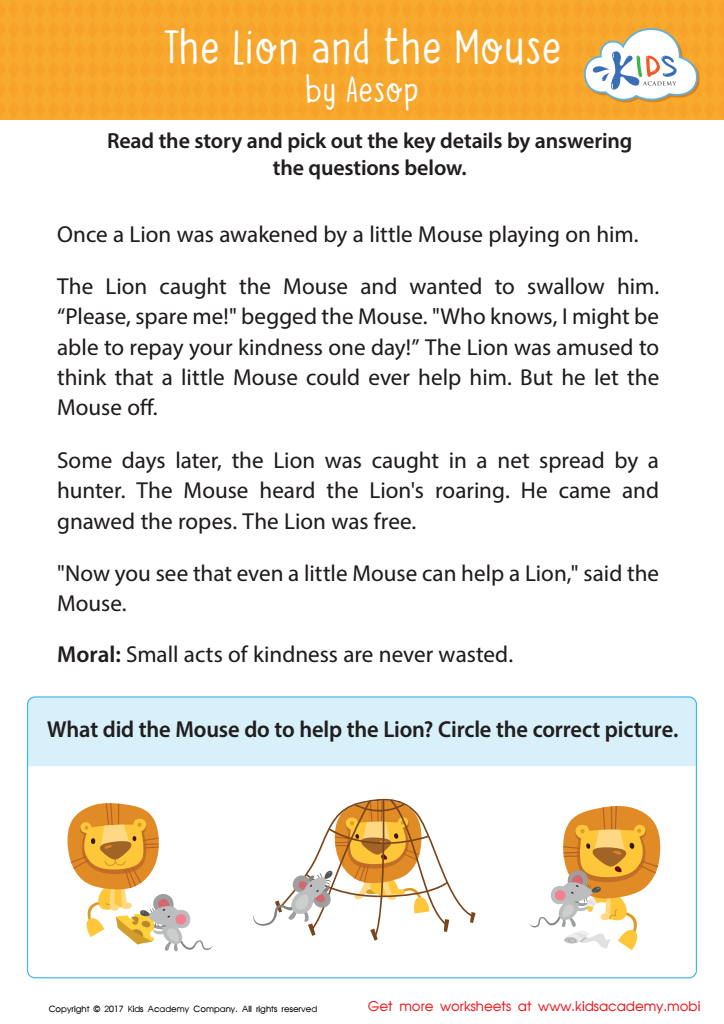
The Lion and The Mouse Sequencing Worksheet
 Assign to My Students
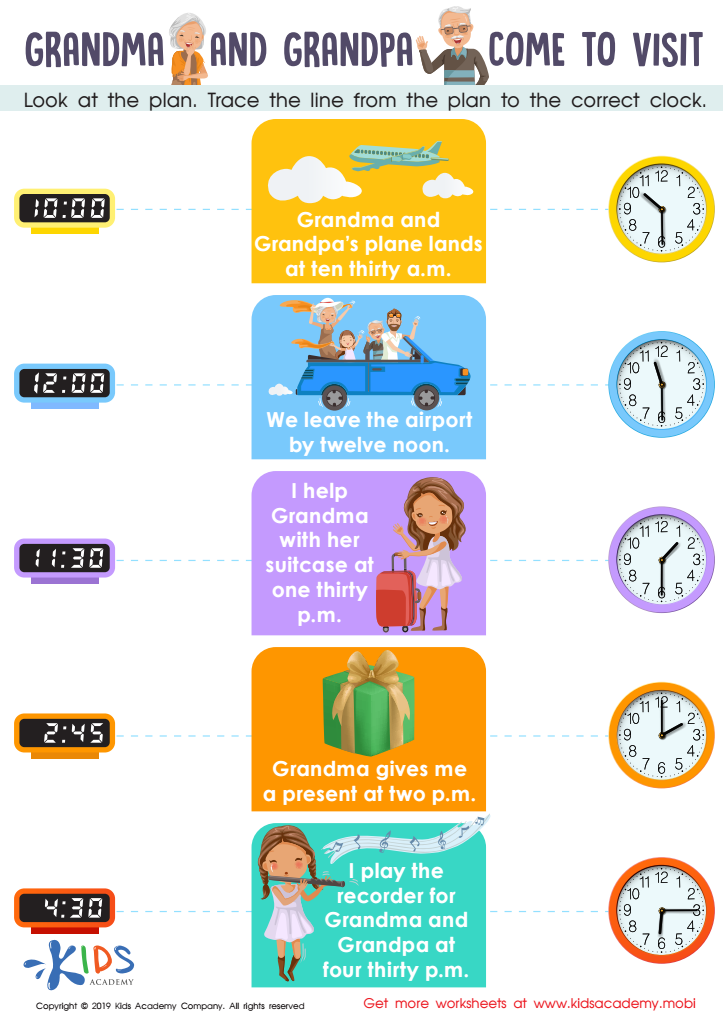
Grandpa and Grandma Come to Visit Worksheet
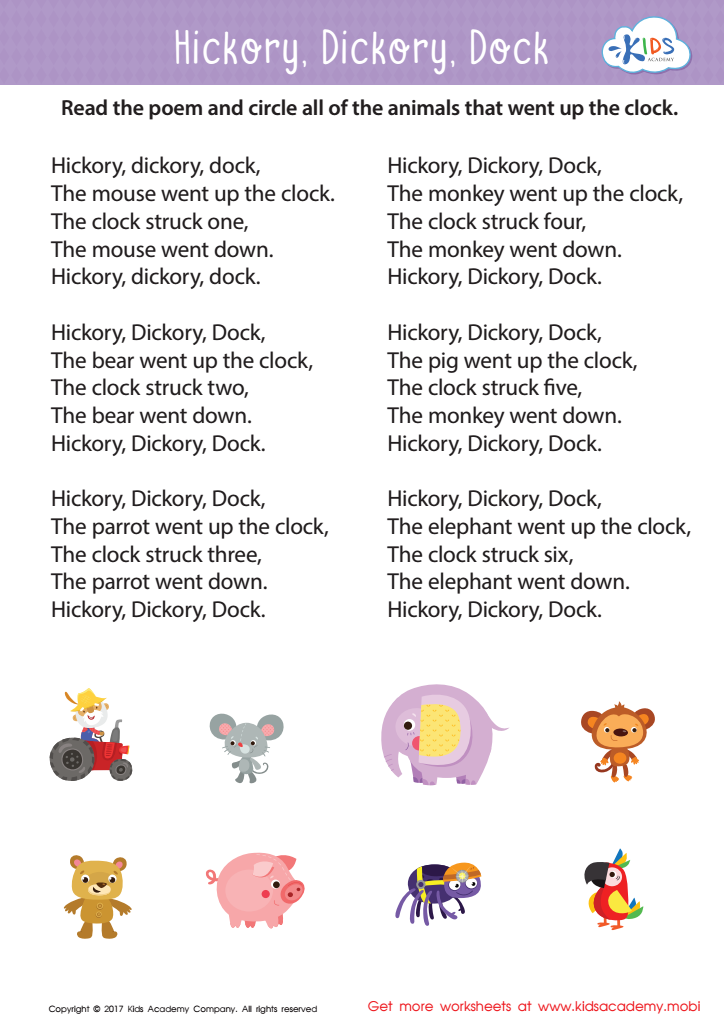
Hickory Dickory Dock Sequencing Worksheet
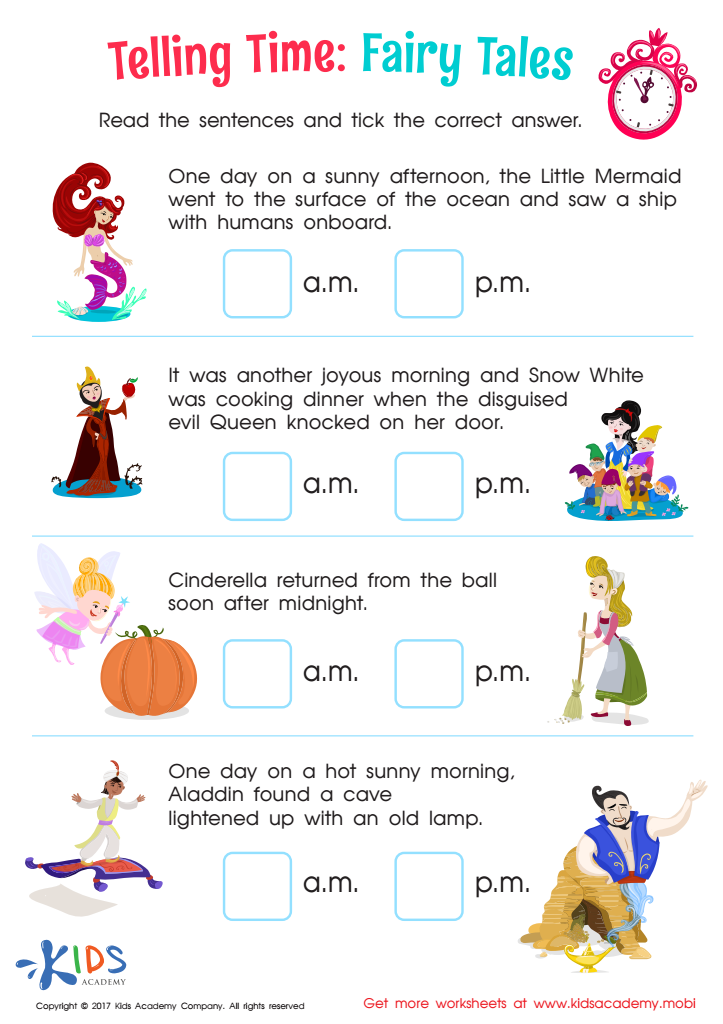
Telling Time: Fairy Tales Worksheet
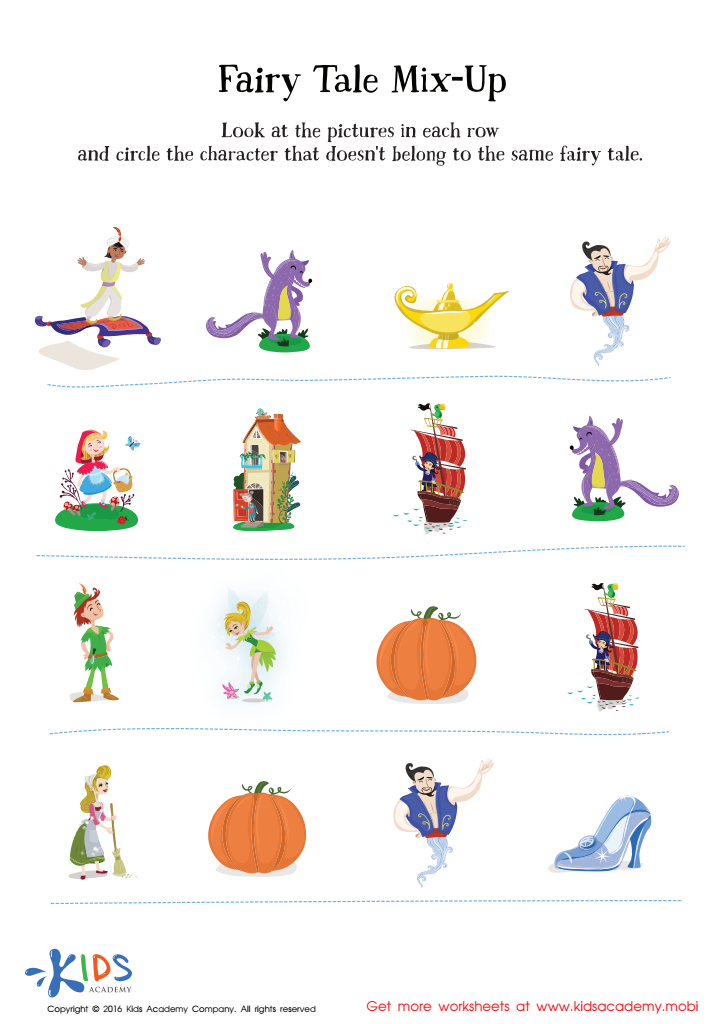
Fairy Tale Worksheet: Story Mix Up








Story sequencing is a crucial developmental skill for young children, particularly for ages 5-6, as it fosters their comprehension skills, cognitive development, and creativity. Parents and teachers should care about incorporating story sequencing activities because they help children understand the logical flow of events, enhancing their ability to organize thoughts and communicate effectively.
By engaging children in story sequencing activities, they learn to identify key elements such as the beginning, middle, and end of a story. This understanding aids in grasping main ideas and summarizing content, which is foundational for their reading and writing skills.
Moreover, story sequencing encourages critical thinking, as children analyze different scenarios and outcomes. It invites them to anticipate what might come next, strengthening their predictive skills and connections between cause and effect. Additionally, these activities can boost vocabulary and language development, as children articulate sequences and express their thoughts.
Ultimately, story sequencing not only aids literacy but also equips children with essential skills they’ll use throughout their lives, making it vital that parents and teachers prioritize these exercises in playful, engaging ways. Investing in such educational techniques early helps cultivate a stronger foundation for future learning.








