Understanding plurals Extra Challenge Worksheets for Ages 5-6
3 filtered results
-
From - To
Unlock the exciting world of plurals with our "Understanding Plurals Extra Challenge Worksheets" tailored for ages 5-6! These engaging and fun worksheets will help young learners grasp the concept of plurals by transforming singular nouns into their plural forms. Through a variety of exercises including matching, filling in the blanks, and engaging illustrations, children will enhance their vocabulary and language skills while enjoying the learning process. Ideal for home or classroom use, these extra challenge worksheets are perfect for reinforcing lessons and providing a rewarding experience for budding linguists. Dive in and watch your child's understanding of plurals flourish!
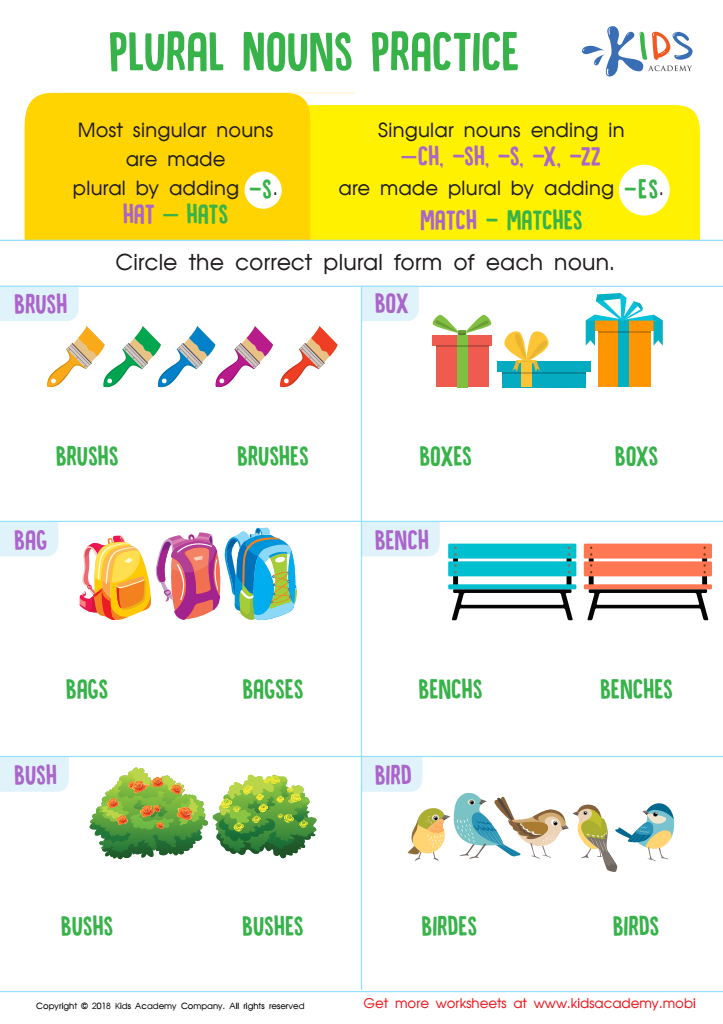
Plural Nouns Practice Worksheet
 Assign to My Students
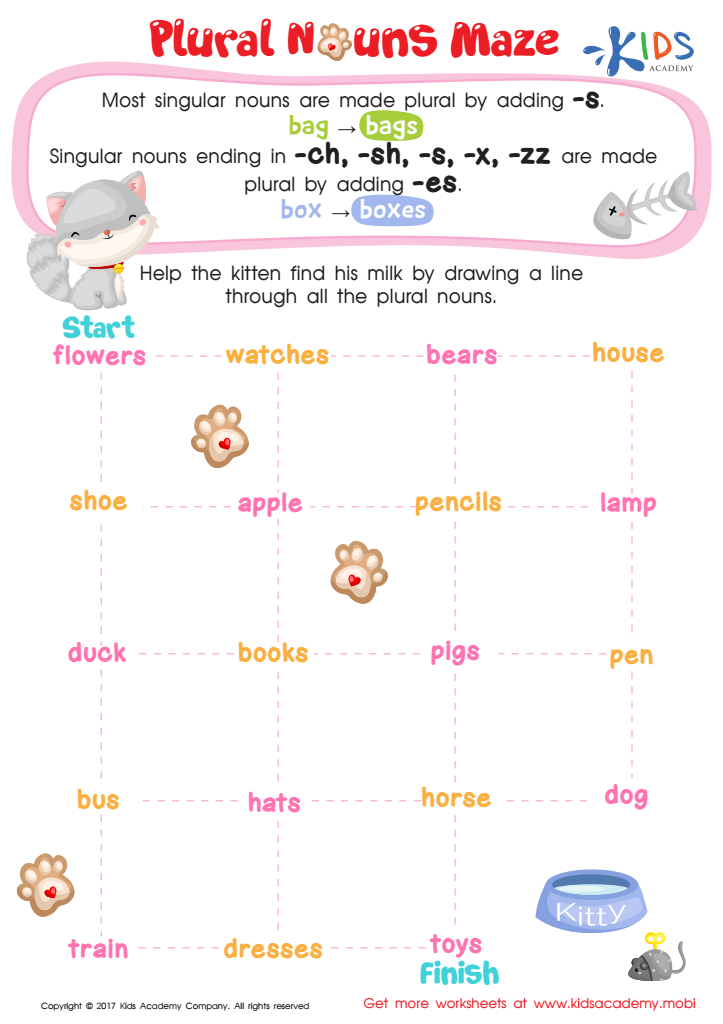
Plural Nouns Maze Worksheet
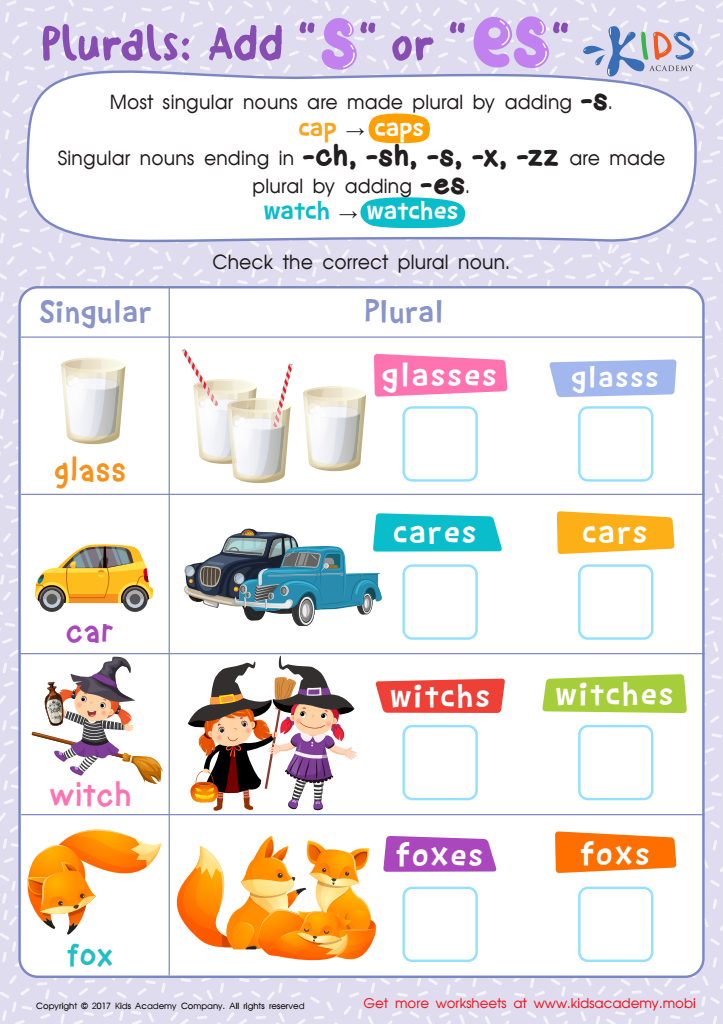
Plurals: "–es" or "–es"? Worksheet







Understanding plurals is crucial for children aged 5-6 as it equips them with foundational language skills that are essential for effective communication and literacy. Learning about plurals helps children grasp the concept that objects can exist in different quantities. This cognitive understanding supports their ability to categorize and quantify their environment, which is fundamental in early math learning.
For parents and teachers, teaching plurals can enhance vocabulary development. When children learn the difference between singular and plural forms, they are empowered to express themselves more accurately and confidently. This not only aids their communication skills but also enriches their storytelling abilities, allowing them to describe multiple characters, items, or events in their narratives.
Additionally, understanding plurals supports reading comprehension. As children's reading materials progress, they will encounter more complex text that includes plural nouns, which makes it vital for them to recognize these forms. By fostering an understanding of plurals, parents and teachers contribute to a child's overall literacy development.
Engaging children in playful activities, such as games, songs, and hands-on exercises, can make learning about plurals exciting. This fun approach encourages curiosity and exploration, nurturing a love for language while making learning enjoyable.








