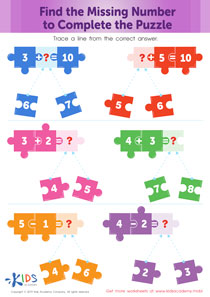
Counting skills Extra Challenge Addition Worksheets for Ages 5-6
6 filtered results
-
From - To
Explore our Counting Skills Extra Challenge Addition Worksheets tailored for children ages 5-6! Designed to enhance early math proficiency, these engaging worksheets provide kids with a fun way to practice addition while strengthening their counting skills. Each worksheet includes vibrant illustrations and interactive activities that encourage a deeper understanding of numbers. Perfect for reinforcing classroom learning or learning at home, our worksheets help develop essential foundational math abilities. Challenge your child to improve their counting and addition in a captivating way, all while building confidence and paving the way for future academic success. Download and watch your child excel in math!
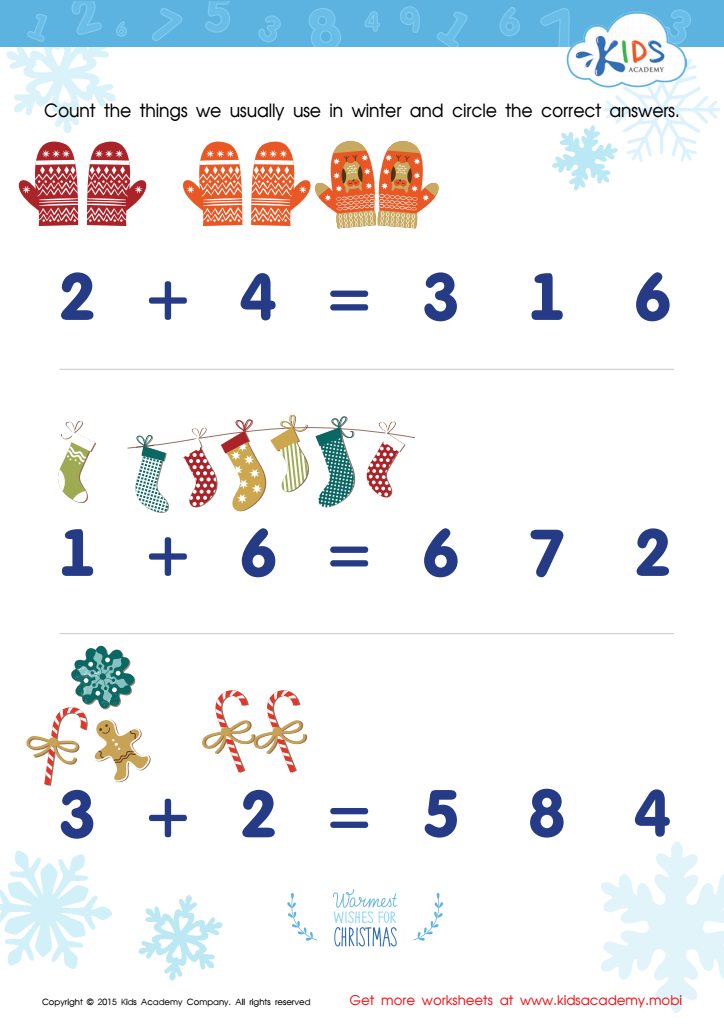
Count Winter Things Worksheet
 Assign to My Students
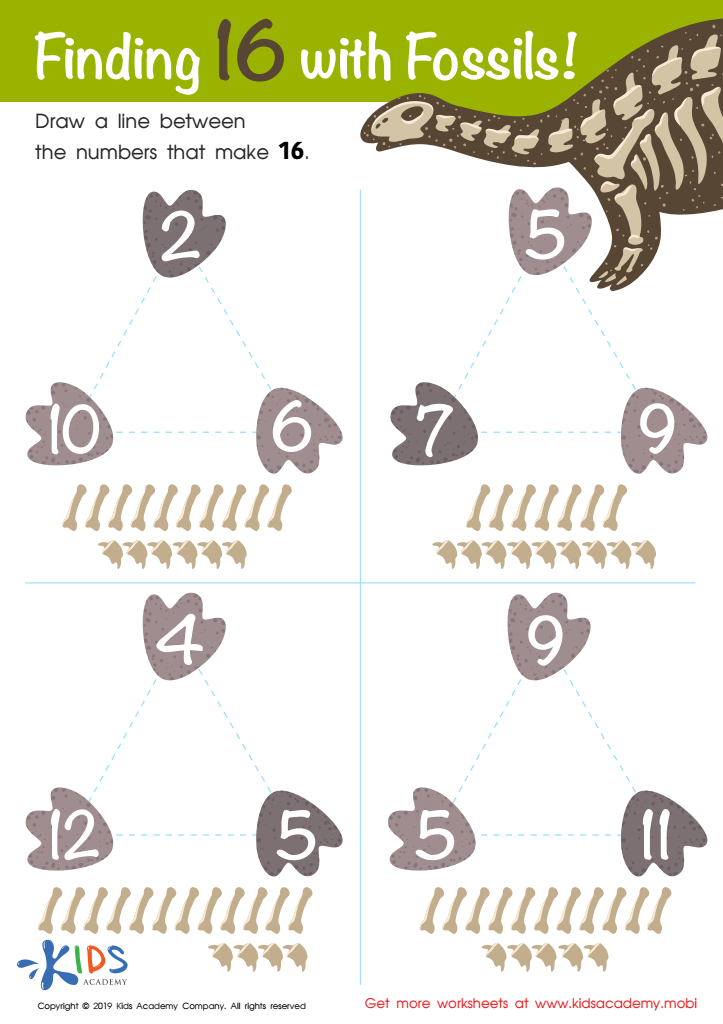
Finding 16 With Fossils Worksheet
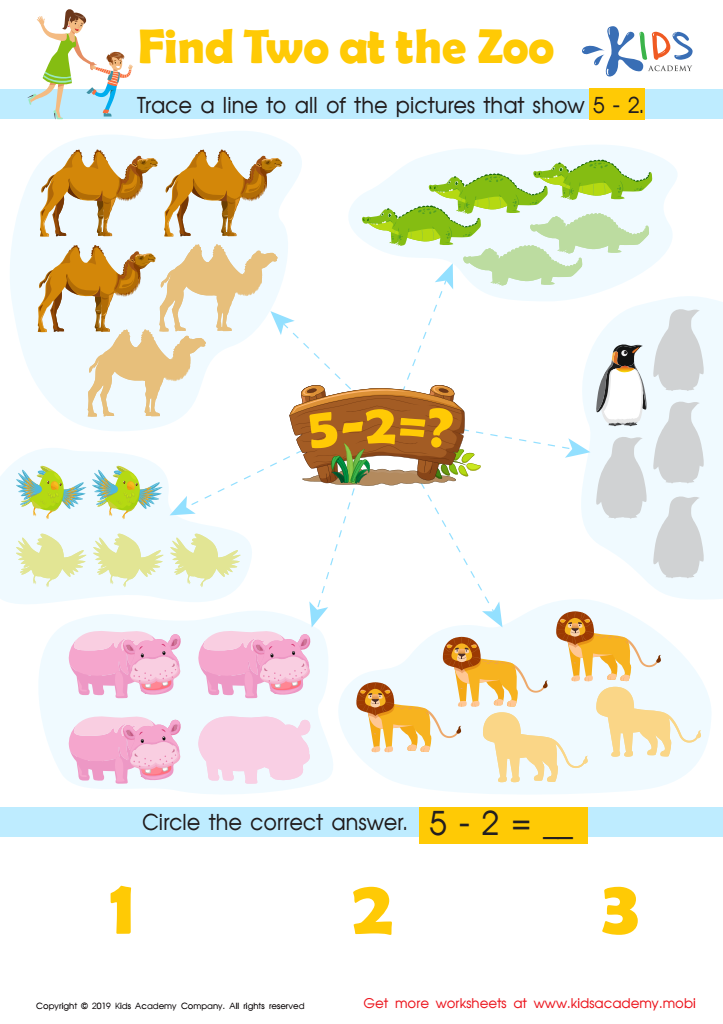
Find Two at the Zoo Worksheet
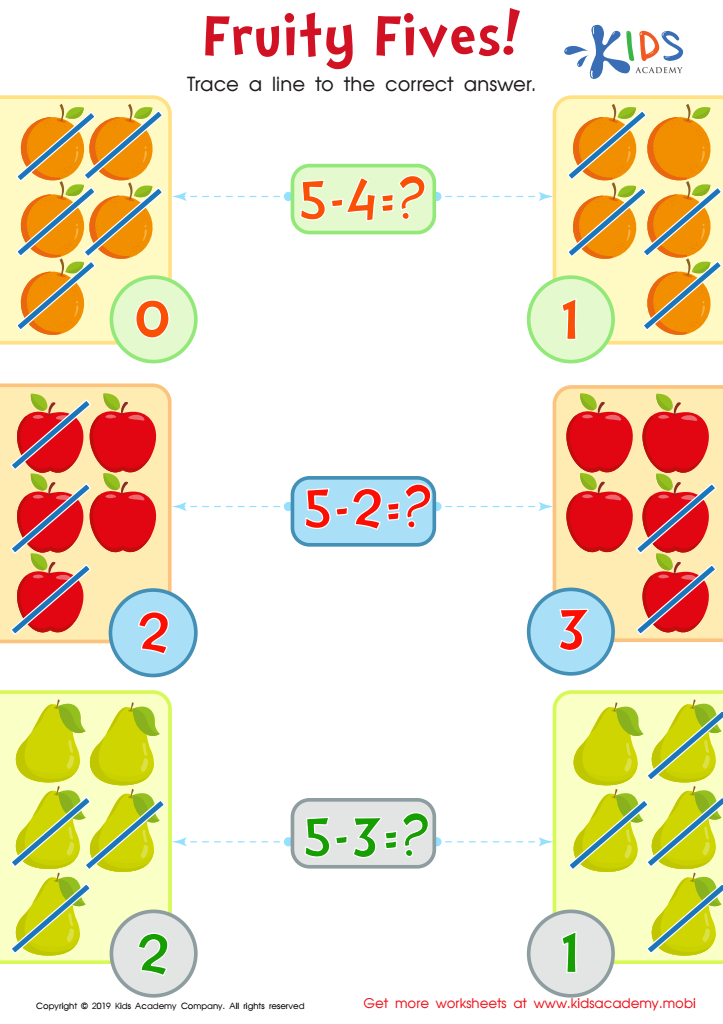
Fruity Fives! Worksheet
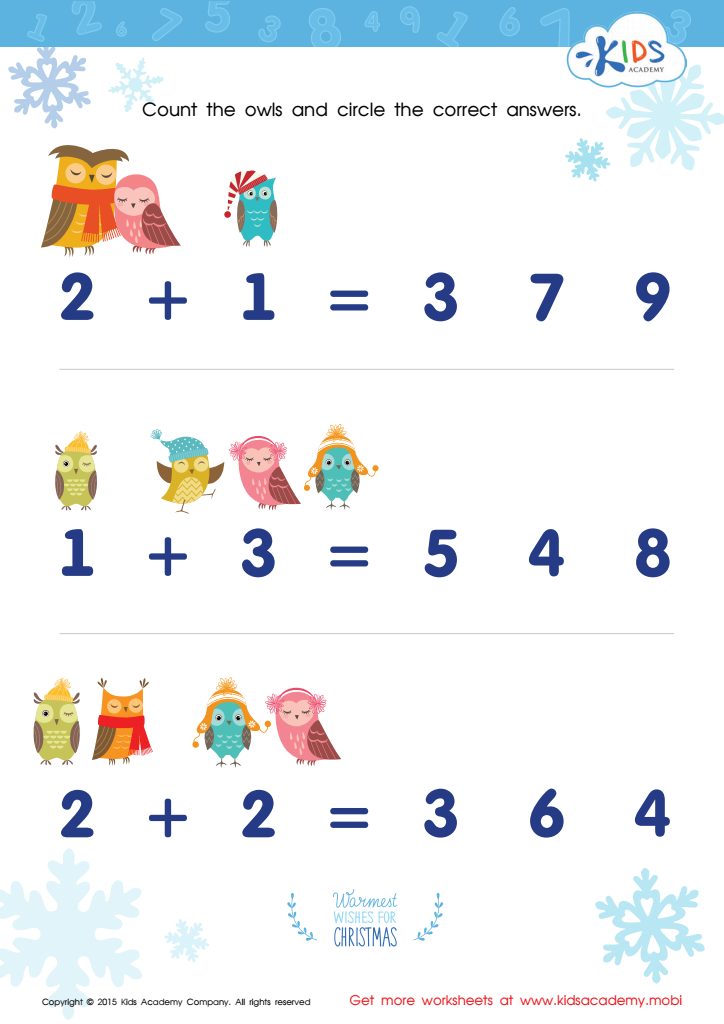
Count Little Owls Worksheet
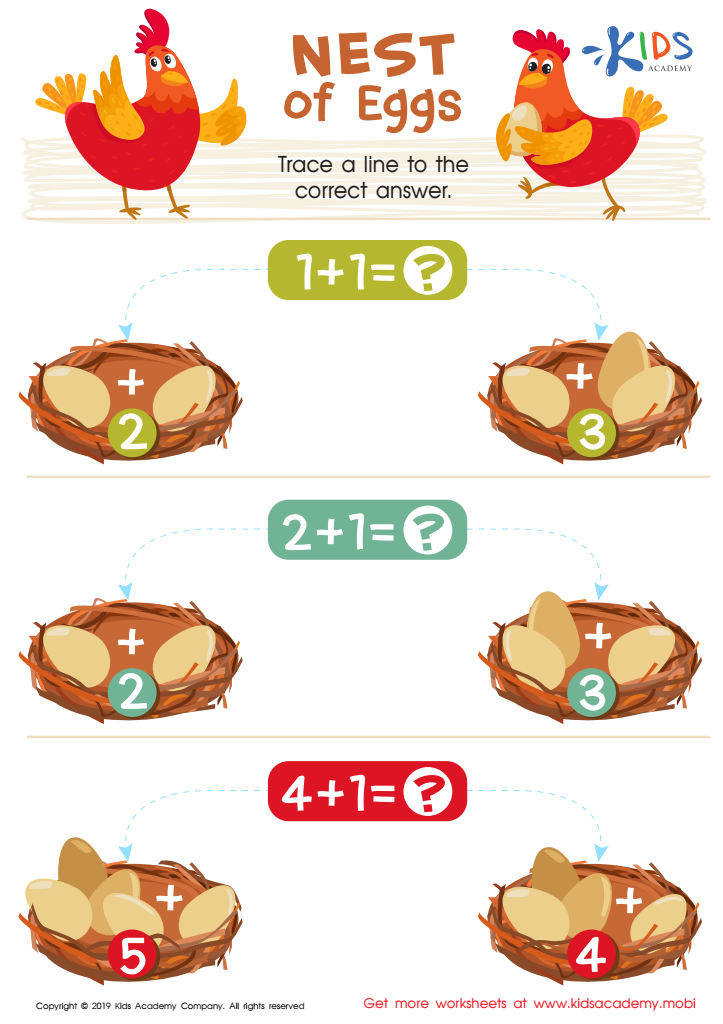
Nest of Eggs Worksheet





.jpg)


Counting skills are foundational for young learners, particularly in the domain of mathematics. For children ages 5-6, activities like the Extra Challenge Addition can enhance their understanding of numbers and numerical relationships, fostering a strong mathemathematical base. Developing counting skills not only helps children perform basic arithmetic, such as addition, but also encourages critical thinking and problem-solving.
Engaging in extra challenges promotes cognitive growth by encouraging kids to explore numbers in various ways, preparing them for more complex mathematical concepts as they advance academically. The process of counting and adding reinforces pattern recognition and helps children understand the idea of 'how many,' which is essential for daily life, such as when they begin measuring ingredients for recipes or counting change.
Moreover, these activities can build children's confidence in their mathematical abilities. When children successfully engage with challenges, they develop a positive attitude toward learning, setting the stage for lifelong educational enthusiasm. In essence, fostering counting skills through Extra Challenge Addition activities equips children with the tools necessary for future academic success and real-life problem-solving, making it vital for parents and teachers to prioritize these developmental milestones in early education.