Extra Challenge Fractions of Shapes Worksheets for Ages 5-6
6 filtered results
-
From - To
Boost your child’s mathematical adventure with our "Extra Challenge Fractions of Shapes Worksheets" designed for ages 5-6! These engaging, curriculum-aligned worksheets help young learners understand the basics of fractions through fun and colorful shapes. Perfect for honing skills in a step-by-step manner, each activity breaks down complex concepts into accessible and enjoyable tasks. Ideal for both classroom settings and at-home practice, these worksheets foster a love for math while building a solid foundation in fractional reasoning. Turn your child's fraction learning into a playful and successfully challenging experience! Download now and watch their confidence grow.
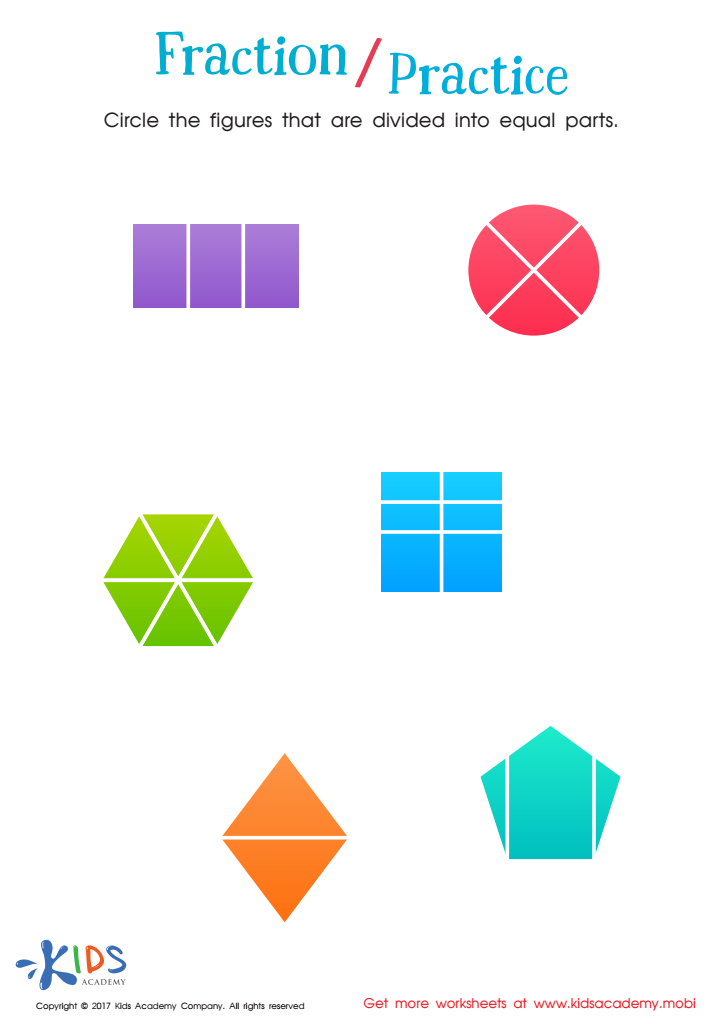
Fractions: Shapes Worksheet
 Assign to My Students
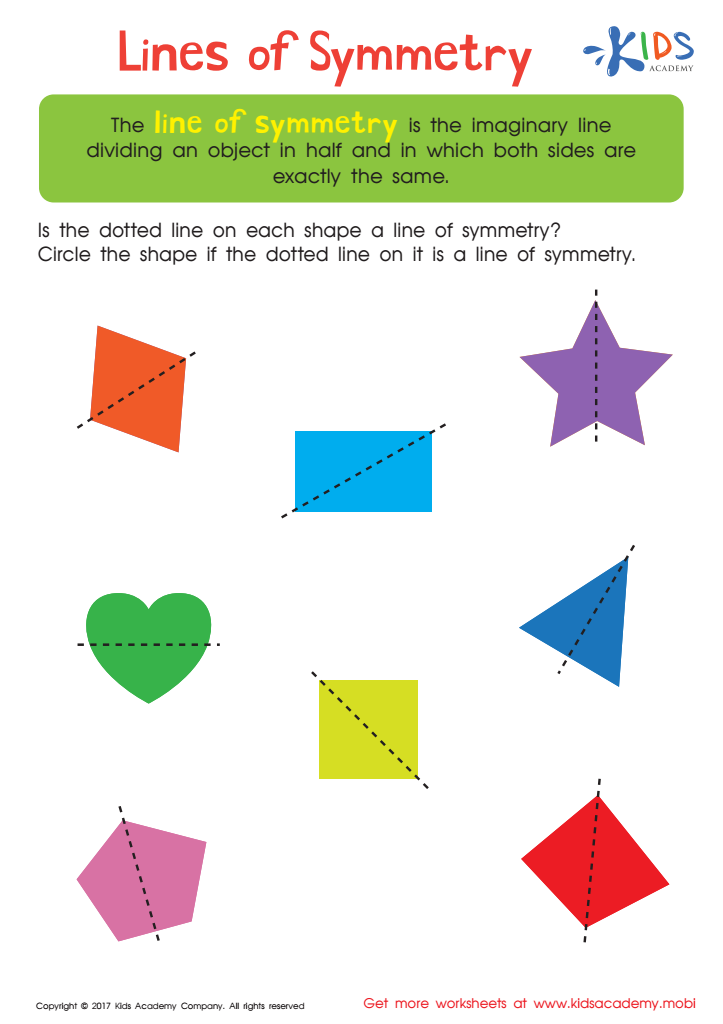
Lines of Symmetry Printable
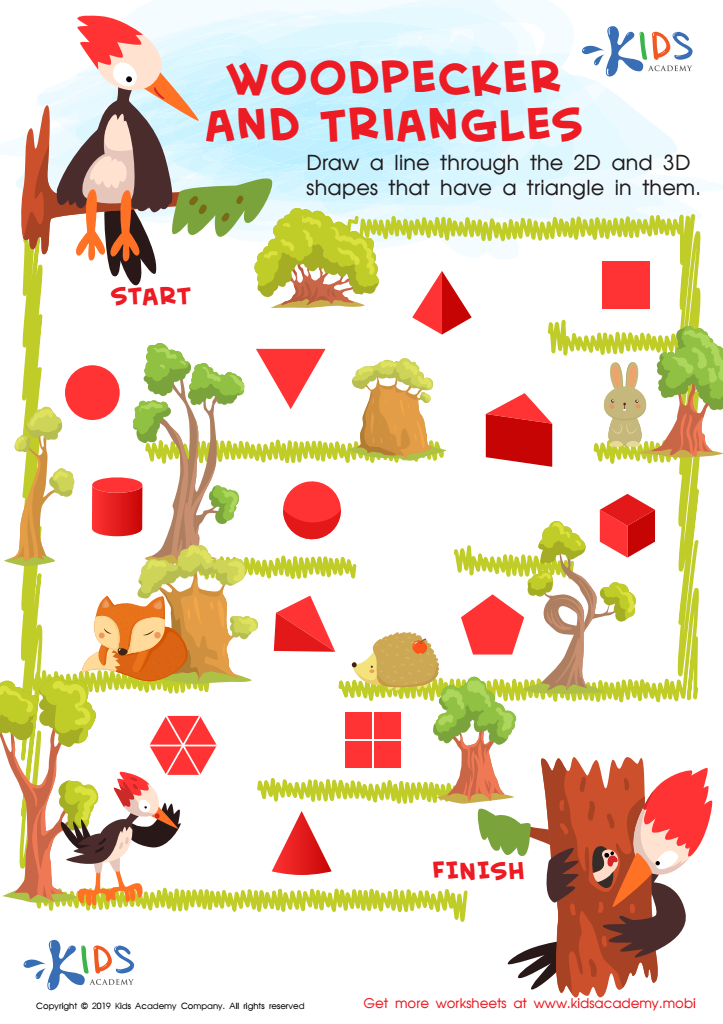
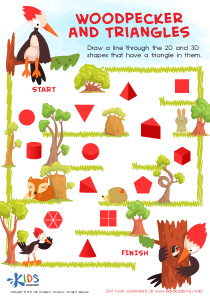
Woodpecker and Triangles Worksheet
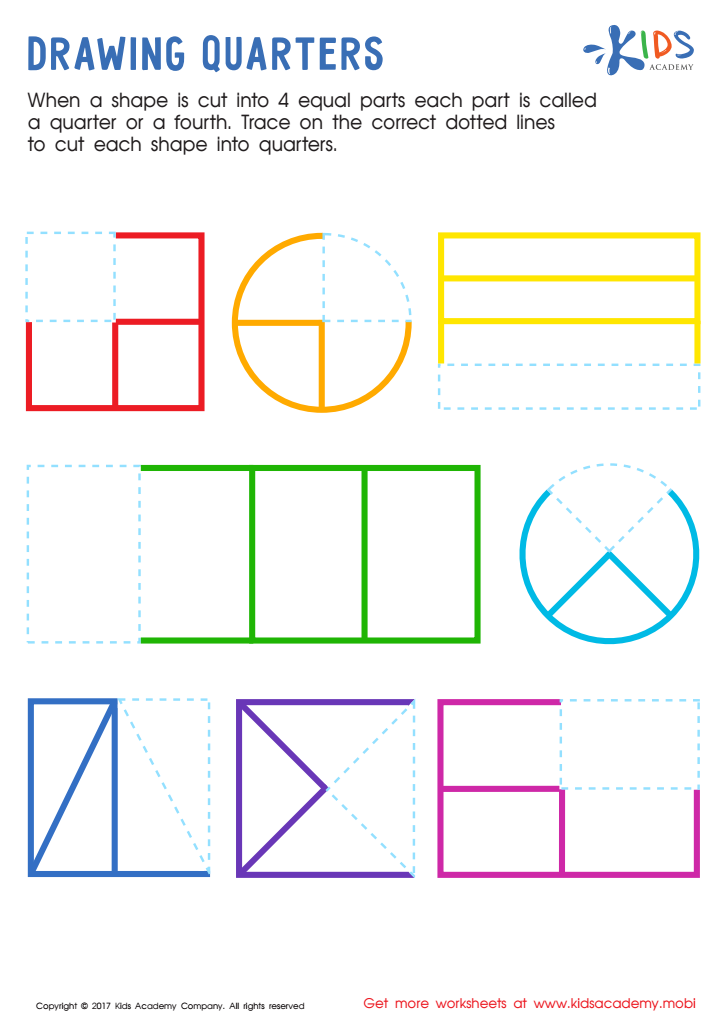
Drawing Quarters Worksheet
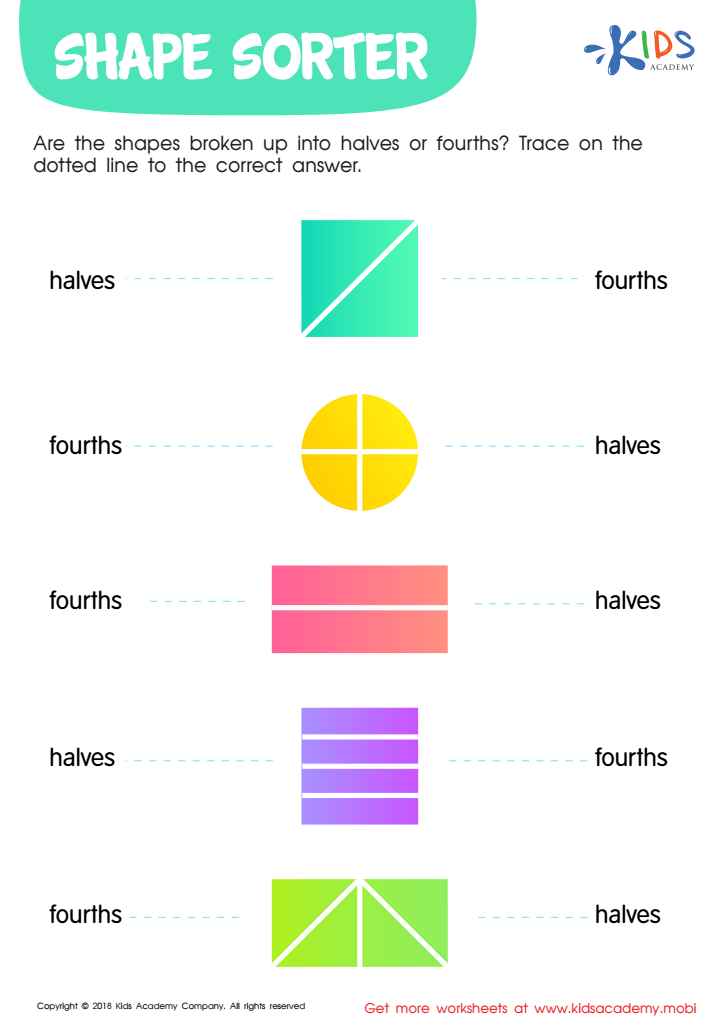
Shape Sorter Worksheet
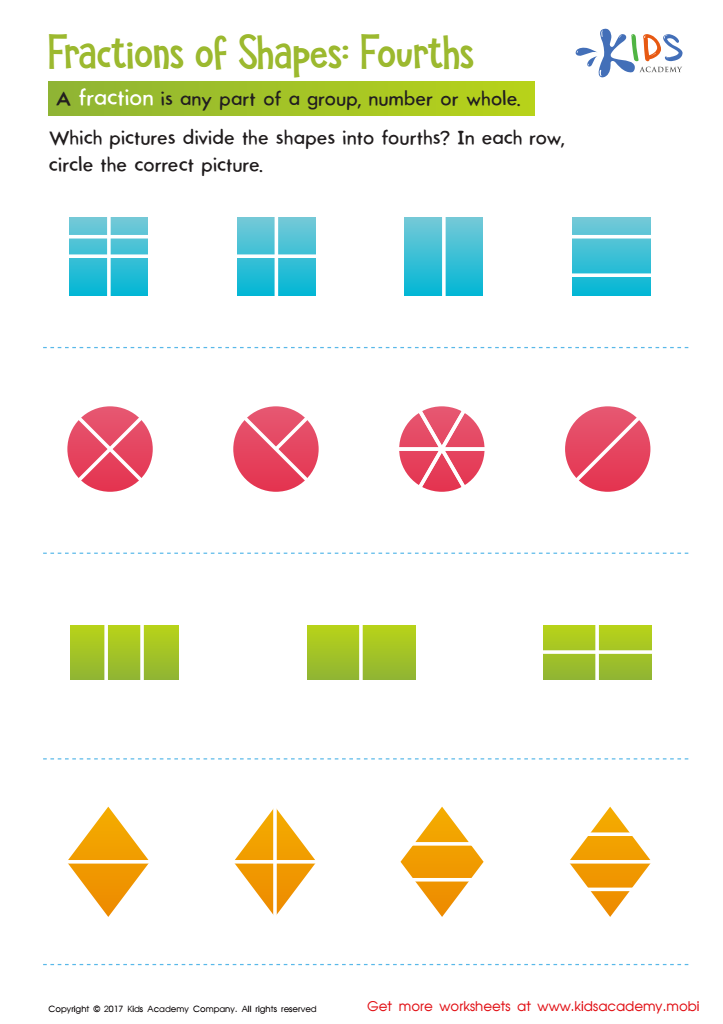
Fractions of Shapes Worksheet








Introducing 5-6-year-olds to Extra Challenge Fractions of Shapes provides a foundation for essential mathematical concepts that are key to their future learning. Understanding fractions at this early stage helps children develop a sense of how parts make up a whole, facilitating their grasp of division, ratios, percentages, and various aspects of probability and higher arithmetic. This knowledge will be valuable beyond their immediate math curriculum, influencing their logical thinking and problem-solving abilities.
Moreover, these early experiences with fractions help children to recognize and describe proportions in everyday contexts – from cutting a sandwich in halves to sharing toys among friends. By engaging in challenging fraction exercises, children can enhance their spatial reasoning, which has wide applications, and improve their ability to visualize math problems.
From a behavioral standpoint, these exercises also foster patience, attention to detail, and persistence. Children learn to follow steps and stay focused until they complete tasks – skills crucial for academic success.
For parents and teachers, offering challenging yet enjoyable tasks ensures that learning is stimulating, fostering a positive attitude toward math. This can lead to increased self-confidence in new, seemingly difficult areas. Essentially, ingraining these concepts early transitions smoothly into a well-rounded, resilient mathematical mindset.