Understanding fractions Extra Challenge Geometry Worksheets for Ages 5-6
3 filtered results
-
From - To
Explore our "Understanding Fractions Extra Challenge Geometry Worksheets" designed for young learners aged 5-6! These engaging and interactive worksheets are perfect for nurturing foundational math skills in children. Each activity focuses on introducing basic fraction concepts through fun geometric shapes, making learning enjoyable and effective. Kids will practice identifying and representing fractions, all while developing spatial awareness and problem-solving skills. Ideal for classroom settings or at-home practice, these worksheets will motivate students to enhance their understanding of fractions. Help your child build early math confidence while fostering a love for geometry with our carefully crafted extra challenge activities!
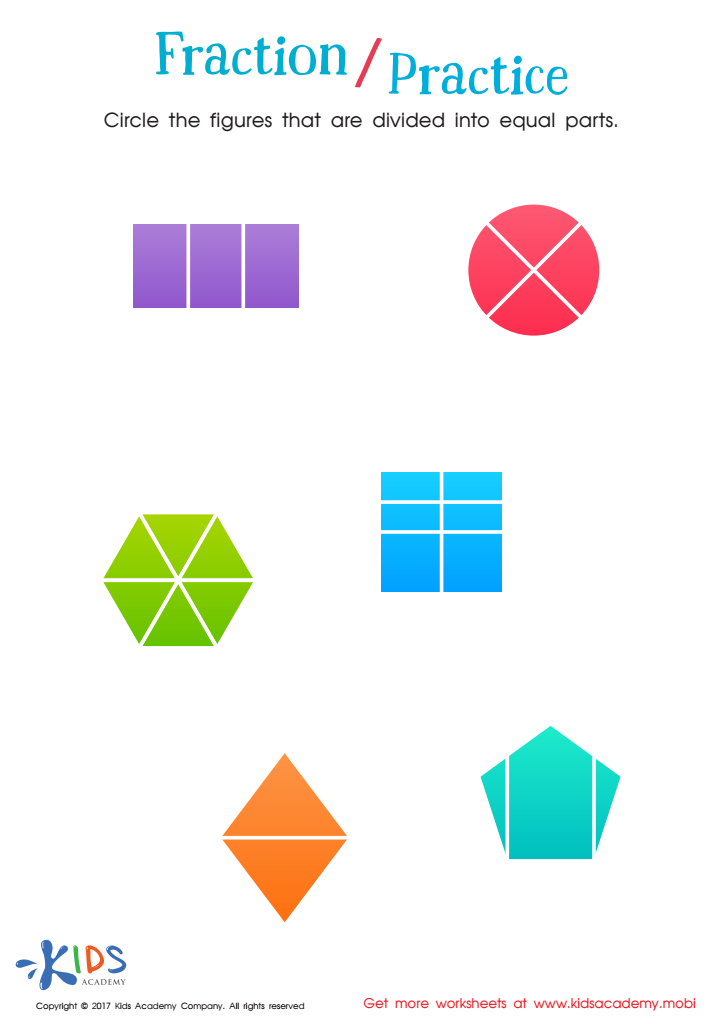
Fractions: Shapes Worksheet
 Assign to My Students











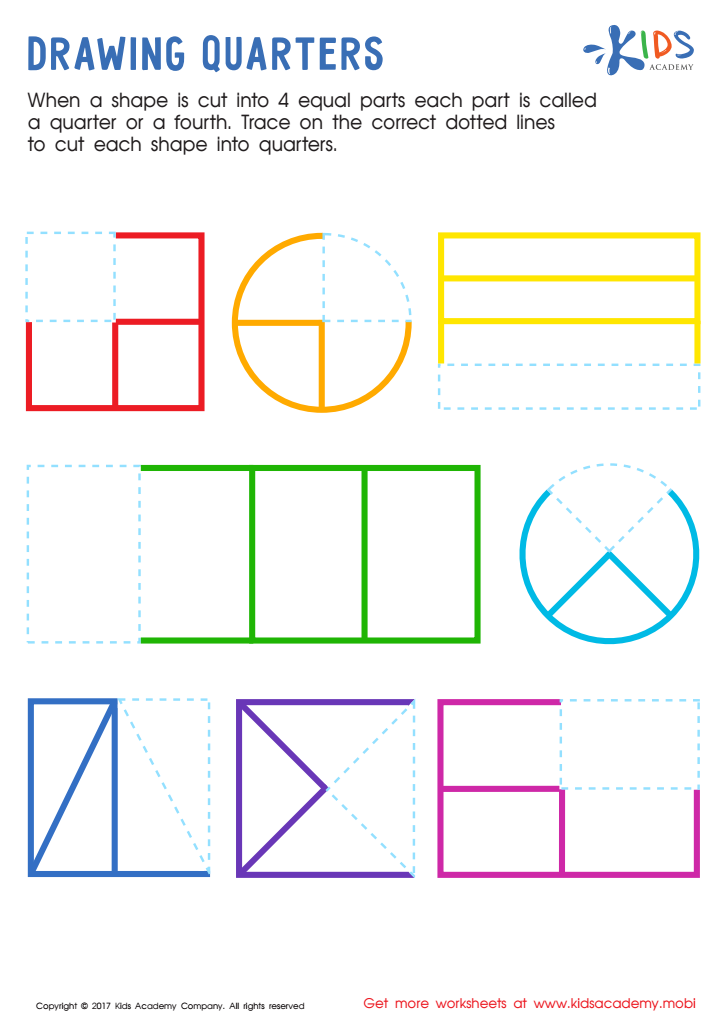
Drawing Quarters Worksheet
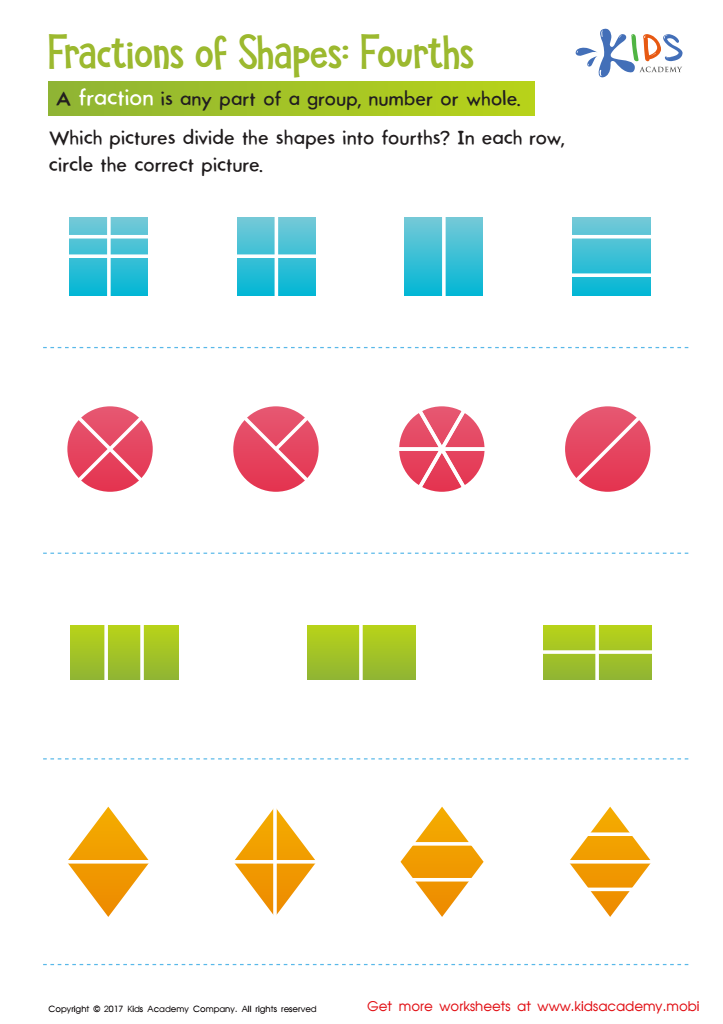
Fractions of Shapes Worksheet








Understanding fractions and geometry is a foundational skill for children ages 5-6, making it crucial for both parents and teachers to engage with these concepts. Fractions introduce children to the idea of parts of a whole, enhancing their ability to grasp more complex mathematical concepts in the future. This early understanding fosters critical thinking and problem-solving skills, which are essential for academic success across subjects.
On the geometry front, children develop spatial awareness and the ability to recognize shapes and their properties. This knowledge not only aids in mathematics but also enhances reasoning skills applicable in science, art, and everyday situations. By integrating a focus on understanding fractions and geometry, we help children build a solid mathematical foundation.
Additionally, engaging in these concepts during early childhood supports cognitive development and prepares them for more advanced topics later on. Parents and teachers can incorporate fun, hands-on activities to make learning about fractions and geometry enjoyable. Encouraging a positive attitude towards math at an early age can lead to long-lasting confidence and interest in the subject. Ultimately, a strong grasp of these foundational concepts sets the stage for lifelong learning and effectiveness in problem-solving.