Financial literacy Extra Challenge Math Worksheets for Ages 5-6
3 filtered results
-
From - To
Discover our Financial Literacy Extra Challenge Math Worksheets for Ages 5-6 at Kids Academy. These engaging worksheets are carefully crafted to introduce young learners to basic financial concepts in a fun and interactive way. Designed to enhance critical thinking and practical skills, our worksheets cover essential topics such as counting money, identifying coins and bills, and making simple transactions. Perfect for sparking an early interest in financial literacy, each activity encourages children to apply math in real-world scenarios, fostering both confidence and competence. Make learning about money enjoyable and enriching with these expertly designed educational resources! Explore now and watch your child soar.
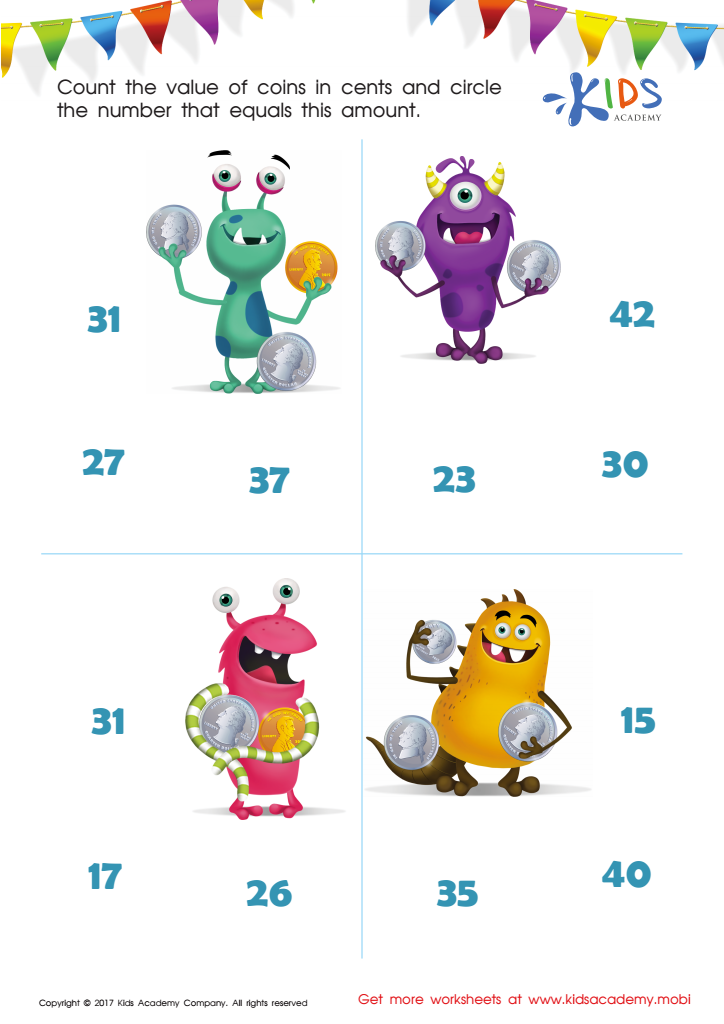
How Many Coins Money Worksheet
 Assign to My Students
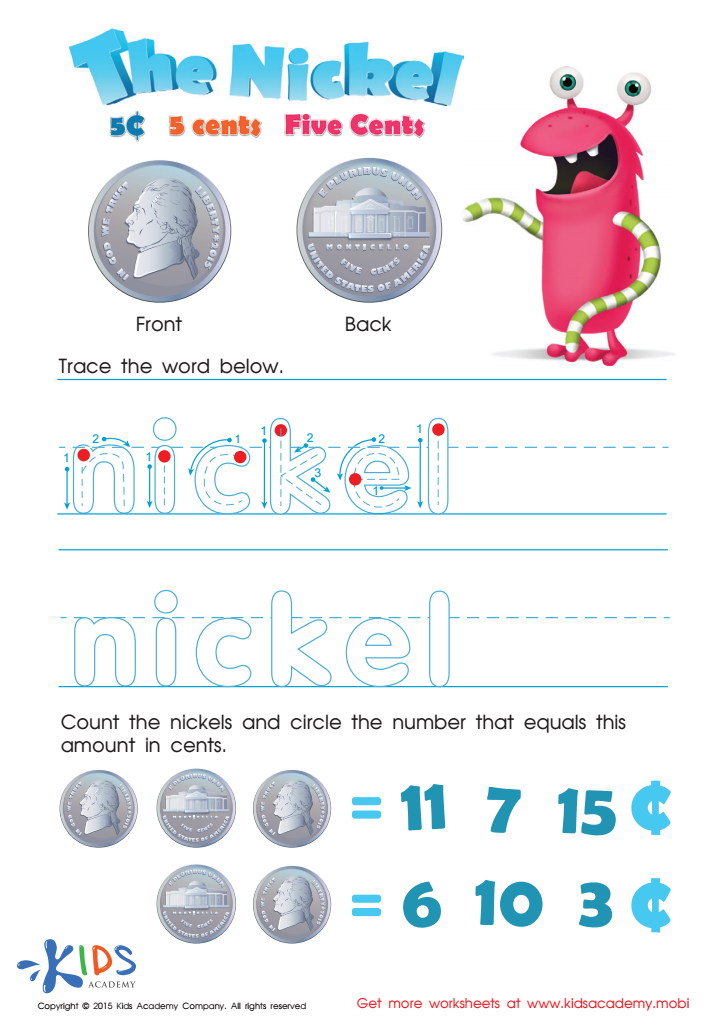
Five Cents or the Nickel Money Worksheet
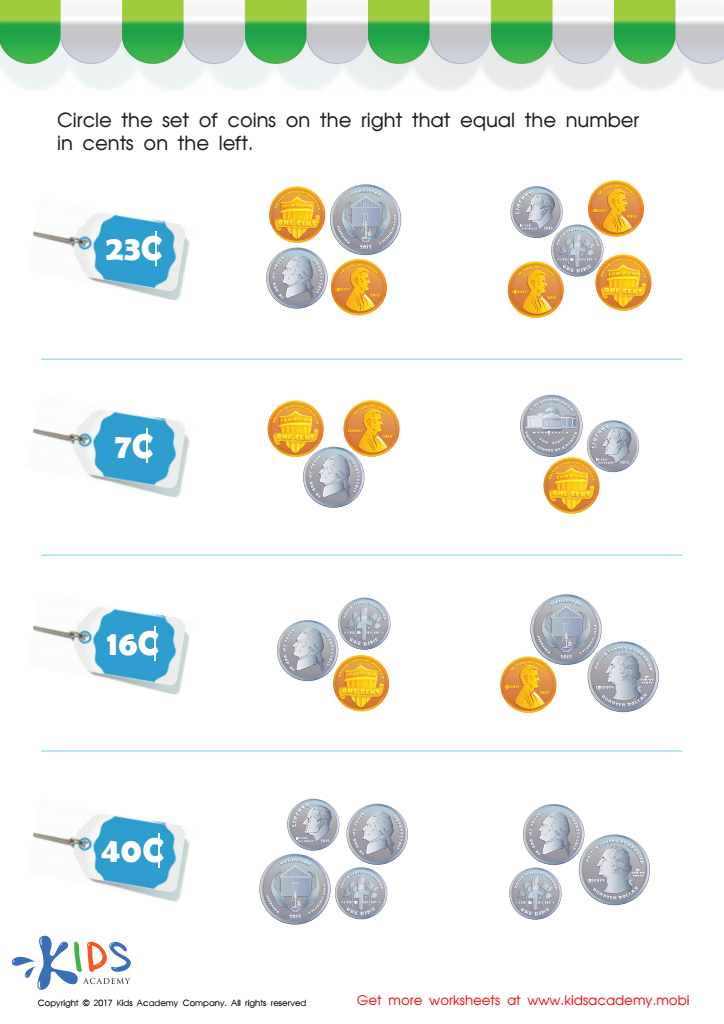
Picking the Coins You Need Money Worksheet








Teaching financial literacy, combined with challenging math activities for ages 5-6, sets the foundation for essential life skills. Understanding basic financial concepts such as saving, spending, and recognizing currency value plays a significant role in future financial stability and decision-making.
At this early age, children's brains are highly receptive to new information. If introduced through fun and engaging activities, the basics of financial literacy can become second nature. These foundational skills can help in forming a positive relationship with money, helping children grow into financially responsible adults.
Furthermore, incorporating financial literacy challenges reinforces key math skills. Counting, basic addition and subtraction, and problem-solving abilities are all cultivated during these activities. As teachers and parents, ensuring children are comfortable with numeracy strengthens their confidence and academic performance in later years.
Additionally, early financial literacy education can also foster critical thinking and planning skills. For example, understanding the concept of saving for a desired item requires patience, foresight, and goal-setting—attributes valuable in many areas of life.
Ultimately, caring about financial literacy challenge math for young children lays a groundwork not just of academic knowledge, but of practical, lifelong skills that contribute to their overall growth and future financial well-being.