Spatial awareness Extra Challenge Math Worksheets for Ages 5-6
4 filtered results
-
From - To
Boost your child's spatial reasoning skills with our advanced Spatial Awareness Extra Challenge Math Worksheets for Ages 5-6. These engaging, printable worksheets are designed to challenge young learners by helping them understand shapes, patterns, and spatial relationships. Perfect for classroom or at-home learning, they provide fun and educational activities that promote critical thinking and enhance mathematical development beyond standard expectations. Crafted for budding mathematicians, these worksheets from Kids Academy will ignite a love for problem-solving that lasts a lifetime. Accessible and easy to use, they offer an excellent opportunity to extend your child’s mathematical mind.
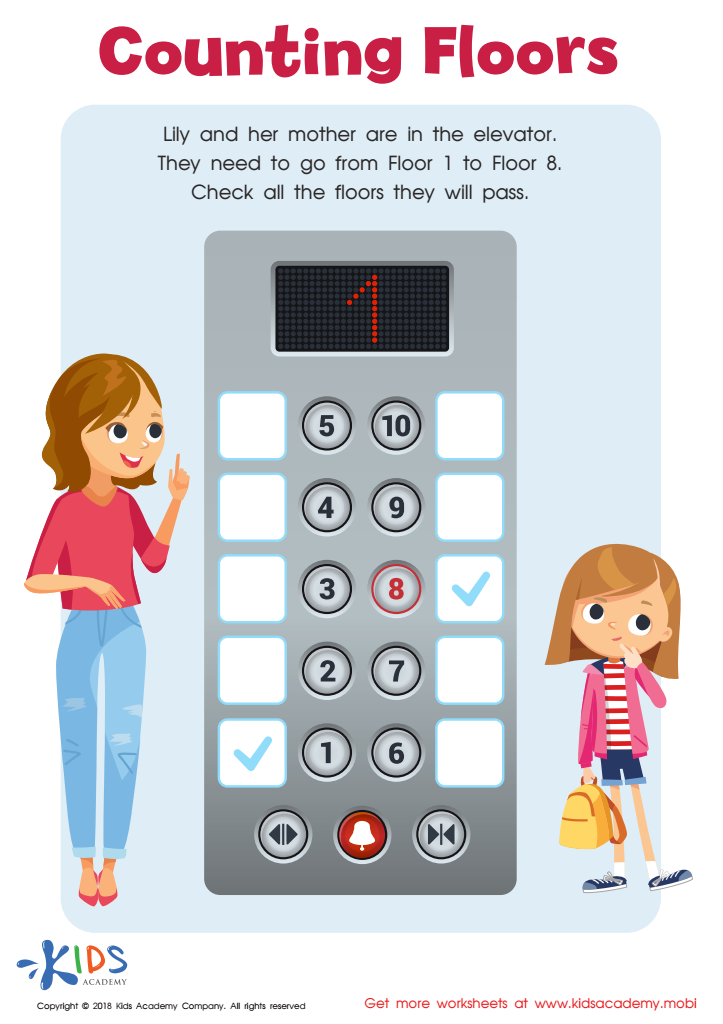
Counting Floors Worksheet
 Assign to My Students
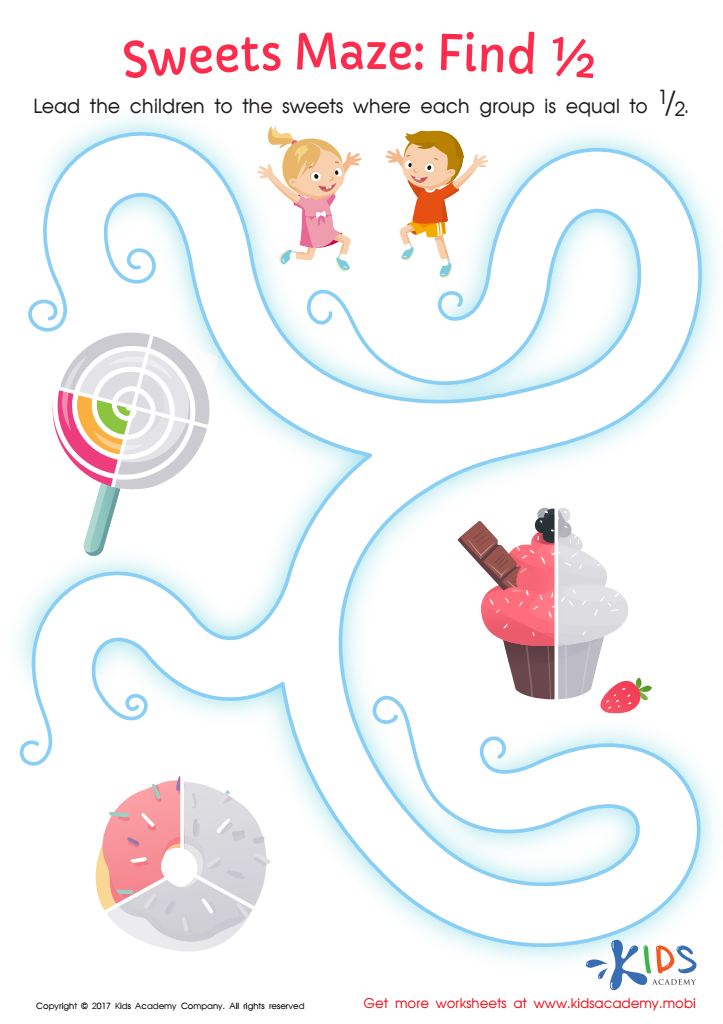
Fractions: Sweets Maze Worksheet
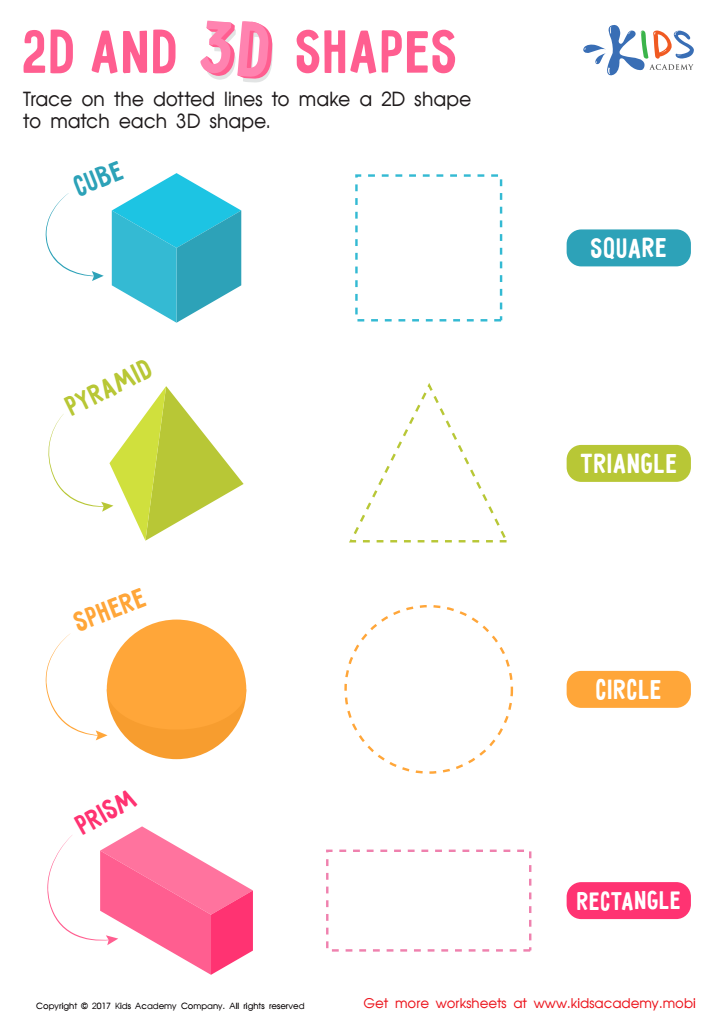
2D and 3D Shapes Worksheet
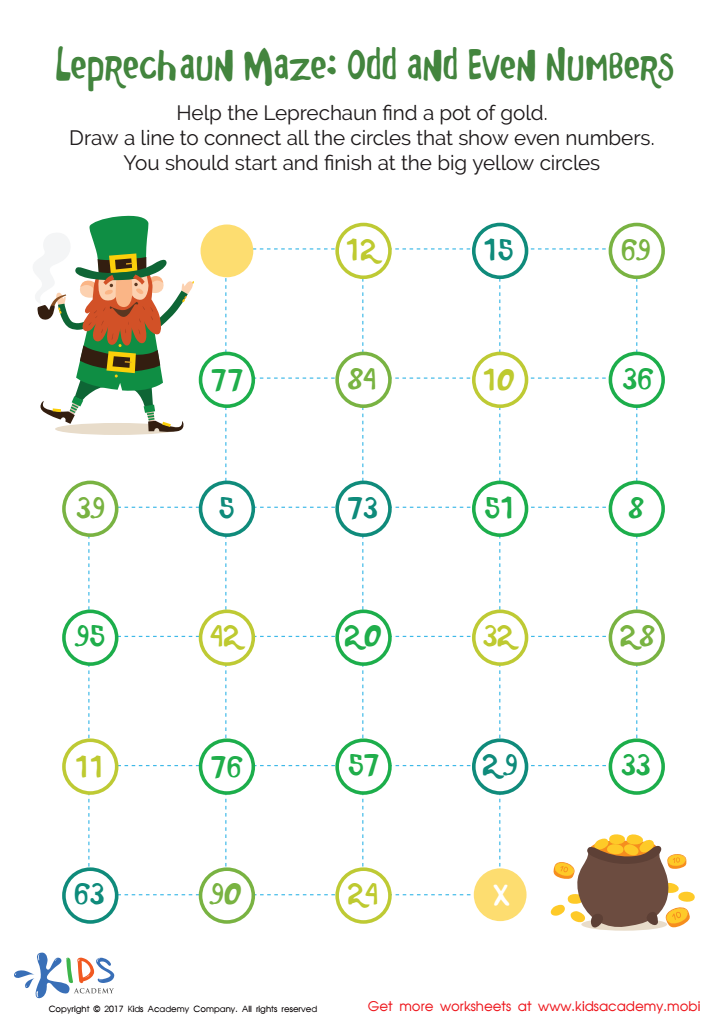
Leprechaun Maze Printable




%20(1).jpg)



Spatial awareness is a crucial cognitive skill that involves understanding the relationships between objects in space. Cultivating this skill in children aged 5-6 can significantly enhance their overall academic development, which is why both parents and teachers should consider incorporating spatial awareness extra challenge math into early education.
Firstly, spatial awareness lays the foundation for success in STEM subjects—science, technology, engineering, and mathematics. Understanding spatial relationships helps children grasp mathematical concepts such as geometry, measurement, and problem-solving, making future math learning more intuitive and less daunting. These skills are advantageous not only in primary school but also in higher education and various career paths that require logical reasoning and spatial manipulation.
Secondly, engaging in spatial awareness activities at an early age promotes critical thinking and cognitive flexibility. Tasks that challenge spatial reasoning require children to visualize, manipulate, and transform shapes, boosting their mental analytically-capable processes. This mental exercise nurtures creativity and innovation, providing a balanced approach to learning beyond mere rote memorization.
Lastly, spatial skills are naturally connected to everyday life activities and motor skills. From tying shoelaces to organizing toys, children who excel in spatial awareness demonstrate better coordination and physical awareness that leads to overall life skill proficiency. Parents and teachers should thus prioritize spatial awareness exercises to foster a well-rounded, capable, and confident child ready to tackle future challenges.








