Mathematical reasoning Extra Challenge Word Problems Worksheets for Ages 5-6
3 filtered results
-
From - To
Discover our engaging "Mathematical Reasoning Extra Challenge Word Problems Worksheets" designed specifically for children ages 5-6. These worksheets offer a fun and challenging way to develop critical thinking and problem-solving skills through creative word problems. Each activity is tailored to enhance mathematical reasoning abilities, enabling young learners to apply their knowledge in enriching contexts. With a focus on captivating scenarios, children will practice addition, subtraction, and logical reasoning while building confidence in their math skills. Perfect for home or classroom use, these worksheets encourage exploration and curiosity, making math an exciting adventure for your little ones!
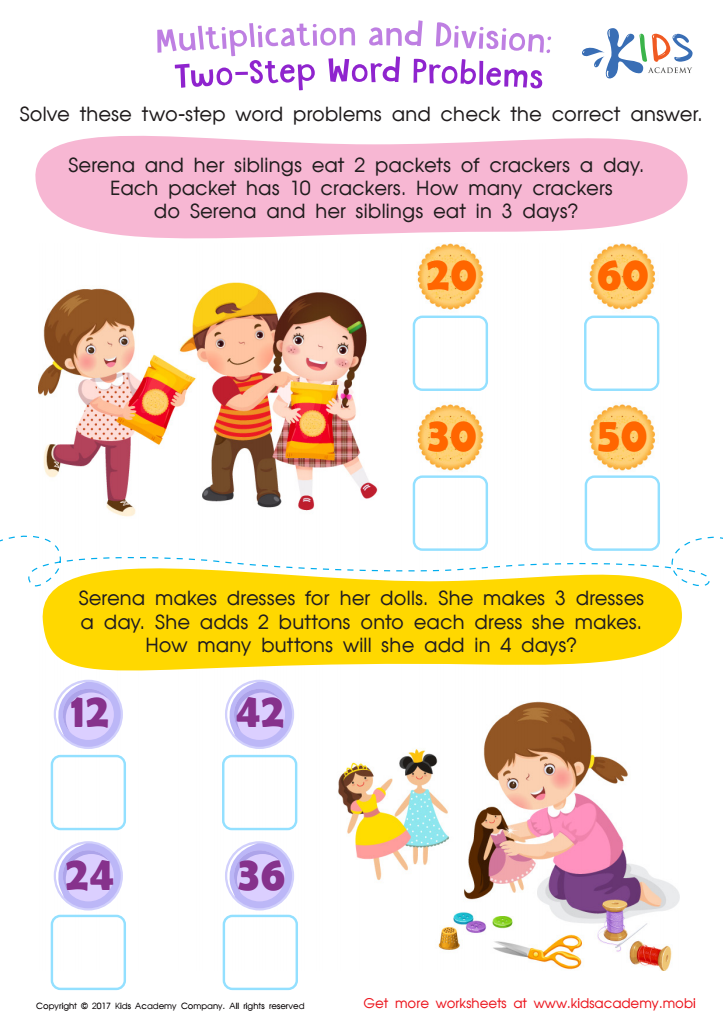
Two Step Word Problems Worksheet
 Assign to My Students
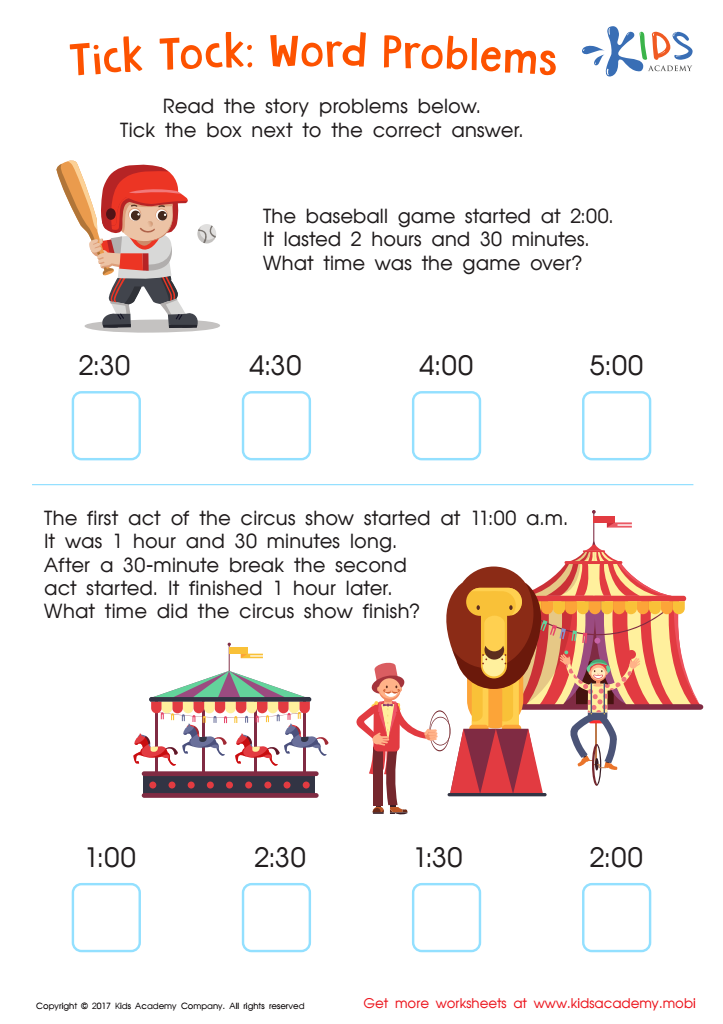
Tick Tock Word Problems Time Worksheet
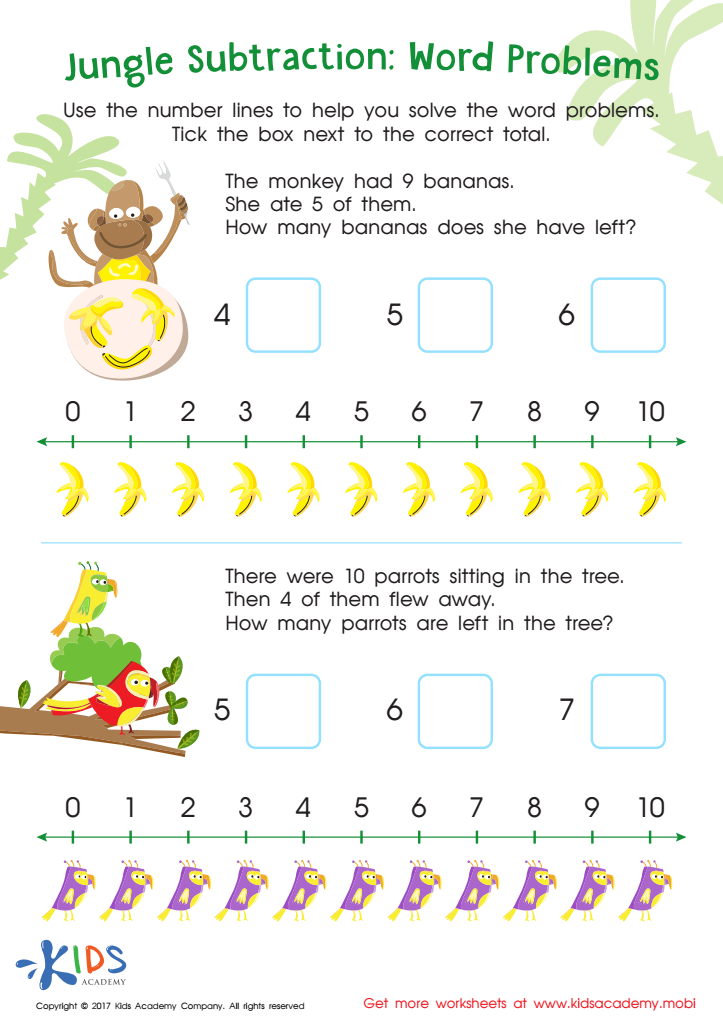
Jungle Subtraction Word Problems Substraction Worksheet








Mathematical reasoning extra challenge word problems for ages 5-6 are vital tools for cultivating essential cognitive skills at an early age. When parents and teachers prioritize these problems, they nurture children's ability to think critically and develop problem-solving strategies. Engaging with word problems helps children make connections between numbers, concepts, and real-world situations, enhancing their understanding of mathematics beyond rote memorization.
These challenges promote not only mathematical knowledge but also language skills, as children learn to decipher complex sentence structures. They enhance comprehension and foster better communication abilities. Additionally, tackling word problems encourages perseverance and resilience; children learn that problems can be solved with patience and flexible thinking, skills that are invaluable throughout life.
Furthermore, these exercises can expose young learners to higher-order thinking and encourage collaboration when discussed in groups, fostering social skills. In a world increasingly reliant on logical reasoning and analytical abilities, equipping children with strong mathematical reasoning from a young age lays the foundation for future academic success. Thus, parental and teacher engagement with extra challenge word problems can significantly impact a child's overall cognitive development, confidence, and enthusiasm for learning.