Handwriting practice Extra Challenge Letter Recognition Worksheets for Ages 5-7
5 filtered results
Difficulty Level
Grade
Age
-
From - To
Subject
Activity
Standards
Boost your child's handwriting and letter recognition skills with our "Handwriting Practice Extra Challenge Letter Recognition Worksheets" for ages 5-7! These expertly crafted worksheets offer a fun and engaging way for young learners to practice letter formation, improve their fine motor skills, and confidently recognize alphabet letters. Designed by educational professionals, these worksheets challenge kids while ensuring they stay motivated and enthusiastic about learning. Perfect for parents and teachers alike, our learning resources support early literacy development. Download now and watch your child's writing skills flourish! Discover more at Kids Academy, where learning is fun and effective.
Favorites
With answer key
Interactive
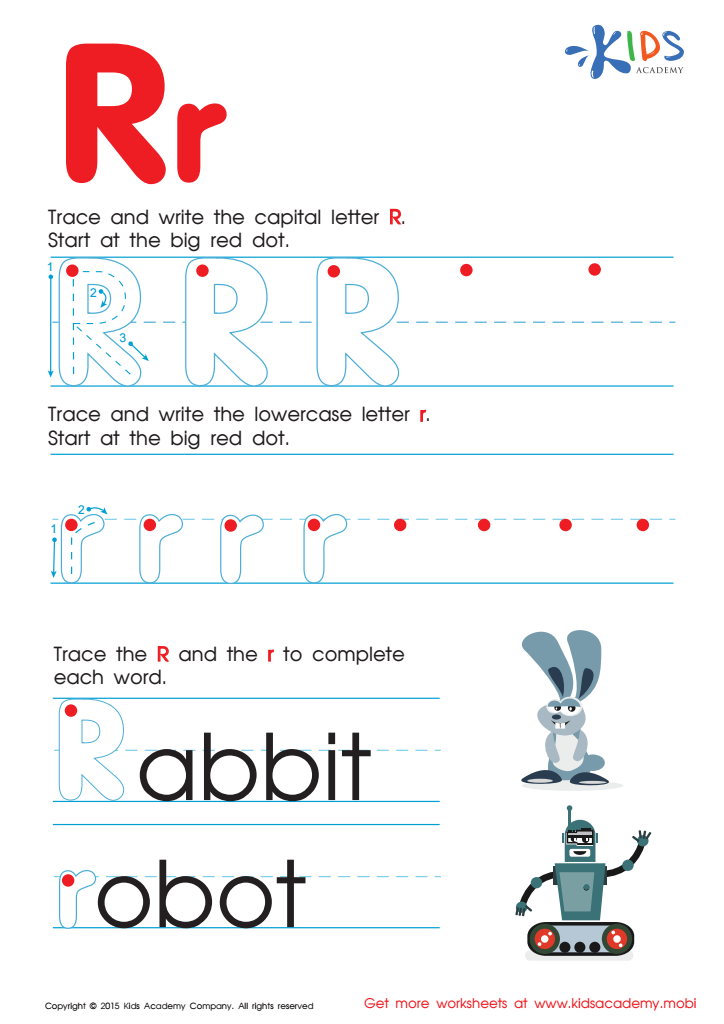
Letter R Tracing Page
Trace and write the letter "R" with this worksheet for kindergarten. Start with the uppercase, then move on to the lowercase. Write the letters several times for practice. Then help complete the words for the rabbit and robot, spelling carefully. More ABC worksheets can be found at Kids Academy.
 Assign to My Students
Letter R Tracing Page
Worksheet
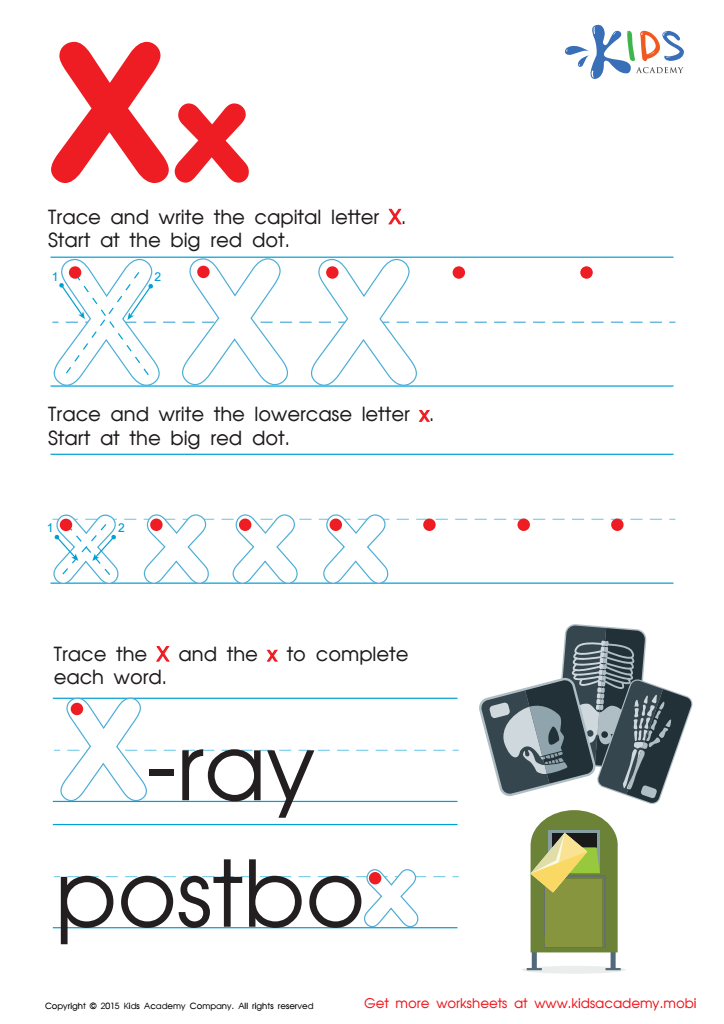
Letter X Tracing Page
Trace the uppercase letter "X" to learn, then write it yourself and practice. Then do the same with the lowercase "x" before completing the words "X-ray" and "postbox". Enjoy our alphabet printables!
Letter X Tracing Page
Worksheet
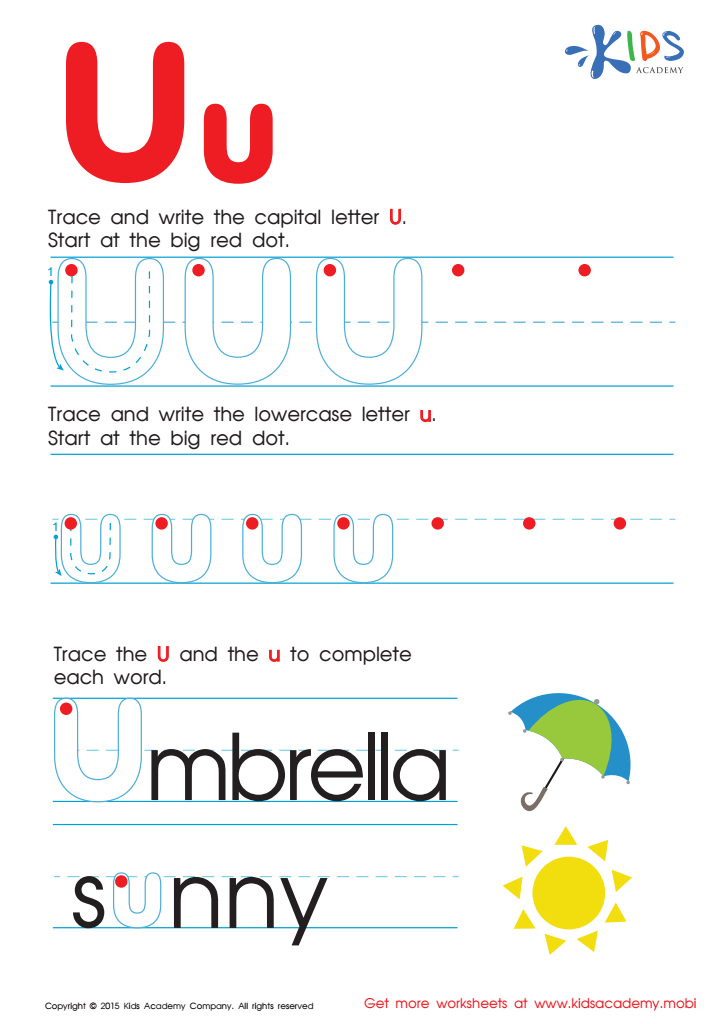
Letter U Tracing Page
Ready to trace and write the letter "U"? Use our worksheet and practice tracing both uppercase and lowercase letters. Complete the words "umbrella" and "sunny" with a capital "U". Check our full collection of alphabet printables for more activities.
Letter U Tracing Page
Worksheet
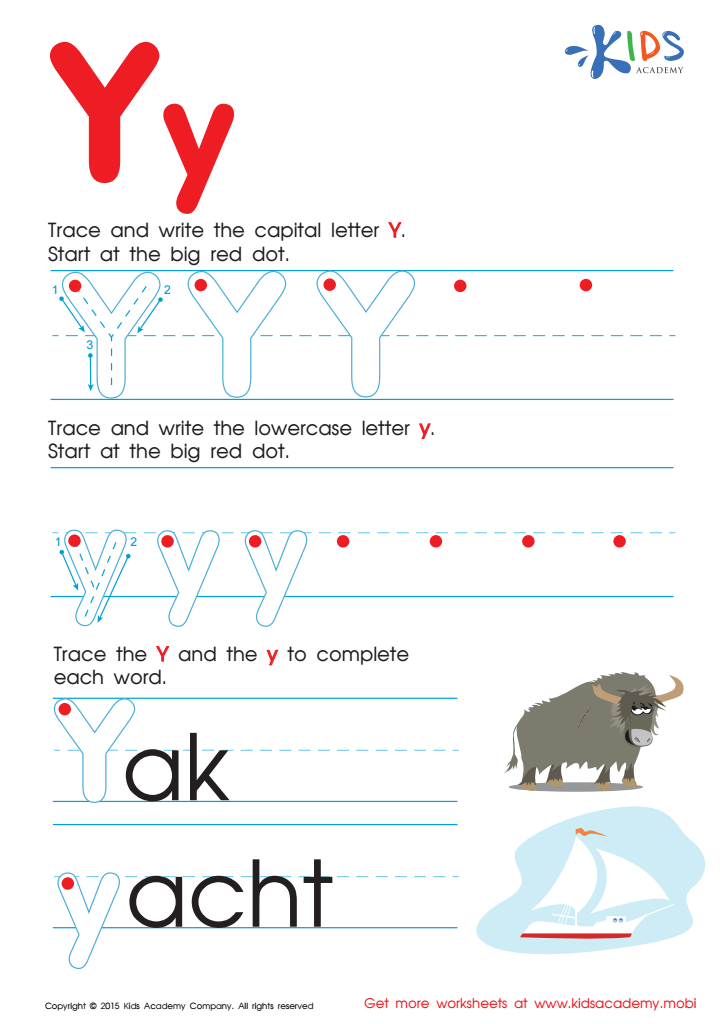
Letter Y Tracing Page
Trace the capital letter "Y" on the red dot, then trace and write the lowercase letter. Complete the words to help the Yak walk and the yacht swim. More worksheets at Kids Academy.
Letter Y Tracing Page
Worksheet

Letter V Tracing Page
Trace the uppercase and lowercase letter "V" with our kindergarten tracing worksheet. Begin at the red dot and follow the lines. Write it several times. Complete the words "Volcano" and "violin". Get more alphabet activities at Kids Academy.
Letter V Tracing Page
Worksheet
Join Kids Academy for Free
Who is primarily going to use this learning content?








Handwriting practice and letter recognition are fundamental skills for children ages 5-7 and merit focused attention from both parents and teachers. At this critical developmental stage, children are refining their fine motor skills and learning foundational literacy concepts. Through handwriting practice, children develop better hand-eye coordination, strengthen their pencil grip, and improve their ability to form letters clearly and correctly. This not only makes writing a smoother and more natural process but also enhances cognitive development, as writing by hand has been shown to engage brain areas involved in memory and comprehension.
Extra challenges in letter recognition—including activities like identifying letters among distractions, matching uppercase and lowercase letters, or recognizing letters within words—further boost literacy skills. Mastery of letter recognition is a stepping stone to fluent reading and writing. As children recognize letters quickly and accurately, it enables them to decode words more efficiently and build a robust vocabulary.
Moreover, these practices foster a child's self-confidence and motivation in learning. When parents and teachers invest time and effort into these activities, it shows children the value of persistence and hard work. It also creates a supportive learning environment that is essential for young learners to thrive academically and psychologically. Thus, prioritizing handwriting practice and letter recognition is crucial for setting children up for long-term educational success.