Fine Motor Skills Extra Challenge Tracing Letters Worksheets for Ages 5-7
7 filtered results
-
From - To
Enhance your child's fine motor skills with our engaging Tracing Letters Worksheets designed specifically for ages 5-7. These extra challenge worksheets provide a fun and interactive way for young learners to practice letter recognition and writing precision. By tracing various letters, children develop greater control and coordination in their writing abilities. Our carefully crafted exercises not only support skill development but also boost confidence in early literacy. Ideal for both home and classroom use, these worksheets allow your child to explore their creativity while sharpening essential motor skills. Download today and make learning letters an exciting adventure!
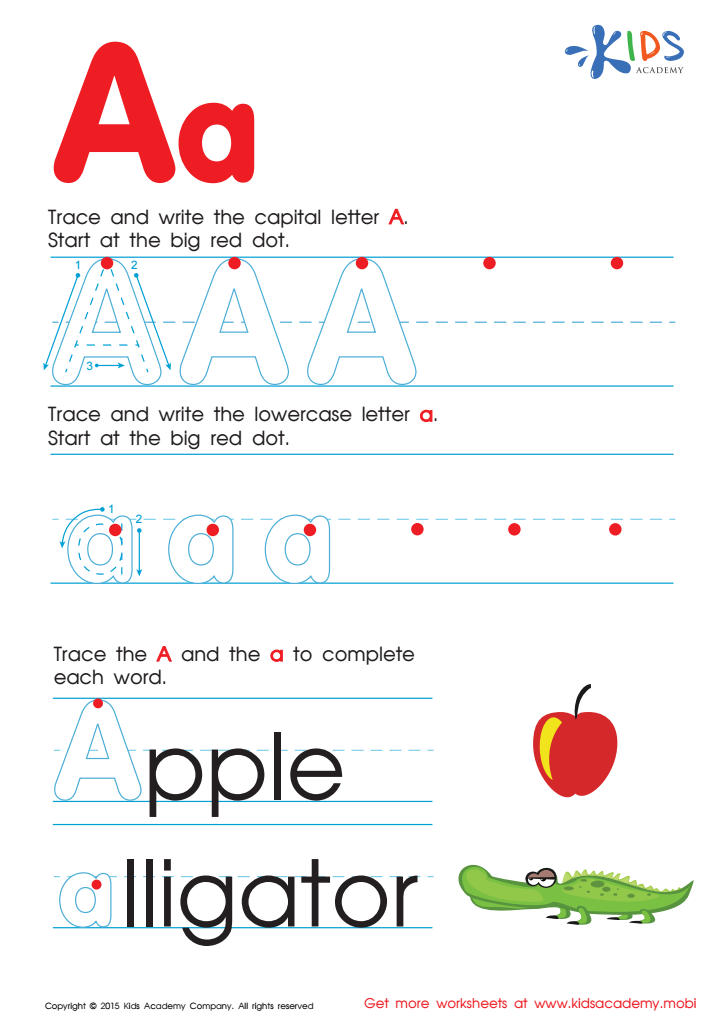
Letter A Tracing Page
 Assign to My Students
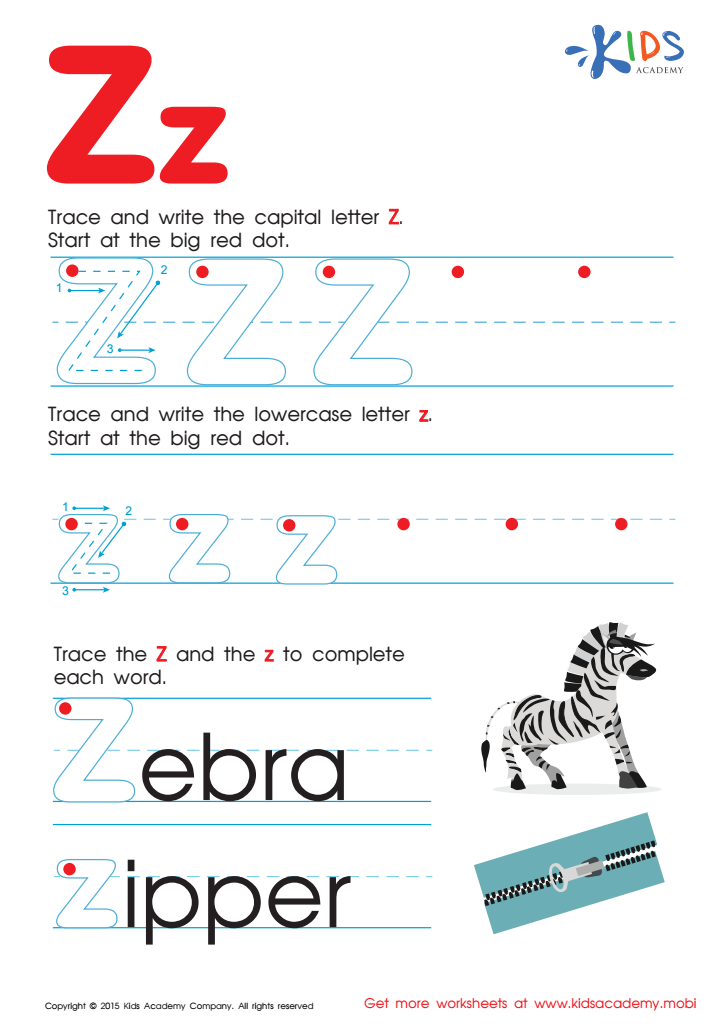
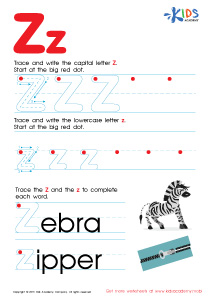
Letter Z Tracing Page
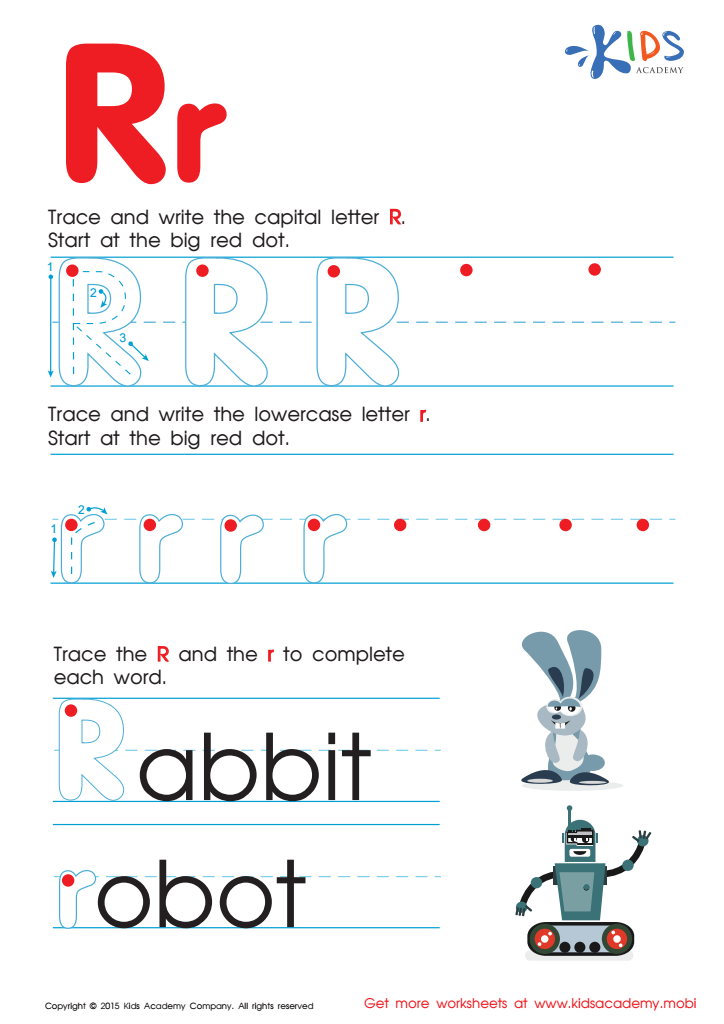
Letter R Tracing Page
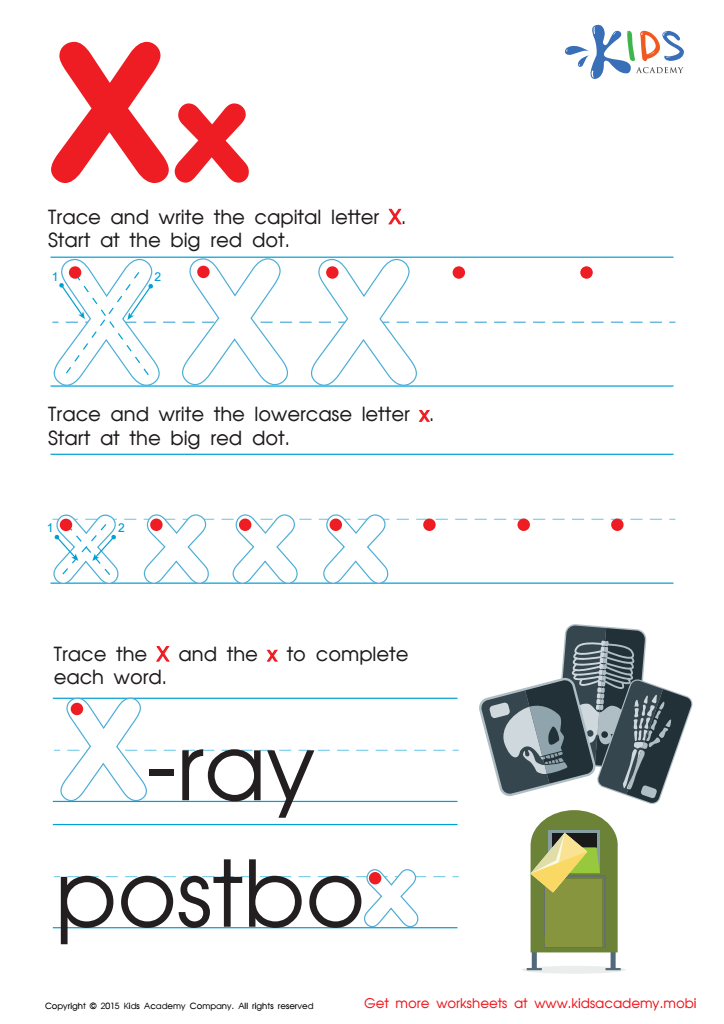
Letter X Tracing Page
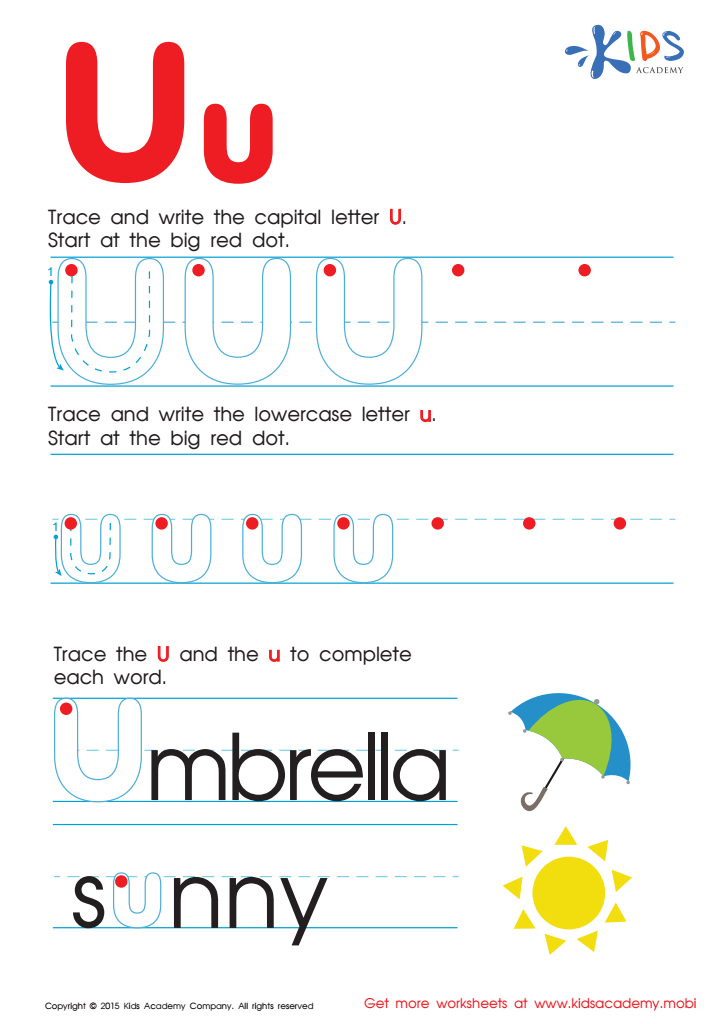
Letter U Tracing Page
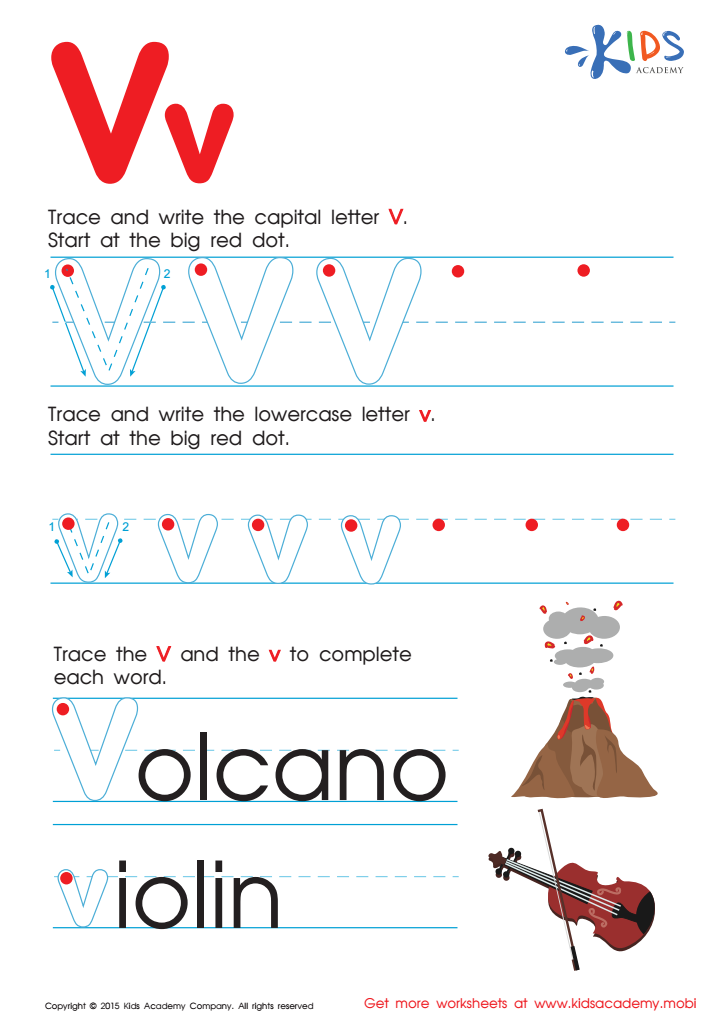
Letter V Tracing Page
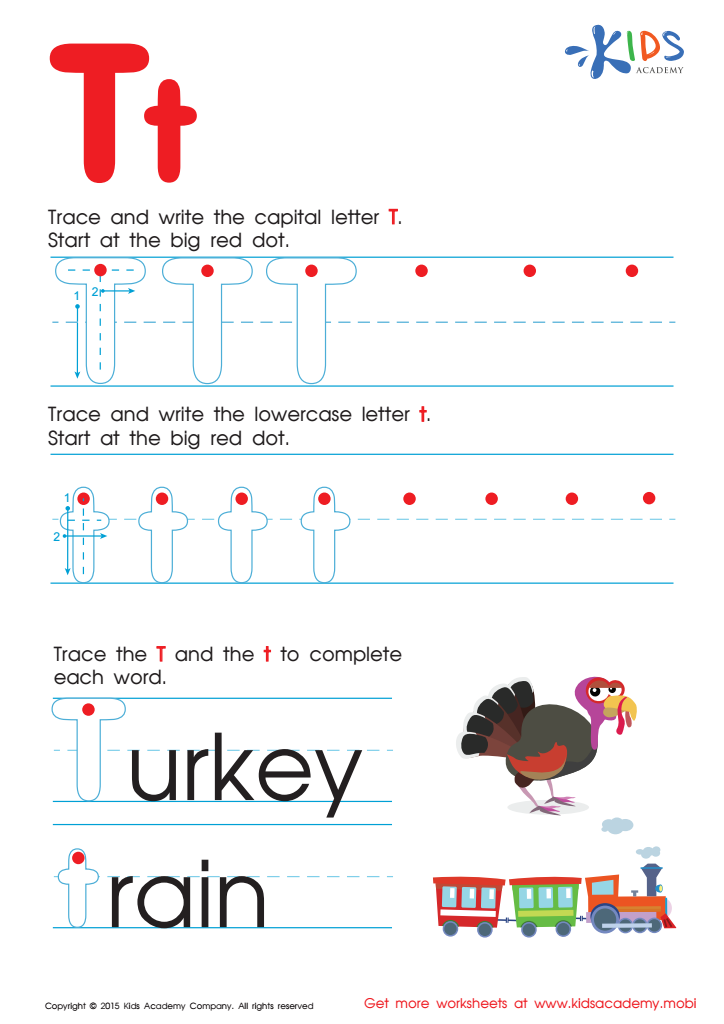
Letter T Tracing Page








Fine motor skills are essential for young children's overall development, particularly for ages 5-7, as they are foundational for tasks involving hand-eye coordination, dexterity, and precision. Engaging children in fine motor skill activities, such as tracing letters, offers numerous benefits that parents and teachers should prioritize.
Firstly, tracing letters helps children develop the muscle control needed for writing. mastering these skills sets the stage for effective penmanship and written communication as they progress in school. Improved fine motor abilities also positively affect other academic areas, such as math, as children learn to manipulate tools like rulers and scissors.
Moreover, tracing letters enhances cognitive processes. It encourages letter recognition, vocabulary development, and phonemic awareness, all critical components of early literacy. As children focus on tracing, they strengthen their visual-motor integration, linking the visual image of a letter with its tactile representation.
Beyond academics, fine motor skill activities foster patience, concentration, and a sense of achievement. These social-emotional benefits help build a child’s confidence as they master new challenges. Overall, prioritizing tracing letters not only promotes academic readiness but also nurtures a love for learning in young children.