Comparing lengths Extra Challenge Worksheets for Ages 5-7
5 filtered results
-
From - To
Unlock your child's potential with our "Comparing Lengths Extra Challenge Worksheets" designed for ages 5-7! These engaging worksheets focus on enhancing children's understanding of measurement by comparing lengths of various objects. Ideal for skill development, our extra challenges encourage critical thinking and problem-solving in a fun, interactive manner. Each worksheet is crafted to spark curiosity, boosting confidence as kids identify longer and shorter items. Complemented by vibrant visuals, these printable resources are perfect for classroom use or at-home learning. Give your child the tools they need to master measuring and comparing lengths with our thoughtfully designed worksheets today!
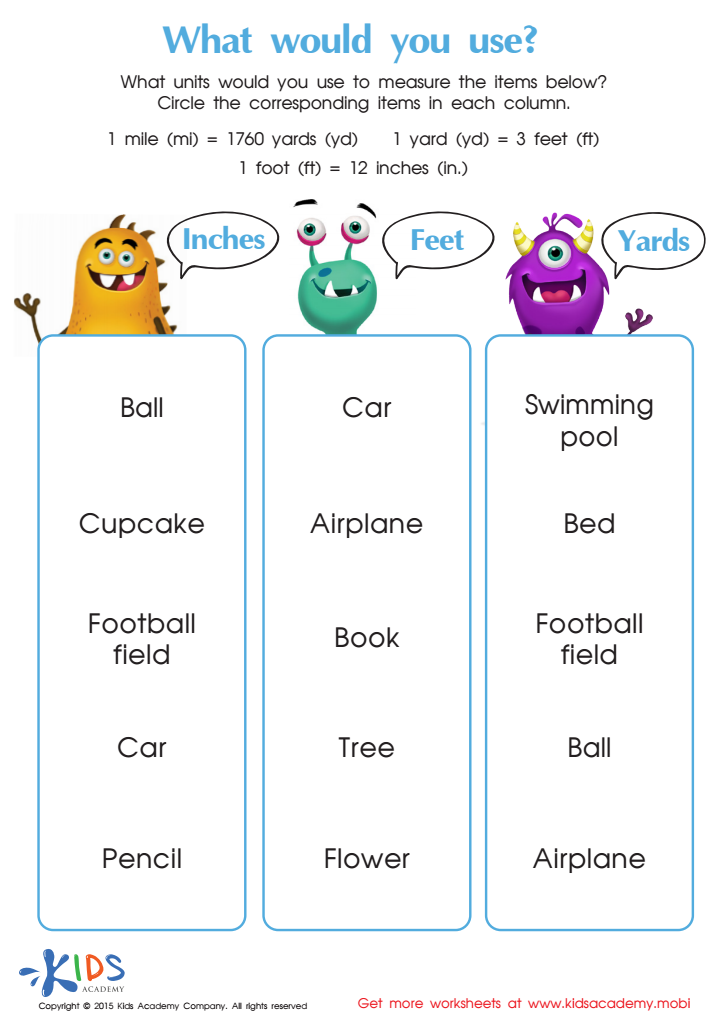
Learning about measuring objects in inches, feet and yards Worksheet
 Assign to My Students
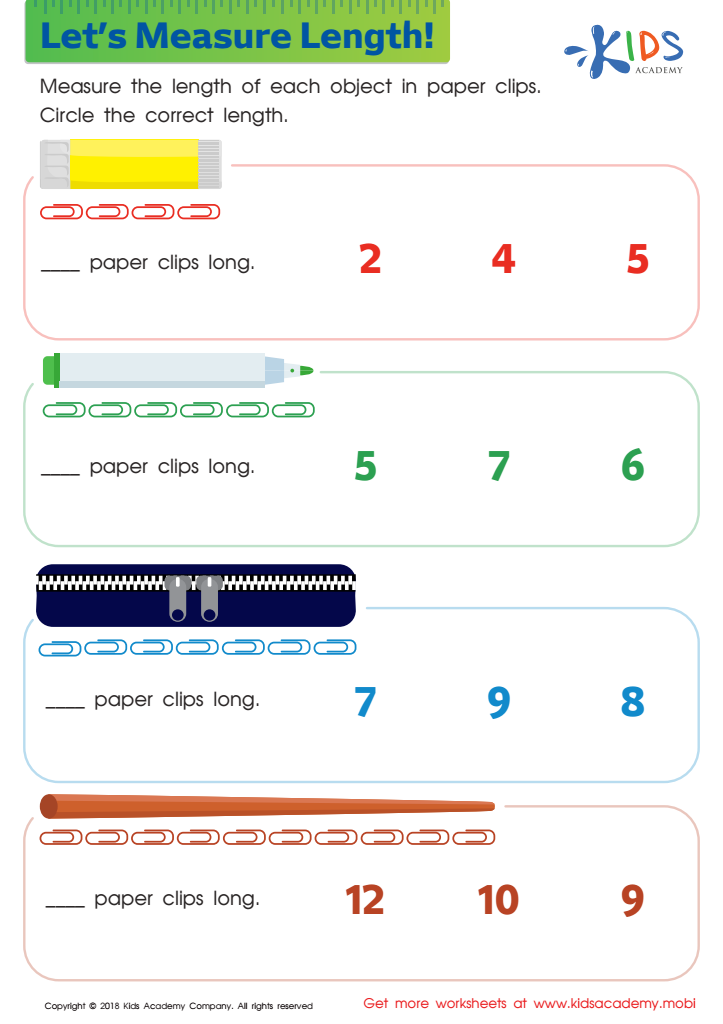
Lets Measure Length Worksheet
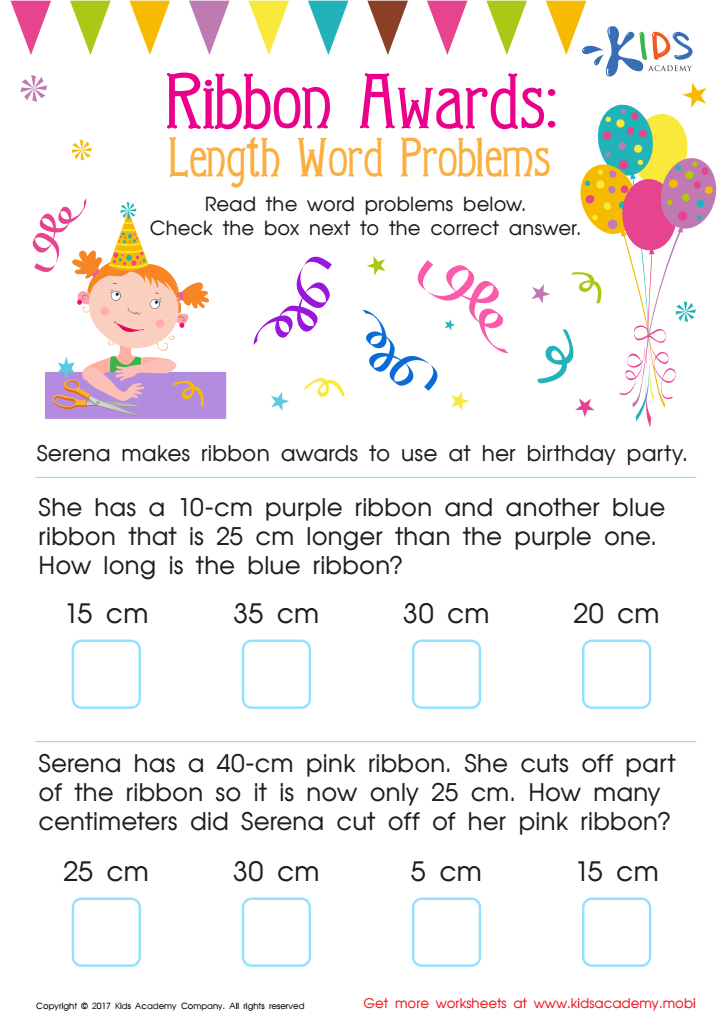
Length Word Problems Worksheet
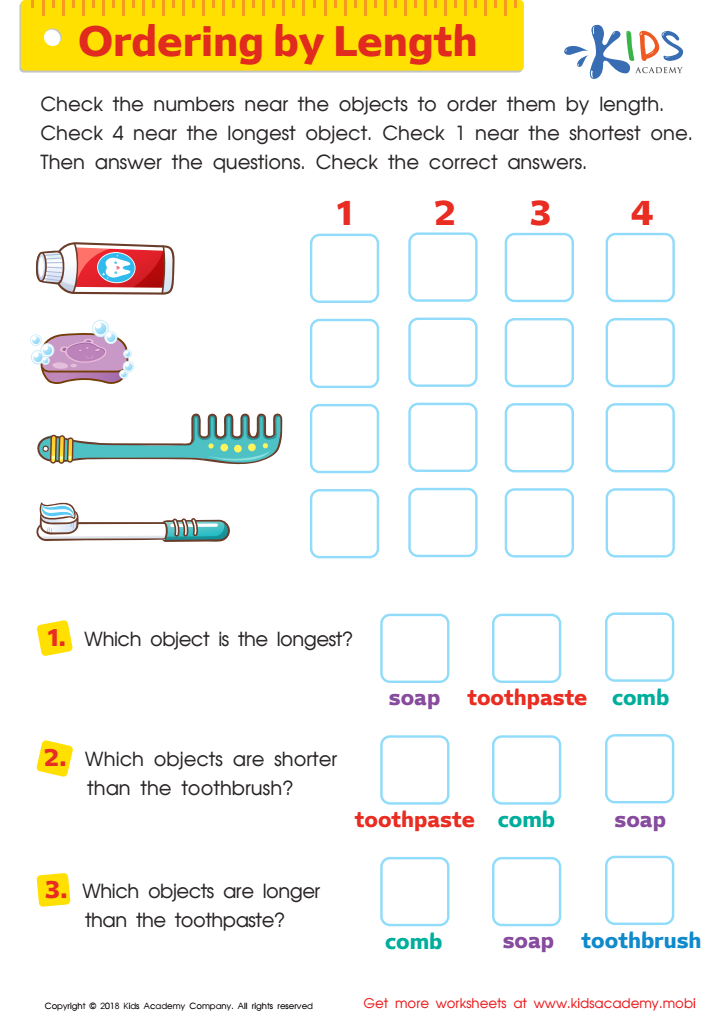
Ordering by Length Worksheet
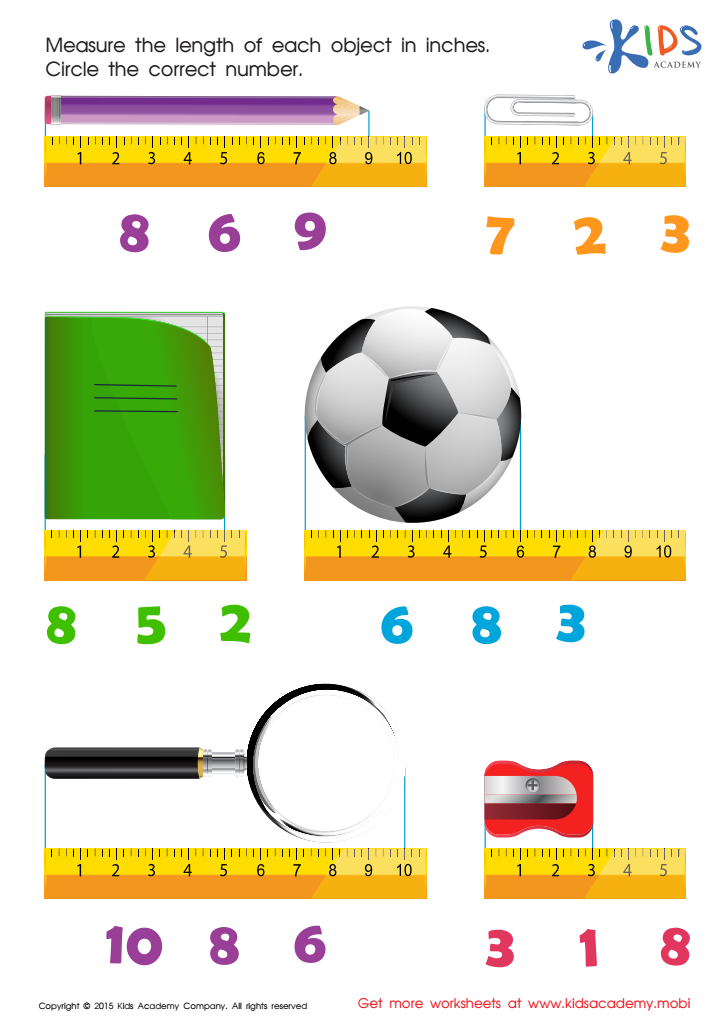
Learning measuring objects in inches Worksheet






Comparing lengths is an essential skill for children aged 5-7 that has far-reaching implications for their cognitive and everyday development. Engaging with this concept helps young learners understand vital mathematical principles, such as measurement and comparison, which are foundational for later math skills. When parents and teachers introduce activities focused on comparing lengths, they are not just teaching kids about numbers; they are fostering critical thinking and problem-solving abilities.
Moreover, these activities encourage hands-on learning, enhancing engagement and retention. Children learn through exploration, which means they become more invested in their education. By measuring and comparing various objects in their environment—using tools like rulers, tape measures, or everyday items—children can develop a sense of spatial awareness and an understanding of how different items relate to one another.
Additionally, comparing lengths nurtures communication skills, as children express their findings and reasoning to peers or adults. This social interaction further builds their vocabulary and encourages collaborative learning. Ultimately, parents and teachers should care about this skill because it paves the way for a well-rounded education, instilling confidence in young learners as they make sense of the world through mathematical concepts.








