Understanding plurals Extra Challenge Worksheets for Ages 5-7
5 filtered results
-
From - To
Welcome to our "Understanding Plurals Extra Challenge Worksheets" designed specifically for ages 5-7! These engaging worksheets are perfect for young learners ready to enhance their grammar skills. Featuring a variety of fun activities, children will explore the concept of plurals through games, illustrations, and creative exercises tailored to their developmental level. Each worksheet encourages critical thinking and reinforces plural formation in a playful way, making learning enjoyable and effective. Great for both classroom and home use, these resources will help your child confidently grasp plural usage while building a strong foundation in language skills. Start the fun today!
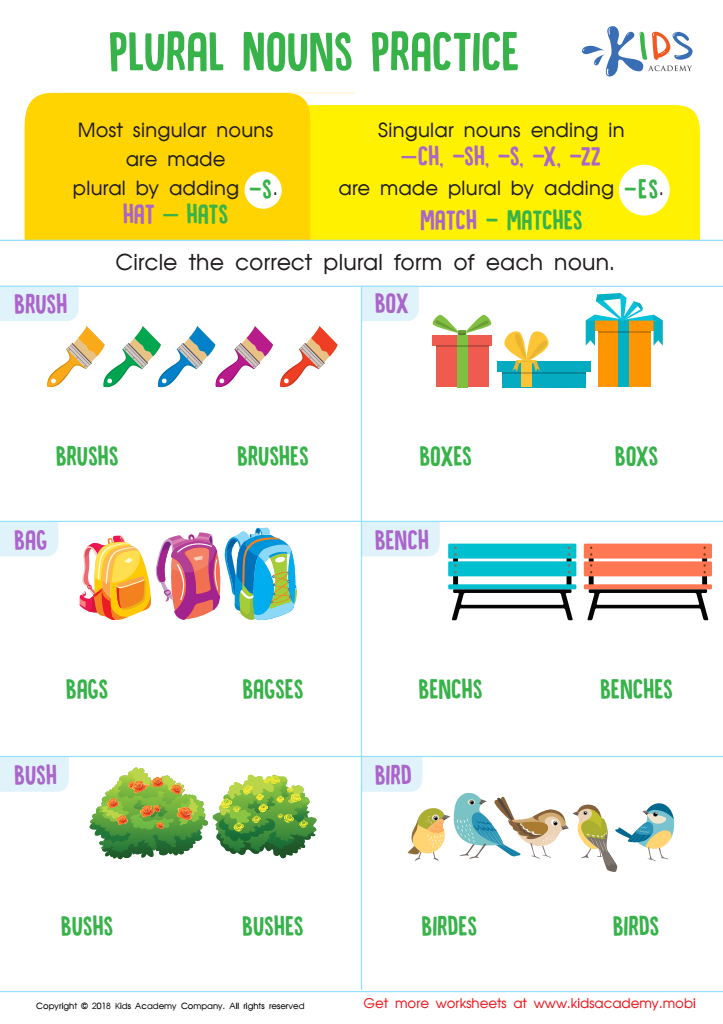
Plural Nouns Practice Worksheet
 Assign to My Students
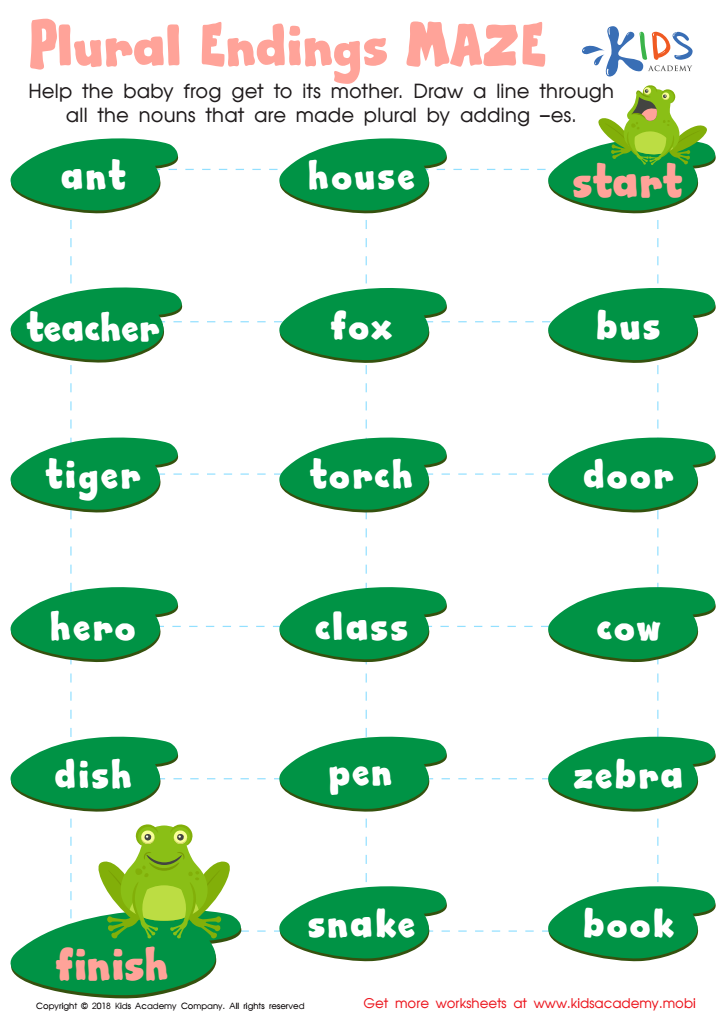
Plural Endings Maze Worksheet
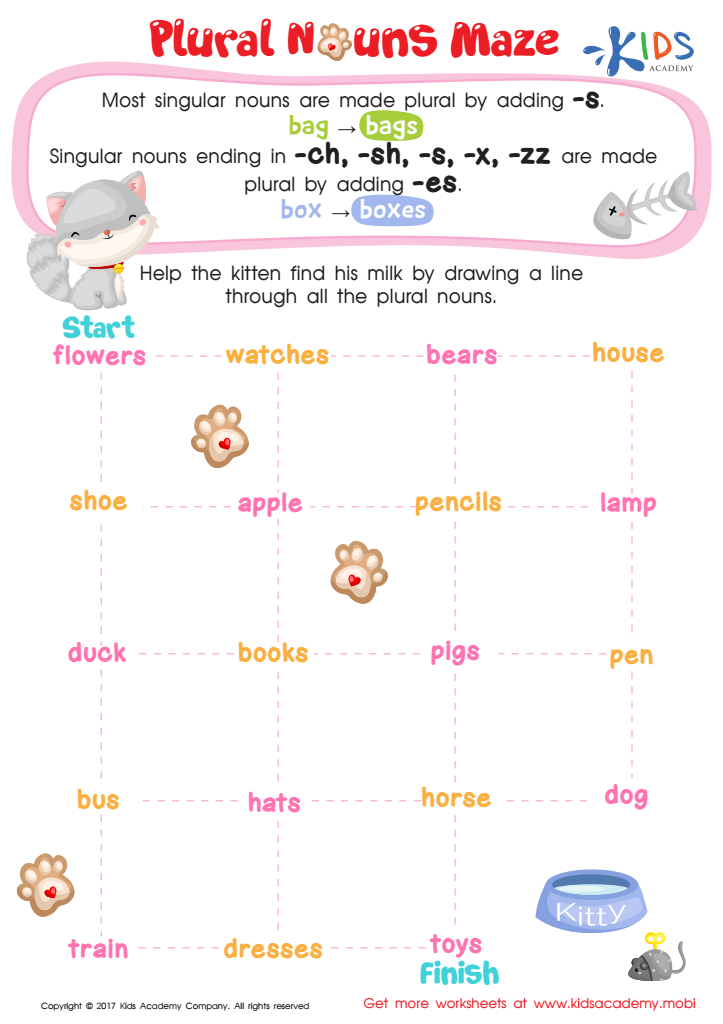
Plural Nouns Maze Worksheet
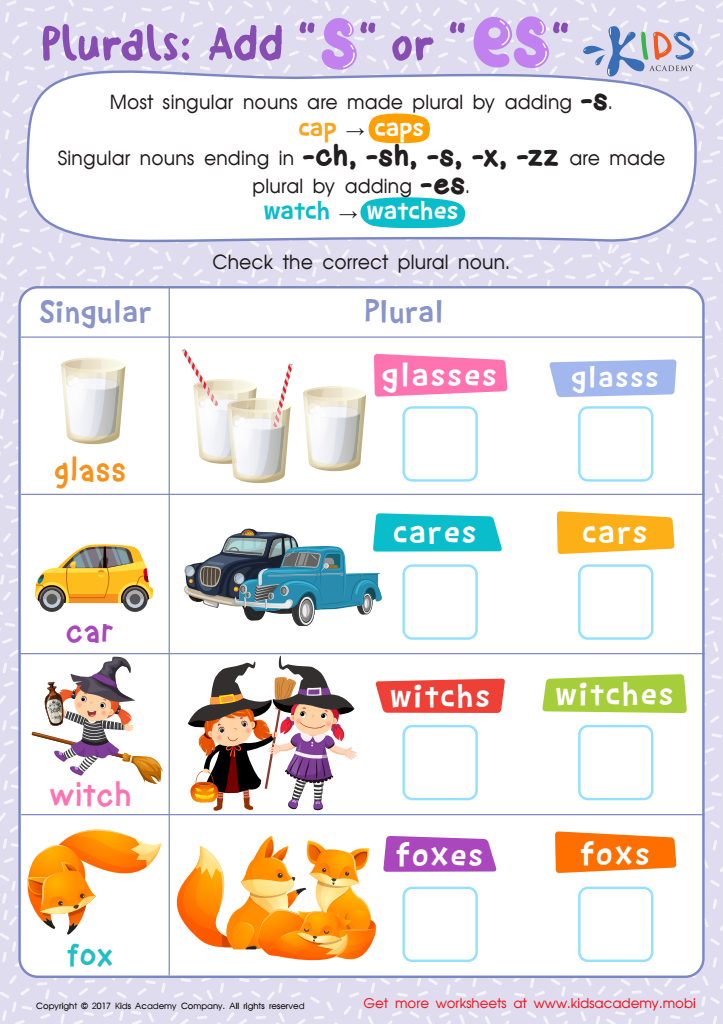
Plurals: "–es" or "–es"? Worksheet
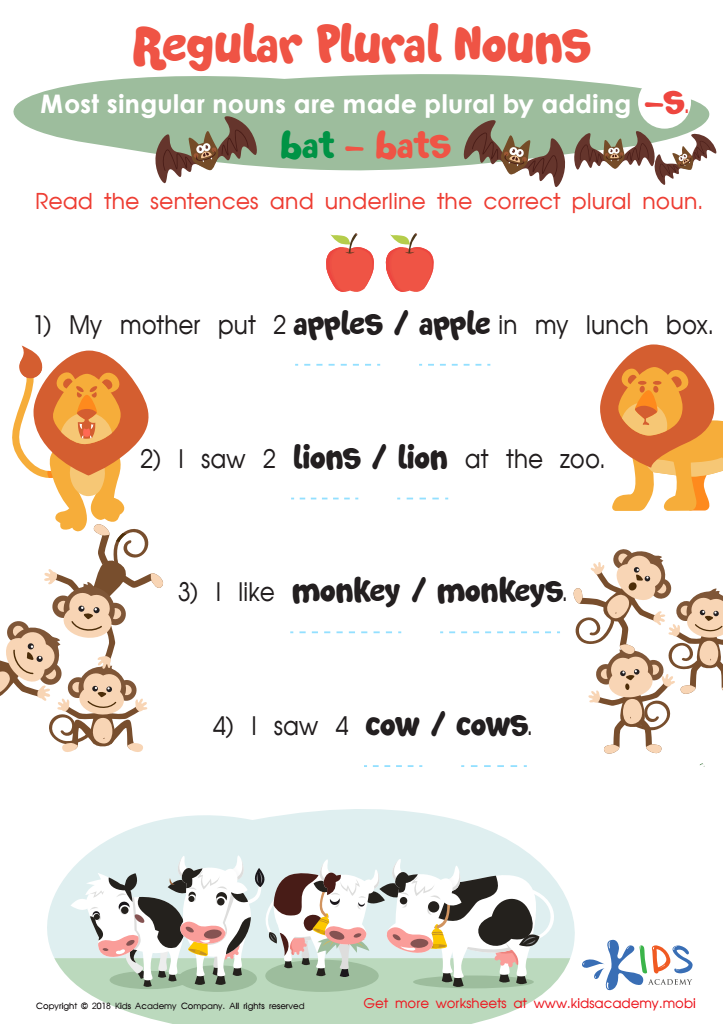
Regular Plural Nouns Worksheet







Understanding plurals is crucial for young learners aged 5-7, as it lays the foundation for robust language skills. When children grasp the concept of plurals, they can better express themselves and comprehend the world around them. Plurals not only aid in vocabulary expansion but also foster effective communication. For example, knowing that “cat” becomes “cats” when talking about more than one helps children construct sentences accurately, enhancing both their speaking and writing abilities.
Furthermore, learning plurals teaches children about the relationship between numbers and nouns, contributing to essential math skills. Recognizing that singular and plural forms can change meaning helps develop critical thinking. In social settings, when they correctly use plurals, children feel more confident expressing themselves, strengthening their social interactions.
Moreover, introducing activities and challenges related to plurals can make learning fun and engaging. By incorporating games, songs, and storytelling, teachers and parents can stimulate enthusiasm for language learning. Ultimately, focusing on plurals equips children with essential tools to navigate their expanding knowledge of language, promotes literacy, and instills a love for communication—crucial skills in any child's development journey. By prioritizing plural knowledge, caregivers can contribute significantly to children’s academic success and self-assurance.








