Money recognition Extra Challenge Money Worksheets for Ages 5-7
4 filtered results
-
From - To
Discover the "Money Recognition Extra Challenge Money Worksheets" designed specifically for ages 5-7! These engaging worksheets provide an exciting way for young learners to enhance their understanding of money concepts. With fun activities tailored to boost counting skills and money recognition, children will practice identifying coins and bills, making them prepared for real-life transactions. The extra challenge component ensures that students are both stimulated and motivated, promoting critical thinking and independence. Perfect for supplementing classroom activities or home learning, these worksheets pave the way for financial literacy from an early age. Start your child's money journey today!
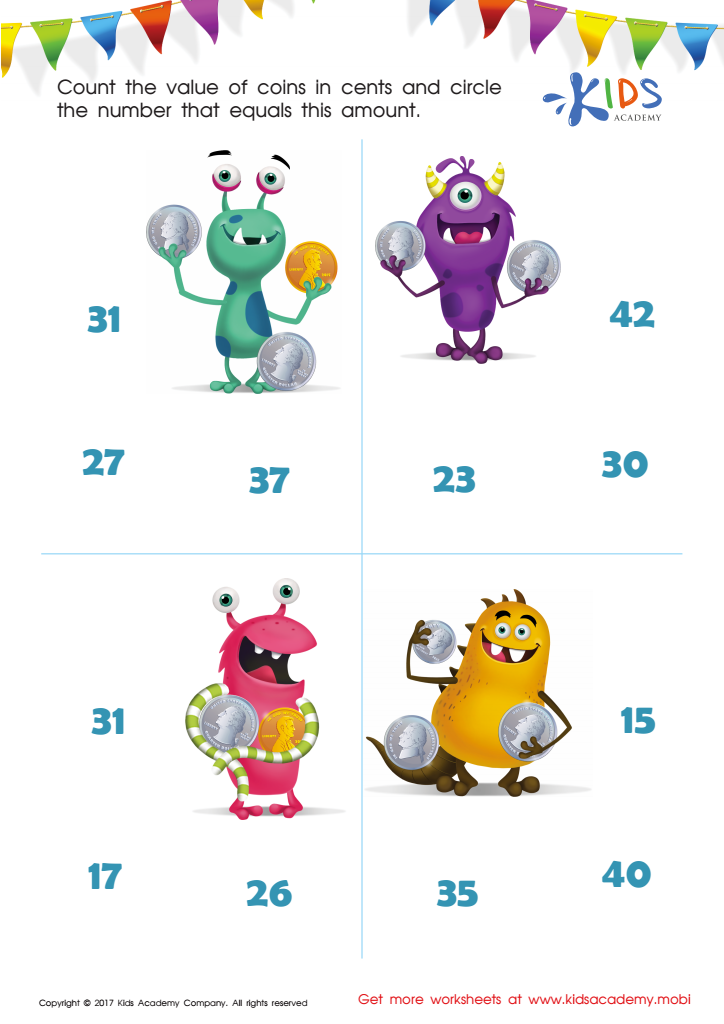
How Many Coins Money Worksheet
 Assign to My Students
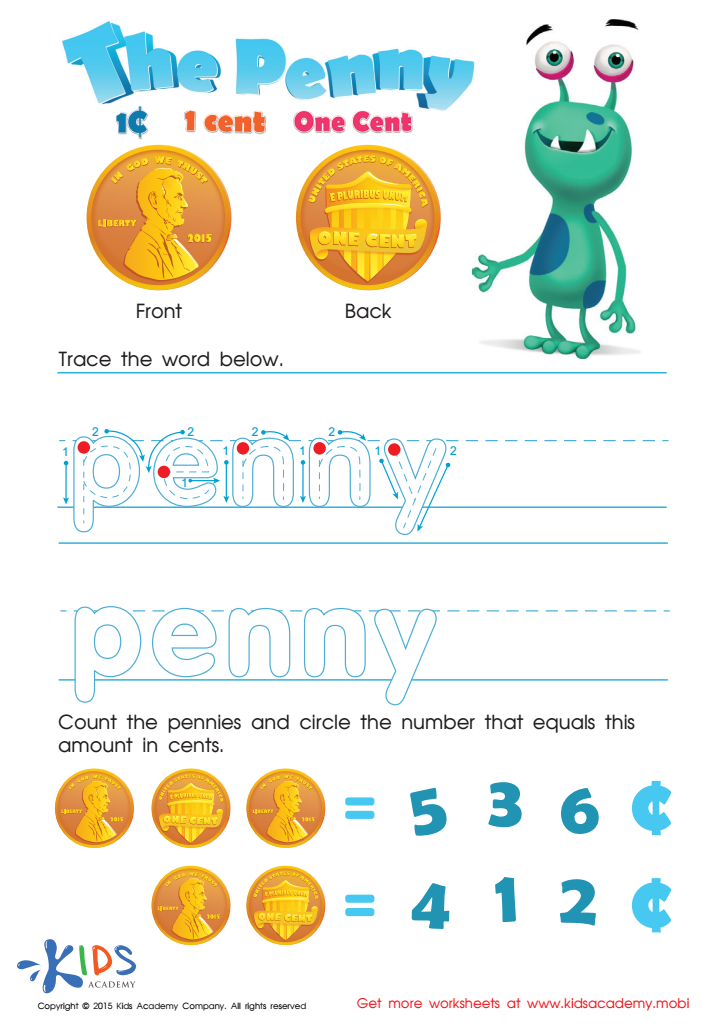
One Cent or the Penny Money Worksheet
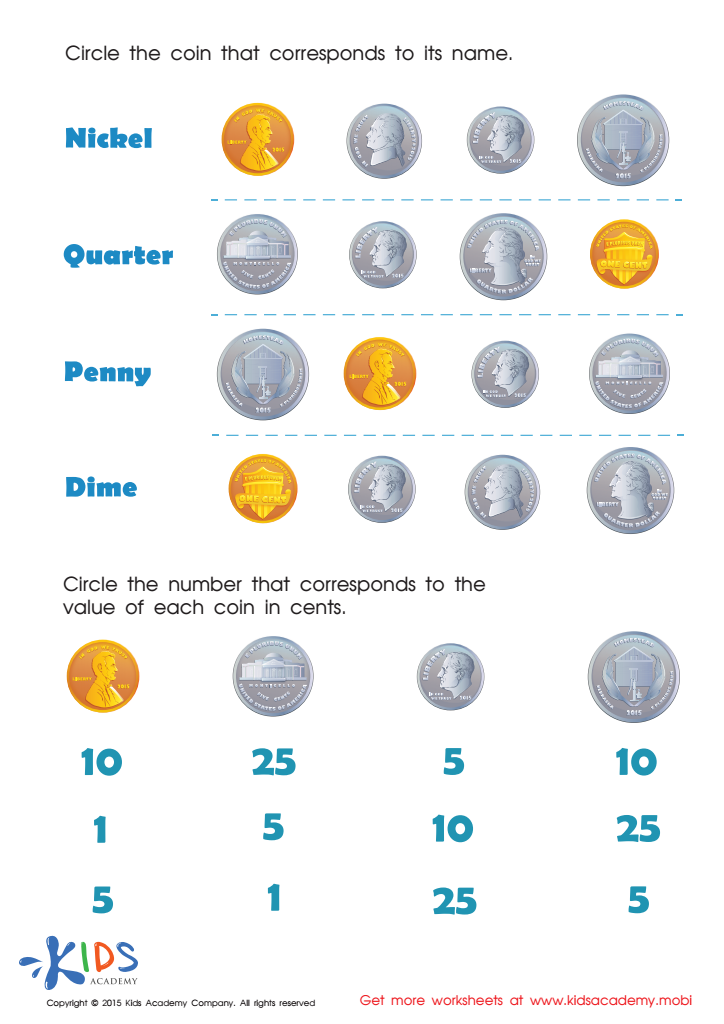
Coin Names and Values Money Worksheet
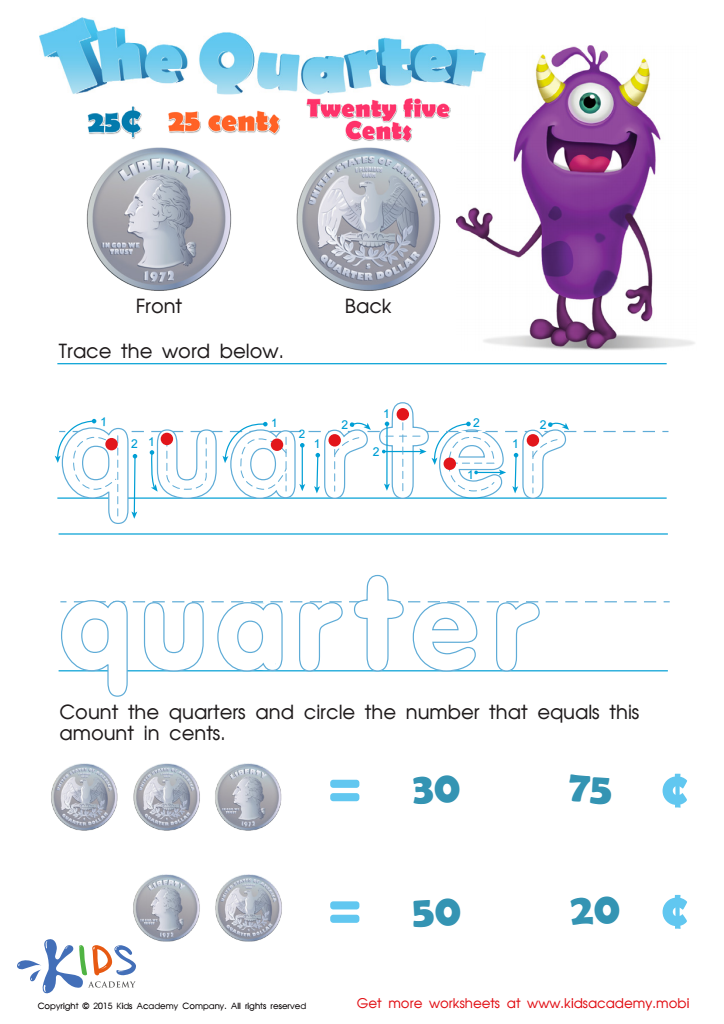
Twenty Five Cents or the Quarter Money Worksheet








Money recognition is a vital skill for children aged 5 to 7, laying a foundational understanding of finance. Parents and teachers should prioritize this learning aspect as it contributes significantly to a child's cognitive development and real-world application. When children learn to identify and differentiate between various coins and bills, they enhance their numeracy skills, which support broader mathematical concepts such as addition, subtraction, and early budgeting.
The Extra Challenge Money program encourages engaging activities that help children grasp the value and significance of money in everyday life. By incorporating playful exercises, such as mock shopping or counting change, children can develop not only their monetary skills but also critical thinking and problem-solving capabilities.
Moreover, teaching money recognition fosters independence and confidence. As children learn to handle money, whether through saving, spending, or giving, they cultivate essential life skills and values related to responsibility and making informed choices.
Equipping young learners with money knowledge empowers them to navigate financial situations effectively in the future. Therefore, by focusing on money recognition, parents and teachers play a crucial role in preparing children for a successful, financially literate adulthood, making it an essential educational priority.