Comparing objects Extra Challenge Math Worksheets for Ages 5-7
3 filtered results
-
From - To
Discover our "Comparing Objects Extra Challenge Math Worksheets" designed for children aged 5-7. These engaging worksheets enhance critical thinking skills as kids practice comparing sizes, quantities, and other attributes of various objects. Each worksheet presents unique activities that help sharpen observational skills while making learning fun and interactive. Perfect for home or classroom use, these challenges are suitable for learners ready to take their comparison skills to the next level. Watch as your child builds confidence and mastery in math through exciting tasks that promote problem-solving and reasoning. Foster a love for learning with our thoughtfully crafted worksheets today!
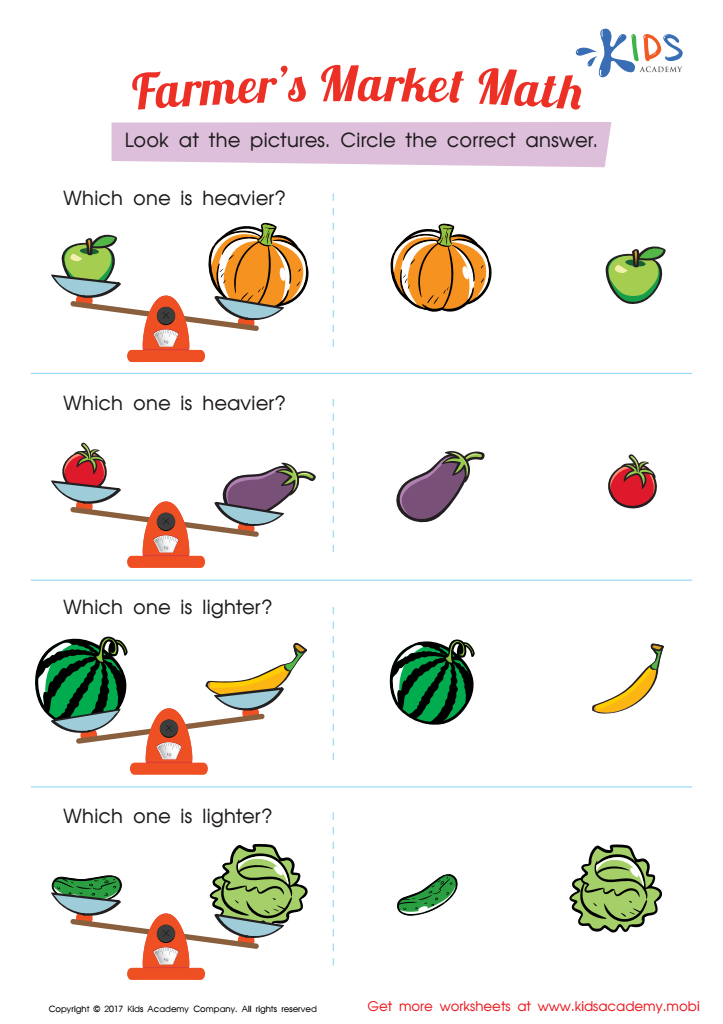
Which One Is Heavier Worksheet
 Assign to My Students
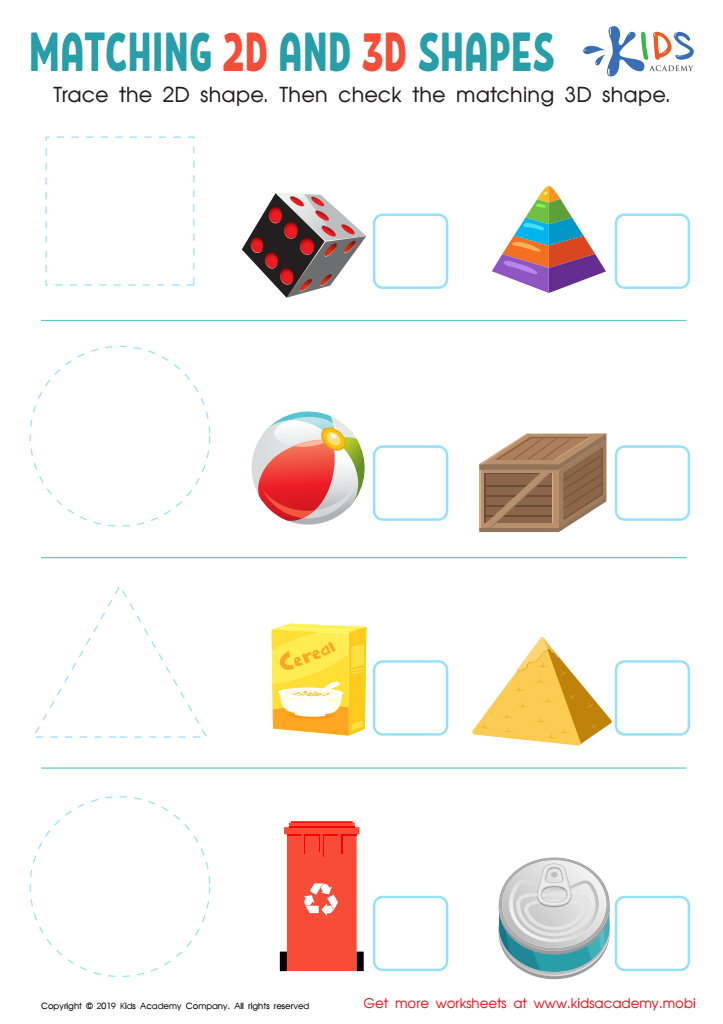
Matching 2D and 3D Shapes Worksheet
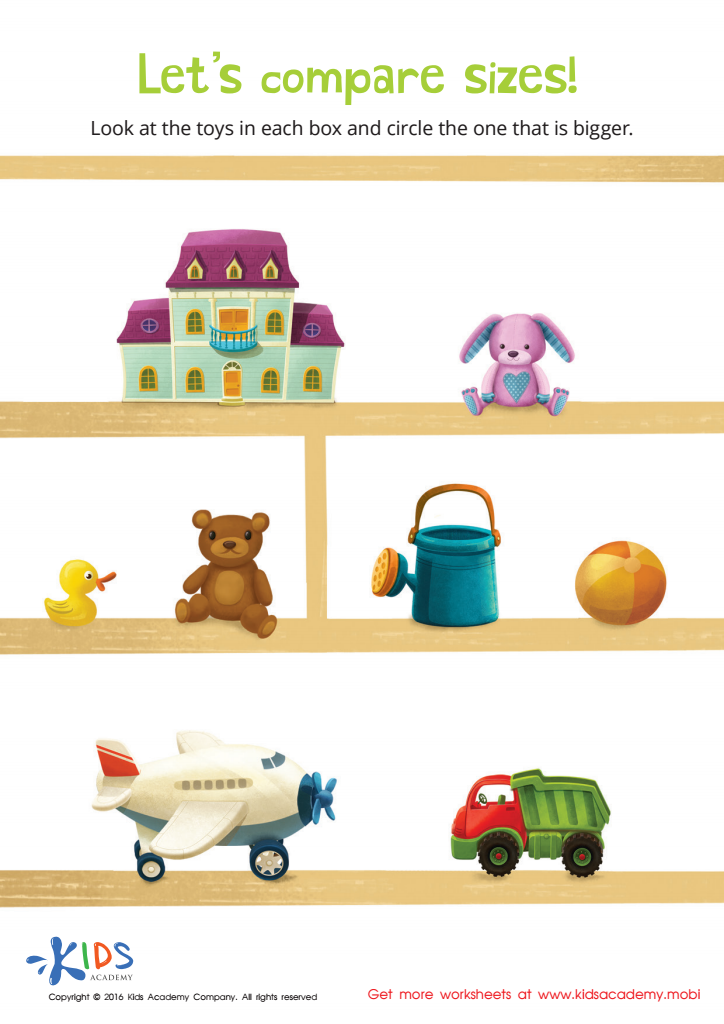
Classifying by Size Sorting Worksheet


.jpg)




Comparing objects is a crucial mathematical skill that foundationally supports children's cognitive development. For parents and teachers of children aged 5 to 7, engaging with comparison activities provides a hands-on approach to learning essential math concepts such as size, quantity, and attributes.
By comparing objects, children develop critical thinking and analytical skills. For example, they learn to identify differences and similarities, enhancing their observation capabilities. This activity is not just about numbers; it fosters language development as children express their observations, learning vocabulary related to comparison, such as “bigger,” “smaller,” “heavier,” and “lighter.”
Additionally, engaging in comparing activities helps children build a strong understanding of basic math principles, such as sorting and categorizing, which are fundamental for more advanced concepts later on. Understanding comparisons also lays the groundwork for developing measurement skills, enabling children to grasp more complex ideas like addition and subtraction in the future.
Finally, these activities can be easily integrated into daily life, making learning fun and relevant. Parents and teachers who prioritize such comparative exercises help instill a love for math, ensuring children recognize its importance in everyday situations, and developing confidence as they progress in their education.