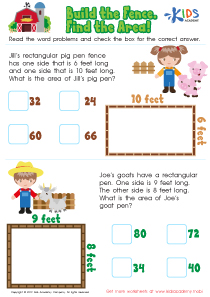
Shape Recognition Extra Challenge Matching Worksheets for Ages 5-7
3 filtered results
-
From - To
Discover our "Shape Recognition Extra Challenge Matching Worksheets" designed specifically for children ages 5-7. These engaging worksheets enhance shape identification skills through fun matching activities that promote critical thinking and problem-solving. Perfect for classroom use or at-home practice, these printables align with early math learning objectives, making them ideal for young learners ready for an extra challenge. Each worksheet is colorful and user-friendly, ensuring that kids remain motivated and engaged as they explore various shapes. Boost your child's shape recognition abilities and encourage a love for learning with these creative and interactive resources. Perfect for teachers and parents alike!
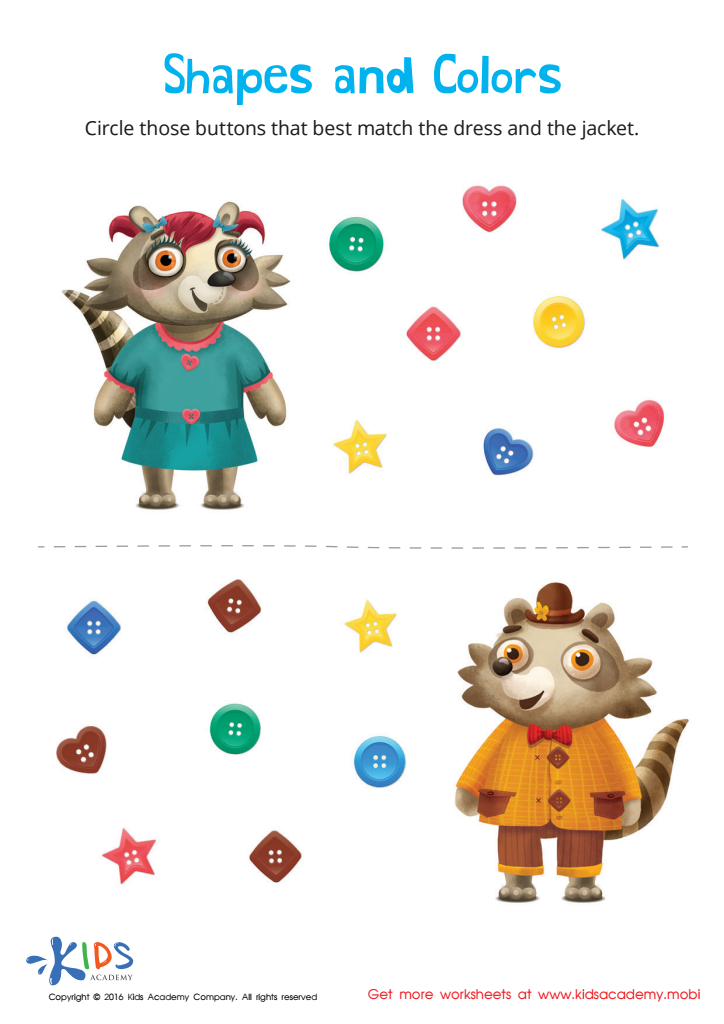
Matching: Shapes and Colors Worksheet
 Assign to My Students
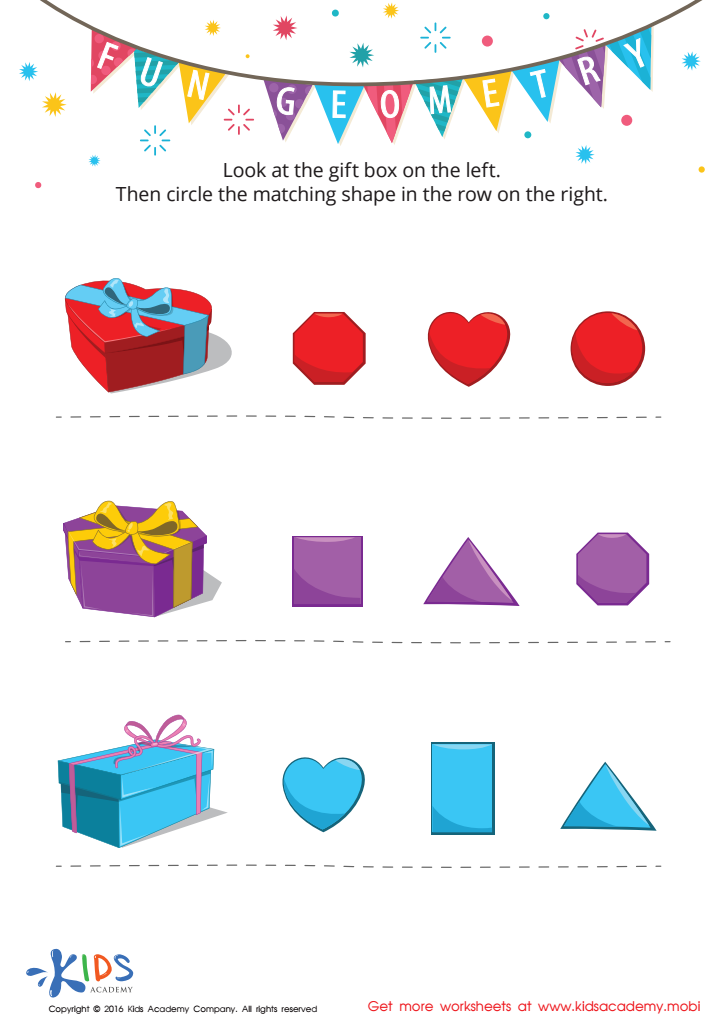
Fun Geometry Worksheet
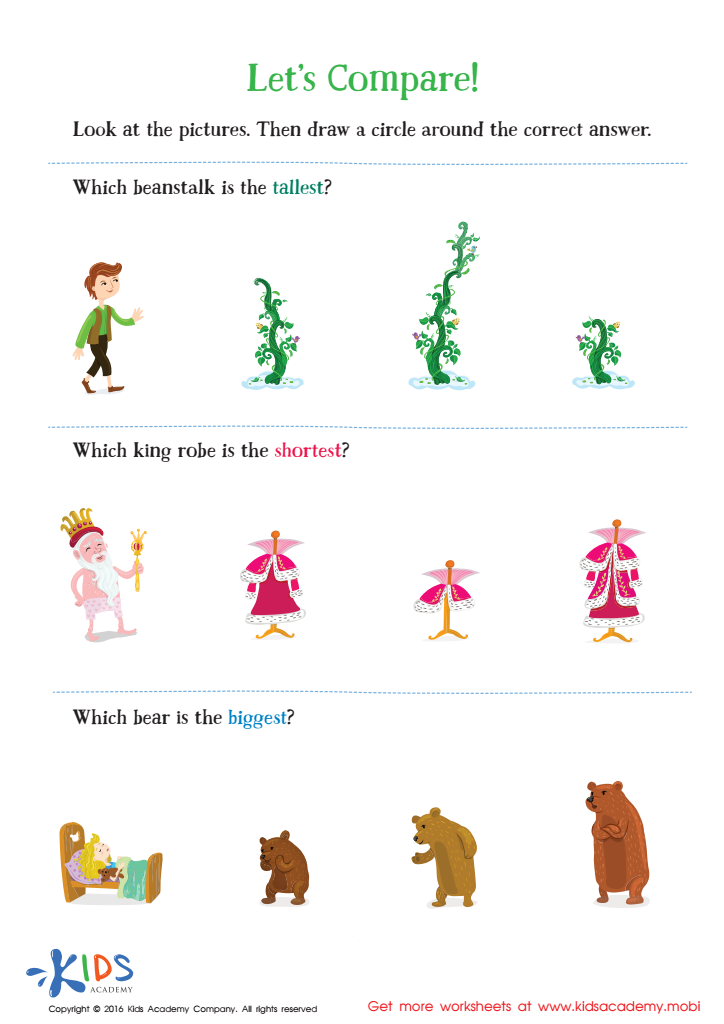
Fairy Tale Worksheet: Let's Compare







Shape Recognition Extra Challenge Matching is a valuable tool for parents and teachers of children ages 5-7 for several reasons. Firstly, shape recognition is a fundamental geometric skill that lays the groundwork for more advanced mathematical concepts. By engaging children in fun activities that involve matching shapes, they enhance their ability to identify, classify, and explain the characteristics of different shapes, which promotes critical thinking and problem-solving skills.
Moreover, this activity combines cognitive development with fine motor skills, as children manipulate physical shapes or engage with digital interfaces. It encourages active participation, making learning more engaging and memorable.
Additionally, sharpening shape recognition skills supports spontaneity in creative arts like drawing, crafts, and building, allowing children to express themselves visually. This aligns with educational standards, where spatial awareness is emphasized as foundational for subjects like mathematics and science.
Finally, Shape Recognition Extra Challenge Matching fosters collaboration and communication when children work in pairs or groups. Through discussion and joint problem-solving, they develop social skills that are crucial for their overall development. Therefore, both parents and teachers should prioritize these activities to support holistic growth in young learners.