Vocabulary enhancement Extra Challenge Matching Worksheets for Ages 5-7
4 filtered results
Difficulty Level
Grade
Age
-
From - To
Subject
Activity
Standards
Introducing our "Vocabulary Enhancement Extra Challenge Matching Worksheets for Ages 5-7"! Designed to boost language skills in young learners, these engaging worksheets combine fun visuals with meaningful activities. Kids will match words to pictures, reinforcing vocabulary development while honing their cognitive abilities. Building essential word recognition and comprehension skills at this age is crucial, and our creatively designed challenges make learning enjoyable! Ideal for classrooms or home practice, these worksheets encourage critical thinking and support literacy growth in early education. Equip your child with the tools they need for successful communication and vocabulary mastery. Perfect for enthusiastic young minds ready to learn!
Favorites
With answer key
Interactive
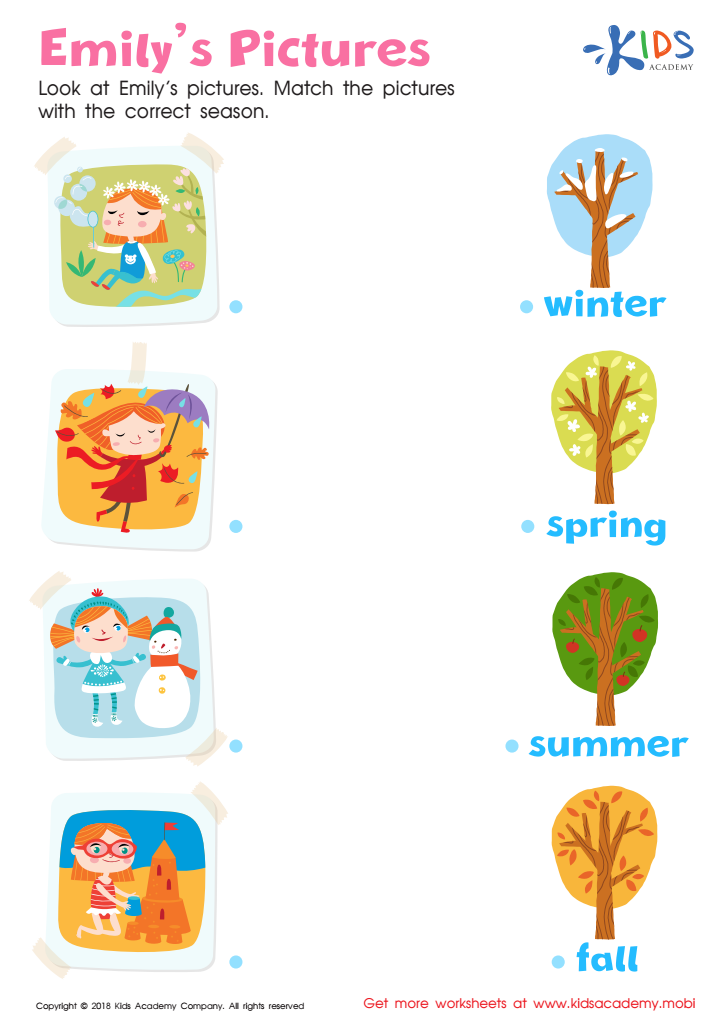
Emily's Pictures Worksheet
Look at the pictures of Emily on the left. Ask your child what she's doing in each one. Then, match the activities to the seasons on the right. Help your kids identify the correct season for each activity. Shorten to 80 words: Look at the pictures of Emily on the left. Ask your child what she's doing in each one, then match the activities to the seasons on the right. Help your kids find the correct season for each activity.
 Assign to My Students
Emily's Pictures Worksheet
Worksheet
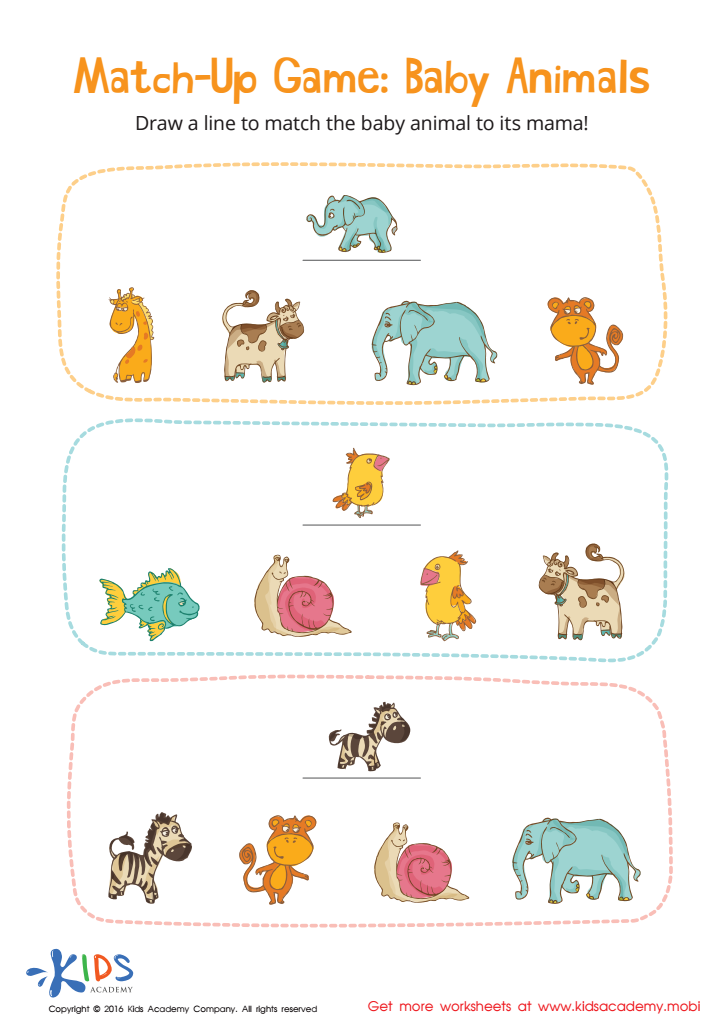
Baby Animals Match-Up Worksheet
Help baby animals find their mummies by using this fun matching worksheet. Kids can practice logical reasoning skills while recognizing similar pictures and learning about animals. Extend their knowledge by having them identify each cute animal!
Baby Animals Match-Up Worksheet
Worksheet
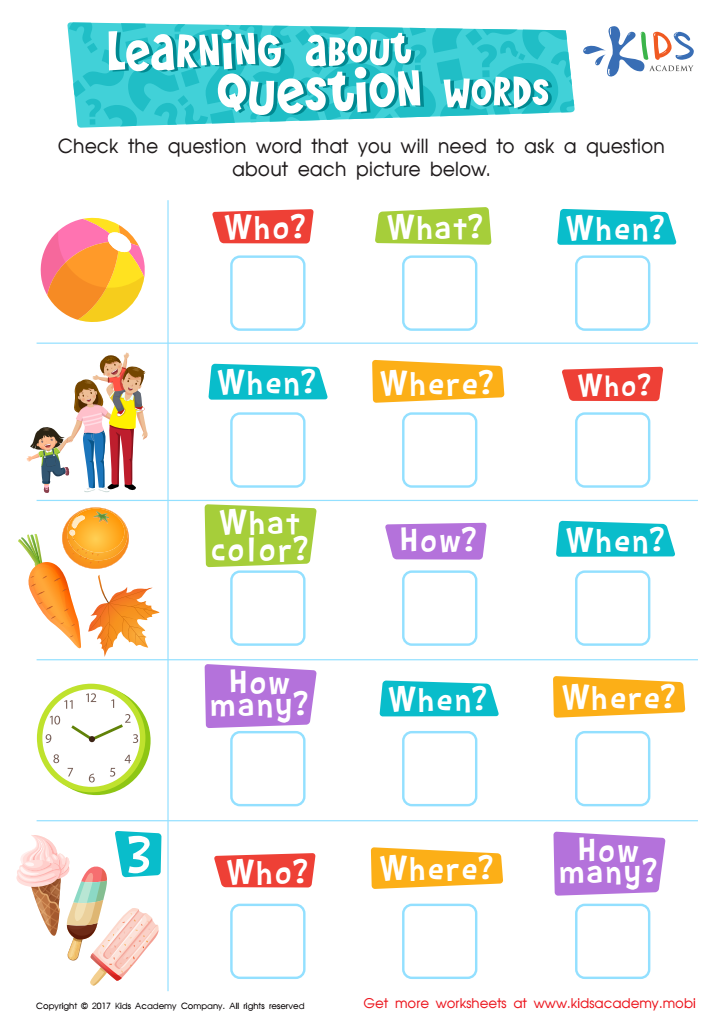
Learning about Question Words Worksheet
Learning language can be difficult, but this free printable worksheet will help! Have your child look at the picture and name it. Then help them choose the right question word to ask something about it. For example, when looking at a beach ball, you can't ask "Who?" Instead, look through the list to select the right word. It's a great way to learn language basics!
Learning about Question Words Worksheet
Worksheet
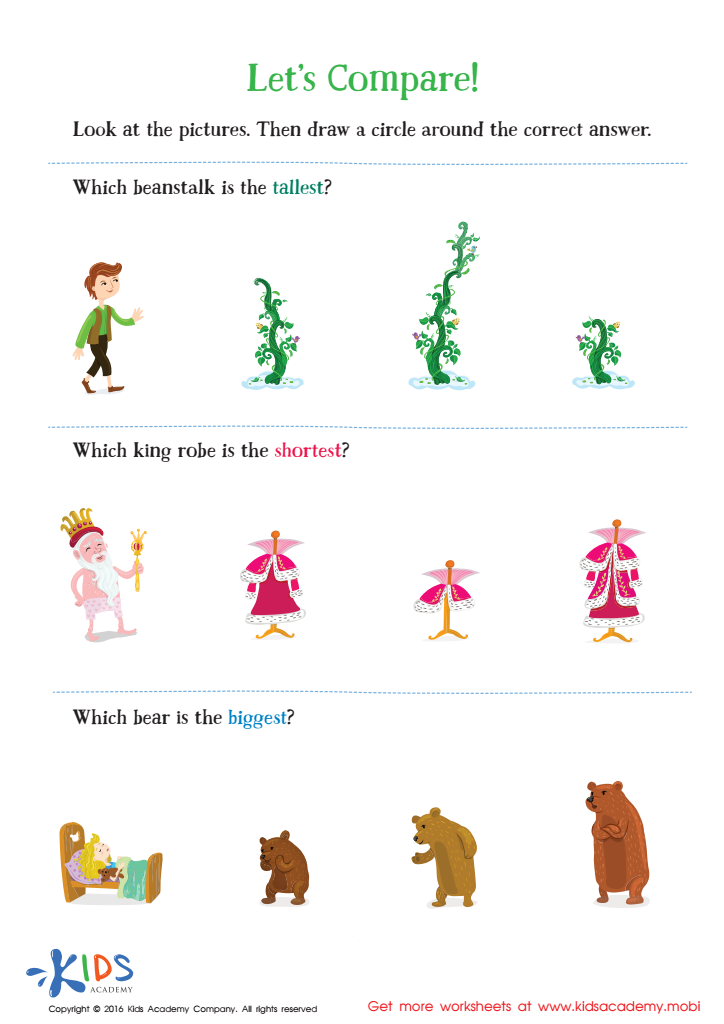
Fairy Tale Worksheet: Let's Compare
Preschoolers need to recognize different sizes of objects. This worksheet combines fun fairy tales with size practice, helping them read, problem solve, and sort through pictures. Your child will love the images and be eager to complete it. Enhance their learning by talking about the tales to build comprehension.
Fairy Tale Worksheet: Let's Compare
Worksheet
Join Kids Academy for Free
Who is primarily going to use this learning content?


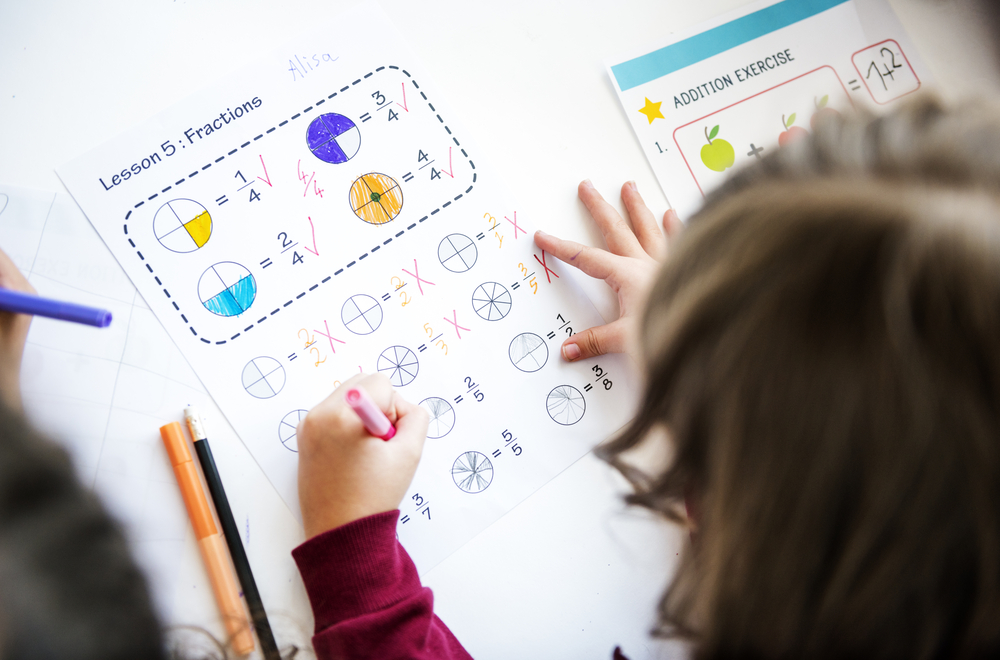





Vocabulary enhancement strategies, such as the Extra Challenge Matching activity, are crucial for children aged 5-7, as this stage is foundational for language development. Words are our primary tools for communication, and a rich vocabulary enhances a child's ability to express thoughts, feelings, and ideas clearly. When parents and teachers invest in vocabulary-building activities, they not only foster better communication skills but also bolster a child's reading comprehension and overall academic performance.
The Extra Challenge Matching activity makes words interactive and engaging, tapping into children’s natural curiosity and playfulness. Rather than rote memorization, this approach encourages exploration and application, allowing children to see how words relate to each other. It reinforces the idea of connections within language, which can improve cognitive skills like critical thinking and problem-solving.
Furthermore, a solid vocabulary is linked to increased self-esteem and socialization; children become more confident in sharing their ideas and participating in discussions. As they cultivate vocabulary skills early on, they lay the groundwork for lifelong learning. Both parents and teachers play essential roles as guides and supporters in this process, ensuring children thrive in their communication abilities and preparing them for future academic success.