Reading comprehension Extra Challenge Science Worksheets for Ages 5-7
4 filtered results
-
From - To
Designed for budding young scientists, our Reading Comprehension Extra Challenge Science Worksheets for Ages 5-7 inspire curiosity and enhance learning. Each worksheet delves into fascinating topics such as habitats, plants, animals, weather, and more. These engaging and thought-provoking exercises challenge early readers to decode information, think critically, and draw scientific conclusions. Our beautifully illustrated pages make reading fun while sharpening comprehension skills. Perfect for parents and educators looking to foster a love for science and reading, these worksheets are an excellent resource for the classroom and home. Unlock your child's potential and set the stage for lifelong learning.
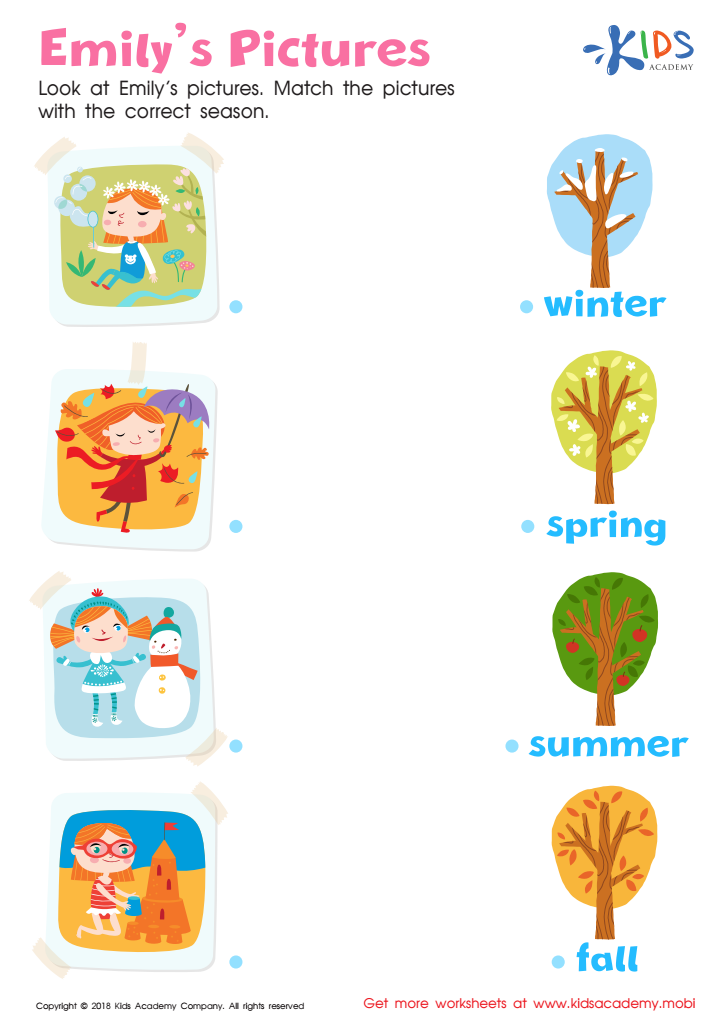
Emily's Pictures Worksheet
 Assign to My Students
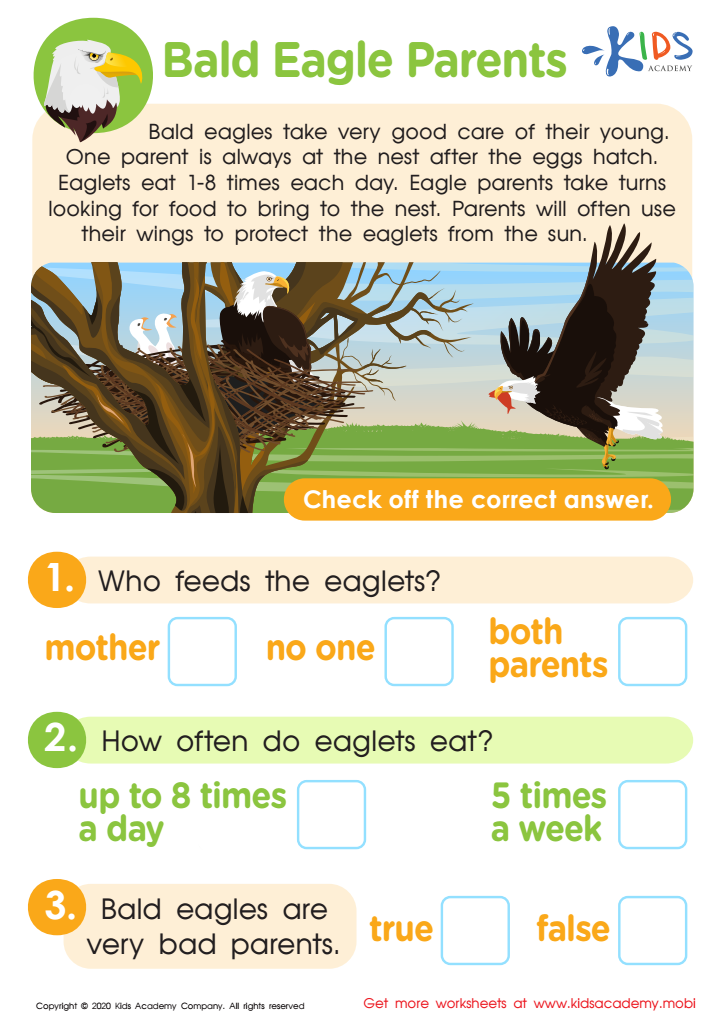
Bald Eagle Parents Worksheet
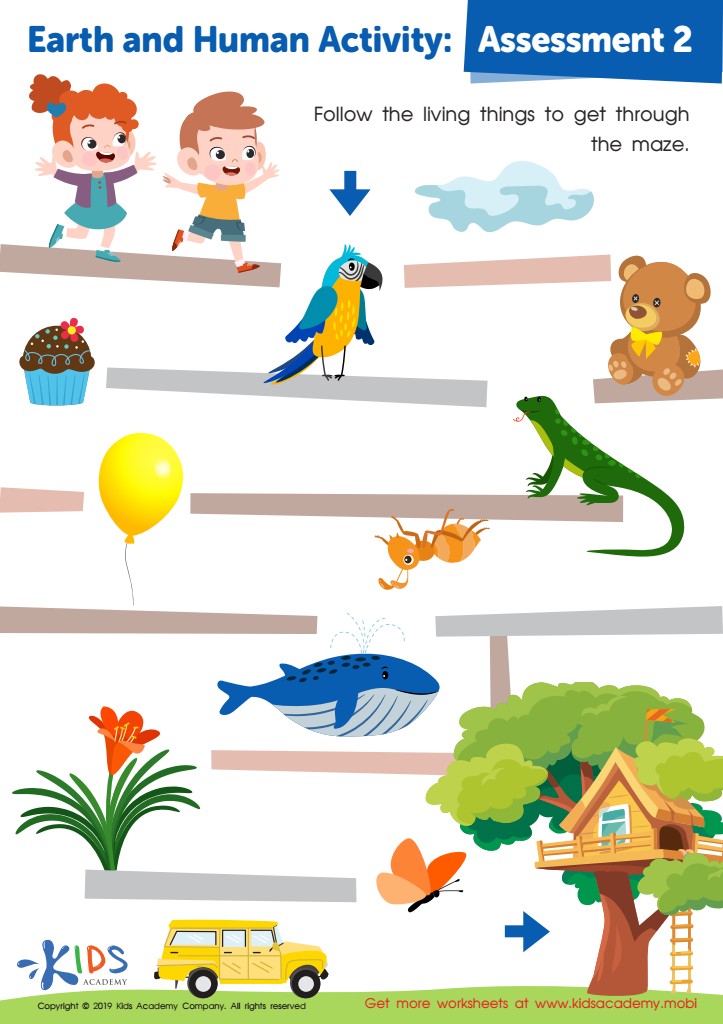
Earth and Human Activity: Assessment 2 Worksheet
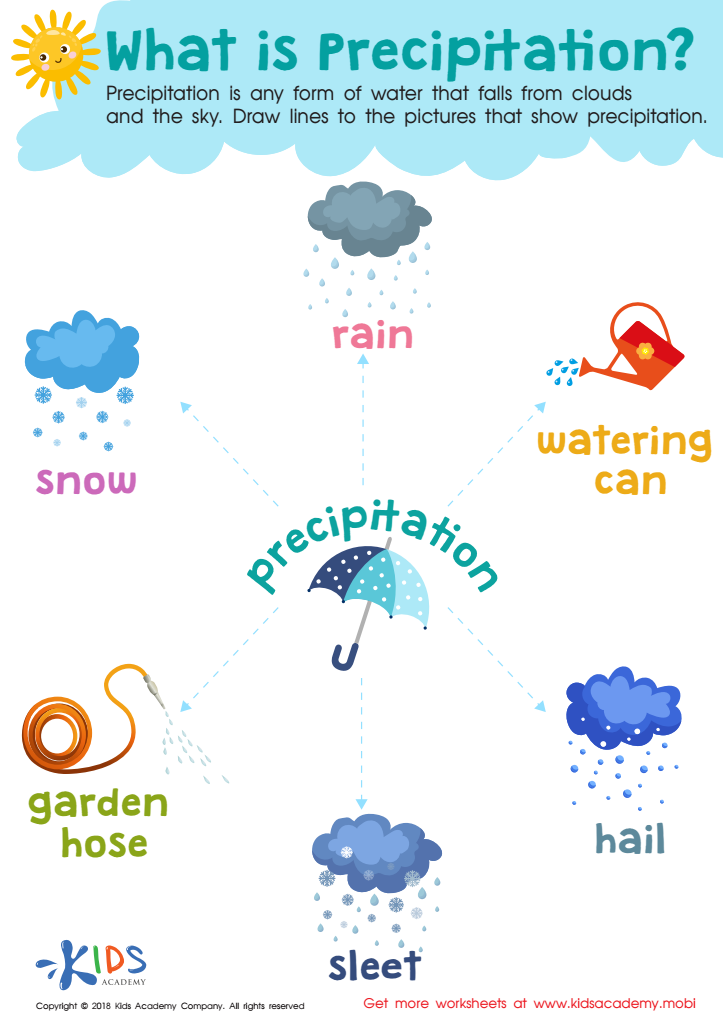
What Is Precipitation? Worksheet







Reading comprehension is essential for young learners, particularly in the context of science, as it lays the foundation for future academic success and fosters a lifelong love of learning. Introducing a Reading Comprehension Extra Challenge Science program for ages 5-7 is beneficial for several reasons.
Firstly, engaging with age-appropriate scientific concepts enhances critical thinking skills. It encourages children to ask questions, make predictions, and understand cause and effect. These are crucial components of scientific inquiry and problem-solving that extend beyond the classroom.
Secondly, early exposure to science texts broadens vocabulary and language skills. Scientific terms and concepts, even when simplified, introduce young learners to new words and ideas, enriching their overall language development.
Moreover, such challenges foster curiosity and a passion for learning. Science is inherently intriguing, and when children read about the world around them—whether it’s about plants, animals, or simple physical phenomena—they develop a sense of wonder that motivates them to explore further.
Lastly, parents and teachers who champion these extra challenges signal to children that learning is valuable and exciting. This collaborative encouragement helps build confidence, perseverance, and a positive attitude towards tackling difficult tasks. By investing in these extra challenges, we equip children with the skills and mindset needed for future scientific learning and discovery.