Problem-Solving Skills Extra Challenge Life Science Worksheets for Ages 5-7
3 filtered results
-
From - To
Introduce your young learners to exciting Problem-Solving Skills Extra Challenge Life Science Worksheets specially designed for ages 5-7! These engaging printables are crafted to stimulate critical thinking and enhance cognitive abilities while exploring fascinating life science concepts. Each worksheet presents fun scenarios and interactive problems that encourage children to analyze, reason, and develop effective solutions. Perfect for the classroom or at-home learning, these worksheets ensure that kids not only grasp essential life science topics but also foster their problem-solving skills in an enjoyable way. Let your child embark on a journey of discovery and strengthen their learning foundations today!
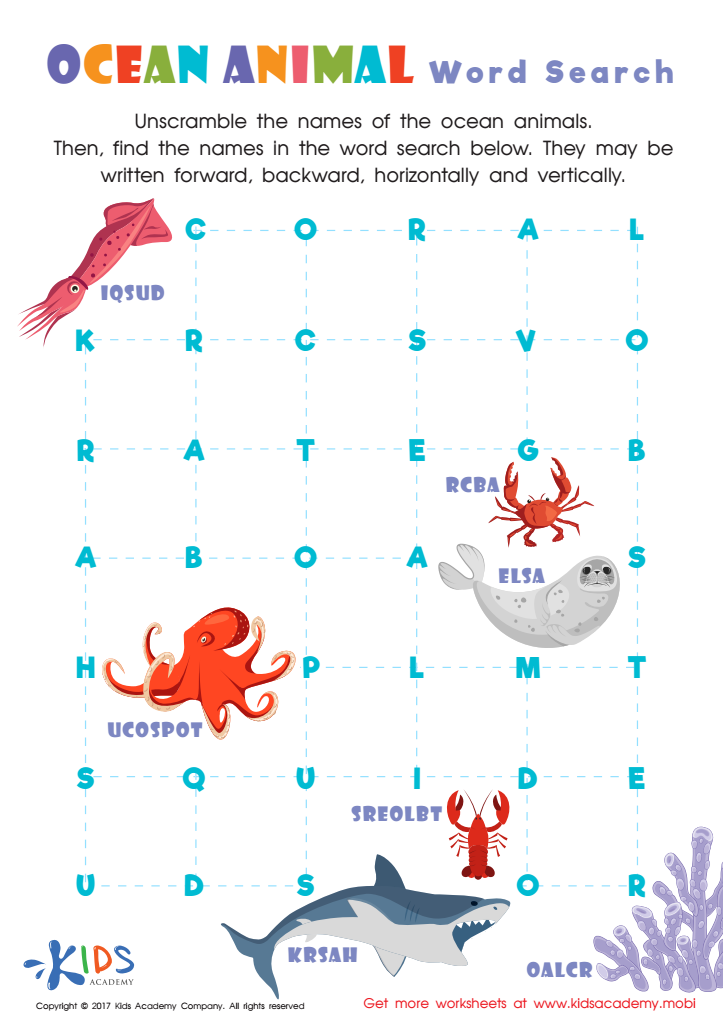
Ocean Animals Word Search Printable
 Assign to My Students
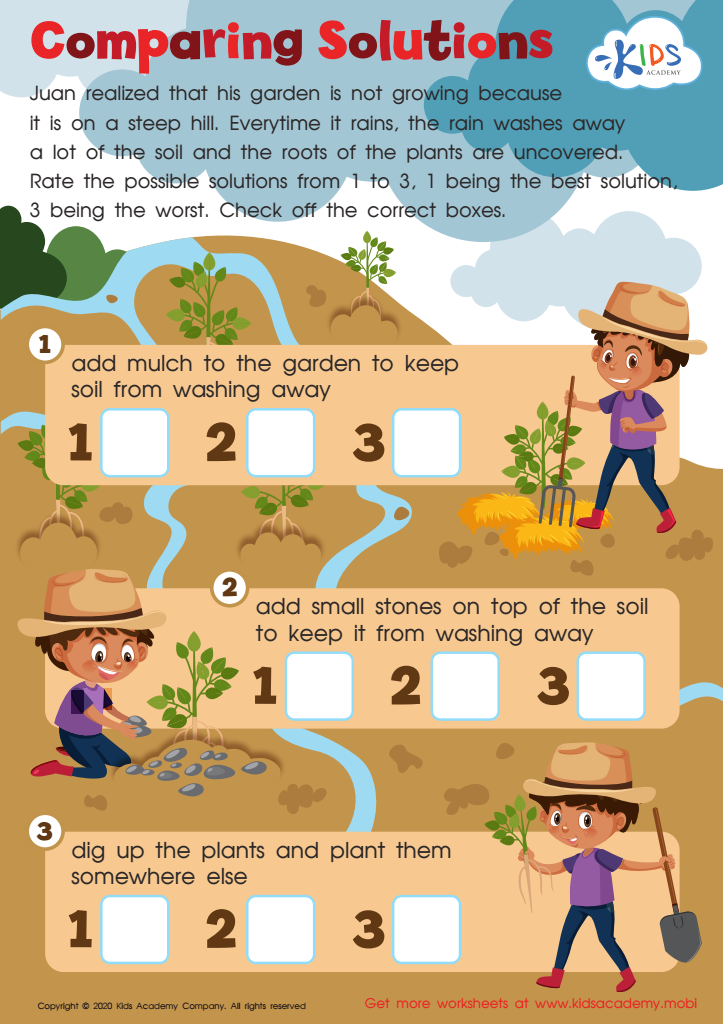
Comparing Solutions Worksheet
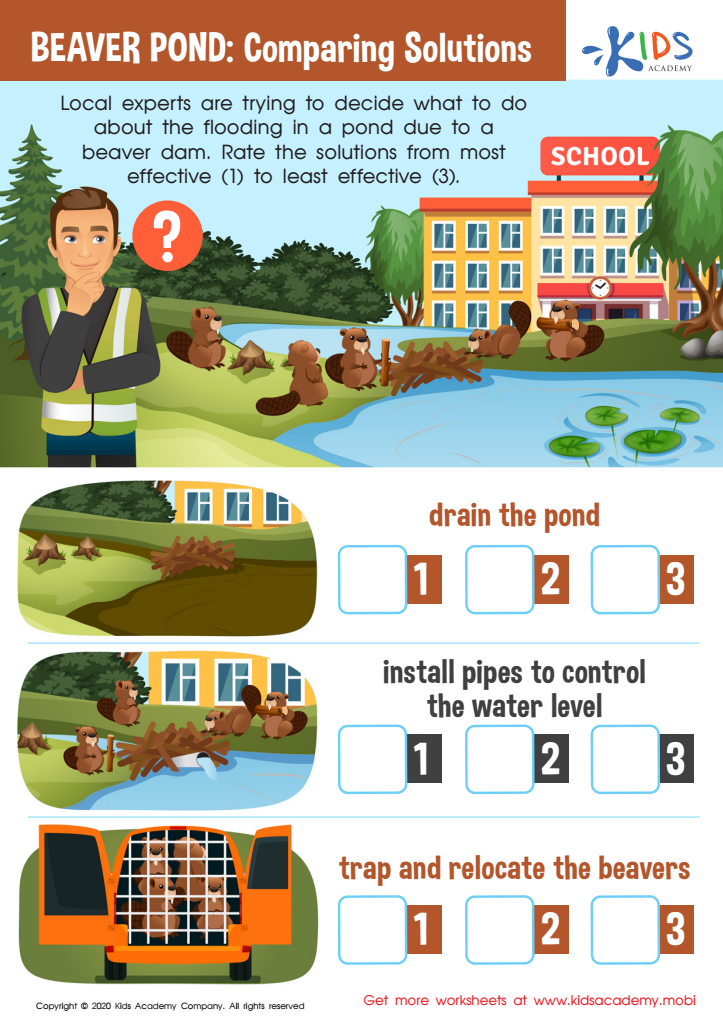
Beaver Pond: Comparing Solutions Worksheet






Problem-solving skills are foundational for young learners, especially in the context of life sciences. For children aged 5-7, these skills not only enhance academic performance but also cultivate a mindset oriented towards inquiry and discovery. Engaging in problem-solving within life science encourages curiosity about the natural world, fostering an appreciation for living organisms and ecosystems.
Parents and teachers should care about these skills because they promote critical thinking. For example, when children explore questions such as "Why do leaves change color?" or "What do animals need to survive?" they develop their ability to hypothesize, test, and conclude. This process enhances cognitive abilities, encouraging them to think independently and creatively solve problems.
Furthermore, problem-solving activities connect scientific concepts to real-life scenarios, making learning relevant and exciting. They help children recognize patterns, make predictions, and understand cause-and-effect relationships. This foundational knowledge is essential for more advanced studies in science and other disciplines later on.
In nature increasingly intertwined with technology, instilling robust problem-solving skills at a young age prepares children for a future where they must navigate complex challenges. Overall, fostering these skills ensures that children grow into innovative thinkers and responsible stewards of the natural world.