
Letter recognition Extra Challenge ABC Order Worksheets for Ages 5-8
7 filtered results
Difficulty Level
Grade
Age
-
From - To
Subject
Activity
Standards
Boost your child's letter recognition with our "Letter Recognition Extra Challenge ABC Order Worksheets" designed for ages 5-8. These engaging printable worksheets from Kids Academy encourage young learners to practice alphabet sequencing while strengthening their letter identification skills. Perfect for curious minds, these activities blend education with fun, enhancing essential early literacy skills. Printable and parent-friendly, these worksheets are ideal for both classroom and home use, ensuring your child gains confidence in their ability to recognize and order letters. Explore our comprehensive collection and provide your child with the tools they need to excel in literacy.
Favorites
With answer key
Interactive
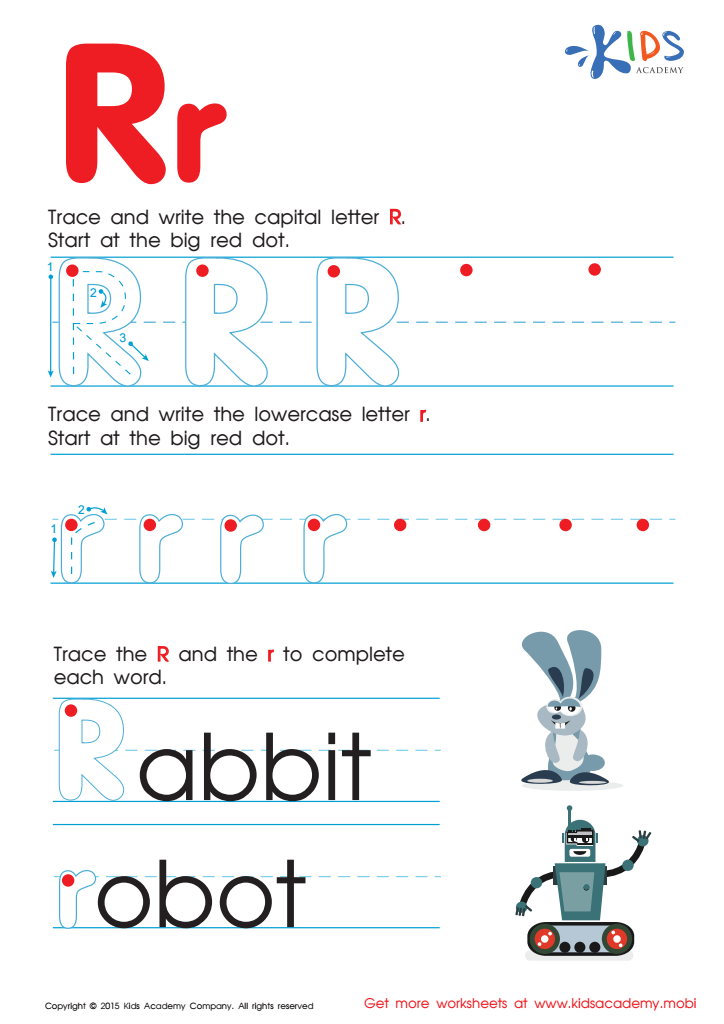
Letter R Tracing Page
Trace and write the letter "R" with this worksheet for kindergarten. Start with the uppercase, then move on to the lowercase. Write the letters several times for practice. Then help complete the words for the rabbit and robot, spelling carefully. More ABC worksheets can be found at Kids Academy.
 Assign to My Students
Letter R Tracing Page
Worksheet

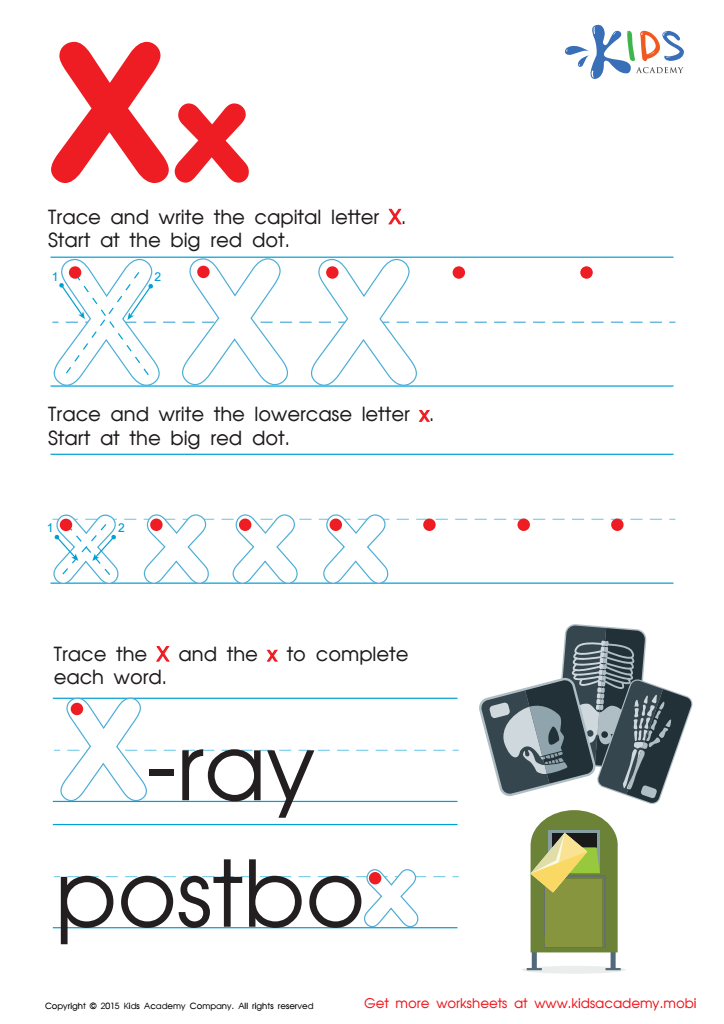
Letter X Tracing Page
Trace the uppercase letter "X" to learn, then write it yourself and practice. Then do the same with the lowercase "x" before completing the words "X-ray" and "postbox". Enjoy our alphabet printables!
Letter X Tracing Page
Worksheet
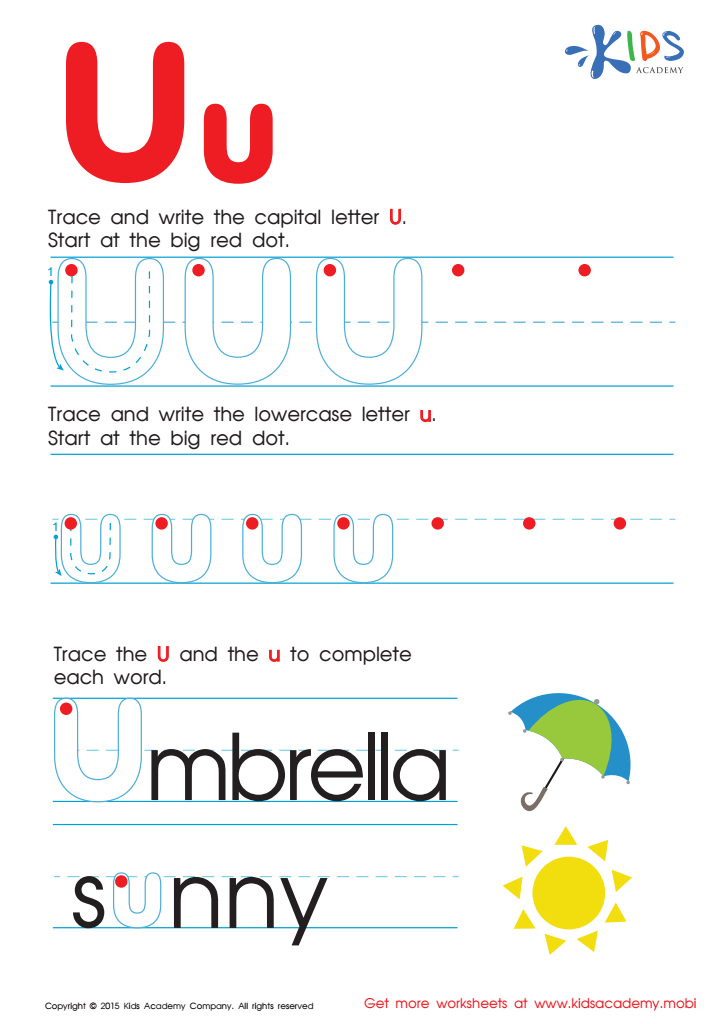
Letter U Tracing Page
Ready to trace and write the letter "U"? Use our worksheet and practice tracing both uppercase and lowercase letters. Complete the words "umbrella" and "sunny" with a capital "U". Check our full collection of alphabet printables for more activities.
Letter U Tracing Page
Worksheet
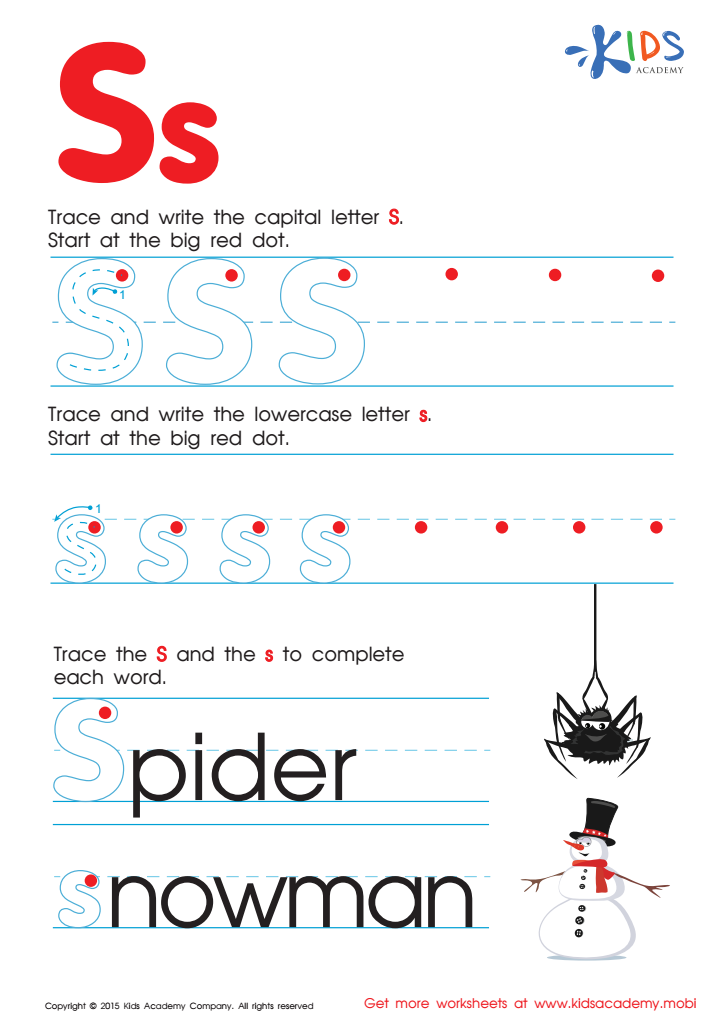
Letter S Tracing Page
Trace and write the capital and lowercase "S" on this ABC worksheet for kindergarten. Start with the big red dot and be careful. When you finish, help the spider and snowman in the pictures restore their words with the capital and lowercase letters. Continue learning the alphabet with Kids Academy.
Letter S Tracing Page
Worksheet
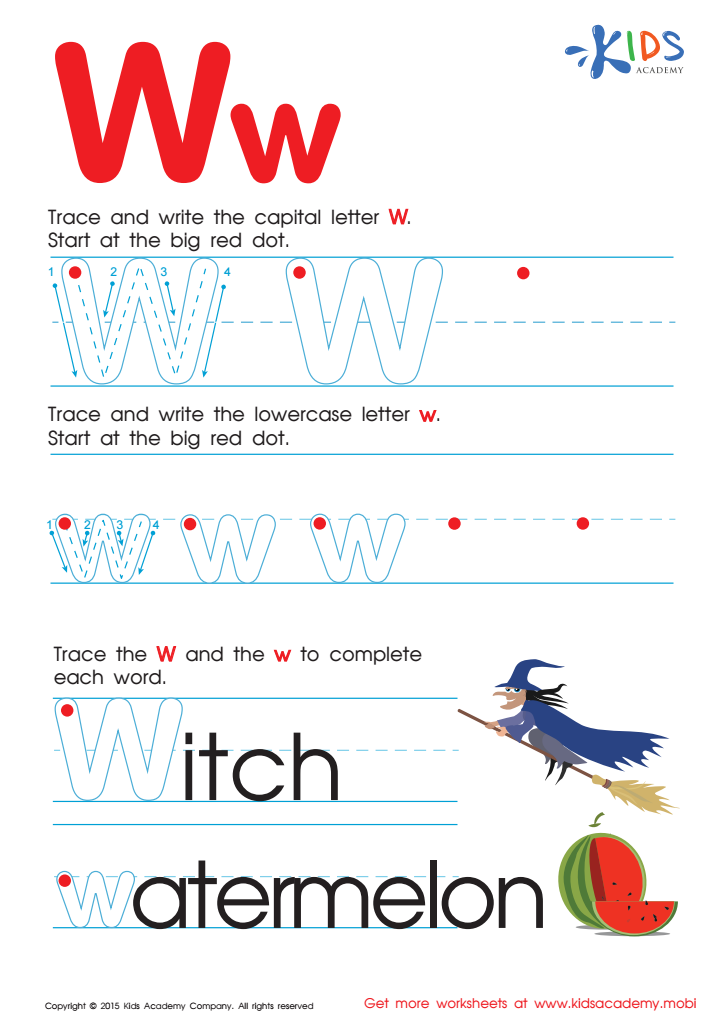
Letter W Tracing Page
Trace and write the capital and lowercase letter W with this free letter tracing worksheet by Kids Academy. Complete the words "Witch" (capital) and "watermelon" (lowercase). Check out our other kindergarten alphabet worksheets!
Letter W Tracing Page
Worksheet
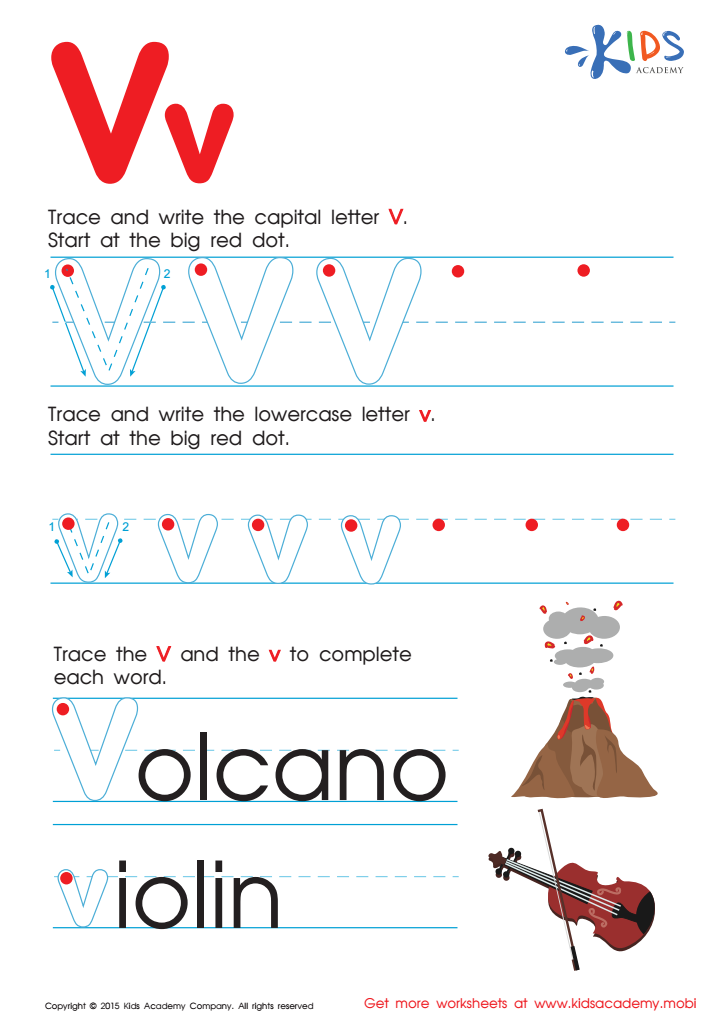
Letter V Tracing Page
Trace the uppercase and lowercase letter "V" with our kindergarten tracing worksheet. Begin at the red dot and follow the lines. Write it several times. Complete the words "Volcano" and "violin". Get more alphabet activities at Kids Academy.
Letter V Tracing Page
Worksheet
Letter T Tracing Page
Trace letters, complete words, draw pictures and see your kids having fun!
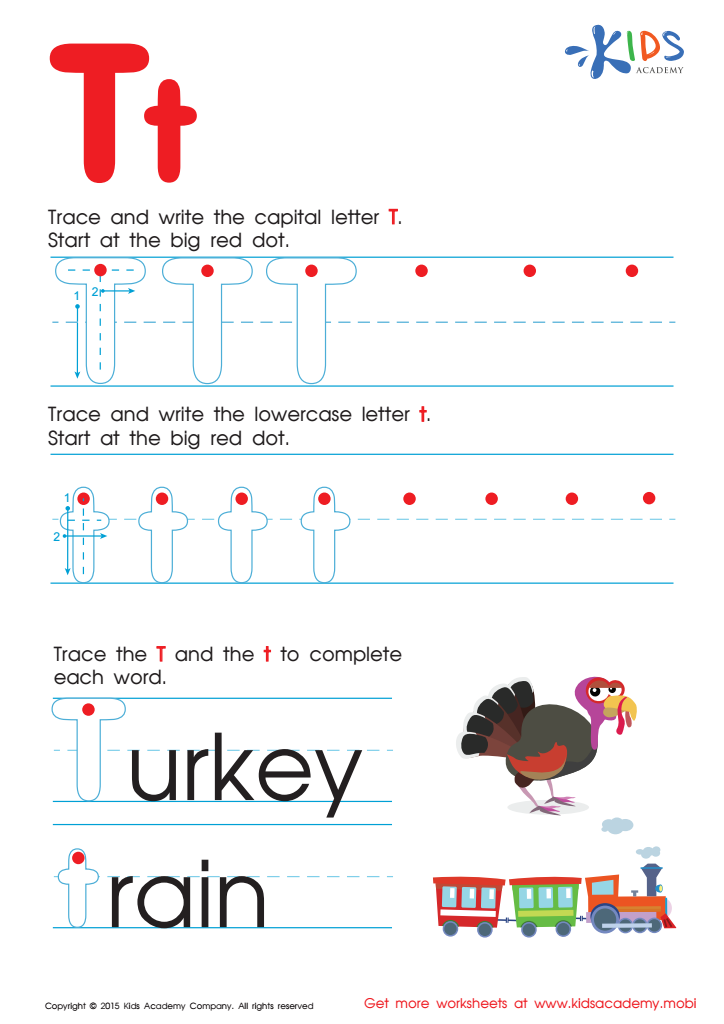
Kids Academy offers alphabet tracing worksheets to learn to write letters. Start with the big red dot, trace the letter, then write it. Practice uppercase and lowercase. Have fun completing words with a Turkey or a rain-train and draw pictures. Get more printable worksheets to make learning enjoyable.
Letter T Tracing Page
Worksheet
Join Kids Academy for Free
Who is primarily going to use this learning content?








Parents and teachers should pay special attention to letter recognition and practicing the extra challenge of arranging letters in ABC order for children aged 5-8, as these skills are fundamental building blocks for literacy development. During early childhood, mastery of the alphabet is crucial for reading and writing proficiency. Recognizing letters and understanding their order helps children decode words, which is essential for reading comprehension and fluency.
Learning the ABC order also enhances cognitive skills such as memory, attention to detail, and sequencing. These are not only key for literacy but are also useful across various subjects and activities. For example, arranging letters in order teaches children logical thinking and problem-solving strategies, which can be applied to tasks like organizing numbers in math or following instructions in science.
Incorporating these skills through engaging activities also builds confidence and encourages a love for learning. When children successfully grasp letter recognition and ABC order, they feel accomplished and are more likely to engage with language and literacy activities enthusiastically. Moreover, early proficiency in these areas reduces the risk of future academic challenges, setting a strong foundation for lifelong learning and curiosity. Thus, nurturing these foundational skills is vital for children's educational development and overall academic success.








