Identification skills Extra Challenge Worksheets for Ages 5-8
3 filtered results
-
From - To
Boost your child's learning with our Identification Skills Extra Challenge Worksheets designed for ages 5-8! These engaging activities focus on enhancing critical thinking and observation skills while making learning fun. Each worksheet is curated to challenge young minds, promoting skills in recognizing shapes, colors, objects, and letters. Perfect for classroom settings or at-home practice, our worksheets encourage children to explore their environments and discover new concepts. With colorful illustrations and varied exercises, these resources cater to diverse learning styles, ensuring every child stays motivated and excited. Unlock your child's potential today with our stimulating Identification Skills Extra Challenge Worksheets!
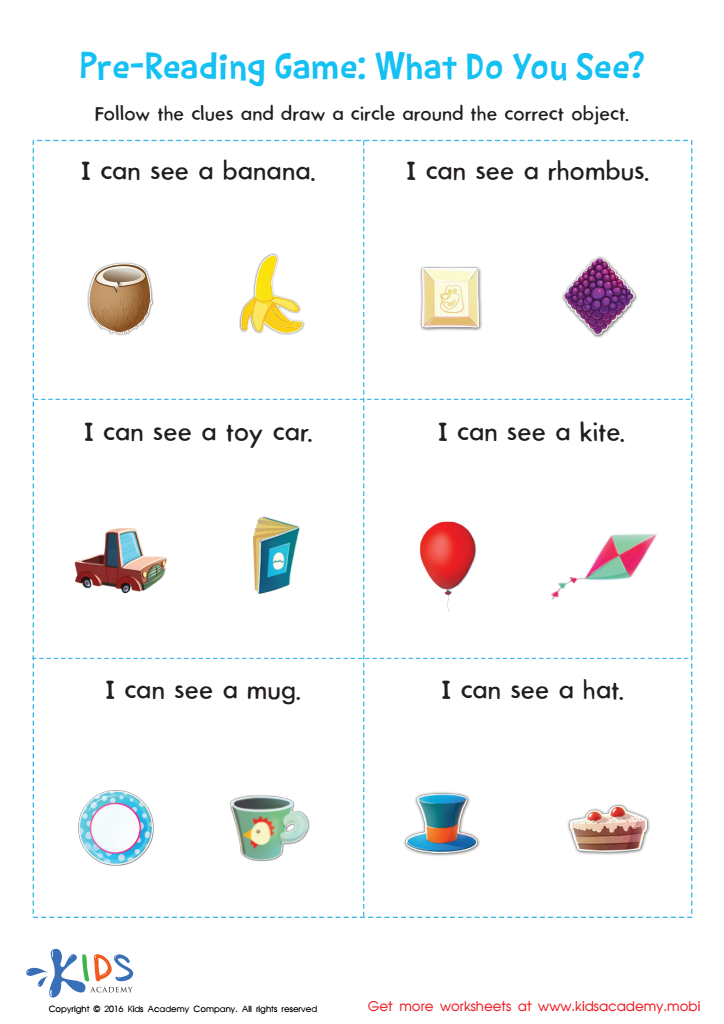
Pre–reading Worksheet: What Do You See?
 Assign to My Students
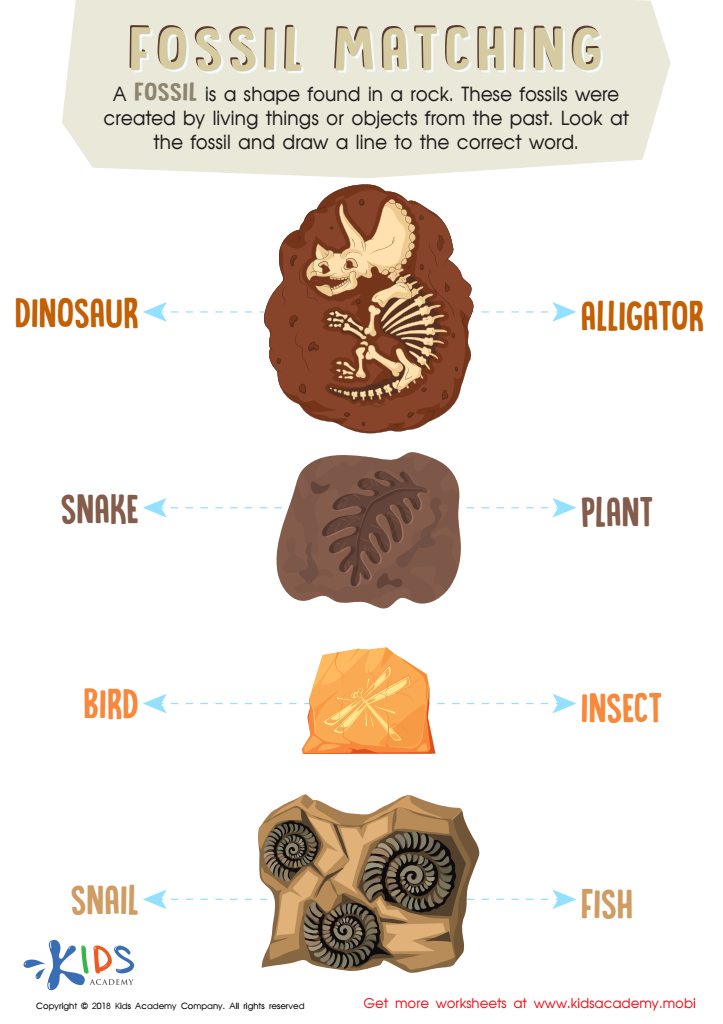
Fossil Matching Worksheet
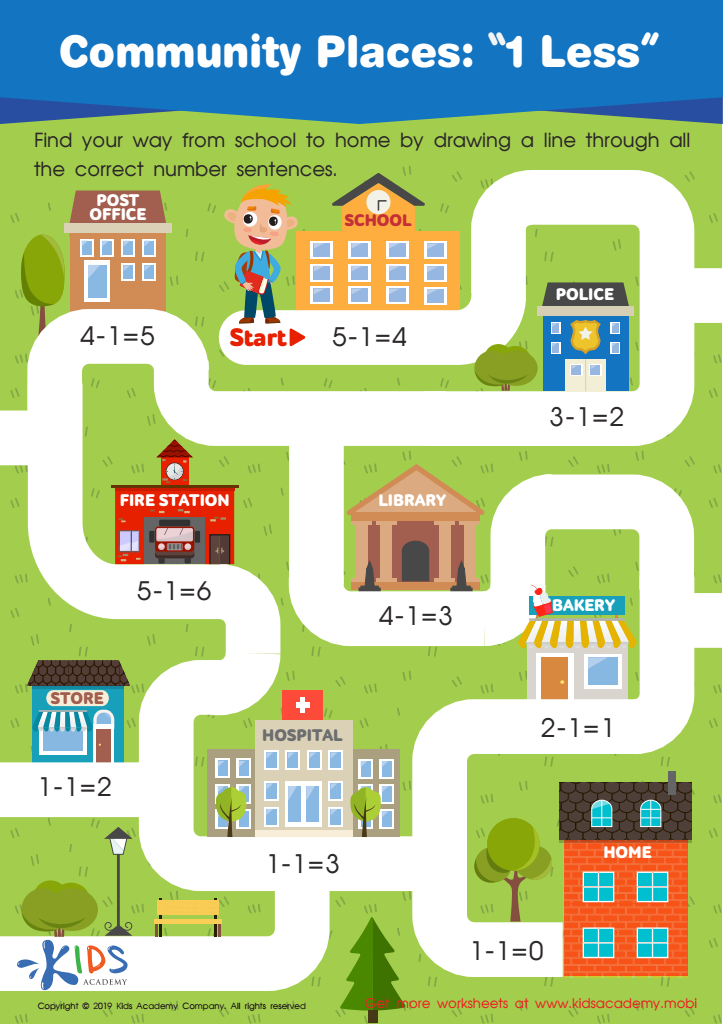
Community Places: 1 Less Worksheet







Identification skills are crucial for children aged 5-8 as they form the foundation for their cognitive, social, and emotional development. These skills enable young learners to recognize and name objects, concepts, and feelings, which fosters communication and comprehension. When parents and teachers focus on enhancing identification skills, they help children make connections in their environment, improve vocabulary, and develop critical thinking abilities.
Through identification activities, children learn to categorize and differentiate between various elements, which is essential for problem-solving. For instance, recognizing the differences between shapes, colors, or sounds can support early mathematics and language acquisition. Furthermore, these skills nurture emotional intelligence; when children learn to identify their own emotions and those of others, they cultivate empathy and social awareness.
Extra challenges that reinforce identification skills inspire curiosity and promote engagement. When educators create rewarding and interactive learning experiences, children are more likely to actively participate, reinforcing their understanding. Additionally, a strong focus on identification helps to build confidence, as children experience mastery of new concepts. Thus, investing in identification skill development unlocks a myriad of opportunities for young learners, preparing them for future academic and social success.








