Understanding measurements Extra Challenge Worksheets for Ages 5-8
6 filtered results
-
From - To
Unlock your child's potential with our "Understanding Measurements Extra Challenge Worksheets for Ages 5-8." Tailored to inspire and enhance learning, these engaging worksheets introduce young learners to essential measurement concepts. Through fun, hands-on activities, children will explore length, weight, and volume, while developing critical thinking and problem-solving skills. Aligned with educational standards, these worksheets provide extra challenges to keep your child ahead of the curve. Perfect for classroom use or at-home learning, they make mastering measurements both enjoyable and rewarding. Equip your little mathematician with the tools they need for success with Kids Academy's expertly designed resources!
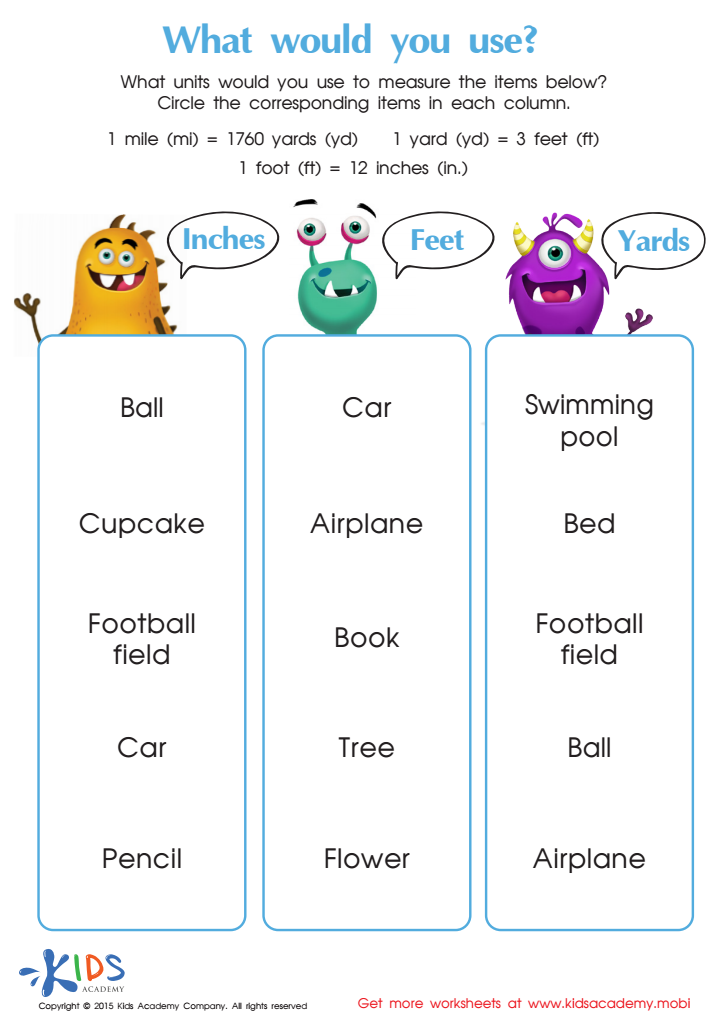
Learning about measuring objects in inches, feet and yards Worksheet
 Assign to My Students
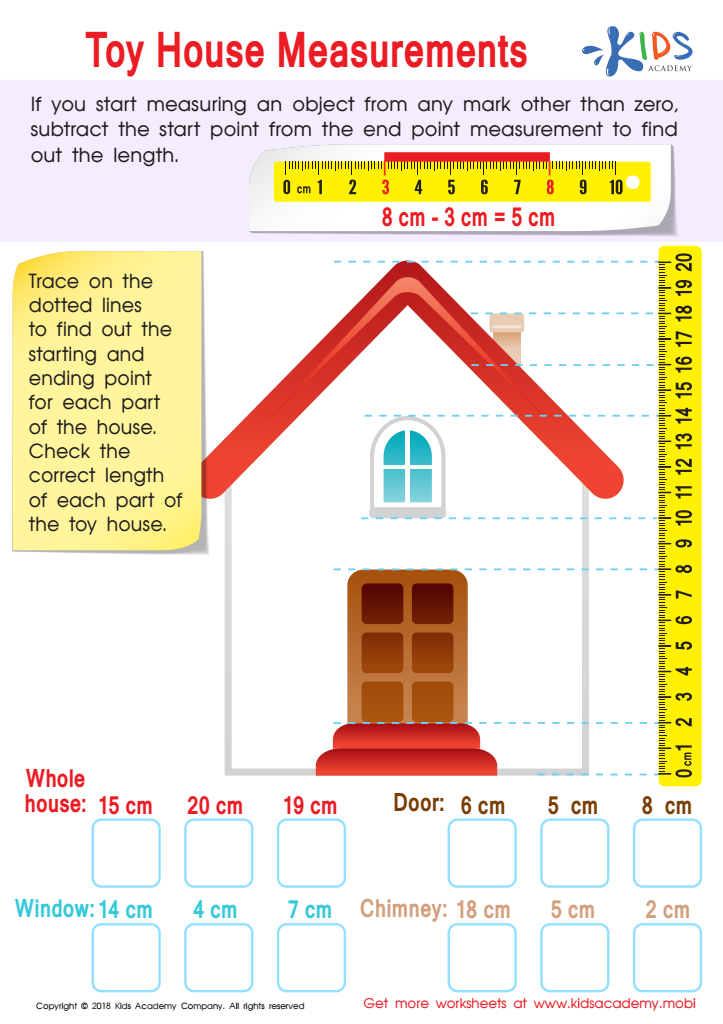
Toy House Measurements Worksheet
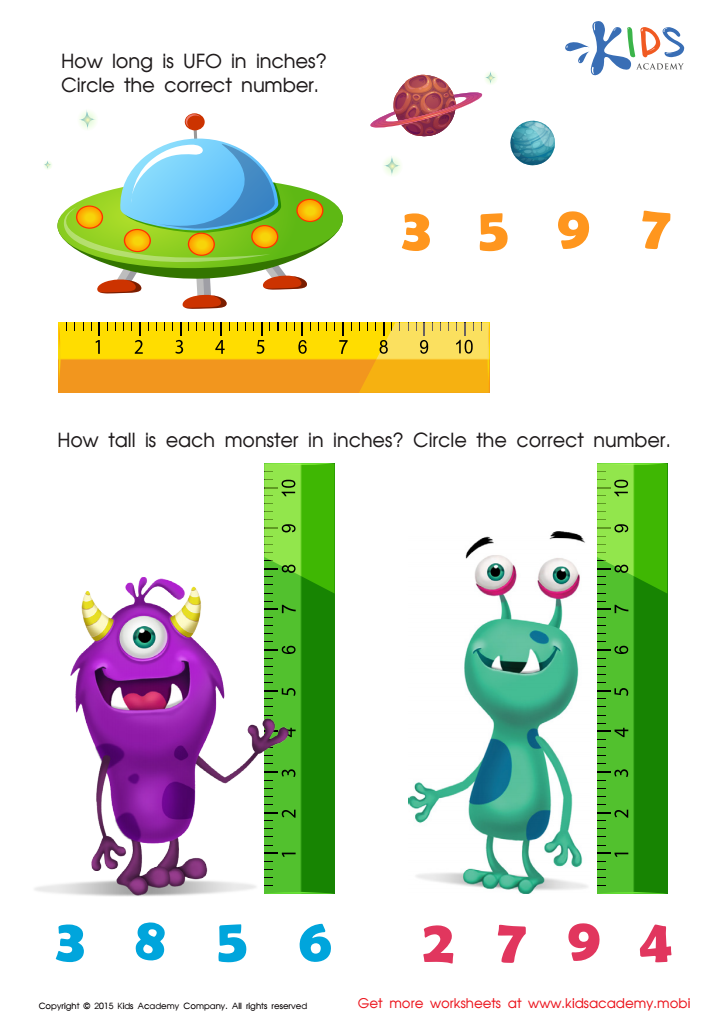
Measuring in Inches Worksheet
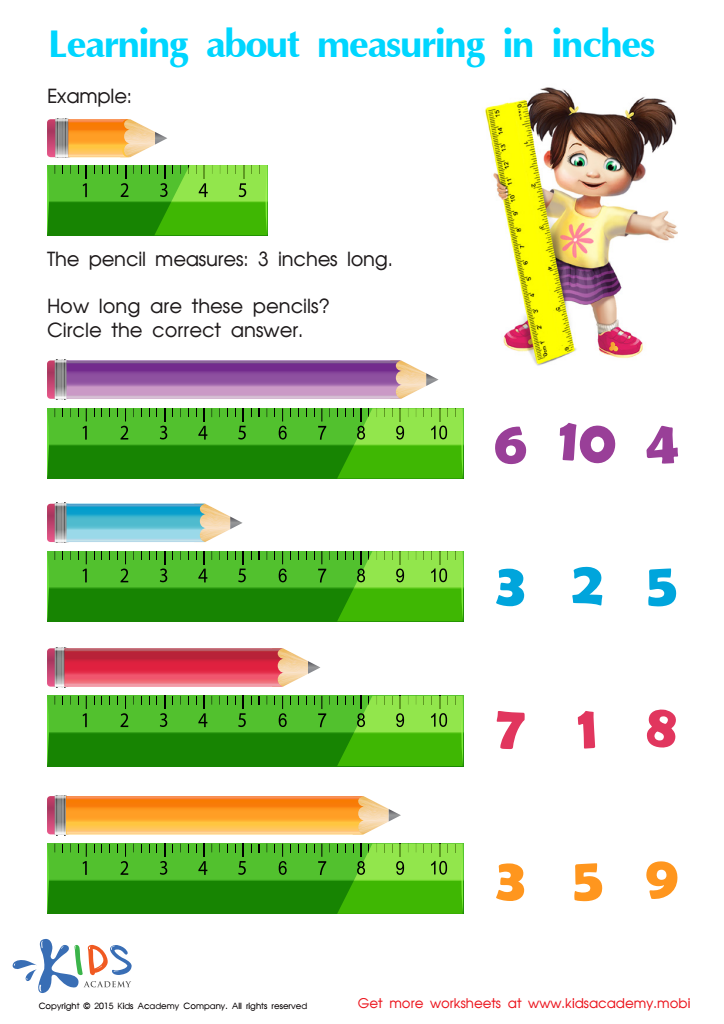
Learning About Measuring In Inches Printable
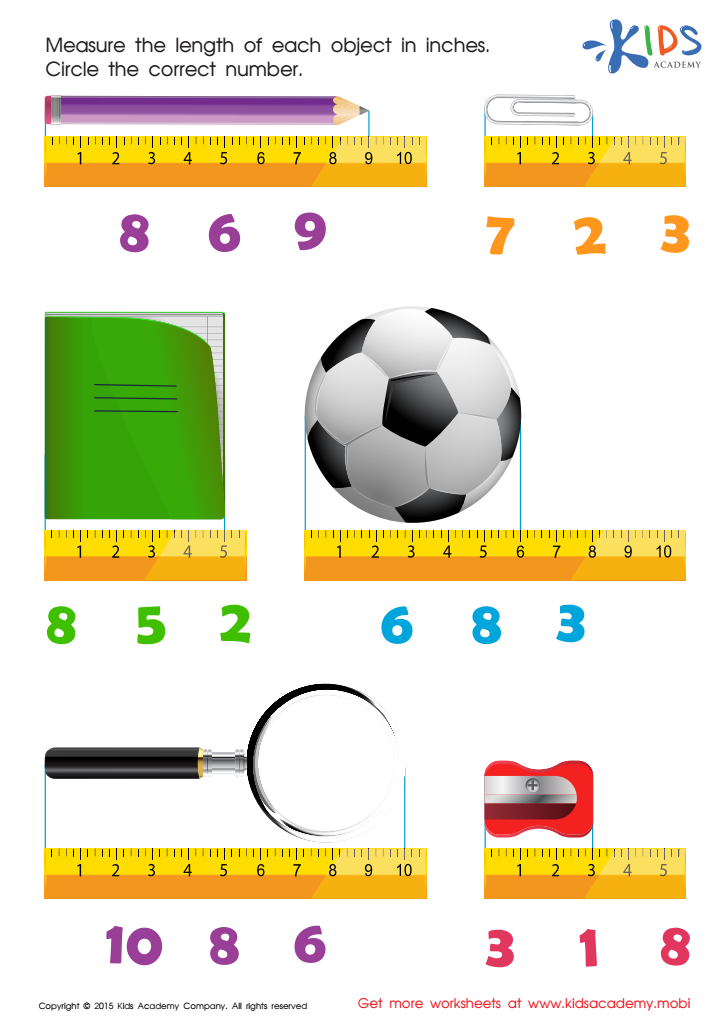
Learning measuring objects in inches Worksheet
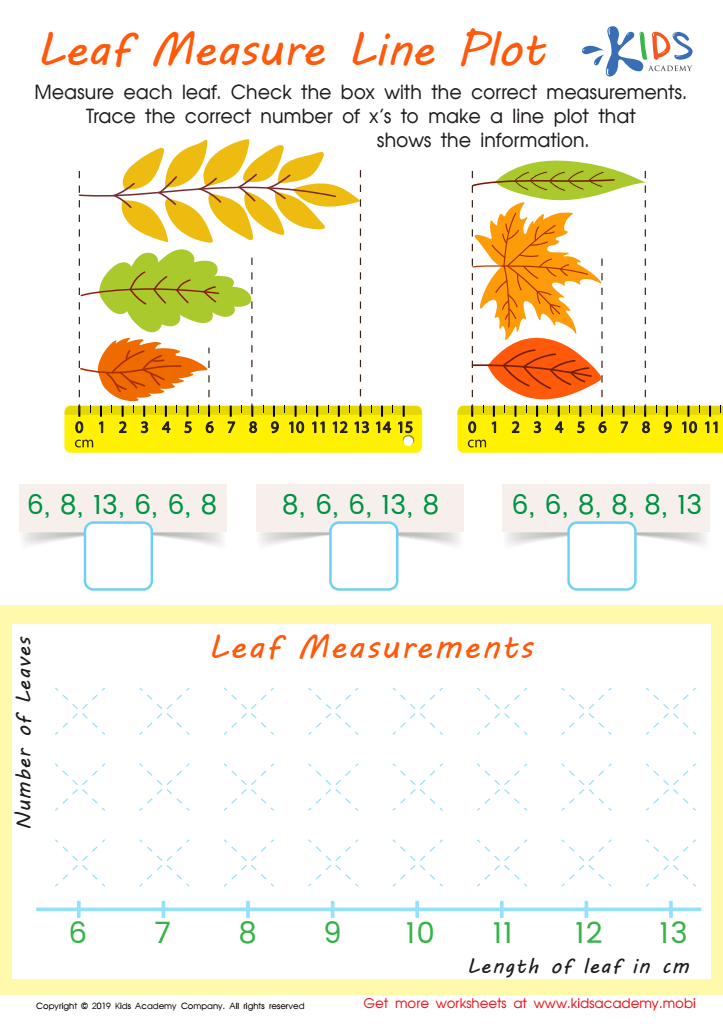
Leaf Measure Line Plot Worksheet







Understanding measurements is fundamental for young children's cognitive development and practical life skills. Ages 5-8 are a critical learning period because children are curious, rapidly absorbing new concepts and beginning to grasp complex ideas. Parents and teachers who emphasize early understanding of measurements, including length, weight, volume, and time, set the foundation for mathematical success and scientific literacy.
At this age, children encounter measurements daily—understanding how high they can swing, how much juice fills a cup, or how long playtime lasts. Introducing measurement challenges helps them relate abstract concepts to concrete experiences. For example, when children weigh various objects, they better understand "heavy" versus "light," fostering quantitative reasoning.
Moreover, measurement skills enhance problem-solving abilities and critical thinking. Through hands-on activities like measuring ingredients for a recipe or determining how much space certain toys occupy, children learn to observe, compare, and make calculations. Teachers can reinforce these skills with interactive tools like rulers, scales, and measuring cups, making learning engaging and relevant.
Early measurement understanding is also pivotal for future academic success. It is interlinked with geometry, arithmetic, and science, building blocks for later curriculum. Encouraging these skills in young learners isn't just about learning numbers and units—it's about nurturing inquisitive minds, fostering independence, and building confidence in tackling real-world challenges.








